
SPECIAL NEWS ANALYSIS | CPHIA 2026 | ADDIS ABABA, ETHIOPIA
Africa is demanding a new place in the global health order not merely as a recipient of international assistance, but as a continent capable of financing its health systems, manufacturing its medicines, producing its vaccines and determining its own public health priorities.
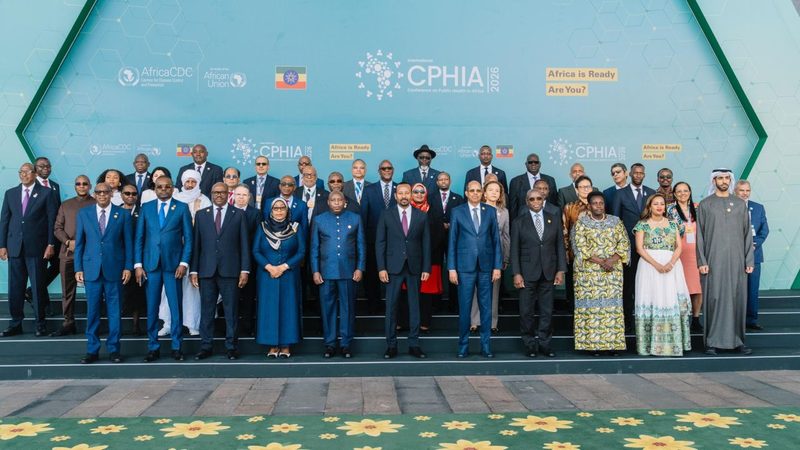
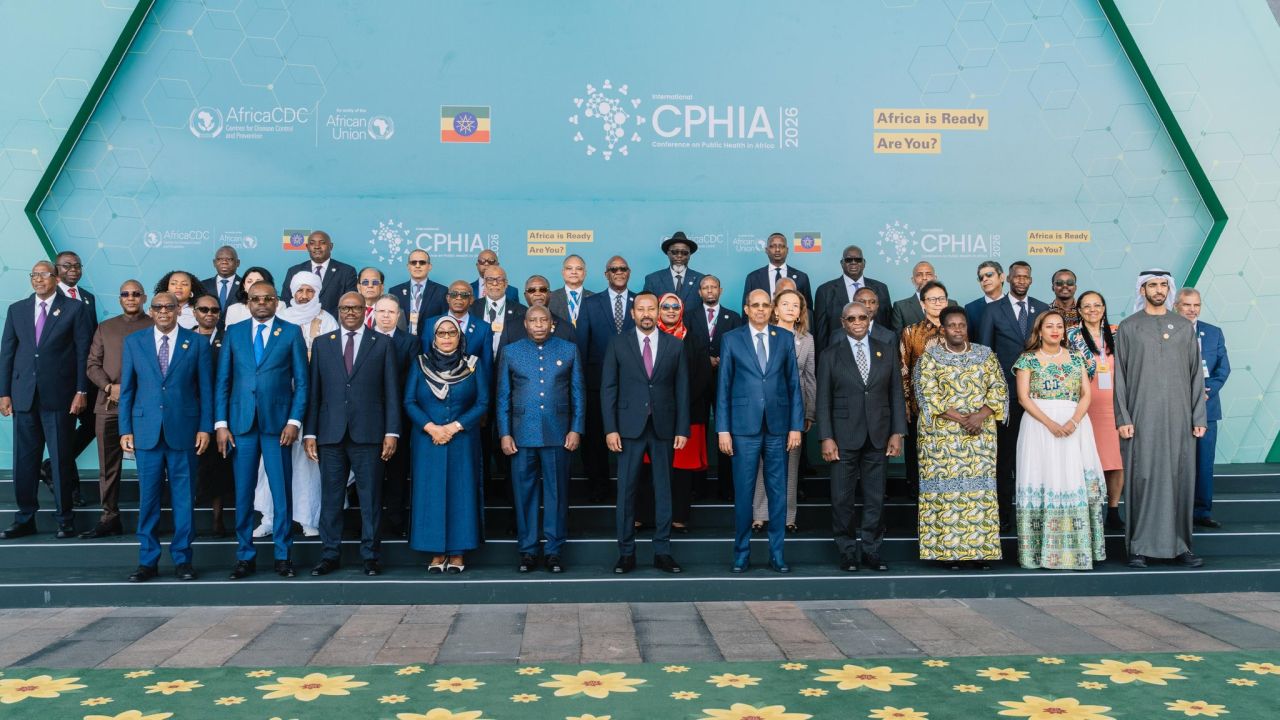
The message emerging from the opening day of the 5th International Conference on Public Health in Africa (CPHIA 2026) in Addis Ababa was unmistakable: Africa’s health future cannot remain permanently dependent on decisions, financing arrangements and pharmaceutical supply chains controlled beyond its borders.
From the Ethiopian capital, African presidents, health ministers, public health experts and international development partners confronted a fundamental question: can a continent that possesses enormous human and natural resources build the institutional, financial and industrial capacity to protect its own people?
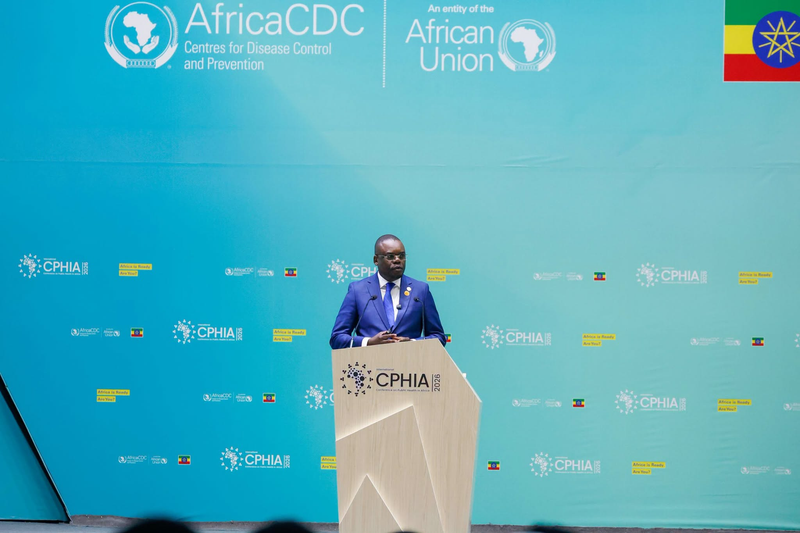
At the heart of the debate was a powerful challenge articulated by Africa CDC Director-General Dr. Jean Kaseya: “Who names us, and who decides for us?”
Drawing on the story of Ethiopia’s internationally recognised 3.2-million-year-old fossil, Lucy, known locally as Dinknesh—meaning “you are marvellous”—Kaseya connected the question of identity and ownership to a much larger struggle over Africa’s position in global health governance.
His argument went beyond symbolism. It raised questions about who determines health priorities, who controls medical production, who finances public health institutions and, ultimately, who has the authority to shape the conditions under which African people live and survive.
THE PRICE OF DEPENDENCY: AFRICA’S HEALTH SYSTEMS UNDER FINANCIAL PRESSURE
Behind the powerful political declarations lies a difficult economic reality. Africa’s ambition for health sovereignty is unfolding amid declining external health assistance, unequal access to medical products and substantial pressure on national health budgets.
According to Africa CDC’s 2026 Financing Africa’s Health Security and Sovereignty handbook, government sources account for approximately 35% of total health expenditure across Africa, while external assistance contributes around 23%. Out-of-pocket payments by households account for another 35%.
The report estimates that development assistance for health to Africa declined from US$25.8 billion in 2021 to approximately US$13 billion in 2025. It also warns that out-of-pocket expenditure pushes an estimated 15 million people into poverty annually. Africa CDC
These figures expose the structural challenge confronting African governments: health sovereignty cannot be achieved through political declarations alone when millions of households remain financially vulnerable whenever they need medical treatment.
The consequences extend beyond hospital budgets. Dependence on external financing can leave essential health programmes exposed to changes in donor priorities, international economic conditions and geopolitical decisions.
The question, therefore, is not whether international partnerships should continue. Africa needs global cooperation, scientific exchange and international investment. The more fundamental question is whether these partnerships strengthen African institutions and domestic capacity or perpetuate a system in which the continent remains dependent on decisions made elsewhere.
The distinction is critical: international cooperation should reinforce African ownership, not replace it.
THE MEDICINE AFRICA NEEDS IS STILL LARGELY MADE ELSEWHERE
Perhaps nowhere is Africa’s dependence more visible than in pharmaceutical production.
A UN Trade and Development (UNCTAD) report, Building the Case for Investment in Local Pharmaceutical Production in Africa, reveals that more than 70% of pharmaceuticals consumed on the continent are imported, mainly from Asia. It further reports that pharmaceutical manufacturing is heavily concentrated, with eight countries accounting for approximately 85% of Africa’s nearly 690 pharmaceutical manufacturing plants. UN Trade and Development (UNCTAD)+1
The World Health Organization’s African regional framework on local production presents an even more troubling picture: between 70% and 100% of medicines and other medical products, approximately 99% of vaccines, and 90% to 100% of medical devices used in the region are imported.
These are not merely trade statistics. They reveal a strategic vulnerability.
When international supply chains are disrupted, when global demand increases or when geopolitical tensions restrict trade, African countries can face serious difficulties securing essential medicines, vaccines and diagnostic technologies.
The COVID-19 pandemic demonstrated the consequences of these vulnerabilities. Competition for vaccines and medical supplies exposed the limitations of depending on international markets during emergencies.
Africa CDC’s ambition to achieve local production of 60% of the continent’s vaccine needs by 2040, highlighted in the CPHIA 2026 agenda, represents an important long-term target. But achieving it will require sustained investment in research, technology transfer, skilled human resources, regulatory institutions, infrastructure and regional markets. Africa CDC+1
The challenge is not simply to establish more pharmaceutical factories. It is to develop an integrated African health manufacturing ecosystem capable of producing quality-assured medicines, vaccines, diagnostics and essential medical technologies at competitive prices.
KASEYA’S QUESTION: WHO DECIDES AFRICA’S HEALTH FUTURE?
Dr. Jean Kaseya’s address at Adwa Hall introduced an important dimension to the debate: the relationship between identity, institutional authority and health sovereignty.
His reference to Dinknesh was particularly significant. Ethiopia’s ancient human fossil, internationally known as Lucy, became a metaphor for the question of who has the authority to define Africa and determine its future.
Kaseya said his four-year progress report at Africa CDC was guided by the conviction that institutions delivering on their mandates deserve the right to request additional resources while remaining accountable for what they receive.
This is an important distinction in the health sovereignty debate.
African ownership cannot mean simply transferring decision-making authority from international institutions to African governments. It must also mean building transparent, capable and accountable institutions that deliver measurable public health outcomes.
His message that Africa’s young people must have a seat at the table—not tomorrow, but today—also brings generational representation into the discussion.
Young Africans are not merely future beneficiaries of health policies. They are researchers, medical professionals, entrepreneurs, digital innovators and community health advocates whose participation is essential to designing sustainable health systems.
The challenge now is to translate that principle into meaningful representation in budget decisions, research priorities, institutional leadership and public health innovation.
AFRICAN LEADERS SPEAK: FROM POLITICAL DECLARATIONS TO CONTINENTAL RESPONSIBILITY
The first-day discussions at CPHIA 2026 brought together African political leaders around a shared question: how can the continent move from dependence towards greater responsibility for its health future?
Sierra Leone: Partnerships must deliver results
President Julius Maada Bio called for stronger partnerships and practical solutions, urging African countries to move beyond declarations and work collectively to fulfil their health commitments.
His message highlighted a fundamental problem in continental health governance: commitments are meaningful only when they produce measurable improvements in people’s lives.
Ethiopia: Investment in domestic capacity
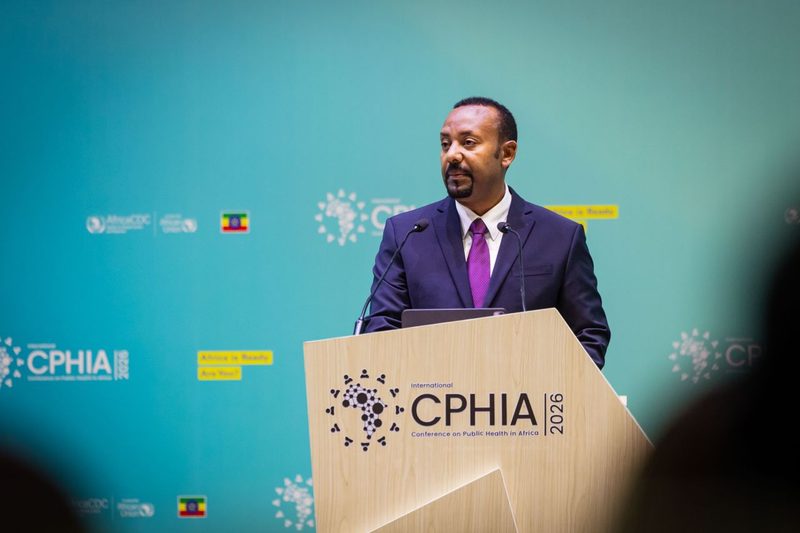
Prime Minister Abiy Ahmed reaffirmed Ethiopia’s commitment to strengthening its health system through investment in health workers, pharmaceutical production, digital health and artificial intelligence.
These priorities reflect the growing recognition that modern health systems require more than hospitals and medical personnel. They also depend on technological capacity, research, data infrastructure and domestic industrial development.
However, the real test will be whether these priorities translate into accessible services, affordable medicines, stronger primary healthcare and improved health outcomes across Ethiopia.
Tanzania: Regional cooperation and national ownership
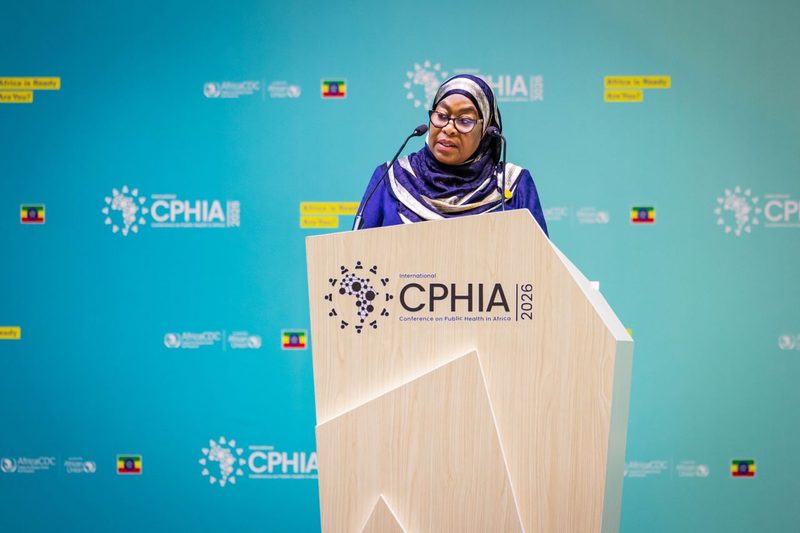
President Samia Suluhu Hassan emphasised stronger cooperation among African countries, investment in national health priorities and the development of domestic capacities.
Her message reflects an important continental reality: individual countries cannot independently overcome every challenge involving pharmaceutical supply chains, disease surveillance, vaccine research and cross-border epidemic preparedness.
Uganda: Unity and shared responsibility
Uganda’s Vice President, Maj. (Rtd) Jessica Alupo, delivering remarks on behalf of President Yoweri Kaguta Museveni, called for African unity and collective responsibility in strengthening health security.
Taken together, the leaders’ interventions point towards a common policy direction: greater domestic investment, stronger regional institutions, local production and coordinated public health responses.
Yet a central question remains: what mechanisms will ensure that these political commitments are implemented, financed and independently monitored?
ETHIOPIA’S OPPORTUNITY: CAN ADDIS ABABA BECOME A CENTRE OF AFRICAN HEALTH TRANSFORMATION?
Hosting CPHIA 2026 gives Ethiopia an important opportunity to contribute to continental discussions on health sovereignty.
The conference, co-hosted by the Government of Ethiopia and Africa CDC from 23–27 November 2026, is organised around the theme Africa’s Health Security and Sovereignty: Transformation from Health Dependency and Vulnerability to Ownership and Resilience. Africa CDC+1
Ethiopia’s priorities, as presented by Prime Minister Abiy Ahmed, include strengthening the health workforce, expanding pharmaceutical manufacturing, advancing digital health and using artificial intelligence to improve health services.
These ambitions are particularly relevant for a country with a large population and substantial demands on its health infrastructure.
Nevertheless, national health transformation requires more than technological ambition. It depends on a functioning primary healthcare system, reliable medical supply chains, adequate financing, trained health professionals, effective regulation and equitable access to services.
Digital health and AI can improve diagnosis, disease surveillance, health information management and resource allocation. But without reliable electricity, connectivity, interoperable data systems, privacy safeguards and trained personnel, technological innovation risks benefiting only a limited segment of the population.
Ethiopia’s opportunity is therefore twofold: to demonstrate domestic progress while contributing to a broader African framework for cooperation, scientific innovation and regional production.
MATERNAL AND CHILD HEALTH: THE HUMAN FACE OF HEALTH SOVEREIGNTY
While political leaders discuss sovereignty, financing and industrial capacity, the ultimate measure of success remains the lives of ordinary Africans.
CPHIA 2026 has placed maternal, newborn and child health prominently on its agenda through the African Union’s 2026–2030 Champions’ Roadmap.
The roadmap’s ambitions include:
- Zero home deliveries.
- Zero preventable maternal and newborn deaths.
- Zero unvaccinated children.
These are ambitious goals that demand significant improvements in access to skilled birth attendance, emergency obstetric care, newborn services, immunisation and community-based healthcare. Africa CDC+1
The significance of these commitments cannot be measured by the number of declarations adopted at international conferences. Their success must be measured in reduced maternal mortality, surviving newborns, fully immunised children and families able to access healthcare without falling into poverty.
Health sovereignty must ultimately be experienced in rural health centres, urban hospitals, maternity wards and communities where preventable diseases continue to threaten lives.
THE WHO LEADERSHIP QUESTION: WILL AFRICA HAVE A STRONGER VOICE IN GLOBAL HEALTH GOVERNANCE?
Another important development at CPHIA 2026 was the engagement between African health ministers and candidates for the position of Director-General of the World Health Organization.
The dialogue brings Africa’s health priorities into discussions about the future direction of global health leadership.
The continent’s position in global health governance matters because decisions concerning pandemic preparedness, international health regulations, vaccine distribution, research financing and emergency response have direct consequences for African populations.
Africa’s growing demand for a stronger voice should be accompanied by a clear policy agenda: fair representation, stronger scientific institutions, predictable financing, equitable access to medical technologies and greater participation in international decision-making.
The question is not simply who leads the WHO. It is whether global health governance will adequately reflect the priorities, experiences and needs of the world’s regions, including Africa.
FROM ADDIS ABABA’S DECLARATIONS TO AFRICA’S ACTION AGENDA
The discussions at CPHIA 2026 raise a fundamental issue: what should Africa do differently to make health sovereignty a measurable reality?
Six priorities deserve particular attention.
1. Domestic health financing: Governments must progressively increase sustainable domestic health expenditure, improve budget execution and strengthen accountability for health resources.
2. African pharmaceutical manufacturing: Countries should develop regional production networks, invest in research and development, strengthen technology transfer and create competitive pharmaceutical industries.
3. Stronger continental institutions: Africa CDC and national public health institutions need predictable financing, technical independence, skilled personnel and stronger emergency-response capabilities.
4. Regional cooperation: African governments should strengthen pooled procurement, regulatory harmonisation, disease surveillance and cross-border health security arrangements.
5. Digital health and scientific innovation: Investment in artificial intelligence, genomic surveillance, medical research and digital infrastructure must be accompanied by data protection and equitable access.
6. Public accountability and youth participation: Citizens, researchers, journalists, civil society and young professionals must have meaningful opportunities to monitor health commitments and participate in policy decisions.
These priorities are consistent with the continental financing reform agenda and the local manufacturing framework highlighted in Africa CDC and WHO publications. Africa CDC+2
THE FINAL TEST: WHO WILL BE ACCOUNTABLE WHEN THE CAMERAS ARE GONE?
CPHIA 2026 is taking place at a moment when Africa’s health financing arrangements, medical supply chains and public health institutions face significant pressures.
The conference’s significance should therefore extend beyond the presence of presidents, ministers and international development partners in Addis Ababa.
Its real legacy will depend on whether governments establish measurable commitments, allocate domestic resources, strengthen institutions and report transparently on progress.
President Julius Maada Bio’s call to move beyond declarations, Prime Minister Abiy Ahmed’s emphasis on domestic capacity, President Samia Suluhu Hassan’s appeal for continental cooperation and Vice President Jessica Alupo’s message of shared responsibility all point towards the need for practical implementation.
And Kaseya’s question about who names Africa and who decides for it provides a deeper philosophical foundation for the entire debate.
Africa’s health sovereignty is not a call to isolate the continent from international cooperation. Nor does it mean rejecting the support of global partners. Rather, it is a demand for partnerships built on mutual accountability, fair participation, domestic capacity and African leadership.
The continent does not lack scientific talent, entrepreneurial potential, natural resources or political institutions. The challenge is to mobilise these assets into functioning systems that protect human lives.
Africa must move from importing the majority of its medicines to producing more of them; from depending on unpredictable external assistance to financing sustainable health systems; and from being represented in global health decisions to actively shaping them.
Dinknesh means you are marvellous. But Africa’s future health achievements must be measured not by the beauty of its history or the strength of its declarations, but by whether a mother can safely deliver a child, whether a rural patient can obtain affordable medicine, whether an outbreak can be detected before it spreads and whether every child can receive life-saving vaccines.
The question raised in Adwa Hall deserves to remain at the centre of the continental conversation:
Who decides for Africa?
The answer must increasingly be reflected in African institutions, African investments, African scientific discoveries and, above all, the health and dignity of African people.
Africa’s health future cannot be outsourced. Africa must lead, finance, produce, innovate and account for results.