




EARTH JOURNALISM NETWORK | COP31 GLOBAL CLIMATE COVERAGE | AFRICA NEWS CHANNEL
By Ayele Addis Ambelu
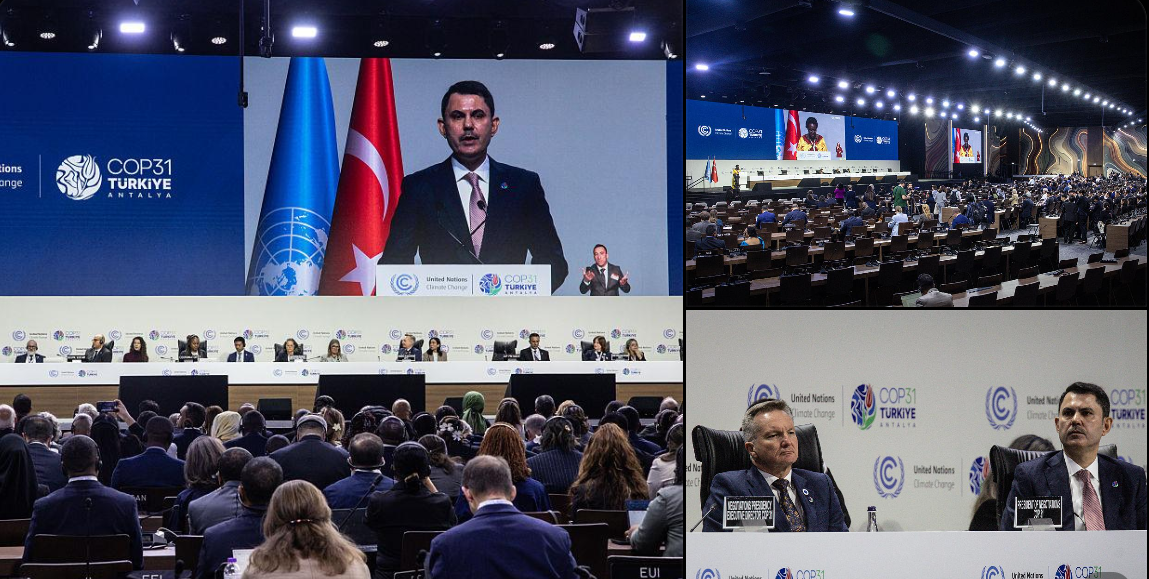
The final hours of COP31 are becoming a high-stakes test of climate diplomacy. The COP31 Presidency has convened ministers through Türkiye’s Divan tradition of deliberation to push for common ground, while a new electrification delivery package is putting grid investment, renewable energy, transport and industry at the centre of the implementation debate.
The latest developments point to a growing push to convert climate promises into infrastructure and investment but the central question remains whether the emerging political agreement will match these announcements with the finance, equity and implementation commitments demanded by vulnerable countries.
This briefing incorporates the official media statements you supplied today, including the new draft announcement, Simon Stiell’s remarks, electrification package figures, and the COP31 Presidency’s final-stage consultations.
BREAKING DEVELOPMENT 1: FOSSIL-FUEL LANGUAGE DISAPPEARS FROM THE NEW COP31 DRAFT
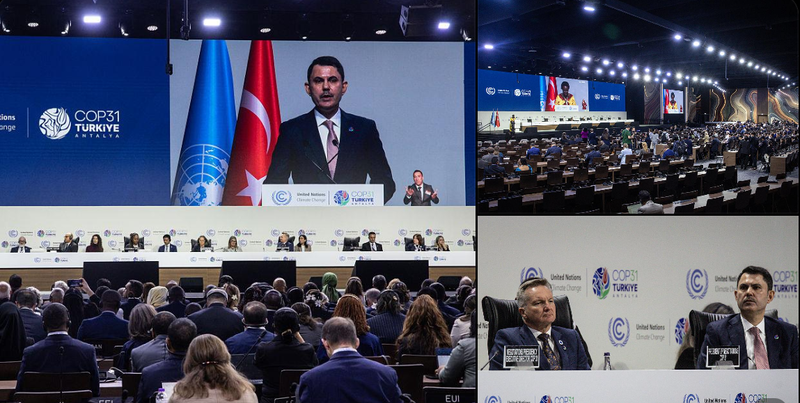
The most consequential development today is the revised COP31 cover decision, published on 19 November at 14:10. The document has sharply reduced the political outcome text, with a substantial change to how the energy transition is framed.
The latest draft now emphasizes:
- A transition towards low greenhouse-gas emissions and climate-resilient development.
- A global effort to increase electricity’s share of final energy consumption to 35% by 2035.
- Accelerating renewables, grid expansion, energy storage, efficiency and electricity access.
- Continued recognition of 1.5°C and the need for deep, rapid and sustained emissions reductions.
But the revised text removes explicit references to fossil fuels and to transitioning away from them.
Reuters confirms that the revised draft removes the explicit fossil-fuel language that appeared in the earlier version. The Guardian’s analysis reports that the new text has fallen from 144 paragraphs to 80, with the earlier phaseout language replaced by weaker transition language. Reuters+1
The political significance
The removal is not a minor editorial change. It shifts the final political text away from explicitly naming the principal sources of fossil-fuel emissions, even while retaining language on emissions reductions, low-emission development and clean-energy transition.
The 35% electrification target remains, but is presented as a nationally determined option rather than a binding obligation.
The accountability test: Can governments claim a credible climate implementation agreement while avoiding explicit language on the fuels driving the climate crisis?
BREAKING DEVELOPMENT 2, THE DIVAN: A LAST-DITCH DIPLOMATIC PUSH FOR CONSENSUS
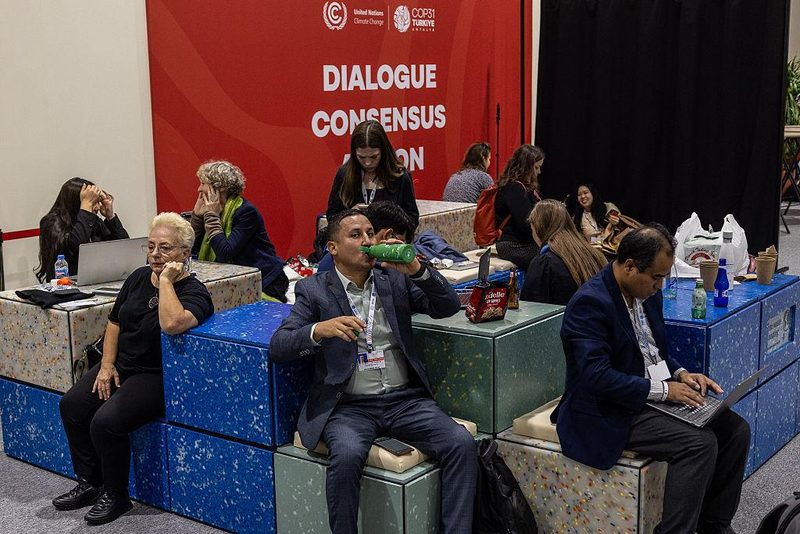
The COP31 Presidency has drawn on Türkiye’s centuries-old Divan tradition—a council for collective deliberation—to bring ministers and negotiating representatives into a shared conversation at a critical stage.
The Presidency describes the gathering as an informal, Party-driven discussion designed to identify areas of convergence, consider difficult political choices and help assemble a balanced final agreement.
It was open to ministerial-level Parties, negotiating group chairs and observer constituencies. Its purpose was to move beyond simply repeating national positions and to explore where compromise could be possible.
Murat Kurum, COP31 President:
“What we need at this stage is not so much to reiterate our respective positions, but rather to identify where we can move forward together.”
He urged participants to listen to each other, broaden common ground and turn possibilities into concrete outcomes.
Chris Bowen, COP31 President of Negotiations:
“This is a chance for the world to show we can work together on climate change and deliver on the real economic and energy pressures people are facing.”
He called for an ambitious, balanced and practical message to the world.
Journalistic analysis: The Divan is a political process, not an agreement. Its success must be measured by what appears in the final text—not by the symbolism, the atmosphere or the fact that ministers met.
The Presidency’s strategy is to consolidate technical negotiations, ministerial consultations and cross-cutting discussions into a consensus package. The remaining time is extremely short.
BREAKING DEVELOPMENT 3 ELECTRIFICATION: $156 BILLION IN ANNUAL INVESTMENT PLANS, 21,000 KM OF NEW GRIDS
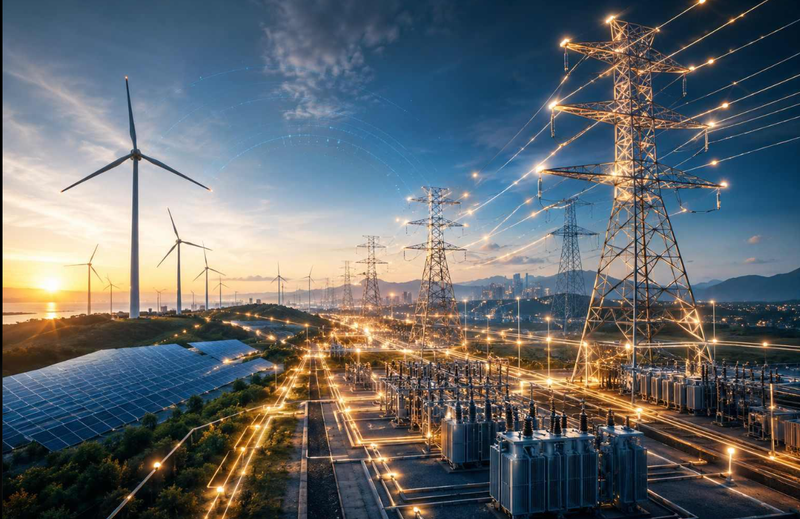
UN Climate Chief Simon Stiell today described electrification as a major opportunity to reduce emissions, improve energy affordability, expand access and improve public health.
Simon Stiell UN Climate Change Executive Secretary
“Today is a lightbulb moment for our global climate push.”
On electrification and real-world climate action, 19 November.
The newly launched COP31 Global Climate Action Agenda Electrification Delivery Package brings together activities reported by governments, businesses, cities and international initiatives.
$156B
Annual investment plansGrids, renewables and storage by UNEZA members
21,000+ km
Grid deployed in 2025Reported by Utilities for Net Zero Alliance members
13 corridors
Zero-emission freightAcross six continents, more than 29,000 km of roads
2,200 buses
Electric buses plannedSix cities announced planned additions for 2027
The UNFCCC says the package includes activities involving more than 150 countries plus the European Union, 37 cities and more than 260 businesses. The participating companies collectively report annual revenues exceeding US$4 trillion.
The package covers power, grids, transport, buildings, industry, electricity access, financing and storage.
Additional commitments and announcements
- AMPLIFi: Now operational with its first projects and a UK contribution of £400 million, aiming to mobilise up to US$5 billion for clean power, grids, storage and electrification in developing economies.
- SIDS renewable energy: Small Island Developing States report 11.2 GW of renewable capacity in 2025 and announce a collective 30 GW target for 2035.
- Electric freight: Thirteen zero-emission freight corridors are under development across six continents.
- Industry: UNIDO launched the Global Green Industrialization Agenda, intended to coordinate investment, technology, skills and policy for cleaner industrial development.
Important distinction for reporting: The package consolidates existing achievements, previously announced commitments, new targets, investment plans and initiatives. It is not US$156 billion of new COP31 cash pledged today. UNEZA’s figure is a combined annual investment plan, not necessarily disbursed finance, and the UNFCCC explicitly says the package does not represent everything needed for the Paris targets.
Simon Stiell’s strongest quote today
“Today is a lightbulb moment for our global climate push.”
He said electrification can bring lower energy costs, cleaner air, better health, improved efficiency and help address energy-access injustice but called for the momentum to reach every country.
Test this optimism against reality. More than 600 million people globally still lack electricity, while many communities remain dependent on costly, unreliable or polluting energy systems. Investment announcements are not equivalent to household access.
BREAKING DEVELOPMENT 4 ADAPTATION FINANCE: THE NEW DRAFT REPLACES A FIXED $120 BILLION PROPOSAL WITH A FINANCIAL PATHWAY DEBATE
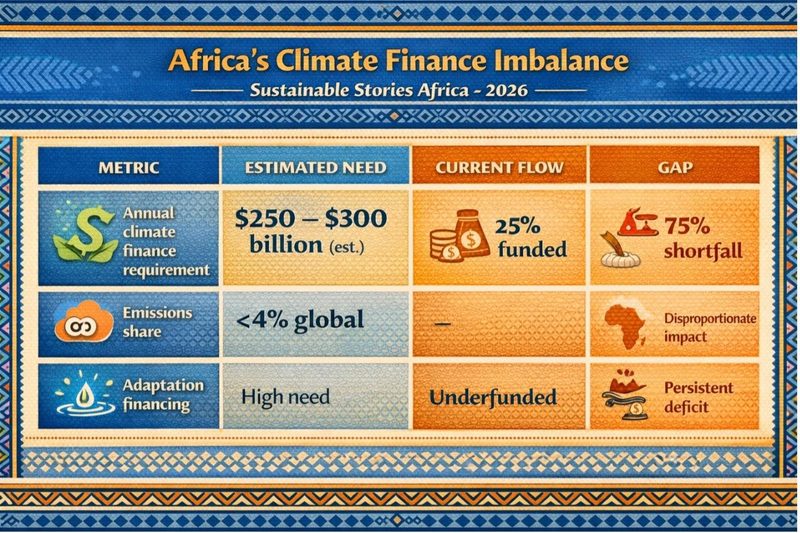
The new draft cover decision contains a substantial adaptation-finance section. It underscores the call to at least triple adaptation finance by 2035, but it does not resolve the critical questions of baseline, source, delivery and access.
The draft:
- Calls for scaled-up, predictable, public, grant-based and highly concessional adaptation finance.
- Recognises developing countries’ constraints, including high cost of capital, limited fiscal space, unsustainable debt and complicated access requirements.
- Proposes a technical report on possible baselines for measuring the tripling of adaptation finance.
- Calls for discussion of an implementation pathway to triple adaptation finance.
- Proposes launching the Antalya-to-Addis Ababa Roadmap on Adaptation and Resilience Finance, under the COP31 and COP32 Presidencies, to identify predictable and scaled-up financing sources, including for responding to loss and damage.
The roadmap proposal would produce a report for consideration in 2027. UNFCCC
A potential bridge from Antalya to Addis Ababa
COP31, Türkiye → COP32, Ethiopia
The proposed roadmap could make the handover between the two presidencies more than a symbolic change of venue—potentially turning adaptation finance into a central agenda for the next climate summit.
Why this matters for Africa
Africa’s adaptation needs are immense, yet its governments face borrowing costs, debt burdens, limited fiscal space and barriers to accessing climate funds.
If the roadmap becomes part of the final agreement, Ethiopia will inherit an opportunity and responsibility to ensure the COP32 process examines finance that can actually reach countries and communities.
WHAT THIS MEANS FOR AFRICA AND ETHIOPIA’S COP32 MOMENT
he developments at COP31 reveal two competing realities.
On one side, governments, businesses and international institutions are expanding grids, investing in renewables, electrifying transport and developing climate-finance mechanisms.
On the other, the new political draft is retreating from explicit fossil-fuel language at precisely the moment climate scientists and vulnerable countries are demanding stronger action.
For Africa, the contradiction is especially important:
- Africa needs electrification, industrialisation and energy access.
- Africa needs affordable financing, grid infrastructure and reliable energy.
- Africa needs climate adaptation for agriculture, water, health and communities.
- But development must not lock the continent into new long-term fossil-fuel dependence.
- Climate finance must not become another mechanism for increasing unsustainable debt.
Ethiopia’s reporting opportunity
Ethiopia can use the emerging COP31 electrification debate to prepare a stronger COP32 agenda around:
- Energy access: Who remains without reliable electricity, and how quickly can they be connected?
- Electricity infrastructure: What investment is needed in grids, storage, distribution and rural access?
- Adaptation finance: What financing can support drought resilience, water systems, food security and communities?
- Nature and carbon removal: What safeguards will protect ecosystems and communities?
- Regional climate cooperation: How can East African countries strengthen shared energy, water, early-warning and climate-resilience systems?
Ethiopia’s COP32 hosting opportunity is not simply to host another conference. It is to position Addis Ababa as the place where unresolved COP31 implementation and finance questions are pursued with measurable outcomes.
Murat Kurum COP31 President
“What we need at this stage is not so much to reiterate our respective positions, but rather to identify where we can move forward together.”
On the Presidency’s Divan process.
Chris Bowen COP31 President of Negotiations
“Now we need to build on common ground and deliver an ambitious, balanced and practical message to the world.”
On the final push for agreement.
Simon Stiell UN Climate Change Executive Secretary
“Vulnerable developing countries need affordable finance and technology.”
On the requirements for a fair and accelerated climate transition.
COP31 is approaching its decisive moment and the gap between climate ambition and political compromise is becoming increasingly visible.
The new electrification package offers a tangible picture of progress: grids, investments, freight corridors, renewable energy, industry and transport. But the revised draft cover decision raises a serious concern for climate accountability by removing explicit fossil-fuel transition language while retaining a voluntary electrification target.
The Divan may help bridge divisions. The adaptation-finance roadmap may create a path from Antalya to Addis Ababa. The electrification package may mobilise investment.
But none of these is the final measure of success.
The test is whether COP31 leaves behind stronger commitments, financing that can be accessed, and implementation that communities can see and feel or whether its most difficult decisions are simply passed to Ethiopia and COP32.
This story was produced as part of the COP31 Climate Change Media Partnership, a journalism fellowship organized by Internews’ Earth Journalism Network, Informed Earth and the Stanley Center for Peace and Security.
This story was produced as part of the COP31 Climate Change Media Partnership, a fellowship for journalists covering the UN climate talks.








