Horn Center for Democracy and the Transitional Justice Consortium-Ethiopia works STRENGTHEN MEDIA CAPACITY FOR TRUTH AND ACCOUNTABILITY
Horn Center for Democracy and the Transitional Justice Consortium-Ethiopia train Transitional Justice Focal Journalists as Ethiopia confronts the challenge of truth, accountability, reconciliation and public trust
ADDIS ABABA, ETHIOPIA | November 18, 2026
As Ethiopia seeks to confront painful chapters of its history, a two-day media training in Addis Ababa has placed journalists at the centre of an increasingly consequential national conversation: how can a country pursue truth, justice and reconciliation when its past remains contested, its present is complicated by conflict, and public trust in institutions is an essential condition for progress?
Ethiopia’s transitional justice ambitions are entering a critical phase in which the power of public information, independent journalism and responsible storytelling cannot be underestimated. Behind the language of reconciliation, institutional reform and accountability lies a much more difficult national undertaking: acknowledging victims’ experiences, establishing the truth about past violations, addressing grievances and creating conditions in which communities can rebuild relationships without suppressing historical realities.
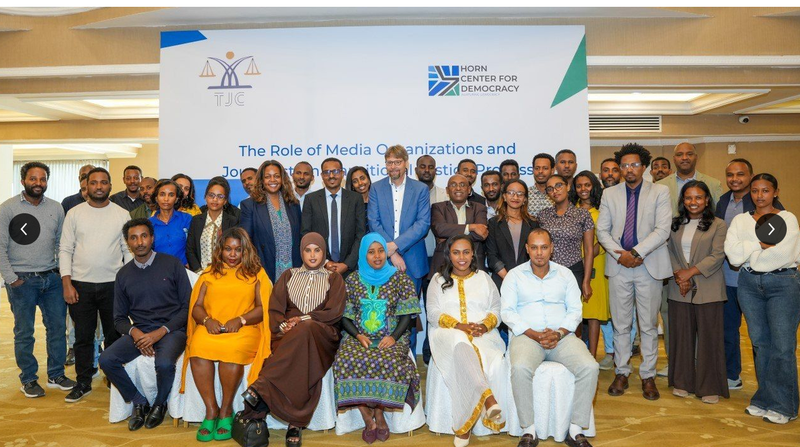
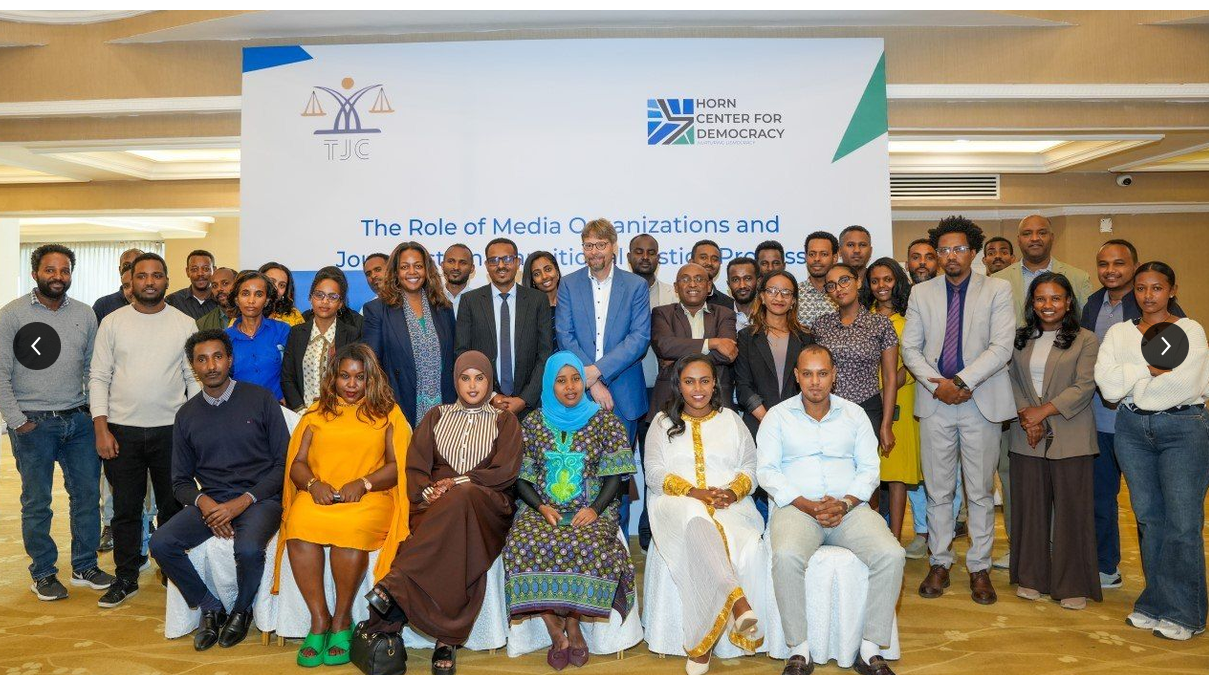
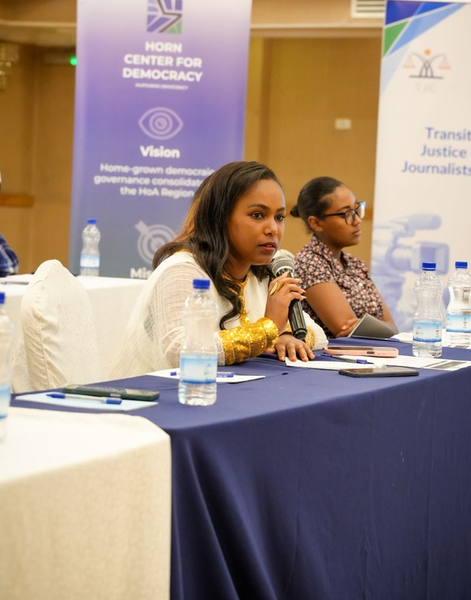
It is against this complex backdrop that the Horn Center for Democracy (HCD), in partnership with the Transitional Justice Consortium-Ethiopia (TJC-E), organized a two-day capacity-building training entitled “The Role of Media Organizations and Journalists in the Transitional Justice Process” in Addis Ababa on November 12–13, 2026.
The initiative brought together media professionals designated as Transitional Justice Focal Journalists (TJFJs), with the objective of strengthening their understanding of transitional justice and equipping them with the knowledge and practical skills necessary to report on the process accurately, ethically, impartially and with sensitivity to the experiences of victims and affected communities.
Although presented as a professional capacity-building exercise, the training addresses a much broader question: what role should journalism play in a country attempting to confront historical injustices, navigate contemporary political and social divisions, and build a more accountable future?
For Ethiopia, this question has profound implications. The success of transitional justice cannot be measured solely by the adoption of policies, the establishment of commissions or the announcement of institutional reforms. It must also be assessed through public participation, access to credible information, the recognition of victims’ experiences and the extent to which citizens believe that the process is inclusive, transparent and capable of delivering meaningful outcomes.
As Ethiopia confronts the complicated task of addressing historical injustices, human rights violations and the consequences of conflict, journalists are being called upon to play a more consequential role in shaping public understanding, documenting victims’ experiences and holding institutions accountable.
This responsibility was at the centre of a two-day training organized by the Horn Center for Democracy (HCD), in partnership with the Transitional Justice Consortium-Ethiopia (TJC-E), on November 12–13, 2026, in Addis Ababa.
The training, entitled “The Role of Media Organizations and Journalists in the Transitional Justice Process,” brought together media professionals designated as Transitional Justice Focal Journalists (TJFJs), with the objective of strengthening their capacity to report on transitional justice accurately, ethically, impartially and with sensitivity.
Opening the event, Frew Demeke, Executive Director of the Horn Center for Democracy, emphasized the critical responsibility of media organizations and journalists in Ethiopia’s transitional justice process.
Demeke highlighted the need for responsible journalism that promotes accuracy, impartiality and sensitivity when reporting on issues involving victims, historical grievances and conflict-related experiences.
His message raises a fundamental question for Ethiopian journalism: Can the media help build public confidence in a transitional justice process while independently questioning institutions, investigating implementation gaps and giving voice to communities whose experiences have historically received insufficient attention?
Frew Demeke: Journalism must become a bridge between justice and public understanding
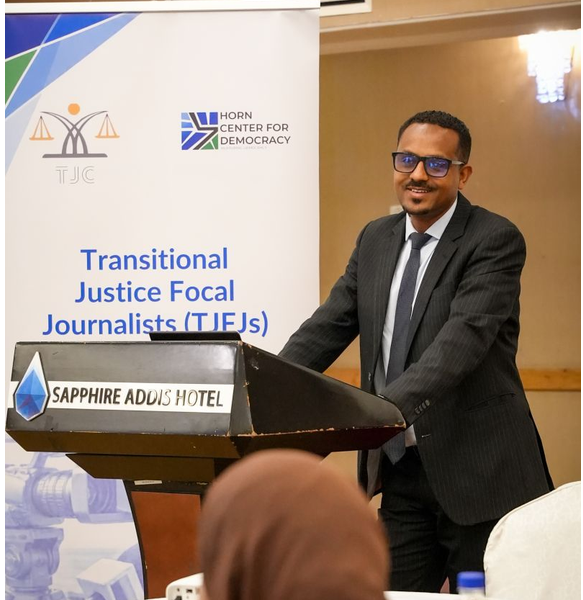
The opening remarks by HCD Executive Director Frew Demeke placed professional journalism within the broader national effort to address historical injustices and strengthen inclusive institutions.
The challenge, as reflected in the training’s objectives, is to move media coverage beyond official announcements and political statements towards evidence-based reporting that examines the experiences of victims and the practical implementation of transitional justice commitments.
A national process that needs more than political commitments
Ethiopia’s transitional justice initiative formally took shape in November 2022, when the government established a Transitional Justice Working Group of Experts under the Ministry of Justice. Following nationwide consultations and policy development, the Council of Ministers adopted the National Transitional Justice Policy on April 17, 2024.
The policy established a framework addressing several interconnected pillars: criminal accountability, truth-seeking, conditional amnesty, reparations and institutional reform. Its stated ambition is to address gross human rights violations and historical injustices while contributing to reconciliation, sustainable peace and the prevention of future violations.
The Ministry of Justice subsequently announced the completion of an implementation roadmap in August 2024, outlining measures intended to operationalize the policy and prepare the necessary institutional and legal frameworks.
However, the existence of a policy and implementation roadmap does not automatically translate into justice on the ground. The transition from political commitment to credible implementation requires independent institutions, clear legal procedures, adequate resources, meaningful participation by victims, protection for witnesses and transparent public communication.
A policy can establish the direction of a national process, but its credibility ultimately depends on what happens when victims seek answers, communities demand recognition and institutions are expected to demonstrate accountability.
This implementation challenge makes the media’s role particularly significant. Journalists are not simply expected to communicate official announcements. They must help citizens understand what the policy promises, what mechanisms are being established, what remains unresolved and whether the process is delivering measurable progress.
Opening the training, Frew Demeke, Executive Director of HCD, underscored the importance of media organizations and journalists in Ethiopia’s transitional justice process. He called for reporting that is accurate, responsible, impartial and sensitive to the experiences of people affected by conflict and human rights violations.
His message reflects a fundamental reality: transitional justice is not exclusively a legal or political undertaking. It is also a public information process that requires citizens to understand their rights, know the available mechanisms and participate meaningfully in decisions affecting their future.
The media can serve several interconnected functions.
First, journalism can make truth-seeking accessible. Through investigative reporting, interviews, documentary production and evidence-based storytelling, journalists can help bring victims’ experiences, historical records and previously overlooked grievances into public discussion.
Second, journalism can strengthen institutional accountability. Media organizations can monitor the activities of transitional justice institutions, investigate implementation delays, examine public expenditure and ask whether commitments made to victims are being fulfilled.
Third, the media can facilitate inclusive public participation. Women, children, internally displaced persons, persons with disabilities, rural communities, ethnic and religious minorities, and other marginalized groups need opportunities to have their experiences and concerns represented.
Fourth, journalism can challenge misinformation and inflammatory narratives. In a polarized information environment, unverified allegations, manipulated images, hate speech and politically motivated narratives can deepen divisions and undermine public confidence. Professional journalism can help distinguish verified evidence from speculation and propaganda.
Nevertheless, journalism must not become an instrument for promoting any political actor’s preferred interpretation of history. Its responsibility is to investigate, verify, question and report in the public interest.
The challenge is to maintain independence while contributing constructively to a process whose credibility depends on transparency and accountability.
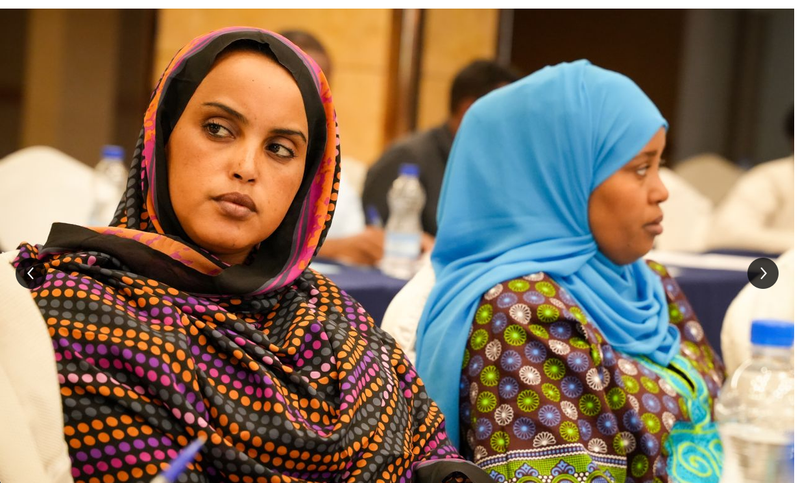
Inside the training room: what journalists were expected to learn
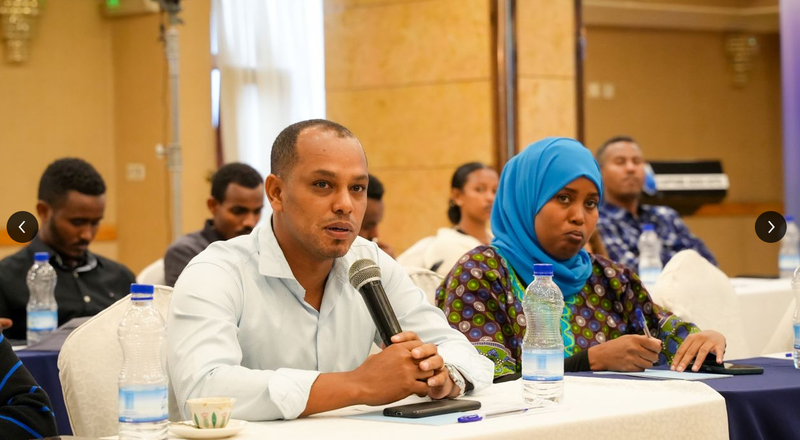
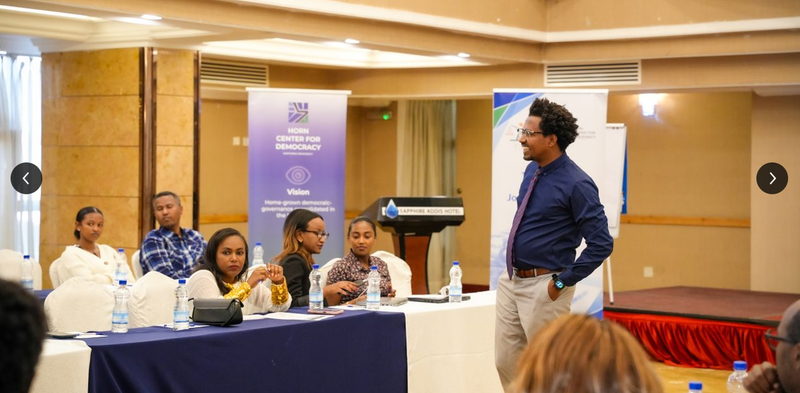
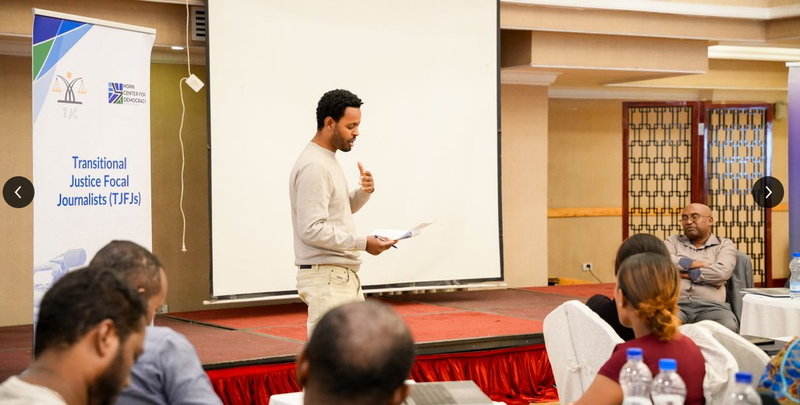
The November 12–13 training brought together designated Transitional Justice Focal Journalists for an intensive examination of the relationship between journalism and transitional justice.
The two-day programme covered the conceptual foundations, objectives and guiding principles of transitional justice from international, regional and Ethiopian perspectives.
Participants explored the role of media organizations across the major pillars of transitional justice, drawing on comparative experiences and lessons from other countries.
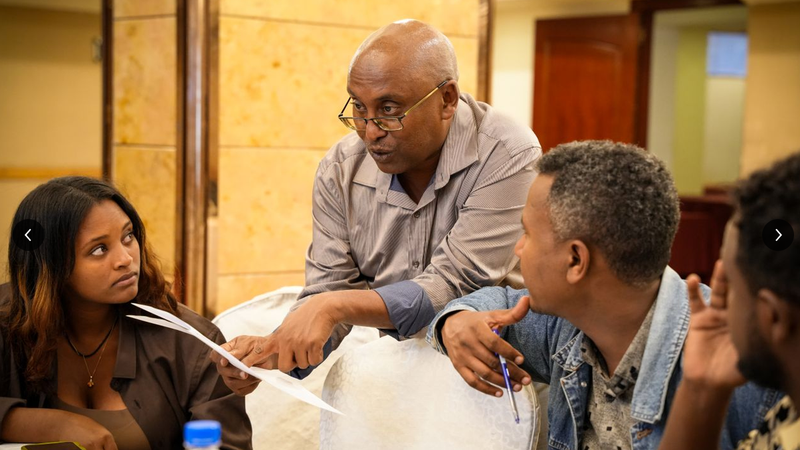
Importantly, the programme went beyond theoretical discussions. It incorporated practical sessions examining conflict dynamics, information ecosystems, the responsibilities of journalists and the professional challenges involved in covering sensitive transitional justice issues.
Particular attention was given to trauma-informed interviewing, ethical reporting and context-sensitive journalism.
These subjects are especially relevant because reporting on past atrocities, sexual violence, displacement, family separation, disappearances and other traumatic experiences requires more than conventional interviewing skills.
A journalist asking a survivor to recount a painful experience must understand the potential consequences of that interaction. The pursuit of a compelling story should never come at the expense of the dignity, safety or psychological well-being of the person being interviewed.
The training therefore raises an important professional consideration: How can journalists expose the truth without reproducing the suffering of those whose experiences they are attempting to document?
The answer requires informed consent, confidentiality, sensitivity, careful verification, appropriate language and an understanding of trauma.
Five pillars, five critical reporting responsibilities
Ethiopia’s National Transitional Justice Policy provides a framework around which the media can organize sustained public-interest reporting.
1. Criminal accountability: Who will answer for violations?
Accountability is among the most sensitive dimensions of transitional justice. It concerns the investigation and prosecution of individuals responsible for serious human rights violations and other crimes within the applicable legal framework.
Journalists must explain the difference between allegations, investigated evidence, formal charges and judicial findings.
They should examine whether accountability mechanisms are independent, impartial and accessible, while respecting the presumption of innocence and the rights of all parties.
The central reporting questions include: Are investigations credible? Are victims able to access justice? Are legal institutions sufficiently independent? Are the applicable procedures transparent?
2. Truth-seeking: Whose experiences will become part of national history?
Truth-seeking is not simply the collection of testimonies. It involves establishing credible accounts of violations, understanding their causes and consequences, identifying patterns and recognizing the experiences of affected communities.
Journalists can contribute by investigating historical records, interviewing survivors and witnesses, examining official documents and documenting experiences that might otherwise remain outside public attention.
However, truth-seeking must not become a competition over which community has suffered most. The responsibility of journalism is to document evidence, recognize individual experiences and provide historical context without minimizing the suffering of any group.
3. Reparations: What happens to victims after the headlines disappear?
For many victims, justice is not an abstract institutional concept. It is also about recovering from physical and psychological injuries, rebuilding livelihoods, restoring dignity and obtaining recognition for the harm suffered.
Ethiopia’s policy envisages measures including restitution, rehabilitation, public acknowledgment, official apologies, commemorations and other forms of reparation.
Journalists should therefore investigate whether victims are receiving meaningful support, whether vulnerable groups are included and whether reparations programmes address the actual needs of affected communities.
The media must continue reporting long after public attention has moved elsewhere.
4. Conditional amnesty: Where is the balance between reconciliation and accountability?
Amnesty is particularly controversial in transitional justice processes because it raises difficult questions about reconciliation, justice and the rights of victims.
Journalists need to explain the legal conditions governing any amnesty arrangements, the categories of violations involved and the protections afforded to victims.
They must avoid presenting amnesty as automatic forgiveness or as a substitute for accountability for serious crimes.
5. Institutional reform: How can history be prevented from repeating itself?
Institutional reform addresses the structural weaknesses and institutional practices that may have contributed to past violations.
This includes examining governance, the justice sector, security institutions and other public bodies.
For journalists, the responsibility is to investigate whether reforms are substantive or merely administrative, whether institutions are accountable to citizens and whether safeguards against future violations are being established.
Together, these pillars provide a framework for sustained reporting that connects historical experiences with contemporary institutional responsibilities.
The implementation gap: a difficult question the media cannot ignore
One of the most important issues facing Ethiopia’s transitional justice process is the gap between policy commitments and practical implementation.
A January 2026 policy brief by the American Friends Service Committee (AFSC), titled Reckoning with the Past in Ethiopia: Key Success Factors for Effective Transitional Justice Mechanisms Implementation, identified a slowdown in the process and raised concerns about delays in the preparation of enabling legislation and the suspension of planned public consultations.
The brief argued that sustained political commitment, independent implementing institutions, inclusivity, transparency, adequate resources and meaningful civil society participation are essential for the process to succeed.
It also highlighted concerns about the need to create an enabling environment for civic participation and to coordinate transitional justice with other national peacebuilding initiatives.
These findings make the role of the media particularly important. Journalists should examine the reasons behind implementation delays, seek explanations from responsible institutions and give affected communities opportunities to express their concerns.
This is not about undermining the transitional justice process. It is about ensuring that the process is subjected to the public scrutiny necessary for its credibility.
The existence of a national policy should not end public questioning. Rather, it should provide a foundation for more informed and consistent scrutiny.
The human dimension: victims must not become instruments of storytelling
Perhaps the most consequential component of the training was its emphasis on trauma-informed journalism.
In transitional justice reporting, journalists frequently encounter people whose experiences involve extreme suffering, loss, fear and uncertainty. Some may be willing to speak publicly; others may fear retaliation, stigmatization or renewed psychological distress.
The professional responsibility of a journalist is to recognize that a victim is a human being with rights, agency and dignity, not simply a source of dramatic content.
Trauma-sensitive reporting should incorporate several safeguards:
- Informed consent: Interviewees should understand how their information, photographs and recordings may be used.
- Protection of identities: The identities of survivors and witnesses should be protected where disclosure could expose them to harm.
- Non-coercive interviewing: Journalists should never pressure individuals to recount traumatic experiences.
- Contextual accuracy: Individual testimonies should be carefully verified and presented without misleading generalizations.
- Gender sensitivity: Reporting on sexual and gender-based violence must avoid victim-blaming, stigmatization and unnecessary exposure.
- Psychological awareness: Journalists should recognize distress and avoid treating emotional suffering as a measure of the credibility of testimony.
The Ethiopian Human Rights Commission and the Office of the UN High Commissioner for Human Rights’ East Africa Regional Office have also emphasized meaningful participation by victims and vulnerable groups in the transitional justice process.
Their May 2025 consultation highlighted the need for participation that is transformative and responsive to victims’ lived experiences, including those of women, children, young people, older persons, persons with disabilities and internally displaced people.
Lessons from international experiences: Ethiopia does not have to start from zero
Transitional justice is not a uniquely Ethiopian undertaking. Different countries have adopted various approaches to addressing historical violations, rebuilding institutions and promoting reconciliation.
South Africa’s Truth and Reconciliation Commission demonstrated the importance of public testimony, historical documentation and national conversations about past abuses. However, its experience also illustrates the continuing debate over whether truth-telling and conditional amnesty adequately address victims’ demands for justice.
The Gambia offers another relevant example. Its Truth, Reconciliation and Reparations Commission created opportunities for survivors to testify publicly and contributed to documenting violations committed under the former government. Civil society organizations also played important roles in bringing gender-based violence into the transitional justice agenda.
In Sierra Leone, the Truth and Reconciliation Commission operated alongside a Special Court, demonstrating how truth-seeking and criminal accountability can complement one another, while also presenting coordination challenges.
These experiences offer important lessons, but they should not be copied mechanically. Ethiopia has its own political history, federal structure, cultural diversity, conflict dynamics and institutional realities.
The media should examine these international experiences critically, identifying what could be adapted, what might not work and what safeguards would be necessary in the Ethiopian context.
The information battlefield: misinformation, polarization and the responsibility of journalists
Transitional justice processes often unfold in environments where competing historical interpretations, political interests and community grievances influence public debate.
Ethiopia’s information ecosystem presents additional challenges. Social media platforms have accelerated the circulation of information, but they have also created opportunities for disinformation, manipulated content, inflammatory messaging and the rapid spread of unverified allegations.
In such an environment, a misleading report about an alleged perpetrator, a fabricated victim testimony or an inaccurate account of a historical event can have serious consequences.
Journalists must therefore strengthen their capacity in fact-checking, digital verification, source protection and responsible handling of user-generated content.
Media organizations should also establish clear editorial procedures for reporting on sensitive issues, including independent verification, corrections, right of reply and protection of confidential sources.
A critical distinction must be maintained: impartial journalism does not mean treating verified evidence and unsupported claims as equally credible. It means applying consistent standards of evidence and fairness regardless of the identity of the individuals or institutions involved.
The significance of Transitional Justice Focal Journalists
The designation of Transitional Justice Focal Journalists represents an opportunity to build specialized professional capacity within Ethiopian media organizations.
However, the value of this initiative will depend on what happens after the training.
Focal journalists should not become merely contact persons who occasionally report on transitional justice events. Their role could evolve into a sustained professional network capable of producing investigative reports, explanatory journalism, documentaries, multimedia stories and community-focused reporting.
To make this possible, media organizations and their partners should consider:
- Developing a continuing professional development programme for transitional justice journalists.
- Establishing a collaborative network for sharing verified information and professional resources.
- Supporting investigative journalism on accountability, institutional reform and reparations.
- Developing multilingual reporting resources to improve access to information across Ethiopia’s diverse communities.
- Establishing safety protocols for journalists covering conflict-related violations and sensitive testimonies.
- Promoting collaboration between journalists, legal experts, human rights organizations, researchers and civil society groups.
- Monitoring the implementation of the national policy through regular, evidence-based media coverage.
The initiative could also benefit from a publicly accessible reporting tracker documenting progress, institutional commitments, public consultations and unresolved implementation questions.
Such a mechanism would transform media engagement from occasional event coverage into continuous public-interest journalism.
Funding, partnerships and institutional responsibility
The two-day training was funded by the German Government and supported by the Deutsche Gesellschaft für Internationale Zusammenarbeit (GIZ) GmbH under the Building Inclusive Institutions for Resilience, Reconciliation and Reforms (BIRRR) project in Ethiopia.
The partnership between the Horn Center for Democracy and the Transitional Justice Consortium-Ethiopia demonstrates the importance of cooperation between organizations working to strengthen democratic institutions, professional journalism and public understanding of transitional justice.
The support of international development partners can contribute to professional capacity-building, technical expertise and institutional development.
Nevertheless, the long-term sustainability of the initiative will require continued commitment from Ethiopian media organizations, professional associations, civil society organizations, academic institutions and the relevant public institutions.
Media independence must remain central. External financial and technical support should strengthen professional journalism rather than compromise editorial autonomy.
The ultimate measure of the initiative should be its contribution to a more informed public, stronger journalism and meaningful participation in the transitional justice process.
IZ and German Government support: Building inclusive institutions through media engagement
The training was funded by the German Government and supported by the Deutsche Gesellschaft für Internationale Zusammenarbeit (GIZ) GmbH under the Building Inclusive Institutions for Resilience, Reconciliation and Reforms (BIRRR) project in Ethiopia.
The support places the initiative within a broader institutional-development agenda concerned with resilience, reconciliation and reform.
Media engagement is particularly relevant to these objectives because institutional reform requires more than the establishment of formal structures. It also depends on public awareness, transparency, citizen participation and the ability of independent media to examine how institutions exercise their responsibilities.
The involvement of development partners in supporting professional journalism capacity-building provides an opportunity to strengthen the technical knowledge and reporting skills needed to cover transitional justice.
However, the long-term sustainability of such initiatives will depend on continued professional development, editorial independence, access to information and the ability of Ethiopian media organizations to maintain consistent coverage.
The voices that must not be missing: Victims, survivors and affected communities
While institutional representatives and media professionals are central to the transitional justice debate, the experiences of victims and affected communities must remain at its heart.
Journalists must ask whose stories are being documented, whose voices remain unheard and whether vulnerable groups have meaningful opportunities to participate.
A transitional justice process that discusses victims without listening to them risks reducing human suffering to institutional language and administrative procedures.
This is why trauma-informed interviewing was an important component of the November training.
The responsibility of journalists is not simply to obtain emotional testimonies. It is to create conditions in which people can share their experiences voluntarily, safely and with dignity.
“Victims should never be treated as instruments for producing dramatic headlines. Their experiences deserve dignity, protection and meaningful recognition. Responsible journalism must tell their stories without exposing them to further harm.”
THE FUTURE OF TRANSITIONAL JUSTICE WILL ALSO BE WRITTEN BY JOURNALISTS
Ethiopia’s transitional justice process presents a historic opportunity to confront difficult questions about the country’s past, address the consequences of human rights violations and establish stronger foundations for justice and reconciliation.
But such an undertaking cannot succeed through government policy documents, institutional announcements or international partnerships alone. It requires public confidence, meaningful participation, credible evidence, independent institutions and a sustained commitment to addressing victims’ concerns.
The two-day training organized by the Horn Center for Democracy and the Transitional Justice Consortium-Ethiopia is therefore significant not merely as a professional development activity, but as an opportunity to strengthen the media’s contribution to a broader national process.
For Frew Demeke and HCD, the emphasis on accurate, impartial and trauma-sensitive reporting highlights the responsibilities that accompany media engagement. For the participating Transitional Justice Focal Journalists, the challenge is to translate the knowledge acquired into consistent, independent and impactful journalism.
Ultimately, journalists cannot replace courts, truth commissions or reparations institutions. Nor should they become advocates for predetermined political narratives. Their responsibility is different, but indispensable: to investigate, explain, question, document and ensure that public-interest information remains accessible.
A survivor’s testimony should not disappear after a news cycle. An institutional commitment should not escape scrutiny after a public announcement. A promise of accountability should be followed by evidence of implementation.
The central question is no longer simply whether Ethiopia has adopted a transitional justice policy. It is whether the country can translate that policy into a process that victims trust, communities recognize as inclusive and institutions demonstrate through concrete action.
And in that journey, journalism has a responsibility that extends beyond reporting the process. It must help ensure that the pursuit of truth is not silenced, that victims are not forgotten and that accountability remains a matter of public interest.
Because without credible information, meaningful public participation becomes difficult. Without independent scrutiny, accountability becomes harder to establish. And without listening to those who have suffered, reconciliation risks becoming a promise without a human foundation.