Benishangule Gumuze/ Bahir Dar/Addis Ababa – September 2025
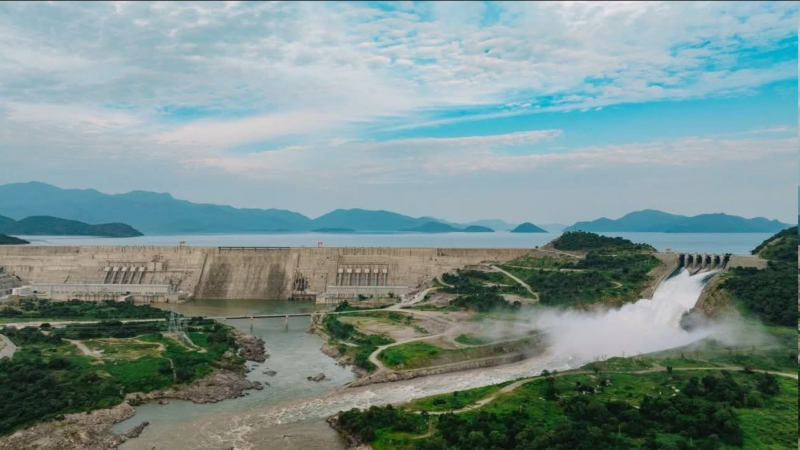
After 14 years of sweat, sacrifice, and high-stakes negotiations, Ethiopia has flipped the switch on Africa’s most ambitious hydropower project: The Great Ethiopian Renaissance Dam (GERD).
From its remote home in the Benishangul-Gumuz region, just 30 kilometers from the Sudanese border, the mega-dam now stands not only as a wall of concrete holding back the Blue Nile—but as a symbol of a nation’s defiance, unity, and unrelenting ambition.
A Dream Carved in Concrete and Sacrifice
When the foundation stone was laid in March 2011 under the late Prime Minister Meles Zenawi, few imagined the project would become a 14-year saga of engineering triumph, political disputes, and citizen mobilization.
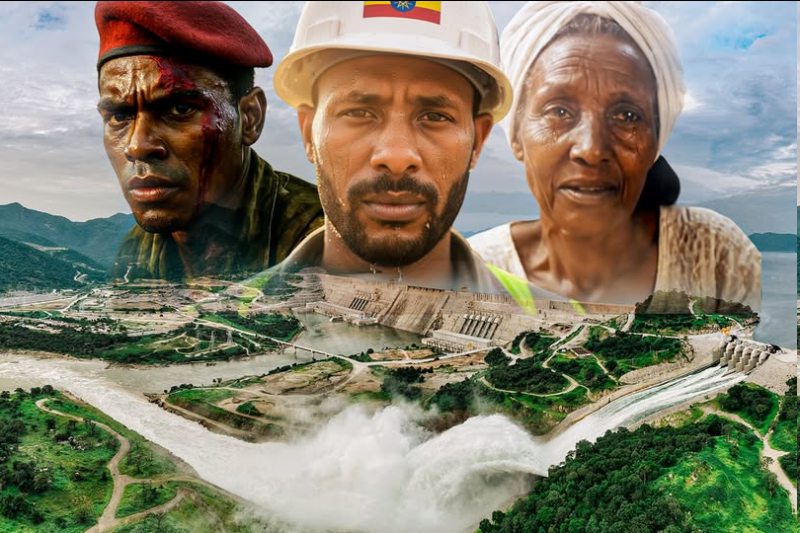
Ethiopians, rich and poor alike, donated wages, bought bonds, and contributed from diaspora pockets. “This is more than electricity—it is dignity. It is proof that we, too, can build our future without begging,” said Engineer Gideon Asfaw, a longtime member of Ethiopia’s dam negotiation team.
The price tag has ballooned from an initial estimate of 80 billion birr to over 233 billion birr (roughly $4 billion). Yet, remarkably, more than 91% was financed domestically, primarily through the Commercial Bank of Ethiopia and citizens’ contributions.
The Beast Unleashed: Power Numbers
The GERD is fitted with 13 massive turbines, with a combined generation capacity of 5,150 megawatts—enough to potentially double Ethiopia’s current electricity supply.
Behind its towering walls, the dam holds back an artificial reservoir capable of storing 74 billion cubic meters of water—a lake as vast as some countries.
“Every drop stored here rewrites the history of the Nile,” said Dr. Tadesse Tefera, a water resources scholar at Addis Ababa University.
A Nation Divided, Yet United in the Dam
Ethiopia’s politics remain fractured, but on GERD, consensus is rare and powerful. “Even those who disagree on everything else agree on this,” remarked Mekonnen Mihret, a historian from Bahir Dar.
Prime Minister Abiy Ahmed, presiding over the inauguration, described the GERD as “a monument to millions of Ethiopian hearts—built with money, sweat, and sacrifice.” His words drew thunderous applause:
“This dam is not just concrete and steel. It is Ethiopia’s roar to the world: we are no longer spectators of history—we are authors.”
Tensions Downstream: Egypt and Sudan’s Reluctant Neighbors
While Ethiopians celebrate, Egypt and Sudan remain deeply wary. Cairo has long warned that the GERD endangers its water security, with Egyptian officials lobbying the UN, Arab League, and even the Trump White House to intervene.
“Egypt lives on the Nile. Ethiopia must understand that,” said one Egyptian negotiator, speaking on condition of anonymity.
But Ethiopian engineers dismiss those claims. “We release water, we don’t drink it,” quipped Engineer Teshome Tadesse, smiling during an interview. “If anything, our regulation reduces floods downstream.”
Still, negotiations have dragged on for more than a decade without a final agreement. Diplomats describe the GERD as “Africa’s most powerful hydroelectric project—and its most bitter diplomatic fault line.”
Africa and the World Watching
The inauguration drew leaders from across Africa and the Caribbean. Kenyan President William Ruto hailed the GERD as “a towering symbol of African self-reliance.” Barbados Prime Minister Mia Mottley called it “proof that the South can lead the green energy future.”
The symbolism is powerful: Ethiopia, long associated with famine and aid dependency, now positions itself as a power exporter and a continental leader in renewable energy.
What Comes Next?
Despite the celebrations, challenges remain. Ethiopia must now expand its national grid to deliver electricity to the 45% of its population still living in darkness. Export ambitions—to Kenya, Djibouti, and Sudan—hinge on new transmission lines and stable politics.
But for many Ethiopians, the moment is already historic. “We gave our salaries, our gold, our patience,” said Meseret Alemu, a schoolteacher from Gondar. “Now, when I switch on the light, I will know it is our light—born from our sacrifice.”
Analysis: A Symbol, A Fault Line, A Future
The GERD is both a triumph and a test. Triumph, because Ethiopia built one of the largest dams in the world largely on its own. Test, because Nile geopolitics remain volatile.
For now, Ethiopia is basking in pride. But as one Addis Ababa analyst put it: “The real challenge begins after the lights turn on. Can this dam unite Ethiopians beyond politics, and can it power a region without sparking conflict?”
That question will define whether the GERD is remembered as Africa’s great leap—or its great gamble.