




Africa News Channel | COP31 Special Analysis | November 19, 2026
By Ayele Addis Ambelu
Antalya’s ocean agenda is gaining political recognition, but the real test is whether climate commitments become finance, science, restoration and protection for people living on the frontlines of a rapidly warming ocean.
The ocean is one of the planet’s most powerful climate regulators, yet at COP31 in Antalya, Türkiye, the question is increasingly not whether the world recognizes its importance, but whether governments will translate promises into financing, protection and measurable action before marine ecosystems and coastal communities are pushed deeper into crisis. From record ocean heat and rising seas to fragile coastlines, disappearing habitats and threatened livelihoods, the ocean is carrying a climate burden that is growing faster than the world’s political response.
The climate crisis is no longer a story confined to melting glaciers, burning forests or rising temperatures on land. Beneath the surface of the world’s oceans, enormous quantities of heat are accumulating, changing marine ecosystems, intensifying risks and reshaping the future of millions of people whose survival depends on coastal environments. The ocean has absorbed much of the excess heat trapped by greenhouse gases, helping shield humanity from even more severe atmospheric warming, but this extraordinary service to the planet is coming at an increasingly dangerous cost.
The World Meteorological Organization has warned that ocean heat content reached a record high in 2025, with preliminary observations suggesting continued increases in 2026. Global mean sea level is also reaching record territory, adding pressure to low-lying coastlines exposed to flooding, erosion, saltwater intrusion and intensifying coastal hazards. These are not distant scientific warnings. They are signals of a changing climate system with consequences for food, economies, infrastructure, fisheries and human security.
At COP31, the ocean is emerging as more than an environmental theme. It is a test of whether the international climate system can respond to scientific urgency with political courage, financial resources and accountability. The ocean is sending a warning. Antalya must now determine whether the world is listening.
Antalya’s ocean promise: ambition rising, accountability still missing
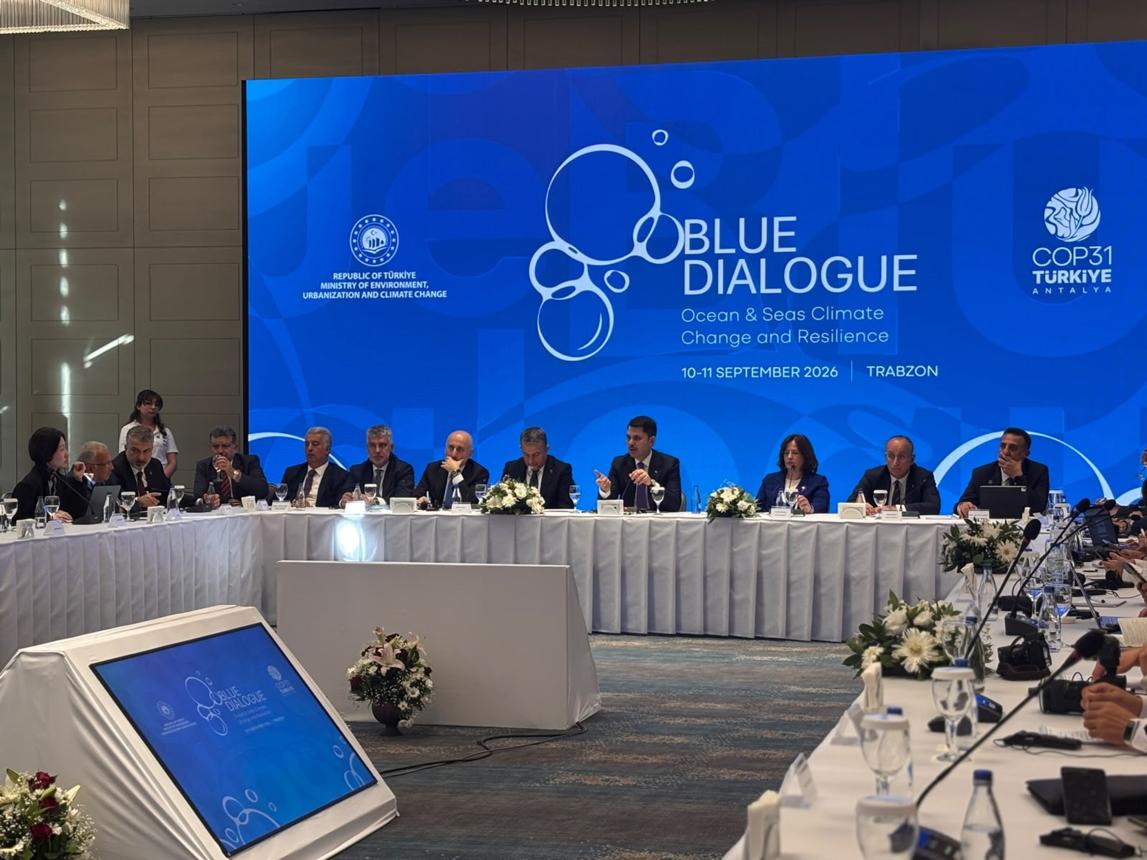
On November 17, during COP31’s Ocean, Seas, Nature and Land Use thematic day, Türkiye’s Presidency brought ocean protection more prominently into the climate conversation through the Antalya Ocean and Seas Compact and a regional and international cooperation initiative. The proposals seek to encourage countries to integrate ocean-related climate action into their national climate plans while strengthening cooperation around ecosystem restoration, resilience, early-warning systems, marine protection and blue finance.
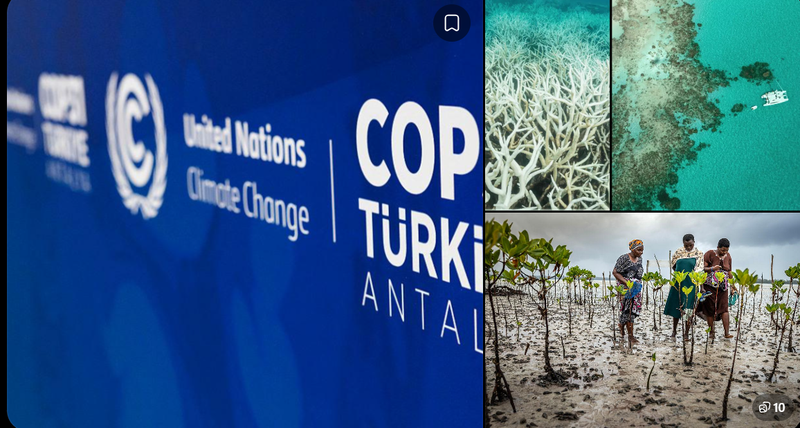
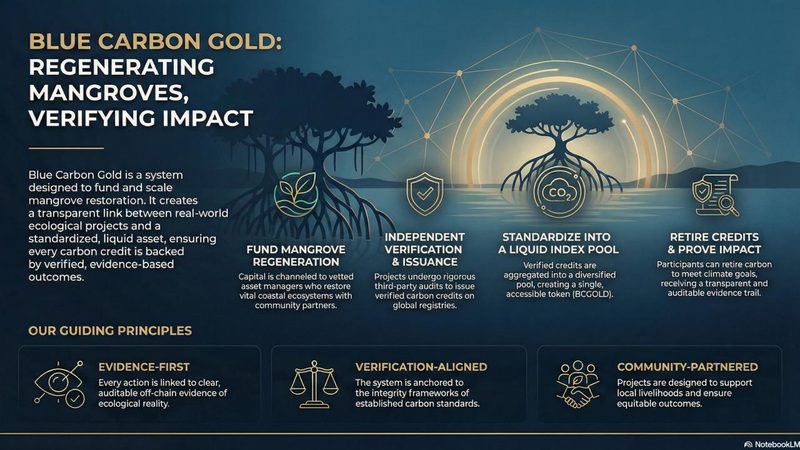
The initiative’s most striking ambition is to restore at least 20 percent of degraded priority coastline by 2035. It also envisions cleaner maritime energy, greener ports, climate-ready shipping and tourism, and stronger early-warning systems for vulnerable coastal communities. Mangroves, seagrass, wetlands and coral reefs are identified as vital ecosystems in the wider effort to strengthen marine and coastal resilience.
The ambition is significant, but the unanswered questions are equally consequential. Where is the baseline against which restoration will be measured? Which coastlines will be prioritized? How much funding is available, and how much of it is genuinely new? Who will be responsible for implementation, and how will governments know whether restored ecosystems are surviving, recovering and delivering real benefits to communities?
A target without transparent measurement risks becoming a headline that survives longer than the restoration it promises. The 2035 ambition could become a meaningful global benchmark, but only if it is supported by clear methodology, financing, monitoring, public reporting and accountability. The ocean does not need another declaration that disappears after the closing ceremony. It needs commitments that can be followed, tested and measured years after Antalya.
The ocean is heating and the consequences are cascading
The scientific warning is becoming increasingly difficult to ignore. As the ocean absorbs excess heat, marine heatwaves can stress ecosystems, disrupt species, damage coral reefs and alter the distribution of marine life. Rising sea levels compound the threats posed by coastal flooding, erosion and storm surges, while saltwater intrusion can place freshwater supplies and agricultural land under growing pressure. Changes in ocean conditions can also affect fisheries, tourism, food supply chains and the livelihoods of communities whose economies are inseparable from the sea.
The ocean’s role in regulating Earth’s climate makes these developments global in consequence. Its warming interacts with the atmosphere, weather systems, rainfall patterns, ecosystems and human settlements. Ocean observations are therefore not merely scientific instruments collecting data from remote waters. They are part of the infrastructure needed to anticipate danger, inform adaptation, protect communities and guide decisions before hazards become disasters.
The warning emerging from the COP31 climate discussions is that the world cannot afford to fly blind. Satellites, ocean buoys, ships, monitoring stations, scientific institutions and early-warning networks need sustained investment, reliable data and access to technology. Yet many vulnerable regions continue to face significant gaps in observation capacity and technical resources. The places most exposed to climate hazards are not always the places best equipped to forecast them, understand them or respond in time.
This is why the ocean agenda at Antalya must be judged not only by restoration pledges but also by whether countries strengthen the science and systems needed to protect people. Climate information that does not reach communities, observation systems that cannot be maintained, and warnings that arrive too late cannot deliver resilience.
The draft COP31 decision could give the ocean a stronger place in climate diplomacy
One of the potentially important developments at COP31 is the appearance of ocean-related language in the Presidency-led draft cover decision. The draft expresses concern about climate impacts on oceans, livelihoods and biodiversity, recognizes the consequences of ocean warming and sea-level rise, and acknowledges sustainable ocean-based action as part of climate adaptation, resilience and mitigation.
The text also recognizes the need for support for sustained global ocean observing and early-warning systems, enhanced access to ocean data and technologies, and capacity-building. The proposals could help strengthen the ocean’s place within the wider climate negotiations, particularly by connecting science, monitoring and implementation with national climate action.
The draft also points toward continued ocean and climate dialogue in future years and a multi-year approach intended to identify opportunities for ocean action across the UN climate process. Such continuity matters because the ocean cannot be protected through one thematic day, one conference or one declaration. Its protection requires long-term scientific cooperation, national policies, investment and monitoring that extend beyond the political calendar of COP meetings.
But draft language is not a final outcome. Its significance depends on what survives the negotiations, how commitments are interpreted, whether support is provided and whether implementation is followed. The difference between recognizing the need for ocean protection and delivering it will ultimately be measured outside the negotiating rooms.
The money question: restoration without financing is a promise without legs
Behind the ocean pledges lies a more difficult climate question: who will pay for the protection of ecosystems and the resilience of communities facing mounting climate risks? COP31’s ocean initiatives speak about partnerships, blue finance, investment and cooperation, but the global financing gap remains one of the most persistent obstacles to turning climate ambition into real-world action.
The problem is not simply the amount of money announced. It is whether financing is accessible, predictable, fair and capable of supporting long-term results. A loan is not the same as a grant, and an investment target is not the same as money disbursed. Funds announced for large infrastructure or commercially attractive projects may not automatically reach the local communities, public institutions or ecosystems facing the most urgent needs.
A coastal restoration project can plant trees and report hectares covered, but ecological recovery depends on more than planting. It requires protection, maintenance, local participation, scientific monitoring, the restoration of natural conditions and long-term stewardship. If financing ends before ecosystems become resilient, the project may deliver an impressive announcement without a lasting environmental result.
The broader climate-finance negotiations at COP31 have exposed similar tensions, with developing countries demanding more accessible adaptation finance, grants, predictable support and money that reaches vulnerable communities. The ocean agenda cannot escape that debate. Blue finance must be scrutinized for what it actually delivers, not simply for the size of its headline.
The critical question is whether COP31’s ocean initiatives will establish transparent financial pathways that allow journalists and the public to follow the money from announcement to approval, disbursement, implementation and verified environmental outcomes. Without that transparency, ocean finance risks becoming another vocabulary of ambition rather than an instrument of accountability.
Africa cannot be left on the edge of the ocean agenda
Africa’s ocean story is written across coastlines where fishing, food, trade, tourism, transport, settlements and livelihoods depend on marine and coastal ecosystems. From the Atlantic shores to the Indian Ocean and Red Sea corridors, coastal communities face a changing climate that threatens the natural systems and economic activities on which they rely.
Healthy coastal ecosystems can help reduce exposure to climate risks while supporting biodiversity and livelihoods. But degradation, pollution, unsustainable resource use, erosion and climate pressures can compound vulnerabilities. Communities already facing economic constraints may have limited resources to adapt, relocate, rebuild or diversify their livelihoods when climate hazards intensify.
The question for Africa is whether the renewed ocean attention at COP31 will bring more than international visibility. African coastal nations need scientific monitoring, effective early-warning systems, accessible finance, sustainable fisheries management, ecosystem restoration, climate-resilient infrastructure and meaningful community participation. They also need support that reaches local institutions and people, rather than stopping at international announcements or project approval stages.
The draft COP31 emphasis on ocean observation, data, technology and capacity-building could be particularly important for regions where scientific infrastructure remains limited. But these priorities will mean little if support is not sustained, if data remain inaccessible, or if the institutions responsible for implementation are unable to maintain the systems after projects end.
For African negotiators and coastal governments, the central challenge is to ensure that the ocean agenda is connected to climate justice and the wider development priorities of the continent. The ocean is a source of food, employment, economic opportunity and environmental protection. Its future cannot be separated from the future of people whose livelihoods are already exposed to the consequences of climate change.
Ethiopia’s Lake Tana and the Blue Nile: the climate story far from the coastline
Ethiopia has no coastline, but it is not disconnected from the ocean–climate story. The relationship is not direct marine exposure; it is the wider connection through climate, water systems, ecosystems, biodiversity, livelihoods and resilience. Lake Tana and the Blue Nile offer a powerful inland perspective on how climate pressures and environmental change affect communities and natural systems far beyond coastal boundaries.
Lake Tana is a freshwater ecosystem, not a marine environment. It is not directly affected by sea-level rise or ocean acidification in the same way as coastal habitats. Yet its watershed, wetlands, fisheries, biodiversity, water quality and surrounding livelihoods are part of a wider climate and hydrological system. Rainfall variability, drought, flooding, land use, sedimentation, agricultural runoff and development pressures can all be relevant to understanding the lake’s resilience and the people who depend on it.
This offers a distinctive reporting opportunity for Africa News Channel. While the global ocean story examines marine heat, coastal erosion, sea-level rise and ocean finance, the Ethiopian investigation can explore how climate resilience is experienced in inland freshwater systems and how the lessons of ecosystem protection, monitoring and investment connect to the broader global climate agenda.
The question is not whether Lake Tana is an ocean. It is how ecosystems and communities connected to water systems are responding to environmental pressures, what the scientific evidence shows, and whether protection and restoration efforts are adequately supported. The lake’s story can widen the climate conversation beyond the coast, showing that resilience is not defined by geography alone, but by the relationship between ecosystems, climate, livelihoods and the resources available to protect them.
The voices behind the ocean warning
COP31’s ocean agenda is also shaped by powerful political and scientific messages. Türkiye’s COP31 President Murat Kurum has emphasized the ocean’s central role in regulating climate, supporting livelihoods and sustaining communities, while acknowledging growing pressure from warming, acidification, sea-level rise and pollution.
United Nations Special Envoy for the Ocean Peter Thomson has repeatedly argued that climate action cannot be separated from the ocean, emphasizing the importance of accounting for ocean systems in global climate efforts. WMO leadership has likewise stressed the importance of sustained observations and reliable climate information in a world facing increasingly dangerous extremes.
Together, these messages expose the central challenge of Antalya. Political recognition, scientific understanding and practical implementation must converge. The ocean needs protection backed by institutions, data, financing and action that can be measured. A speech may capture the urgency, a scientific report may document the threat, and a political declaration may signal direction—but the result will be determined by what governments and institutions do next.
The accountability test: what happens after the cameras leave?
COP31’s ocean initiative should not be judged by how many leaders attend its launch, how many statements are issued or how many partnerships are announced. It should be judged by whether money is committed and disbursed, whether restoration is independently measured, whether ocean observation systems are sustained, whether communities participate in decisions, and whether ecosystems and livelihoods demonstrably improve.
The 2035 coastline restoration ambition will require a credible baseline, clear definitions of what restoration means, transparent reporting, responsible institutions and public access to progress. Ocean observation and early-warning initiatives will need reliable financing and sustained technical capacity. Communities should be able to see whether the projects intended to protect them are actually reducing risks and improving their resilience.
These questions are especially important because the Antalya Ocean and Seas Compact and its associated initiatives are voluntary rather than a new binding treaty. Voluntary cooperation can still mobilize resources, strengthen partnerships and accelerate implementation, but it must be transparent if it is to maintain public trust.
The world needs to know which initiatives are negotiated outcomes, which are Presidency announcements, which are partnerships, which are financial pledges, and which are already producing measurable results. Treating every announcement as an achievement risks obscuring the difference between ambition and delivery.
The ocean and climate justice: who carries the cost?
The ocean debate is inseparable from climate justice. Communities and countries that have contributed least to global greenhouse-gas emissions can face enormous costs from climate impacts. Coastal families may lose homes, livelihoods, fisheries, land, infrastructure and access to resources, while the finance and technology needed to adapt remain difficult to obtain.
For many vulnerable communities, climate protection is not an abstract policy debate. It is the question of whether they can continue living where they are, whether they can sustain their livelihoods, whether they can recover from disasters, and whether they have access to resources before the next climate shock arrives.
This is why finance is a question of responsibility as much as economics. Climate resilience must not become a privilege available only to countries and communities with the financial capacity to protect themselves. The ocean agenda must address not only ecosystem restoration but also equity, access, participation and the distribution of benefits.
As COP31 moves toward its closing days and COP32 approaches in Addis Ababa, Africa has an opportunity to connect ocean protection with wider priorities of adaptation finance, water security, climate-resilient livelihoods, early-warning systems, ecosystem restoration and development. Ethiopia’s incoming COP32 role also offers a chance to widen the conversation, bringing inland ecosystems, rivers, watersheds and freshwater resilience into climate diplomacy without confusing them with marine ecosystems.
The verdict: COP31 has recognized the ocean but recognition is not rescue
Antalya has elevated the ocean through its Ocean and Seas Compact, restoration ambition, regional cooperation initiative, ocean observation priorities and proposed language in the draft climate decision. The ocean is receiving greater political recognition within the climate conversation, and that matters.
But recognition alone cannot restore degraded coastlines, protect marine ecosystems, sustain fisheries, finance adaptation or shield vulnerable communities. A target without a baseline is difficult to verify. A promise without financing is difficult to implement. A scientific warning without observations and early-warning capacity cannot protect communities in time. And a climate initiative without accountability can disappear into the long history of promises made and results left unmeasured.
The 2035 restoration ambition could become an important benchmark if it is backed by transparent finance, scientific monitoring, public reporting and meaningful participation. The continued ocean and climate dialogue could provide institutional continuity if its findings influence national policies and real implementation. The draft cover decision could strengthen the ocean’s place in the climate process if its language survives and is supported by resources and action.
The world’s ocean is absorbing heat, changing and warning humanity. COP31 has heard that warning. Now the world must demonstrate that it is prepared to act on it.
This story was produced as part of the COP31 Climate Change Media Partnership, a journalism fellowship organized by Internews’ Earth Journalism Network, Informed Earth and the Stanley Center for Peace and Security.
This story was produced as part of the COP31 Climate Change Media Partnership, a fellowship for journalists covering the UN climate talks.








