Addis Ababa, Ethiopia – 9 September 2025
The Second Africa Climate Summit (ACS2) opened in Addis Ababa today with African leaders calling for a decisive shift from rhetoric to action. The tone was unapologetically assertive: Africa, they argued, is not merely a victim of climate change but a potential driver of solutions in the global climate economy.
Co-hosted by the Ethiopian government and the African Union Commission under the theme “Accelerating Global Climate Solutions: Financing for Africa’s Resilient and Green Development,” the summit brings together heads of state, ministers, and international partners. The gathering reflects both rising frustration over unmet climate finance pledges and growing confidence in Africa’s homegrown strategies.
Abiy Ahmed: From Survival to Leadership
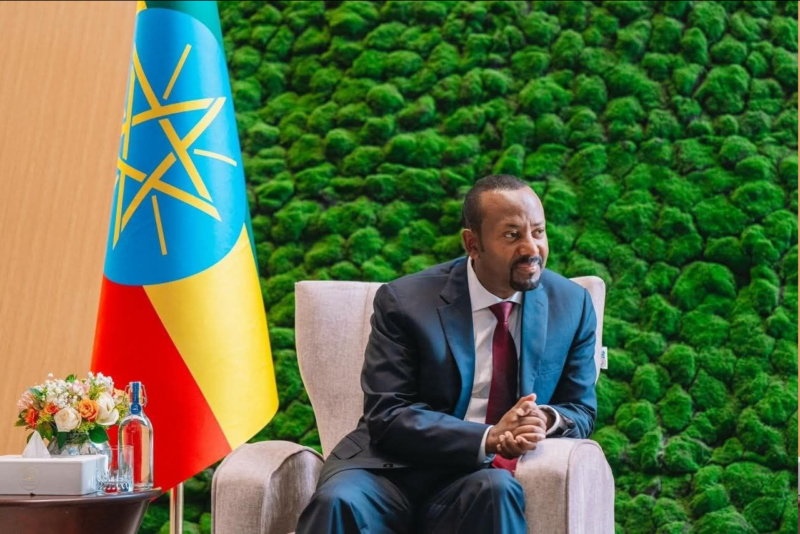
In his keynote, Ethiopian Prime Minister Abiy Ahmed sought to reframe Africa’s position in climate negotiations. Rejecting the language of dependency, he emphasized the continent’s assets: its youthful population, vast renewable energy potential, forests and wetlands that serve as global carbon sinks, and expansive arable land.
Ethiopia’s domestic initiatives—48 billion trees planted under the Green Legacy program, climate-resilient wheat production, and the near-completion of the Grand Ethiopian Renaissance Dam—were presented as proof of Africa’s capacity for transformative action.
“We are not here to negotiate our survival. We are here to design the world’s next climate economy,” Abiy declared, positioning Addis Ababa as a potential host for COP32 in 2027.
AU’s Mahmoud Ali Youssouf: Climate Justice and Finance Equity
The African Union Commission chairperson, Mahmoud Ali Youssouf, underscored the urgency of fair and predictable climate finance. His remarks echoed longstanding African frustrations: the mismatch between climate vulnerability and financing, the dominance of wealthy nations in carbon markets, and the stalled replenishment of the Green Climate Fund.
Youssouf went further, demanding a genuine fund for loss and damage and international oversight of carbon credits to prevent exploitation by polluting states. His framing was clear—Africa’s climate agenda must be about equity as much as innovation.
Ruto: Climate as Opportunity, Not Burden
Kenyan President William Ruto, who spearheaded the first Africa Climate Summit in Nairobi in 2023, praised Ethiopia for carrying forward the momentum. He reinforced the idea that climate action should be viewed as a driver of jobs and growth, not a constraint.
Yet his warning was sobering: “No nation can solve this crisis alone. Only bold, united, and sustained collaboration can avert climate catastrophe.” Ruto’s comments highlighted both the opportunities and the risks of Africa’s increasingly ambitious climate agenda.
African Climate Innovation Compact: From Ideas to Action
Perhaps the most concrete proposal came with the announcement of the African Climate Innovation Compact (ACIC), envisioned as a pan-African platform to generate 1,000 climate solutions by 2030. With a financing target of $50 billion annually, the initiative aims to link researchers, startups, and communities in fields ranging from renewable energy to resilient cities.
If realized, the Compact could signal a shift from Africa’s reliance on donor-driven projects to African-led, investment-driven climate innovation. But questions remain about financing mechanisms, governance, and political will.

Symbolism and Substance
The opening tree-planting ceremony at the Addis Ababa International Convention Center was laden with symbolism—African leaders collectively planting trees as a gesture of solidarity and commitment to restoration. Yet the challenge remains: will symbolism translate into systemic change?
The Bigger Picture
The Addis summit highlights a growing assertiveness in Africa’s climate diplomacy. By reframing itself as a hub of solutions—rather than a victim pleading for aid—Africa is trying to carve out a stronger negotiating position ahead of COP30 in Brazil and beyond.
Still, the path forward will depend on whether global partners respond with genuine investment and whether African states can overcome domestic challenges of governance, coordination, and implementation.
For now, the message from Addis Ababa is clear: Africa is no longer waiting to be saved—it is positioning itself as a cornerstone of the world’s climate future.