By Ayele Addis Ambelu (Investigative Stories)
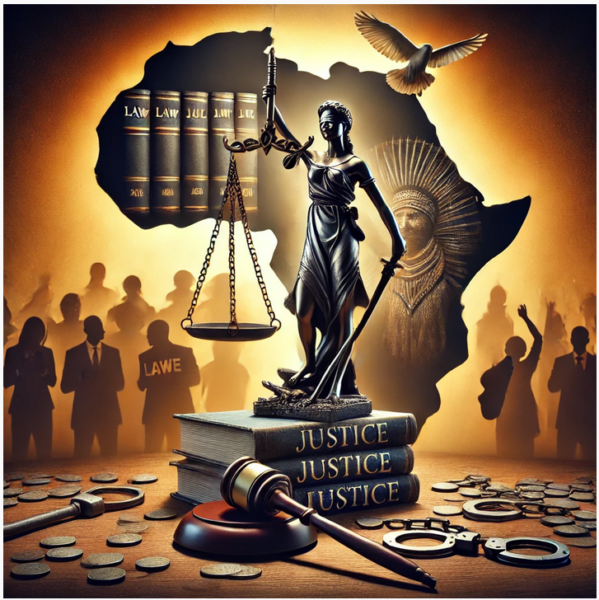
The African Human Rights Report 2024 extensively reviews the human rights landscape across the continent, shedding light on significant achievements, persistent challenges, and evolving legal frameworks. Published under the aegis of the African Court on Human and Peoples’ Rights, the African Commission on Human and Peoples’ Rights, and the African Committee of Experts on the Rights and Welfare of the Child, the Yearbook serves as a vital tool for human rights scholars, policymakers, and advocates.
This analysis seeks to unpack the key themes of the Yearbook, assess the effectiveness of Africa’s human rights institutions, and identify emerging threats and opportunities by examining its findings in detail, interviewing experts, and critically reviewing recent developments.
The African Human Rights System: Structural Challenges and Institutional Reforms
The African human rights system, anchored by the African Charter on Human and Peoples’ Rights, has seen notable progress in recent years. However, experts argue that systemic weaknesses continue to hinder its full potential. Dr. Solomon Ayele Dersso, former Chairperson of the African Commission on Human and Peoples’ Rights, notes that while the African Commission has been instrumental in setting human rights standards, its lack of enforcement mechanisms renders its decisions largely symbolic. “The Commission’s recommendations often lack the force of law, leading to selective compliance by states,” he explains.
The African Court on Human and Peoples’ Rights, operational since 2006, has similarly faced significant resistance from member states. While its mandate allows it to issue binding decisions, only a handful of African Union (AU) member states have ratified the declaration granting individuals and NGOs direct access to the Court. Legal scholar Dr. Fatsani Boco highlights that “the reluctance of states to recognize the Court’s jurisdiction stems from concerns over sovereignty and the fear of political repercussions”
Despite these challenges, recent rulings by the Court have reinforced its credibility. Cases involving the protection of indigenous land rights, media freedom, and gender-based violence have set legal precedents that could shape future human rights litigation in Africa
Pressing Human Rights Issues in Africa
1. Freedom of Expression and Civic Space
One of the most alarming trends highlighted in the Yearbook is the shrinking civic space across several African nations. Reports indicate an increasing crackdown on independent media, human rights organizations, and opposition voices. The widespread use of anti-terror laws to silence dissent has raised concerns among international watchdogs.
Dr. Tiseke Kasambala, a senior human rights researcher, notes that “the erosion of press freedom in countries such as Ethiopia, Tanzania, and Uganda signals a broader pattern of state-led suppression. Journalists and activists face arbitrary arrests, internet shutdowns, and even extrajudicial killings.”
The case of the Amhara region in Ethiopia, where independent media outlets have been systematically targeted, underscores the fragile state of press freedom in conflict zones. Media experts argue that unless AU mechanisms take a stronger stance on these violations, the situation is unlikely to improv.e
2. Gender-Based Violence and Women’s Rights
The Yearbook dedicates a significant section to gender-based violence (GBV), a crisis that remains widespread despite legal frameworks such as the Maputo Protocol. In the Democratic Republic of Congo (DRC), for instance, entrenched impunity for sexual violence has perpetuated a culture of abuse.
Women’s rights advocate, Dr. Grace Nyongesa, points out that “while African legal instruments are progressive on paper, the failure to implement protective laws at the national level keeps women vulnerable. In conflict zones, the situation is even more dire”
Recent court rulings, such as the African Court’s landmark decision in a case involving sexual violence survivors in Sudan, demonstrate the potential of regional mechanisms to drive accountability. However, enforcement remains a key barrier.
3. Climate Change and Environmental Rights
The yearbook also prominently themes the intersection of human rights and environmental justice. Climate change has exacerbated socio-economic inequalities across Africa, disproportionately affecting marginalized communities.
Environmental lawyer Prof. Mike Adebayo argues that “the right to a healthy environment is enshrined in the African Charter, yet industrial pollution, deforestation, and land degradation continue unchecked. Weak enforcement of environmental treaties is a major roadblock.”
The Sahel region, for example, has witnessed severe desertification, impacting livelihoods and fueling resource-based conflicts. The African Court’s recent ruling on indigenous land rights in Kenya sets an important precedent, affirming that environmental degradation is a human rights violation.
Path Forward: Strengthening the African Human Rights Framework
Experts agree that significant reforms are needed for Africa’s human rights institutions to be more effective. Key recommendations include:
- Expanding Jurisdiction of the African Court – Encouraging more AU member states to ratify the necessary declarations to allow individual access to the Court.
- Enhancing Compliance Mechanisms – Establishing stronger enforcement mechanisms to ensure that states implement rulings by the African Court and recommendations by the African Commission.
- Strengthening Civil Society Engagement – Protecting the role of human rights organizations in monitoring and reporting abuses.
- Integrating Human Rights into National Development Plans – Ensuring economic policies align with human rights principles.
The African Union’s 2024 theme, “Educate an African Fit for the 21st Century,” also presents an opportunity to embed human rights education in school curricula, fostering a culture of rights awareness from a young age
Conclusion
The African Human Rights Yearbook 2024 provides a sobering yet insightful reflection on the continent’s human rights trajectory. While significant progress has been made in legal frameworks and judicial rulings, persistent challenges demand urgent attention. With rising authoritarianism, environmental crises, and gender-based violence, the need for a robust and accountable human rights system has never been greater.
By strengthening its institutions and fostering a culture of human rights, Africa can chart a course toward a more just and equitable future. However, the onus remains on both regional bodies and national governments to translate legal commitments into tangible change.