





In a world riddled with escalating conflicts and waning trust in international interventions, Ethiopia emerges as an enduring symbol of resilience and commitment to global peacekeeping. A recent publication, Ethiopian Military in International Peace Operations, sheds light on the nation’s unparalleled contributions to international peace missions over the past seven decades, highlighting the unique doctrines and philosophies that underpin its success.
From the 1950s Korean War to present-day operations in Somalia and South Sudan, the Ethiopian National Defense Force (ENDF) has deployed over 168,000 troops in peace support operations (PSOs). Ethiopia’s peacekeeping legacy is a testament not only to its military prowess but also to its cultural and humanitarian ethos. This commitment has placed Ethiopia among the top troop-contributing countries for both United Nations (UN) and African Union (AU) peacekeeping missions.
A Legacy of Sacrifice
Ethiopia’s peacekeeping story began under Emperor Haile Selassie, who, in the 1950s, sent troops to Korea. The Kagnew battalion’s bravery during the Korean War earned global acclaim, and subsequent missions in Congo, Rwanda, Liberia, and Darfur further solidified Ethiopia’s reputation as a peacekeeping force. In Abyei, Ethiopia served as the sole contributor to the UN Interim Security Force (UNISFA), demonstrating its capacity to lead mono-national peace missions effectively.
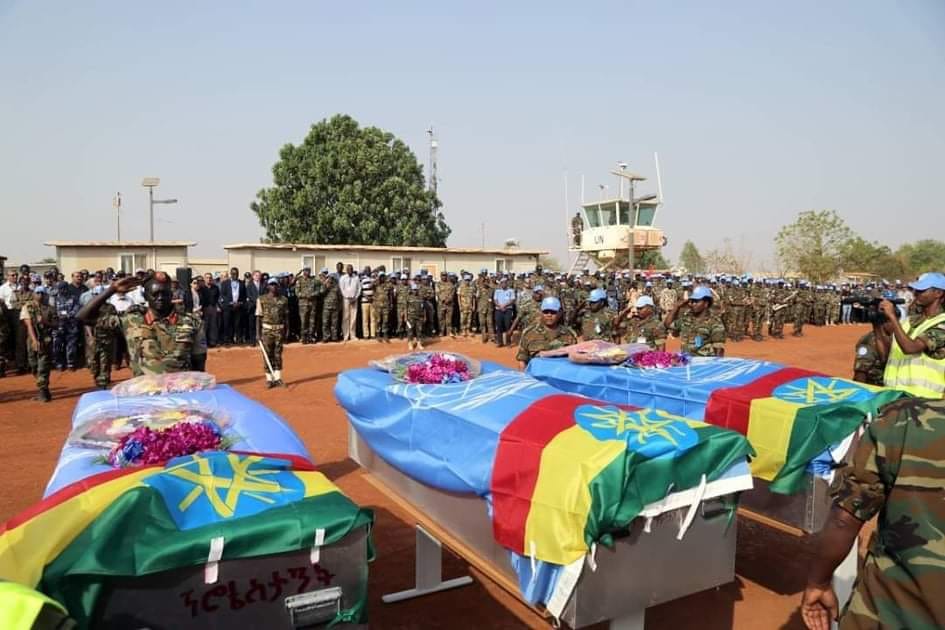
However, this legacy has not been without sacrifice. Ethiopian troops have consistently paid the ultimate price to protect vulnerable populations, often operating under harsh conditions with limited resources. Their unwavering commitment to “people and nation before oneself,” a core doctrine of the ENDF, has fostered trust and credibility among host nations’ local populations.
The Secret to Ethiopia’s Success
Its people-centered approach sets Ethiopia apart from other troop-contributing countries (TCCs). Unlike the state-centric models adopted by many UN peace missions, Ethiopia’s peacekeeping doctrine prioritizes winning the hearts and minds of local communities. Ethiopian troops actively engage with the people they protect—sharing meals, celebrating local traditions, and providing humanitarian aid, including medical care and water access, often beyond their official mandates.
This grassroots strategy has proven effective in volatile regions such as Somalia, where Ethiopian troops under the AU Mission in Somalia (AMISOM) have not only combated extremist groups like Al-Shabaab but also gained the trust of local communities. A senior officer recounted how Somali elders and clan leaders defended Ethiopian troops against false allegations, a testament to the strong bonds they have forged.
A Call for Recognition and Reform
Despite their contributions, Ethiopia’s peacekeeping efforts often go unrecognized on the international stage. The publication calls for greater acknowledgment of Ethiopia’s unique approach and its lessons for global peacekeeping. It also highlights the need for the UN to adapt its doctrines to better integrate people-centered strategies, as demonstrated by Ethiopia.
Ethiopia’s military leaders argue that the international community must shift from top-down peacekeeping models to more inclusive approaches that address the needs and values of local populations. Such reforms are crucial as the demand for peacekeepers continues to rise amidst growing instability in Africa and beyond.
The Future of Peacekeeping
As Ethiopia continues to navigate its internal challenges, its role in international peace operations serves as a beacon of hope for a continent striving for stability. The ENDF’s doctrines—rooted in integrity, effectiveness, and an unwavering democratic attitude—offer valuable lessons for global peacekeeping efforts.
Ethiopia’s story is a reminder that peacekeeping is not just about military intervention but about building trust, fostering relationships, and prioritizing humanity. In a world desperate for solutions to conflict, Ethiopia stands as a shining example of how to bridge the gap between rhetoric and reality in peace missions.
This publication serves as both a tribute to Ethiopia’s sacrifices and a call to action for the global community to recognize and learn from Africa’s unique contributions to peace and security.
By Ayele Addis Ambelu (Ayeleradio@gmail.com)








