By Ayele Addis Ambelu (Special edition)
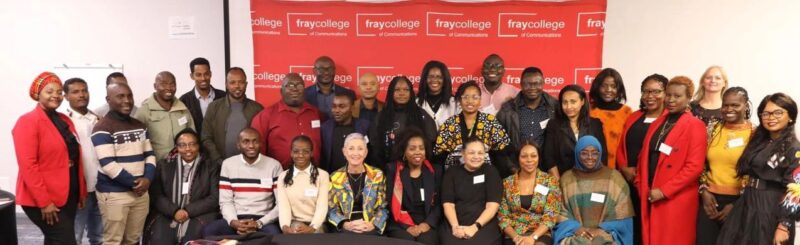
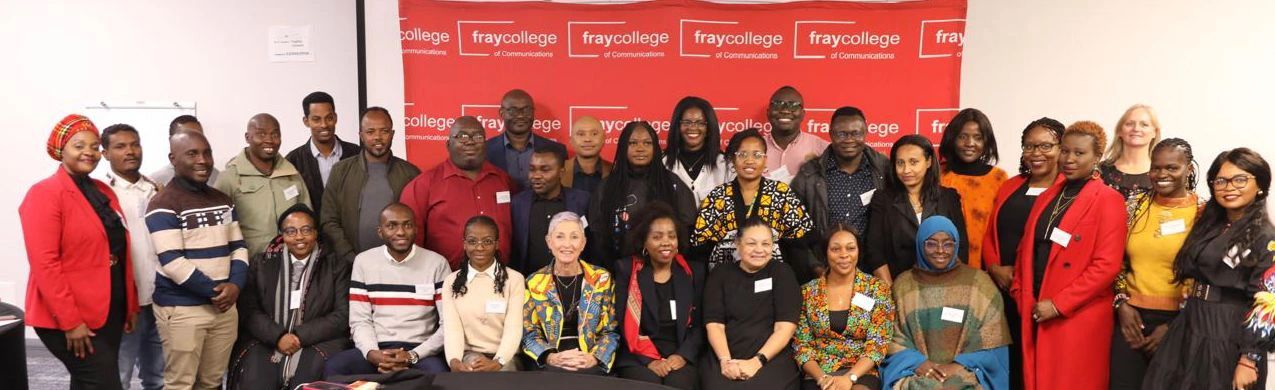
In the middle of Johannesburg, South Africa a strong bond between the press and the medical practitioners was created. The 2025 Africa Health Communications Fellowship (AHCF), produced by fraycollege, was launched with a charged 3-day event that laid down the gauntlet with ground breaking storytellers, scientists, and strategists to address some of the most vexing issues affecting population health on the African continent: misinformation, ethical leadership, and the tactical use of digital platforms in advocacy.
The mood was charged with a high-octane mission because participants representatives of Africa conversed under the umbrella of the theme, Shaping Our Narrative-Trust, Technology and the African Voice. These were not any normal attendees of the conference; they were specially chosen change drivers with a common goal to rebuild the health communication infrastructure in Africa with multidisciplinary instruments and Afrocentric narrative.
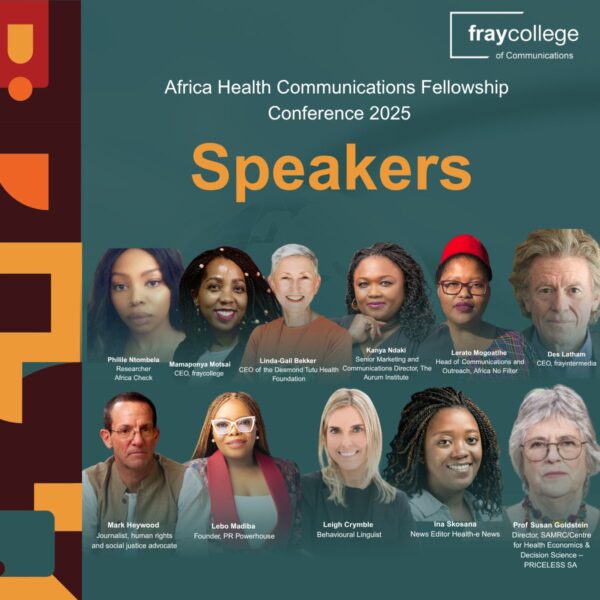
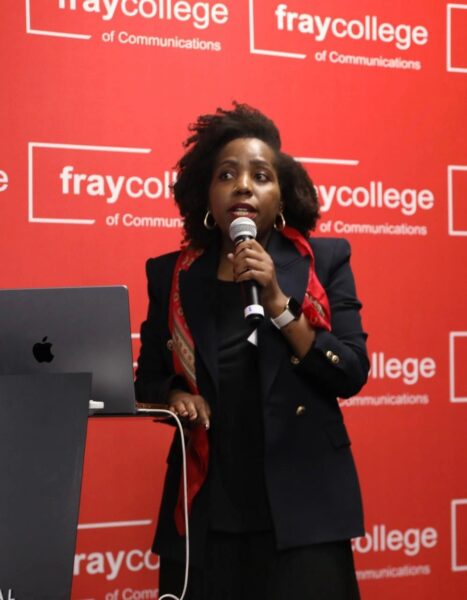
The fellowship was opened by a powerful and touching speech given by Mamaponya Motsai, the CEO of fraycollege who framed the tone of the whole program. What we are doing is that, she started, we are not training storytellers, we are training custodians of African health narratives. By working together, we can destroy misinformation and raise evidence-based communication.” Her statements were thundered and nodded upon.
Mamaponya presented a full presentation of the fellowship program that described that the project was based on a multi-month learning and implementation process. It would involve a mix of Face-to-Face training, online workshops and joint project implementation, so as to multiply credible health stories within the continent. She added, it is time to own up our stories. Not out of shortage, but out of force and realities.
Keynote Power: The Pulse of Health Advocacy
Keynote address, Leading with Evidence: Driving Public health change in Africa, was presented by Professor Linda-Gail Bekker, who is the CEO of the Desmond Tutu Health Foundation. Bekker said that leadership based on data is important, particularly following the COVID-19 pandemic. She said, when there is evidence the impact is there. Her commentary indicated the necessity of a science-based and culturally competent system to create a health message in the African settings. “When evidence leads, impact follows,” she said. Her remarks highlighted the need for a science-driven, culturally competent approach to health communication in African contexts.
In her address, Bekker highlighted how complex some of the issues affecting the health of the people in the continent are and how African innovation is a possibility. There is no lack of talent on our side or ideas, she demanded. What we require is convergence, braveness, and the ability to transform to research to resonance.
Day One: Decoding Technology, Misinformation, and African Health Narratives
The first day was moving with a vibrant interaction led by Paula Fray, the Director of fraycollege and the Founder of frayintermedia. Within her presentation, Signals & Shifts: How Technology is Reshaping Communication, Media, and Advocacy, Fray provided a clear image of the changing world of health information. She cautioned that technology is a minefield and megaphone. We have to use it judiciously in the service of truth and not disorder.. In her lecture, Signals & Shifts: How Technology is Reshaping Communication, Media, and Advocacy, Fray painted a vivid picture of the evolving health information landscape. “Technology is both a megaphone and a minefield,” she warned. “We must harness it wisely to serve truth, not chaos.”
Fray led action groups on critical trends of digital communication to provide a picture of how lies are found out many times earlier than truth. She used her focus on audience trust and framing strategy as a guide to others who wanted to produce behavior-change content. To her, relevancy is power and context is everything. “Relevance is power,” she noted, “and context is everything.”
A revolutionary conversation was held later by Lerato Mogoatlhe, Head of Communications and Outreach at Africa No Filter on Telling Africa-s Health Stories: Decolonising Health Communication. Her words were like no-holds barred: Africa does not require saving. It requires hearing.” Lerato was also a challenge to participants to raise local wisdom and present health stories with Afrocentric prisms. She demanded that people needed to cease being invisible to their own stories.Later, Her message was unflinching: “We must stop being invisible in our own narratives,” Lerato insisted.
Day Two: Behavioral Science, Policy Translation, and Personal Branding
On the second day, Leigh Crymble (behavioral linguist) launched the provocative session Motivational Messaging for Medicine: Behavioral Linguistics in Action. She demonstrated that slight word alteration can steer a radical change of behavior. She said that the team is not simply translating, but the team is translating motivation. “We’re not just translating content,” she said, “we’re translating motivation.”
A human rights advocate and journalist, Mark Heywood was up next: When Evidence Isn’t Enough: Leadership, Ethics and the People Power Behind Health Justice. Heywood stressed on the significance of moral leadership and social justice. The story needs to disrupt more than it must inform. It has to be provocative: change is necessary, he said.
Professor Susan Goldstein, Director at SAMRC/Centre for Health Economics & Decision Science, focused her session on How to Measure the Impact of Health Stories and Campaigns. Goldstein introduced practical tools for evaluating communication outcomes. “We must move from likes to lives,” she said, urging fellows to align metrics with meaningful outcomes.
In the later hours, Kanya Ndaki at The Aurum Institute presented the lesson of dependencies Translating Research into Policy: Lessons from the Field. She made some good points in communicating about health issues by focus on clarity and time. People will change when there is a policy change. It is our work to make complexity exciting” she said. Her emphasis on clarity and timing in health communication struck a chord. “Policy moves when people understand. Our job is to make complexity compelling,” she said.
Concluding the day was Lebo Madiba, the founder of the PR Powerhouse that talked about Building a Personal Brand in the context of Public Health Advocacy in Africa. Madiba enabled fellows to put themselves forward as credible persons. She said, credibility does not come under silence. It is accumulated with being present, in a clear, caring and brave manner.
Day Three: Collaboration in Action and the Road Ahead
The last day was very much practical and anticipatory. The workshop was run by Ina Skosana, News Editor at Health-e News on how to build meaningful partnerships between journalists and health experts. She focused on the ideas of mutual respect, co-creation, and breaking the silos. Great stories also exist in the boundaries of science and society, she thought.
The Art of Multiplatform Health Storytelling was a course spearheaded by Des Latham, the CEO of frayintermedia, and offered the fellows with the technical skills needed to repackage narratives to print, video, and online media.
Media Training for Health Experts, held by Mamaponya Motsai and Des Latham, was one of the most thrilling experiences of the day. It was a play-filled practical workshop aimed at making the participants hone their media presence, arm them with sharp talking points and teach them to communicate confidently in a wide variety of media.
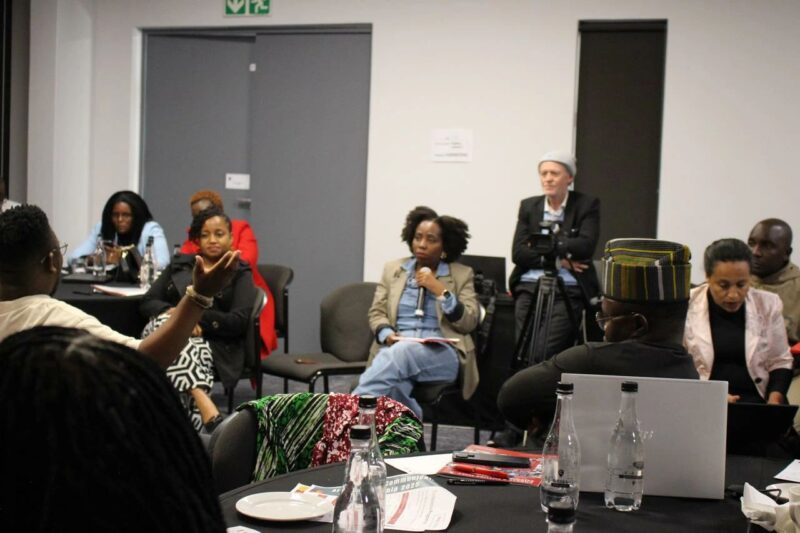
The day was beginning to end, fellows started to arrange their joint works. An idea that was exceptional was the Smart Team Ethiopia Idea; which is entitled: Voices against resistance: fighting misinformation and investigating antibiotic misuse using a One Health Communication approach. Their policy is an amalgam of investigative journalism, community dialogue, and data storytelling that concerns AMR at grassroots level.
Participant Voices: A Chorus of Hope and Determination
Journalist, Kevin-John Brandt of South Africa expressed the spirit of the fellowship when he said: This is beyond training. It is reform.” Other people echoed what he said, and the ability to interact, meditate, and multidimensional collaboration was unpriced as well.
Dr. Luchuo Engelbert Bain, a health expert from kenya, summed up the fellowship’s essence: “This is more than training. It is transformation.” Others echoed his sentiments, citing the space to connect, reflect, and collaborate across disciplines as invaluable.
Mr Taye Zeru, a health expert from Ethiopia, health and the surrounding narrative about misinformation led one ethiopian health advocate to comment that “it has changed the way I see advocacy”. Now I realize that it is not about having better volume because it is about communicating wisely.”An Ethiopian health advocate shared: “The framing around One Health and misinformation has shifted how I view advocacy. I see now that it’s not about shouting louder—it’s about communicating smarter.”
A Closing Note from Mamaponya Motsai
The fellowship ended and Mamaponya Motsai moved back to the podium to give closing reflections. You are professionals who came. She said, You go as change initiators. The African story on health is yet to be completed. We have to ensure that it is us telling it, to us, with honesty and sense of urgency.” And so the first chapter of the 2025 Africa Health Communications Fellowship concludes not with a farewell, but with a radical new start: a call-to-arms to challenge misinformation everywhere, to tell healthier health stories and to secure the future of public health throughout the continent. “You came as professionals. You leave as partners in change,” she said. “The story of health in Africa is still being written. Let’s make sure it’s told by us, for us, with truth and urgency.”
With that, the first chapter of the 2025 Africa Health Communications Fellowship ended not with a goodbye, but with a bold beginning—a collective call to action to fight misinformation, tell better health stories, and protect the future of public health across the continent.