





Ayele Addis Ambelu
Illicit Financial Flows (IFFs) and tax abuse are major obstacles to Africa’s economic development. Each year, billions of dollars leave the continent through corruption, tax evasion, and trade misinvoicing. According to Global Financial Integrity (GFI), Africa loses an estimated $88.6 billion annually due to IFFs, nearly equivalent to the total Official Development Assistance (ODA) received. This report delves into how these financial leakages occur, the mechanisms involved, and their impact on economic growth and governance.
IFFs refer to money illegally earned, transferred, or utilized across borders. These financial movements occur through three primary channels:
- Commercial Tax Evasion – Multinational corporations exploit tax loopholes, underreport profits, and shift earnings to tax havens.
- Corruption and Bribery – Government officials and businesses siphon public funds for personal gain.
- Criminal Activities – Money laundering from drug trafficking, human smuggling, and illegal resource extraction fuels IFFs.
Case Study: Nigeria’s Oil Sector Leakages
Nigeria, Africa’s largest oil producer, suffers from systemic revenue losses due to illicit financial flows. Reports from the Extractive Industries Transparency Initiative (EITI) reveal that Nigeria lost over $15 billion in 2021 alone due to oil smuggling, contract fraud, and tax evasion. The Panama Papers leaks further exposed Nigerian elites funneling wealth to offshore accounts, depriving the nation of critical development funds.
Tax Avoidance Strategies by Multinational Corporations
Many multinational corporations use transfer pricing manipulation to shift profits from high-tax African countries to low-tax jurisdictions. For example:
- In 2020, Google, Amazon, and Apple were accused of shifting billions from African subsidiaries to tax havens.
- The International Consortium of Investigative Journalists (ICIJ) revealed that mining firms in Zambia underreport revenues, reducing taxable income and increasing illicit outflows.
Economic Consequences of IFFs
- Reduced Public Revenue: Losses from IFFs limit government spending on infrastructure, healthcare, and education.
- Increased Debt Burden: Countries borrow externally to compensate for lost revenues.
- Weakened Institutions: Corruption and weak financial regulations allow illicit funds to thrive, undermining governance and state stability.
Expert Views: Combating Illicit Financial Flows
Dr. Sarah Kwame, an economist at the African Development Bank (AfDB), stresses the need for financial transparency: “African nations must enforce stricter financial reporting standards and cooperate globally to track illicit funds.”
Meanwhile, investigative journalist John Kamau suggests that cross-border collaboration in journalism can help expose illicit practices: “Leaks like the Panama Papers demonstrate the power of investigative reporting in holding corrupt actors accountable.”
Proposed Solutions and Policy Recommendations
- Stronger Financial Oversight – Governments must implement anti-money laundering (AML) laws and real-time monitoring of financial transactions.
- International Cooperation – African nations should collaborate with the OECD, IMF, and Financial Action Task Force (FATF) to track illicit flows.
- Corporate Accountability – Enforce tax regulations and penalize corporations engaging in tax evasion.
- Whistleblower Protection – Strengthening legal protections for journalists and whistleblowers can expose financial crimes.
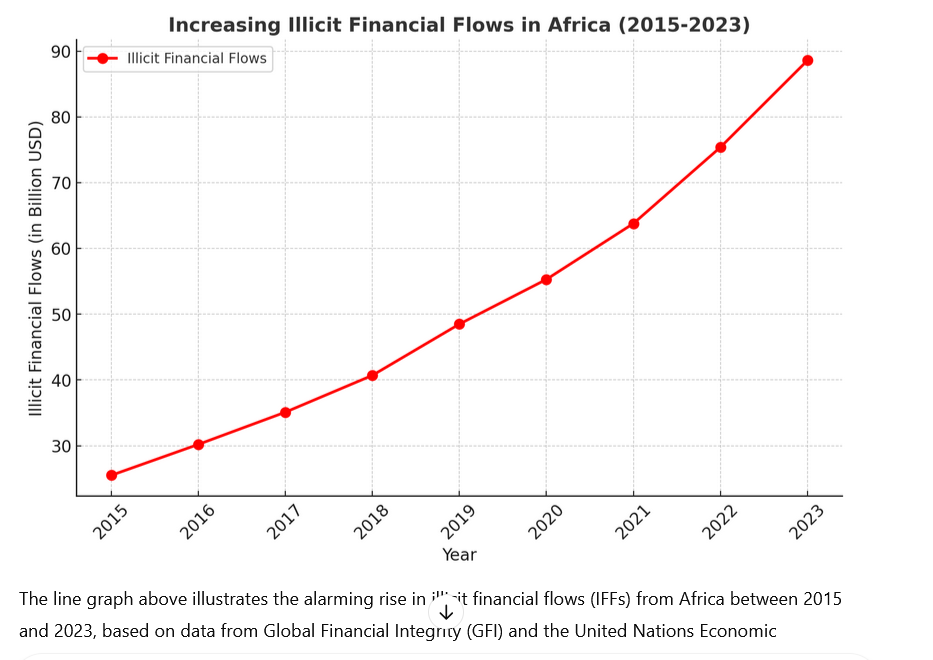
Graph: Rising IFFs in Africa (2015-2023)
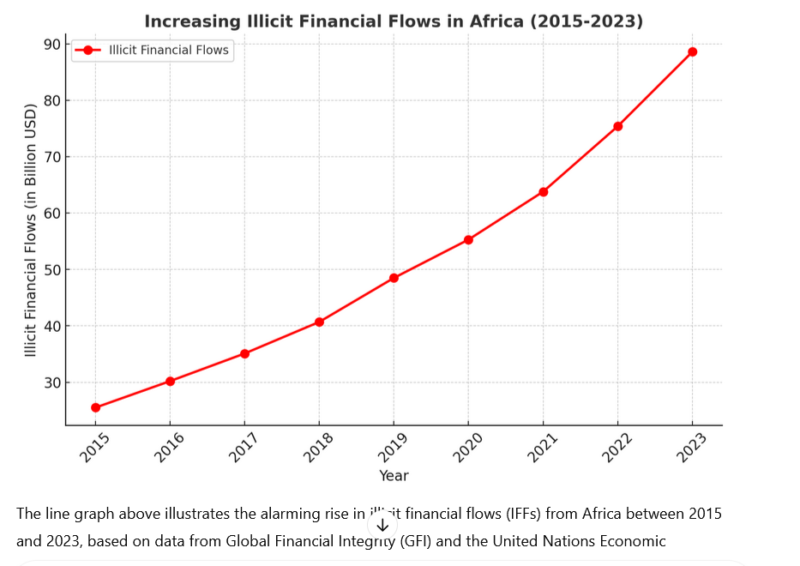
The line graph above illustrates the alarming rise in illicit financial flows (IFFs) from Africa between 2015 and 2023, based on data from Global Financial Integrity (GFI) and the United Nations Economic Commission for Africa (UNECA). The graph shows a steady increase, from $25.5 billion in 2015 to $88.6 billion in 2023. This sharp rise highlights the persistent challenges of tax evasion, trade misinvoicing, and corruption. The red line with markers emphasizes the growing financial hemorrhage, reinforcing the urgent need for stronger financial regulations, transparency, and international cooperation to curb these losses.
Illicit financial flows and tax abuse rob Africa of its wealth, hindering sustainable development. These financial leakages will persist unless nations adopt stronger regulations, enforce transparency measures, and collaborate internationally. Addressing IFFs requires coordinated efforts from governments, financial institutions, and investigative journalists to ensure Africa’s resources benefit its people rather than being siphoned abroad.








