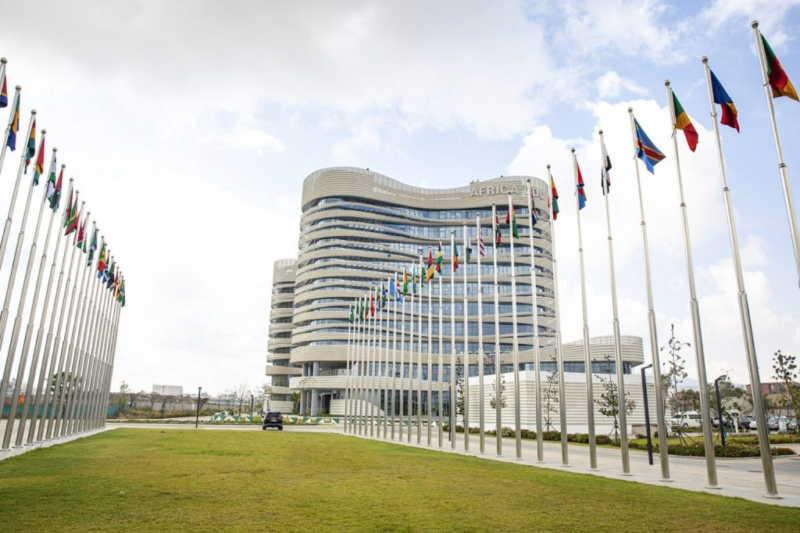
Africa CDC, Addis Ababa, 12 February 2026 – In what observers are calling one of the most consequential health partnerships of the decade, the United Nations Population Fund (UNFPA) and the Africa Centres for Disease Control and Prevention (Africa CDC) have signed a landmark Memorandum of Understanding during the African Union Summit 2026, signaling a dramatic escalation in efforts to transform women’s and adolescents’ health systems across the continent.
The agreement, signed by UNFPA Executive Director Ms. Diene Keita and Africa CDC Director-General Dr. Jean Kaseya, comes at a pivotal moment for Africa. Despite significant progress over the past two decades, sub-Saharan Africa still accounts for nearly 70 percent of global maternal deaths, and millions of women and adolescent girls continue to face barriers to accessing modern contraception, safe childbirth services, and comprehensive reproductive health care. At the same time, Africa is home to the world’s youngest population, with more than 60 percent under the age of 25, a demographic reality that presents both a profound opportunity and an urgent responsibility. Health experts have long argued that unlocking this demographic dividend depends fundamentally on ensuring universal access to sexual and reproductive health and rights (SRHR), a central pillar of this new partnership.
Beyond the moral imperative, the economic stakes are immense. Research consistently shows that investments in reproductive health yield high returns: when women have access to voluntary family planning and quality maternal care, maternal mortality declines, girls stay in school longer, workforce participation increases, and household incomes rise. Some global health financing analyses estimate that every dollar invested in family planning can generate multiple dollars in economic and social returns through improved productivity and reduced health system costs. For Africa, where many countries are striving to accelerate progress toward the Sustainable Development Goals and the African Union’s Agenda 2063, the link between women’s health and macroeconomic resilience is no longer theoretical; it is strategic.
The UNFPA–Africa CDC alliance also reflects hard lessons learned from recent global crises. The COVID-19 pandemic exposed deep vulnerabilities in supply chains and procurement systems across the continent, leading to shortages of essential health commodities, including sexual and reproductive health products. Studies of health systems performance during the pandemic revealed disruptions in maternal health services and family planning access in several countries, underscoring the fragility of gains made over decades. By prioritizing pooled procurement mechanisms, localization of manufacturing, and stronger coordination with Regional Coordinating Centres and National Public Health Institutes, the new agreement aims to reduce dependency on imports and build a more self-reliant, resilient health architecture for Africa.
At the heart of the MoU is a shared commitment to innovation and data-driven policymaking. Evidence from digital health initiatives across Africa demonstrates that technology-enabled systems can significantly improve service delivery, supply chain transparency, and real-time decision-making. Yet digital transformation remains uneven across countries. The partnership seeks to scale inclusive digital health ecosystems, strengthen research and development focused on women’s and adolescents’ needs, and enhance the capacity of health leaders and programme managers to implement equitable primary health care. By aligning Africa CDC’s continental public health mandate with UNFPA’s global expertise in reproductive health and population data, the alliance positions Africa not merely as a recipient of innovation but as a driver of it.
This collaboration builds on the momentum of the WomenX Collective Nairobi Hub, launched in June 2025, which spotlighted African-led solutions to advance women’s health innovation. Analysts see the new agreement as an institutional deepening of that vision, integrating political legitimacy, technical excellence, and financing strategies into a unified continental approach. The emphasis on blended finance, private sector engagement, and sustainable investment signals a recognition that traditional donor funding alone will not close the financing gaps in adolescent, maternal, and reproductive health. Instead, diversified funding models and co-investment frameworks are increasingly viewed as essential to scaling impact.
Dr. Jean Kaseya framed the partnership as central to Africa’s health security architecture, emphasizing that resilient communities are built on the health of women and girls. Ms. Diene Keita underscored the rights-based dimension, stressing that every woman and girl deserves access to quality health care grounded in dignity and equity. Together, their message was clear: this is not merely an administrative agreement but a strategic recalibration of how Africa approaches women’s health, linking innovation, manufacturing, data, policy, and financing into a coherent continental strategy.
As the African Union Summit 2026 sets the tone for the years ahead, the UNFPA–Africa CDC partnership stands out as a bold declaration that Africa intends to lead in shaping sustainable, inclusive health systems. If effectively implemented, this alliance could mark a decisive turning point, transforming research into policy, policy into investment, and investment into measurable improvements in the lives of millions of women and adolescents across the continent.
By Ayele Addis Ambelu