By Ayele Addis (ayeleradio@gmail.com)
Developing story from October 7, 2024 | 14 min read
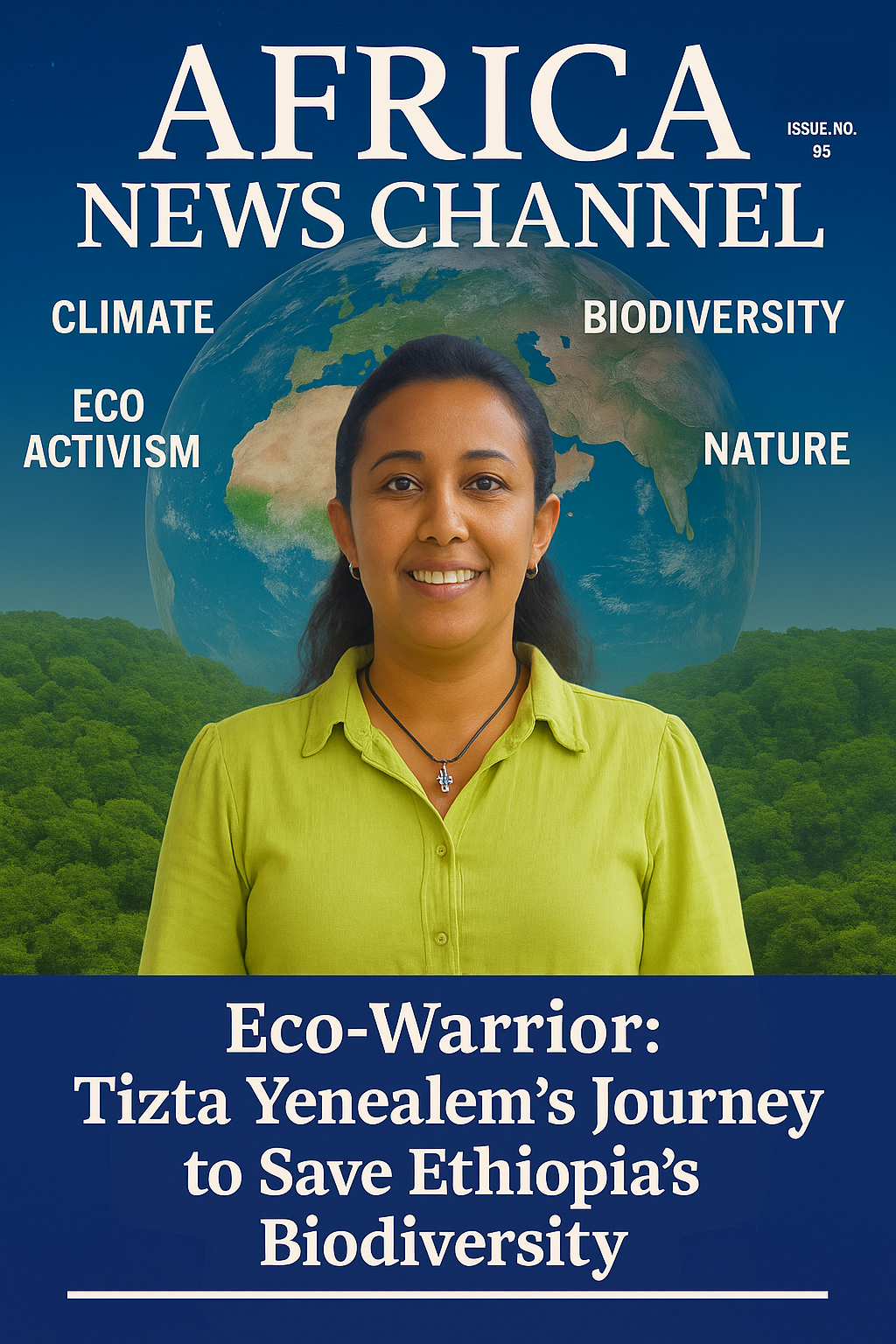
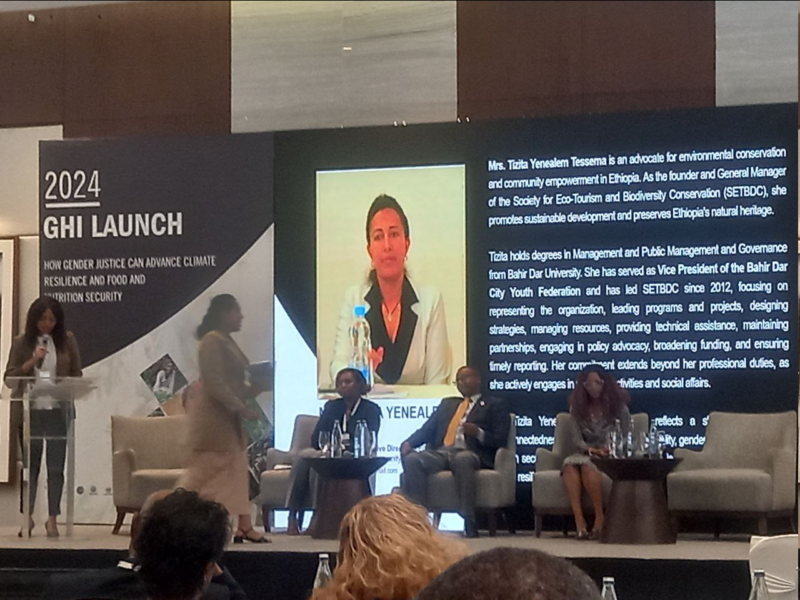
In the heart of Ethiopia, where breathtaking natural beauty coexists with mounting environmental challenges, one woman is transforming landscapes and communities alike. Tizta Yenealem Tessma, an environmentalist, visionary leader, and grassroots mobilizer, continues to blaze a trail in conservation and eco-tourism. As the founder and director of what was once known as the Society for Eco-Tourism and Biodiversity Conservation (SETBDC), the organization recently rebranded to “Ecotourism, Environment and Community Development (EECD)”—a name that better reflects its expanded mission.
Why the Name Change? A Broader, Bolder Vision
“The original name emphasized eco-tourism and biodiversity, which are still central to our mission,” explains Tizta. “But over time, we realized our work touches far more—community livelihoods, environmental restoration, education, peacebuilding, and local economic empowerment. This is why we renamed our organization to Ecotourism, Environment and Community Development—to align with the full scope of our impact and our vision for the future.”
Under the EECD banner, the organization has grown into one of Ethiopia’s most effective women-led environmental entities, with a clear commitment to inclusion, sustainability, and long-term community transformation.
From Humble Beginnings to Leading a National Movement
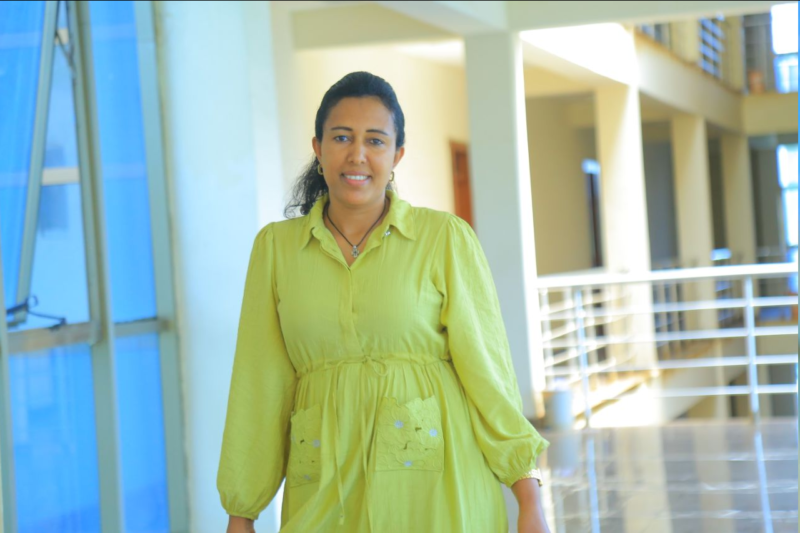
Tizta’s journey began in Debre Tabor, a small town surrounded by forested hills and sacred groves that ignited her early love for nature. Over time, that love matured into a call to action. Backed by a degree in Management and an MA in Public Management and Governance from Bahir Dar University, Tizta combined academic rigor with grassroots activism.
“I wanted to create an organization that not only protects nature but empowers people—especially women and youth—to become environmental stewards,” she says.
Turning Crisis into Opportunity: Restoring Abay Millennium Park
A flagship project of EECD (formerly SETBDC) is the restoration of Abay Millennium Park, which the invasive weed Lantana camara had overrun. Originally introduced in 1985 as an ornamental plant near Bezawit Palace, the species quickly spread across the park, destroying native habitats and reducing biodiversity.
“By 2015, Lantana camara had invaded 254 hectares of the park,” recalls Tizta. “We had to act—not only to save the park but to protect the surrounding communities who rely on its ecosystem.”
With support from local stakeholders and extensive community mobilization, EECD cleared 194 hectares (75%) of the invasive plant and planted over 313,000 indigenous and exotic seedlings, achieving an 86% survival rate. The once-devastated landscape is now home again to native trees, medicinal herbs, and returning wildlife—including guinea fowl, duiker, monkeys, and even leopards.
“The park used to be forgotten. Now it’s alive again,” says Mesfin Alemu, a local farmer and participant in the restoration effort. “Our children now play where the weeds once grew. It’s a miracle.”
Lake Tana: A Collective Victory
Tizta’s influence extends beyond the park. She played a pivotal role in organizing public campaigns to remove Water Hyacinth from Lake Tana, Ethiopia’s largest lake and a vital ecological and economic resource. Her leadership galvanized communities, raising over one million ETB to purchase a boat used for removing the invasive plant.
“She didn’t just tell us to clean the lake,” says Eyerusalem Getaneh, a youth volunteer in Bahir Dar. “She led from the front—with boots on, sleeves rolled up. That’s the kind of leader she is.”
More Than 2 Million Trees and a Movement Grown from the Ground Up
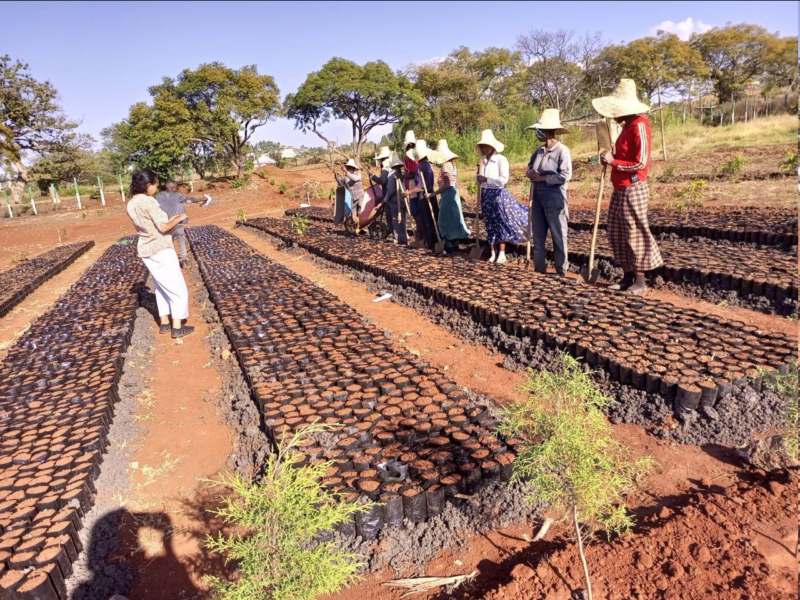
To date, EECD has overseen the growth and planting of over 2 million trees across public institutions, private lands, and degraded areas. These trees now contribute to carbon sequestration, soil fertility, water retention, and local economies.
“It’s not just about planting a tree,” says Tizta. “It’s about planting a future, rooted in hope and sustainability.”
Through short-term employment programs and long-term conservation planning, EECD has created jobs for laborers, guards, and foremen—providing income and environmental education simultaneously.
Women at the Forefront of Change
At the core of EECD’s mission is social inclusion, particularly the empowerment of women.
“Women are the backbone of community life. Yet for too long, they’ve been excluded from environmental decision-making,” Tizta insists. “We’ve changed that. Women are now planners, leaders, and agents of change in every project we run.”
In one initiative, EECD trained local women in beekeeping and livestock fattening, diversifying incomes and giving them a reason to protect restored land. These efforts build a sustainable cycle of environmental and economic resilience.
Education, Peace, and Eco-Tourism
During national elections, EECD also engaged in civic education and peacebuilding, working with youth groups and religious leaders to encourage peaceful participation and conflict resolution.
Tizta sees eco-tourism as the next major pillar of Ethiopia’s sustainable development. With restored parks and protected biodiversity, Ethiopia has the potential to attract tourists seeking nature-based experiences that respect local culture and ecosystems.
“Eco-tourism isn’t just about visitors,” Tizta emphasizes. “It’s about creating livelihoods and pride in preserving what’s ours.”
A Blueprint for Local-Led Conservation
The success of EECD in restoring Abay Millennium Park has garnered interest from eco-tourism investors, NGOs, and development partners. The project has become a blueprint for locally-led, community-empowered conservation.
Infrastructure improvements—including 26 km of hillside terraces, over 4,000 micro-trenches, and artificial waterways—have dramatically reduced erosion and improved land fertility.
Voices from the Ground: More Testimonies
“Before this, I thought the forest was just for firewood,” says Haregnesh Wondimu, a mother of three. “Now, I help protect it, and I earn from honey and herbs.”
“We’ve seen the return of birds, bees, and even butterflies we hadn’t seen in years,” notes Asfaw Tilahun, an environmental science teacher who volunteers with EECD. “It’s not just the land that’s healing—it’s our spirit too.”
The Road Ahead
As EECD looks to the future, the organization plans to expand into the Lake Tana Basin Biosphere Reserve and integrate its work with sustainable development efforts near the Grand Ethiopian Renaissance Dam (GERD).
“We’ve only scratched the surface,” says Tizta. “Ethiopia has the knowledge, the people, and the landscapes. What we need is continued commitment—and partnership—to make this country a model for green development.”
Conclusion: A Legacy in the Making
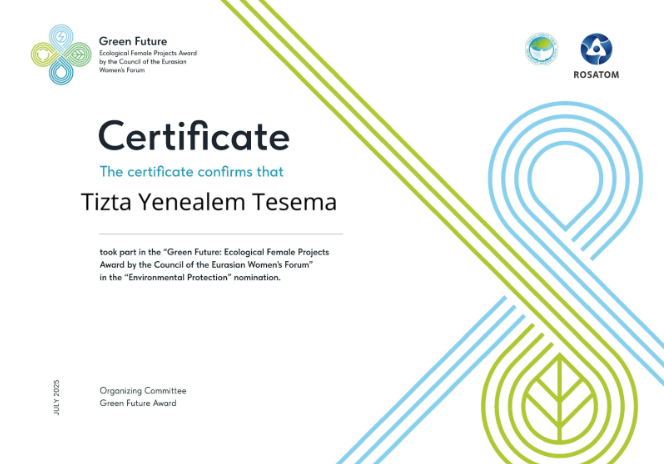
Tizta Yenealem Tessma is not just an environmentalist—she is a movement builder, educator, and trailblazer. Her work with Ecotourism, Environment and Community Development (EECD) offers a roadmap for tackling ecological crises through community-driven solutions, inclusive leadership, and bold vision.
“This is not my success,” she says. “It belongs to every farmer, every youth, every mother who picked up a tool and believed we could bring life back to the land.”