





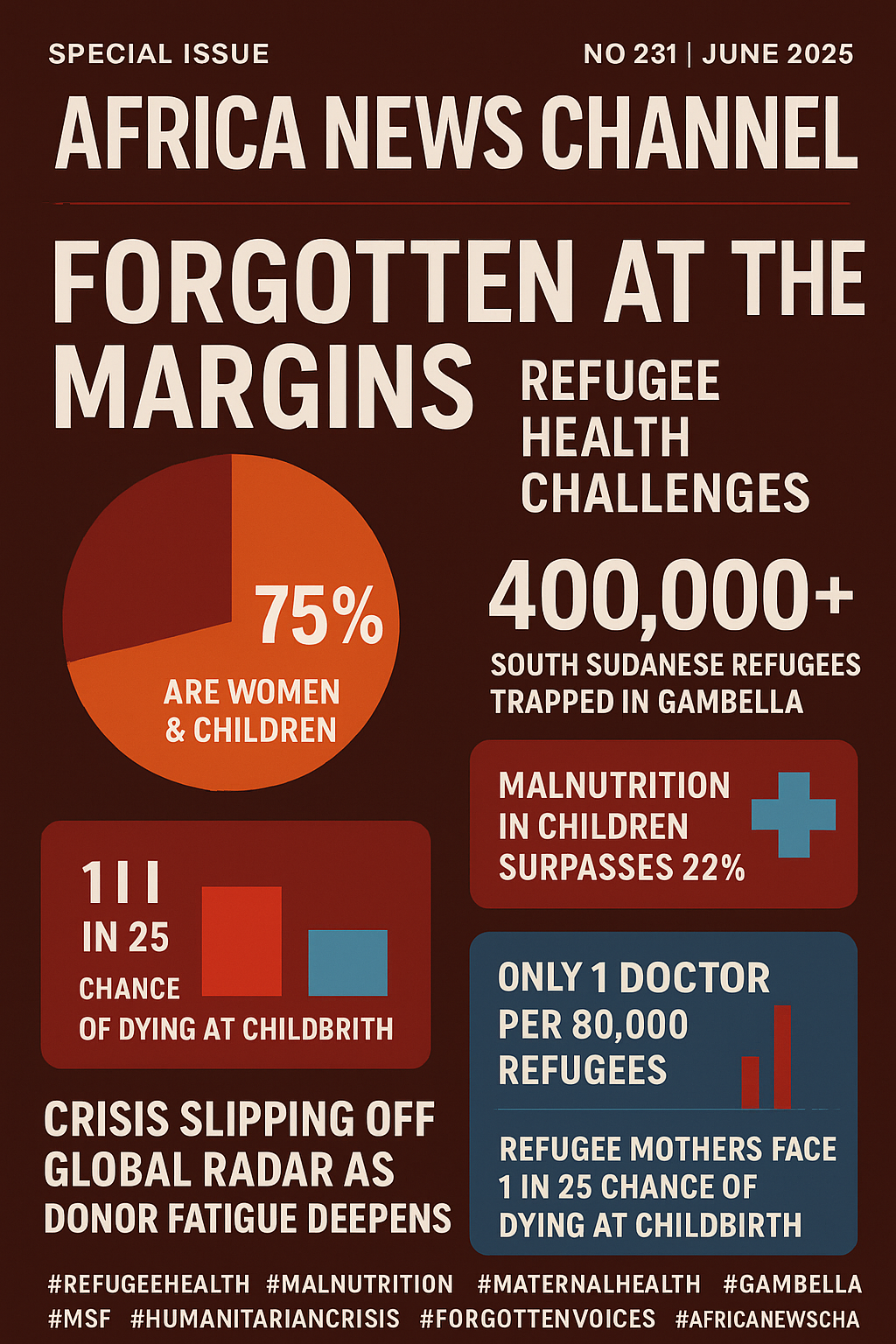
By Ayele Addis Ambelu | Africa News Channel
A Landscape of Exile
The sun rises over Kule Refugee Camp in Ethiopia’s Gambella region, casting a golden glow over endless rows of tarpaulin shelters. Children in worn-out sandals chase each other through dusty alleys while women queue at the water point, balancing jerrycans on their heads. For the 55,000 South Sudanese refugees who call Kule home, each day is a struggle for survival.
“Here, life is waiting,” says 38-year-old Maryam, a refugee mother of five. “Waiting for food. Waiting for medicine. Waiting for peace that never comes.”
Since 2014, Gambella has become one of the largest refugee-hosting regions in Africa. Over 400,000 South Sudanese live across camps like Kule, Tierkidi, and Nguenyyiel. While Ethiopia has long been praised for its open-door refugee policy, the reality inside these camps is far from dignified. Refugees face chronic malnutrition, malaria outbreaks, and crumbling reproductive health services.
Eight years into their exile, many feel abandoned — forgotten at the margins of global attention.
A Humanitarian Crisis in Numbers
Gambella, Ethiopia, is home to one of the world’s most overlooked humanitarian emergencies. According to UNHCR’s 2024 figures, more than 400,000 South Sudanese refugees live in the region, most of them in sprawling camps such as Kule, Tierkidi, and Nguenyyiel. An overwhelming 75 percent are women and children, whose vulnerabilities are compounded by malnutrition, disease, and lack of reproductive healthcare. The statistics tell a devastating story: global acute malnutrition exceeds 22 percent among children under five, far above the internationally recognized emergency threshold of 15 percent. In some camps, there is only one doctor available for every 80,000 refugees, a ratio that underscores the near-collapse of health services.
An MSF report released in 2024 painted an equally alarming picture. Malaria continues to be the leading cause of illness and death in the camps, spreading rapidly during the rainy season and overwhelming under-resourced clinics. Maternal mortality rates are three times higher than Ethiopia’s national average, while refugee mothers face a 1 in 25 chance of dying during childbirth — one of the most dangerous odds in the world. These figures are not abstract; they represent lives cut short and families destroyed in silence, far from the international spotlight.
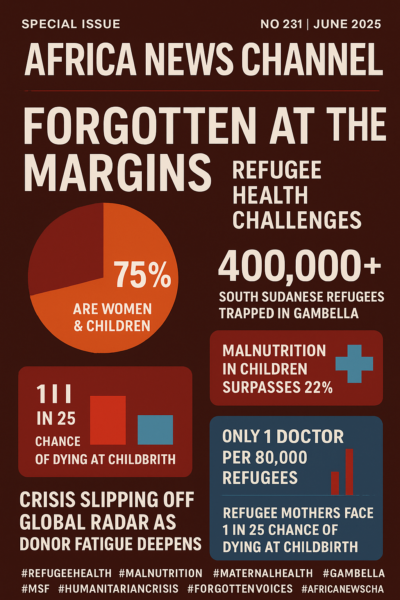
According to UNHCR’s 2024 figures:
- 400,000+ South Sudanese refugees reside in Gambella.
- 75% are women and children.
- Global malnutrition rates exceed 22% among children under five — far above the emergency threshold.
- Only 1 doctor per 80,000 refugees is available in some camps.
An MSF report in 2024 highlighted alarming health challenges:
- Malaria remains the leading cause of illness and death in the camps.
- Maternal mortality is three times higher than the Ethiopian national average.
- Refugee mothers face a 1 in 25 risk of dying during childbirth.
Testimonies from the Camps
Behind these statistics are raw human stories that reveal the daily struggle for survival. Maryam, 38, from Kule Camp, recalls the birth of her youngest child:
“When my youngest child was born, the clinic had no electricity. The midwife used the light of a mobile phone. My baby survived, but I lost too much blood. For weeks, I could not walk properly. I thought I would die.”
Her words highlight how something as basic as electricity can mean the difference between life and death for mothers.
For young people, the crisis manifests differently but with equal severity. James, 17, living in Tierkidi Camp, described his experience with repeated illness:
“I have had malaria five times in one year. The clinic often has no medicine. Sometimes we are told to buy drugs from outside, but we have no money. We just wait and pray.”
His testimony reflects the brutal cycle of preventable disease and poverty, where survival often depends not on treatment but on endurance.
Women’s struggles are even more pronounced when it comes to maternal and child health. Asha, 24, from Nguenyyiel Camp, shared her heartbreaking reality:
“I was married at 15 in South Sudan. Here in the camp, I became pregnant twice. One of my babies died because I was malnourished. There is no special food for mothers. We eat what is given — sorghum and beans. It is never enough.”
Asha’s voice reveals how child marriage, maternal malnutrition, and lack of adequate food converge into a cycle of loss that defines refugee existence in Gambella.James, 17, Tierkidi Camp:
“I have had malaria five times in one year. The clinic often has no medicine. Sometimes we are told to buy drugs from outside, but we have no money. We just wait and pray.”
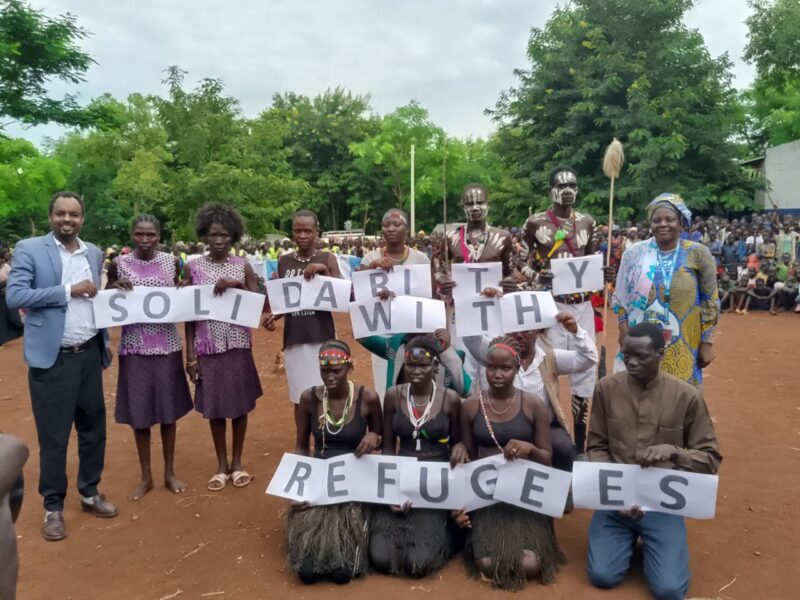
Malnutrition: A Daily Battle for Survival
Malnutrition in Gambella’s camps is both chronic and acute. In 2024, a joint WFP–UNICEF survey revealed that 1 in 5 children under five is acutely malnourished. The food rations provided — mainly cereals and pulses — fail to meet nutritional needs.
“I see babies with sunken eyes and weak cries every day,” says Nurse Daniel, an Ethiopian health worker serving at Kule. “Mothers dilute porridge just to make it last longer. Children stop growing. Some never recover.”
Funding shortfalls have worsened the crisis. In mid-2024, the World Food Programme cut rations to refugees by 40%, citing global funding gaps. “We have been pushed to the brink,” admitted a WFP official. “Without urgent support, we risk famine-like conditions in the camps.”
The Burden of Disease
The swampy climate of Gambella makes it a breeding ground for malaria. During the rainy season, health posts overflow with patients.
“In August 2024, we treated more than 1,500 malaria cases in just two weeks,” says MSF doctor Dr. Jean-Luc. “We ran out of testing kits. People were dying in their shelters without ever reaching the clinic.”
Other diseases — tuberculosis, diarrhea, and respiratory infections — compound the suffering. Children, weakened by malnutrition, are the most vulnerable.
Reproductive Health in Crisis
Women in Gambella’s camps face daunting reproductive health challenges. With limited access to antenatal care, many deliver at home under unsafe conditions. Skilled birth attendants are scarce, and emergency obstetric care is often unavailable.
“I walked three hours in labor to reach the clinic,” recalls Aluel, a 19-year-old refugee mother. “When I arrived, there was no midwife. I gave birth on the floor with other women helping me. My baby was born, but he could not breathe. He died within minutes.”
Cases of sexual and gender-based violence (SGBV) are also widespread. Women report being attacked while collecting firewood outside the camp. Yet survivors face stigma and inadequate services.
“Some women arrive with injuries from rape,” says an MSF counselor in Gambella. “But many never report. They fear shame, or they believe nothing will change.”
Expert Voices: A Crisis of Neglect
Health experts warn that Gambella’s refugee emergency is sliding further into invisibility as international attention shifts elsewhere. Dr. Meseret Haile, an Ethiopian public health expert, describes it bluntly:
“Donors have shifted focus to Ukraine, Gaza, and Sudan. Refugees in Gambella are at the bottom of the list. The crisis here is invisible, yet it is just as urgent.”
A UNHCR official in Addis Ababa echoed this concern, pointing to the devastating impact of dwindling resources:
“We are struggling with unprecedented funding cuts. Refugees are receiving less food, less healthcare, less everything. Without more support, the situation could spiral into catastrophe.”
From the humanitarian frontline, MSF’s perspective is equally urgent. An MSF medical coordinator working in Gambella stated:
“Refugees did not choose to be here. They fled violence in South Sudan. Now they are trapped in camps with no adequate healthcare. We risk losing a generation to malnutrition and preventable diseases.”
A Generation at Risk
Children make up more than half the refugee population in Gambella. Many were born in exile and have never seen their homeland. Their futures are uncertain.
“I dream of becoming a nurse,” says Nyandeng, a 14-year-old refugee girl in Tierkidi. “But I have not been to school for two years. My family cannot afford books. Sometimes I wonder if my dreams will die here in the camp.”
Education, health, and nutrition are all interconnected. Without adequate healthcare, children miss school. Without education, they face cycles of poverty and despair.
International and National Reports
- UNICEF Ethiopia (2024): Warned that child malnutrition in Gambella camps could reach “irreversible levels” without urgent intervention.
- Human Rights Watch (2023): Documented cases of sexual violence and lack of access to reproductive healthcare among South Sudanese refugees.
- MSF Annual Report (2024): Highlighted Gambella as one of the most underfunded refugee responses in the world, despite its scale.
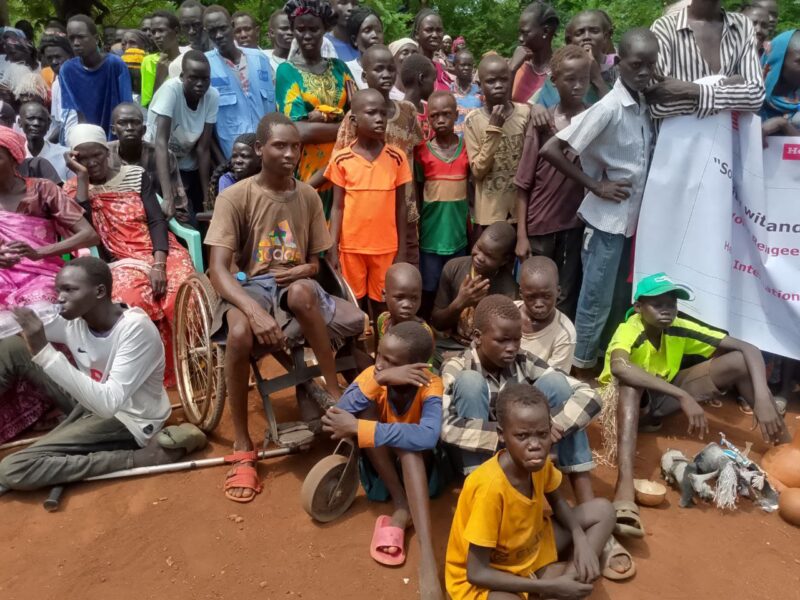
Glimmers of Hope
Despite overwhelming challenges, resilience shines through. Community health workers, trained by NGOs, move tent-to-tent providing vaccines, health education, and family planning. Refugee women’s groups advocate for safer childbirth and protection from violence.
In 2024, MSF opened a new maternity unit in Kule Camp, providing emergency obstetric care. “Since it opened, maternal deaths have decreased,” says midwife Helen. “It is still not enough, but it is a start.”
The Forgotten Crisis
Ethiopia has shown generosity by hosting South Sudanese refugees. But generosity alone cannot save lives. Without sustained international support, Gambella’s camps risk becoming zones of despair — where malnutrition, disease, and neglect kill silently.
As Maryam, the refugee mother, put it: “We are human beings, not statistics. We need the world to see us. We need the world to remember us.”
RefugeeHealth #GambellaCrisis #ForgottenAtTheMargins #MaternalHealth #ChildMalnutrition #HumanitarianCrisis #SouthSudaneseRefugees #MSFEthiopia #HealthEquity #AfricaNewsChannel #SpecialIssue #GlobalHealth #FoodInsecurity #RefugeeVoices #DonorFatigue #EmergencyResponse








