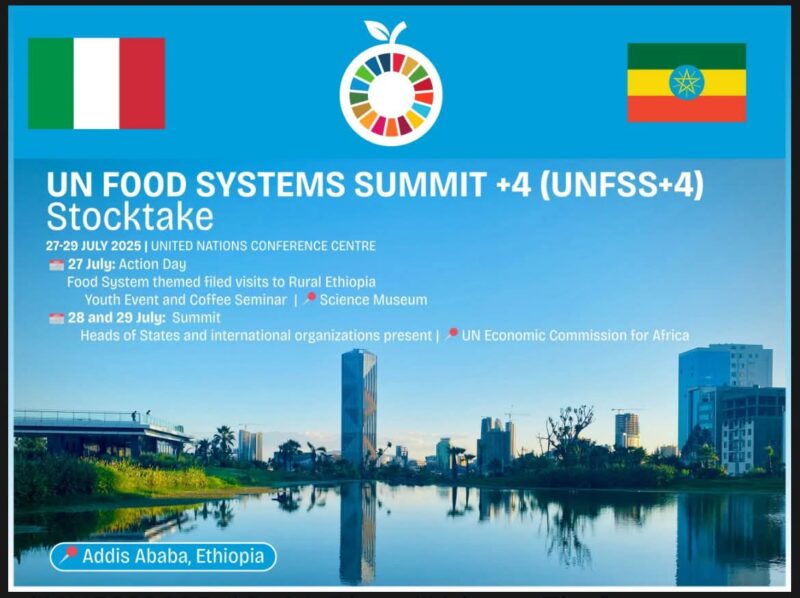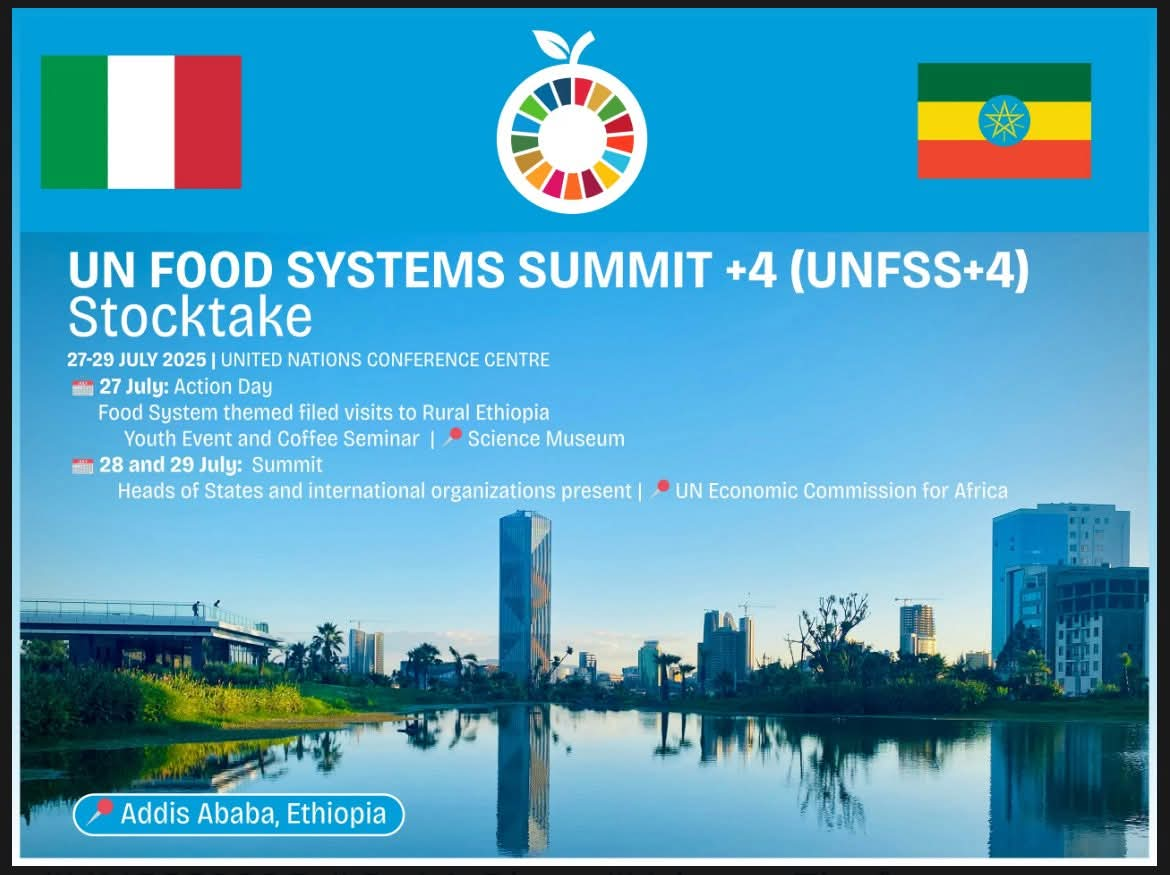
ADDIS ABABA – In a historic moment for the continent and the global food agenda, Ethiopia is finalizing preparations to host the United Nations Food Systems Summit +4 Stocktake (UNFSS+4) from July 27–29, 2025, at the UNECA headquarters in Addis Ababa. Co-hosted by the governments of Ethiopia and Italy, this three-day global gathering is being hailed as “the Davos of Food”—a make-or-break opportunity to drive bold progress toward sustainable, equitable, and resilient food systems across the world.
The summit, coming four years after the landmark UN Food Systems Summit in 2021, brings together a high-powered delegation of heads of state, ministers, UN agencies, youth leaders, farmers, researchers, civil society, and private sector innovators. But the host nation is not merely providing a venue—it is staking a leadership claim on the global food stage.
🇪🇹 Ethiopia: From Food Crisis Symbol to Food Sovereignty Pioneer
Once emblematic of hunger and drought in the global imagination, Ethiopia is now flipping the narrative. Through initiatives like the Wheat Self-Sufficiency Campaign, the Green Legacy reforestation movement, and a fast-growing agro-industrial development sector, the country has emerged as a laboratory for food systems innovation in Africa.
The hosting of UNFSS+4 is both symbolic and strategic. It marks Ethiopia’s transformation into a convening force for South-South cooperation, and a nation intent on defining its own agricultural future—through climate-smart policies, local innovation, and regional leadership.
🛤️ Action Day: Ground Realities, Local Solutions
Before the official summit kicks off, July 27 will be designated as Action Day, featuring field visits to rural areas where Ethiopia’s food systems reforms are unfolding in real time. Delegates will witness how community-led models are addressing food security, nutrition, and climate resilience—focusing on Indigenous practices, youth innovation, and smallholder empowerment.
A high-level Youth Event and a unique Coffee Seminar at the Addis Ababa Science Museum will underscore Ethiopia’s deep cultural and economic connection to agriculture, while centering youth voices and traditional knowledge in the food transformation dialogue.
🧭 Summit Agenda: From Talk to Tangible Action
Over the next two days, the UNECA halls will buzz with high-level plenaries, ministerial roundtables, thematic panels, and stakeholder dialogues. The agenda pulls no punches:
- Unlocking financing for transformation
- Advancing rights-based, climate-smart food systems
- Supporting smallholder resilience
- Embedding equity, inclusion, and Indigenous rights into global policy
Beyond policy talk, the summit will host investment dialogues, SME engagement platforms, and side events to match vision with capital and action.
🌐 Global Implications, Local Momentum
UNFSS+4 is not an isolated event. Its outcomes will directly influence global forums such as the UN General Assembly, COP30, the UN Environment Assembly, and the World Food Forum. A formal stocktaking report by the UN Secretary-General, along with a Chair’s Summary and stakeholder contributions, will serve as the road map for the next five years of food systems transformation.
For Ethiopia, this summit is more than diplomacy—it’s a national affirmation of progress and possibility. In hosting UNFSS+4, Addis Ababa is no longer simply reacting to global food crises—it is helping lead the world out of them.
“We are no longer the epicenter of food aid—we are becoming a center of food solutions,” one Ethiopian official noted. That sentiment encapsulates a broader ambition: to reshape global narratives around hunger, food justice, and Africa’s place in the agricultural future.
From being fed to feeding others—Ethiopia’s food systems journey is now the world’s classroom.