






Journalists Who Shape History: AIJC 2025 Opens with a Call to Courage
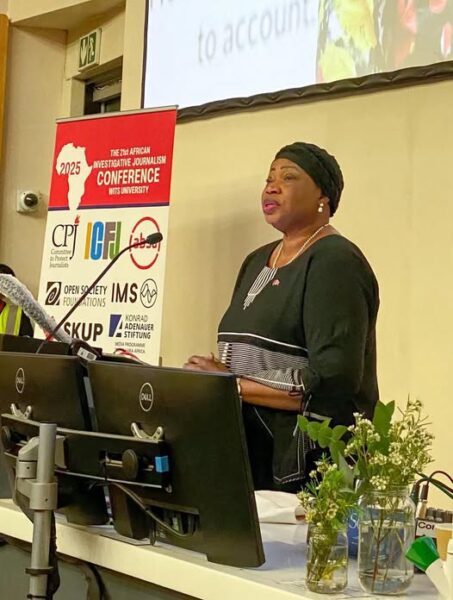
Johannesburg — Former International Criminal Court prosecutor Fatou Bensouda will open the 2025 African Investigative Journalism Conference (AIJC) at Wits University with a keynote address calling for an Africa anchored in empowered youth, accountable leadership, and a courageous, solutions-oriented press.
“We are not only observers of history,” she is expected to say, “but shapers of it.” Bensouda’s remarks highlight the growing expectation for African media to not only expose wrongdoing but also spotlight innovations and resilience across the continent.
Ahead of the conference, twenty leading investigative journalists from 13 African countries have been selected to participate in the prestigious 2025 Investigative Journalism Masterclass, hosted by the Wits Centre for Journalism in partnership with SKUP (Norway) and Bellingcat. The fellows were chosen from more than 400 applications from across the continent, representing print, broadcast, online media, investigative units, training institutions, and fact-checking organisations. 2025 Masterclass participants u…
The three-day workshop, held from 2–4 November, will introduce advanced digital investigative techniques, including OSINT, geolocation, chronolocation, digital footprint tracing, and data journalism, led by Bellingcat researchers Youri van der Weide and Aiganysh Aidarbekova, alongside Kenyan investigative data journalist Purity Mukami. 2025 Masterclass participants.
Participants will then join the main AIJC conference, which begins on 5 November, offering a further programme of training labs, reporting masterclasses, and collaborative investigation sessions. AIJC Masterclass 2025 programme
ANALYSIS
Bensouda’s framing of Africa’s media responsibility signals a shift in the narrative of journalism on the continent: from mere exposure to impact. The call resonates strongly at a time when African investigative reporters are increasingly leveraging digital forensics, data-driven investigations, and cross-border collaborations to uncover corruption, conflict economies, environmental crimes, and state abuses.
The composition of this year’s Masterclass cohort reflects this trend. Many of the selected journalists work on cross-border, accountability and public-interest investigations, often with limited institutional support and in high-risk political environments. Their presence at AIJC suggests the emergence of a new African investigative generation—technically skilled, regionally networked, and unafraid to interrogate power.
Yet the pressures remain acute: shrinking press freedoms, online harassment, state surveillance, strategic lawsuits, and financial precarity continue to threaten independent journalism across the continent. The training offered at AIJC—especially in verification, open-source fact-checking and data analysis—directly strengthens journalists’ ability not only to report more safely and rigorously, but also to withstand digital misinformation wars and state propaganda.
If Bensouda is right that journalists shape history, then AIJC is more than a conference—it is an investment in the infrastructure of truth on the continent.
By Ayele Addis Ambelu
Top journalists from 13 African countries join AIJC’s 2025 Investigative Masterclass

Twenty leading investigative journalists from 13 African countries will participate in the 2025 Investigative Journalism Masterclass, hosted by the Wits Centre for Journalism (WCJ) in collaboration with SKUP, the Association for a Critical and Investigative Press in Norway and Bellingcat, an independent investigative organisation.
This intensive training three-day workshop introduces participants to the latest investigative journalism techniques, including cutting-edge digital forensics, OSINT tools, geolocation, chronolocation and other verification methods, as well as best practices in data journalism.
This year’s Masterclass participants were selected from more than 400 applications received from journalists working in print, online and broadcast media, as well as investigative journalism units, training institutions and fact checking organisations, and includes award-winning investigative reporters, editors and trainers from across Africa.
The sessions will be led by Bellingcat researchers and trainers Youri van der Weide and Aiganysh Aidarbekova, joined by experienced freelance investigative and data journalist Purity Mukami.
The Masterclass is a pre-event to the African Investigative Journalism Conference (AIJC) which kicks off at Wits University on 5 November. Participants will also attend the AIJC which includes more than 20 training sessions offered over the three conference days.
Meet the trainers:

Youri van der Weide, Netherlands, Bellingcat
Youri van der Weide is a researcher and trainer at Bellingcat. During his five years at the investigative unit he has worked on various topics, all related to open-source investigations, including geolocating extrajudicial killings and investigating conflict-related footage. He has also contributed to research into new open-source research tools and methods.
Aiganysh Aidarbekova, Kyrgyzstan, Bellingcat
Aiganysh Aidarbekova joined Bellingcat in 2018 as an investigative researcher and data trainer. She has conducted open-source investigations ranging from corruption to conflict research with a particular interest in Central Asia. As a trainer she has conducted workshops on OSINT to hundreds of journalists and activists around the world.
Purity Mukami, Kenya, Freelance
Purity Mukami is a Kenyan investigative and data journalist who, until June 2025, was the Africa Data Journalist at OCCRP (Organised Crime and Corruption Reporting Project). Before OCCRP she worked at Africa Uncensored, BBC Africa Eye and Finance Uncovered. She is now freelancing.
Mukami, who previously worked in banking and taught statistics at several Kenyan universities, solidified her pursuit of a career in investigative data journalism after meeting mentors such as Margot Gibbs and Khadija Sharife while attending numerous data sessions at the 2018 edition of the African Investigative Journalism Conference.
Since then, her journalism career has blossomed. Mukami thrives at the intersection of data, open-source research, and technology — skills she uses to uncover leads, sharpen investigations, and counter misinformation. She was selected as an AIJC Masterclass fellow in 2022, and now in 2025, joins us as a data journalism trainer.
She is also exploring how AI and tech can be harnessed to draw meaning and insight from stories and unstructured data and at the same time how to hold the same AI and Tech accountable.
The team of trainers will also be assisted by Katherine de Tolly, a South Africa-based open-source researcher who is passionate about mining data to unearth illegal and exploitative activities. She consults for Bellingcat, focusing on their finance team. In addition, one of the trainers for the inaugural Masterclass in 2022, Krister Sørbø, will represent SKUP on the training team. The Masterclass is coordinated on behalf of the WCJ by Izak Minnaar, a veteran South African editor and journalist.
Meet the fellows:

Annela Niamolo, Central African Republic, Bangui, Freelance
Annela Niamolo is a Central African photojournalist passionate about investigative reporting and visual storytelling. Founder of the blog Nexus Sango, she explores social, environmental, and cultural issues through in-depth field reports and investigations. With both pen and lens, she sheds light on often overlooked stories, giving a voice to local communities and young changemakers. Curious and determined, Annela is emerging as a rising voice in Central African journalism, combining rigor, creativity, and civic engagement.
Asmaa Kandil, Egypt, Cairo, Freelance/IJ Net
Asmaa Kandil is an Assistant Professor in the Faculty of Mass Communication at Ahram Canadian University, and a freelance editor and translator with the International Journalist Network. She has both academic and practical experience in digital media and data journalism, working with regional and international websites such as the leading Arab international newspaper Asharq Al-Awsat and the International Journalist Network. Asmaa has written many international articles about wars, conflicts, and natural disasters, which have been translated into many languages.
Augustine Kasambule, DRC, Kinshasha, Pulitzer Center
Augustine Kasambule Katshunga is the Congo Basin Program Coordinator at the Pulitzer Center and a member of its editorial team. Based in Kinshasa, Democratic Republic of the Congo, she is an experienced environmental journalist with over two decades of expertise covering forest and environmental issues, primarily working with television and also serving as a video producer. She holds academic qualifications in both biology and journalism. Augustine co-founded the Réseau des Communicateurs pour l’Environnement in DR Congo and has a background in teaching. She also provides training and coaching to journalists, helping to strengthen environmental journalism across the region. Augustine has worked with major organisations like Greenpeace Africa, WWF, and the Wildlife Conservation Society.
Ayele Addis Ambelu, Ethiopia, Addis Ababa, Africa News Channel
Ayele Addis Ambelu is an award-winning Ethiopian investigative journalist, lecturer, and media researcher with over 17 years of experience. He is currently a senior journalist at Africa News Channel and Ethiopian Mass Media and teaches investigative journalism at Bahir Dar University. His cross-border investigations have exposed corruption, human rights abuses, and illicit financial flows, health issues earning him international recognition, including the Fetisov Journalism Award , WHO Africa, Continental Re, and Nile Media Award.
Buyeleni Sibanyoni, South Africa, Johannesburg, amaBhungane
Buyeleni Sibanyoni is an award-winning investigative researcher at the amaBhungane Centre for Investigative Journalism. She recently exposed the R263 million Johannesburg water tanker tender scandal, uncovering red flags, price manipulation, collusion, and irregular awards. The story garnered widespread public and media attention and earned her the Juby Mayet Rising Star of the Year Award (2024) at the 2025 Standard Bank Sikuvile Journalism Awards.
Edmund Boateng, Ghana, Accra, The Fourth Estate
Edmund Agyemang Boateng is an investigative journalist with The Fourth Estate, renowned for exposing systemic corruption and environmental crimes in Ghana. His investigations have uncovered illegal mining takeovers involving national security and an MP, misappropriated public funds, and election collation failures causing distrust and deaths. Boateng revealed how influential figures, including a former Chief of Staff’s son, held mining concessions on ravaged riverbanks despite bans, and exposed a failed $15.8 million Accra streetlighting project. In May 2025, he won the Media Freedom Coalition’s Long Report award for the galamsey (illegal mining) exposé, amplifying the fight against illegal mining.
Elodie Toto
Elodie Toto is a multimedia journalist whose work explores the intersections of environment, extractive industries, and human rights. She is currently a staff reporter with Mongabay’s Africa bureau and was a 2024 Pulitzer Center Rainforest Investigations Network fellow. Her investigations, spanning video, print, and audio, have uncovered gold mining in protected forests of the Congo Basin, the drivers of overfishing and migration in West Africa, and human rights abuses linked to conservation models. Her reporting has sparked debate, informed legal actions, and been screened by civil society groups. Previously, Elodie worked as staff for the BBC and as Reuters’ regional producer and coordinator in West and Central Africa
Ibrahim Adeyemi, Nigeria, Abuja, HumAngle Media
Ibrahim Adeyemi covers humanitarian crises, defence and security stories. He leads investigations at HumAngle and deploys accountability journalism to interrogate humanitarian crises, illuminating the grey areas in local and international conflicts. His work has resulted in justice for disadvantaged communities, a voice for the less privileged, punishment for exposed officials, and a contribution to global peace and security. His reporting has earned him local and international journalism accolades, including the One World Media Award, the Kurt Schork Award in International Journalism, the Thomson Foundation Young Journalist Award, the Wole Soyinka Awards for Investigative Reporting, and the Kwame Karikari Fact-checking Award for African journalists.
Ida Jooste, South Africa, Durban, Bhekesisa
Ida Jooste is a South Africa–based health and science journalist and a former political editor and documentary maker with more than 20 national and international media awards. She has led newsrooms in Durban, Johannesburg, and Nairobi. Her own reporting across Africa has explored governance, corruption, transparency, human rights, and science, always focused on people’s stories backed by evidence. An international trainer, public speaker, and moderator, Ida led Internews’ global COVID-19 media initiative and continues to mentor journalists in impactful storytelling, ethical reporting, and misinformation management. As Internews Country Director in Kenya, she designed a media programme described as the “gold standard” for journalism training and guided a PEPFAR-funded health journalism initiative to respond to the country’s post-election crisis, expanding into conflict mitigation, data journalism, and inclusion of marginalised voices.
Jack McBrams, Malawi, Lilongwe, Platform for Investigative Journalism
Jack McBrams is a multi-award-winning Malawian investigative journalist with the Platform for Investigative Journalism (PIJ Malawi), where he has produced groundbreaking exposés on corruption, financial crimes, and human trafficking. His fearless reporting has influenced public debate and policy discussions in Malawi and beyond. Jack also serves as AFP News Agency’s correspondent in Malawi and is a regular contributor to The Continent, covering politics, governance, and human rights across Africa. His work is driven by a passion for accountability and amplifying the voices of ordinary citizens affected by systemic failures. Beyond reporting, Jack is a strong advocate for press freedom, dedicated to using journalism as a catalyst for transparency, justice, and democratic change.

Jérémie Kyaswekera, DRC, Butembo, Network of Investigative Journalists
Jérémie Kakule Kyaswekera, an investigative journalist, is co-founder and coordinator of the Network of Investigative Journalists in the DRC (REJI–RDC). He is also a lecturer and researcher in journalism at the University of the Assumption in Congo (UAC). His work focuses mainly on investigations into crimes against journalists, the safety of media professionals, and sexual violence in conflict zones. Kyaswekera collaborates with Ukweli Coalition Media Hub (based in Kenya), Mongabay Africa, and the Henry Nxumalo Foundation (South Africa) on cross-border investigations in the Great Lakes region, and he advocates for journalism that serves truth, justice, and democratic governance in the Democratic Republic of Congo.
Joan van Dyk, South Africa, Johannesburg, Freelance
Joan van Dyk is an independent health journalist. She graduated at the top of her journalism honours class at the University of Stellenbosch in 2017, and then moved to Johannesburg to start her career at the Bhekisisa Centre for Health Journalism where she honed her news, analysis and narrative feature writing skills. Joan was part of the Bhekisisa team whose COVID-19 pandemic coverage earned the Centre the 2021 Reconciliation award from the Institute for Justice and Reconciliation.
Kumba Leigh, The Gambia, Banjul, Gambia Daily
Kumba Leigh is a Gambian journalist with a strong focus on health, climate change, the environment, and investigative reporting on human interest stories. In 2023, she was selected as a CPHIA Fellow for Public Health in Africa, participating in the conference held in Lusaka, Zambia. Her international media experience includes covering events such as the Global Media Congress in Abu Dhabi (2022), reporting on human trafficking and money laundering in Abuja, Nigeria, and attending stakeholder meetings of the Intergovernmental Action Group Against Money Laundering in West Africa (GIABA) in Dakar, Senegal.
Musinguzi Blanshe, Uganda, Kampala, Freelance
Musinguzi Blanshe is a freelance data journalist and winner of the AIJC 2024 African Investigative Journalist of the Year Award. He is a regular contributing reporter for The Africa Report Magazine, covering East Africa. His journalistic work has also been published by The New York Times, Jeune Afrique, Rest of World, and Al Jazeera, among other outlets.
Nemenlah Cyrus Harmon, Liberia, Monrovia, New Narratives
Nemenlah Cyrus Harmon is a Liberian journalist with more than seven years of experience in the newsroom. He joined New Narratives in 2022 as a fellow with its US Embassy-funded programme “Investigating Liberia”. Harmon is a 2019 graduate of the University of Liberia with a Bachelor of Arts Degree in Mass Communication. He also earned a certificate in Journalism from the International School of Journalism, formerly the LBS School of journalism, in 2012.
Ojo James, Nigeria, Lagos, Legit.ng
James Ojo Adakole is an award-winning journalist. He is a Senior Copy Editor at Legit.ng. In 2017, he won the Reporter and Editor of the Year respectively as a campus journalist. He also emerged as the second runner-up at the 2022 PwC Media Excellence Awards. Similarly, he was named winner of TheCable Journalist of the Year award for 2022 and also won the 2022 Hostwriter prize for collaborative investigative journalism. In December 2023, he won Legit.ng’s Copyediting Excellence Award, which he also won again in 2024. He also clinched the 2024 African Prize for Investigative Journalism (PAJI) in Nouakchott, Mauritania.
Qosim Suleiman, Nigeria, Abuja, Premium Times
Qosim Suleiman is a developmental journalist with Nigeria’s leading investigative newsroom, Premium Times. Qosim was shortlisted for Thomson Foundation Young Journalist of the Year in 2024 and won Premium Times reporter of the year in 2023. As an undergraduate, he was also shortlisted for the Youth Digest Campus Journalism Awards in 2020. He is a grantee of the Pulitzer Center, the International Centre for Investigative Reporting (ICIR), Institute for War and Peace Reporting (IWPR), and the Centre for Journalism Innovation and Development (CJID). Qosim was a Corp Member for Report for the World (RFW), an initiative of The GroundTruth Project.
Sakhile Dube, South Africa, Emalahleni, Freelance/TechCabal
Sakhile Dube is an investigative journalist who digs into the thrilling worlds of environment, health, energy, tech, and business and occasionally her own email inbox. A serial recipient of journalism grants, she is powered by coffee, curiosity, and a healthy dose of skepticism. Dube brings serious reporting with just enough wit to keep things interesting while shedding light on overlooked communities.
Tom Odula, Kenya, Nairobi, Freelance
Tom Odula is an award-winning multi-media journalist – including the 2023 AIJC African Investigative Journalist of the Year Award – with over 20 years of experience in investigative reporting across print, television, and digital platforms. His fearless reporting has exposed some of East Africa’s most critical and sensitive stories, including the CIA’s rendition program, state-sponsored of massacre of Mungiki sect members, Kenya’s military intervention in Somalia, the 2007–08 post-election violence, and major terror attacks such as Westgate Mall and Garissa University. His investigative work extends to film, having contributed to two BAFTA-nominated documentaries: Terror at the Mall (2014) and Ross Kemp on Gangs: Kenya Special (2009).
Tulani Ngwenya, South Africa, Delmas, Freelance
Tulani Ngwenya is an Associate at Oxpeckers Investigative Environmental Journalism, editor and investigative journalist with more than eight years’ experience exposing environmental crime, systemic corruption, and social injustice across Southern Africa. He contributes to BusinessLIVE’s Financial Mail Fox, where he covers extractives, mining and energy with a sharp focus on governance and accountability in critical sectors. A former editor of the Highveld Chronicle, Tulani has collaborated with the Southern Africa Accountability Journalism Project (SA I AJP) and trained under WWF’s Khetha Programme and Oxpeckers’ #WildEye Academy.
Read more stories: Unmasking Power: Africa’s Investigative Elite Converge at Wits
The Continent’s Watchdogs Are Here — And They Are Not Afraid
Africa Rising: Youth, Truth and a Fearless Press Take Centre Stage
From Exposure to Impact: A New Era of African Journalism Begins
The Fight for Truth Intensifies: Africa’s Top Investigators Begin Masterclass at Wits
Exposing Corruption, Reshaping History: AIJC 2025 Launches With Force








