





Africa CDC and UK-PHRST Urge Shift to Locally-Driven, Sustainable Epidemic Response Models
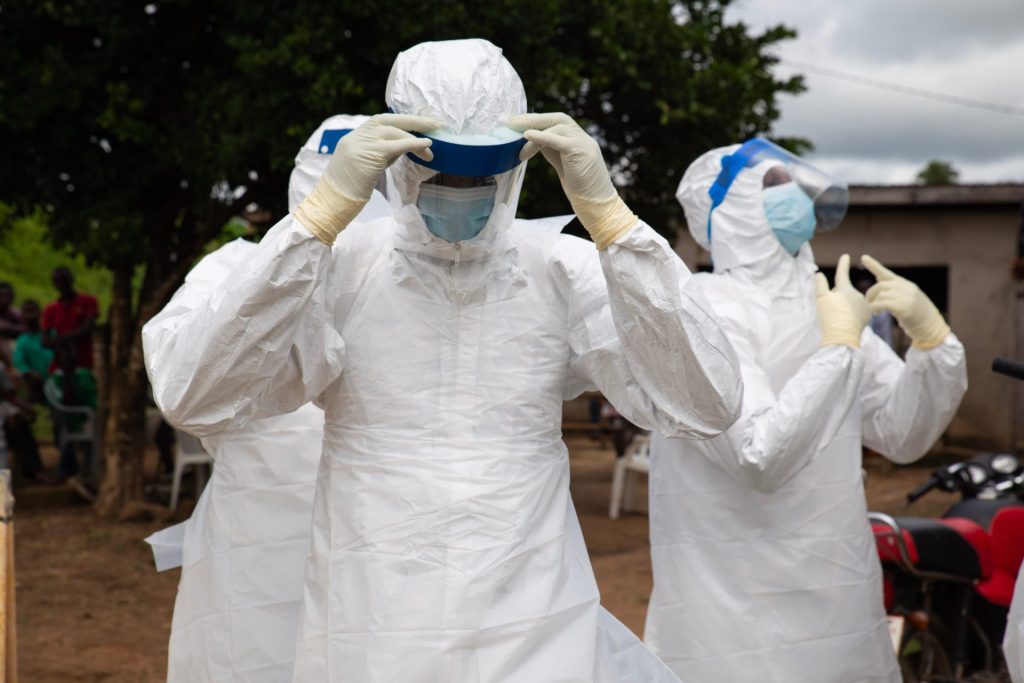
Addis Ababa, 4 July 2025 — A landmark study released by the Africa Centres for Disease Control and Prevention (Africa CDC) and the UK Public Health Rapid Support Team (UK-PHRST) has confirmed the game-changing role that international health teams have played in combating disease outbreaks across Africa. The study—one of the most comprehensive of its kind—also calls for a bold transformation of outbreak response strategies, placing local leadership, sustainability, and resilience at the forefront.
Presented and endorsed during a high-level virtual workshop from 23 to 24 June 2025, the study meticulously assesses the impact of international technical deployments in African Union (AU) Member States between 2020 and 2023. The findings reveal that international teams served as critical “surge forces,” rapidly bolstering national capacities across key public health functions such as disease surveillance, laboratory diagnostics, epidemiology, infection prevention and control (IPC), clinical care, and risk communication.
Strikingly, nearly half of these deployments addressed multiple technical areas simultaneously—proving their versatility and effectiveness in tackling complex, multi-dimensional health emergencies. The study also highlights that international teams not only responded to immediate crises but provided long-term value by strengthening infrastructure, developing protocols, building operational systems, delivering extensive training, and enhancing coordination frameworks.
“These deployments delivered rapid, life-saving support during critical outbreaks,” said Dr Radjabu Bigirimana, Programme Lead for Africa CDC’s African Volunteers Health Corps (AVoHC). “However, they also present us with crucial lessons—about sustainability, national ownership, and the urgent need to embed outbreak preparedness within local systems.”
Key insights from the study include:
- The importance of aligning deployments with national priorities and pre-existing capacities;
- The value of mentorship-based models for long-term capacity building;
- The need for greater regional collaboration to reduce dependency on external teams;
- Stronger emphasis on gender equity and community engagement in outbreak responses;
- Recognition that some deployments were more impactful when supported by clear exit strategies and integration plans.
Dr Edmund Newman, Director of UK-PHRST, stressed that global partnerships must evolve beyond crisis response. “Deployments should be strategic investments that empower national health systems and drive long-term resilience—not just temporary firefighting missions,” he said.
“This study validates the experiences of health workers across Africa—but also shows us where we must adapt,” said Dr Femi Nzegwu, Assistant Professor at the London School of Hygiene & Tropical Medicine and UK-PHRST’s Monitoring, Evaluation and Learning Lead. “We need to ensure future deployments are context-specific, inclusive, equitable, and ultimately strengthen country-level leadership.”
The workshop concluded with the joint development of a Continental Roadmap to operationalize the study’s recommendations—providing a practical guide for AU Member States to transition from dependency on external surge teams toward robust, self-sufficient outbreak management.
“This is about shifting the narrative,” said Dr Bigirimana. “Africa must lead its epidemic responses, with partners supporting national systems—not replacing them.”
The full report and roadmap are expected to guide epidemic preparedness and health security investments for years to come.
About Africa CDC
Africa CDC is the specialized public health agency of the African Union, working to strengthen health systems and improve disease surveillance, prevention, and response across the continent. Learn more at africacdc.org.
About UK-PHRST
The UK Public Health Rapid Support Team is a partnership between the UK Health Security Agency and the London School of Hygiene & Tropical Medicine. It works globally to strengthen outbreak preparedness and response through rapid deployments, research, and capacity-building, with support from UK aid via the UK Department of Health and Social Care.
Media Contacts
Africa CDC: Margaret Edwin, Director of Communication and Public Information
📧 EdwinM@africacdc.org
UK-PHRST: UKHSA Press Office
📧 ukhsa-pressoffice@ukhsa.gov.uk








