





The Global Civic Crisis
By Ayele Addis Ambelu, Africa News Channel
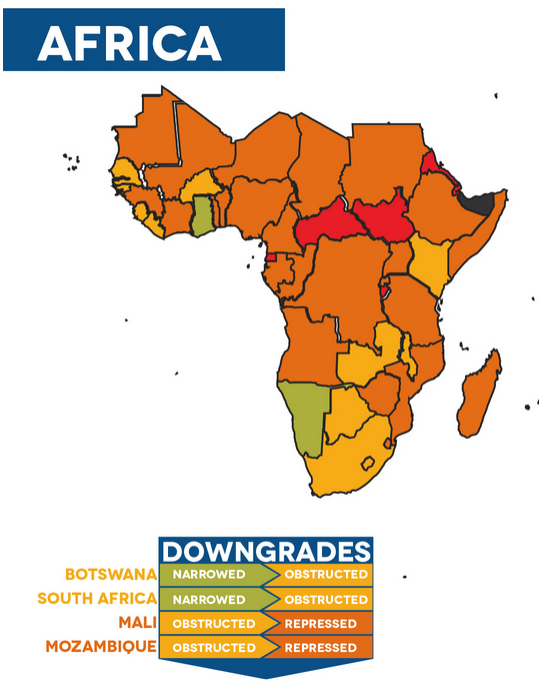
Civil society is under attack in 116 of 198 countries worldwide, according to CIVICUS. Africa mirrors this crisis, with alarming patterns of repression emerging across the continent. From Ethiopia’s internet blackouts to Sudan’s violent suppression of protests, the African democratic experiment faces existential threats.
The African Civic Crisis
- Ethiopia: Journalists and civic leaders face detention under broad anti-terror laws.
- Uganda: Opposition leaders routinely jailed during elections.
- Egypt: NGOs are restricted under stringent laws, with thousands of political prisoners.
- Sudan: Protesters killed in crackdowns since the 2021 coup.
Mo Ibrahim, founder of the Mo Ibrahim Foundation, observed in a 2025 policy report:
“Africa’s future depends on our ability to harness youth energy and civil society innovation. Without civic space, governance becomes hollow.”
The Economics of Repression
Repression is not only political—it is economic. World Bank research shows that countries with restricted civic space also experience slower economic growth and lower human development outcomes. Civic groups often fill gaps in health, education, and humanitarian aid, yet governments treat them as threats.
Table 2: Arrests of Journalists & Activists in Africa (2023–2025, top 10 countries)
| Country | Arrests Reported | Key Issue |
|---|---|---|
| Ethiopia | 500+ | Anti-terror laws |
| Uganda | 300+ | Election protests |
| Egypt | 1,000+ | NGO restrictions |
| Sudan | 700+ | Coup resistance |
| Zimbabwe | 250+ | Protest crackdowns |
| Nigeria | 200+ | Police reform protests |
| DRC | 180+ | Election unrest |
| Eritrea | Unknown | Press silence |
| Cameroon | 150+ | Anglophone crisis |
| Algeria | 120+ | Civil protests |
Digital Repression: Internet Shutdowns
According to Access Now (2025), Africa recorded the highest number of internet shutdowns globally in 2024, with 22 incidents across 10 countries. These shutdowns, often during elections or protests, stifle civic action.
Solutions: African Renewal from Within
Despite challenges, solutions are emerging:
- Legal Protection of Civic Space: Regional enforcement through the African Court on Human and Peoples’ Rights.
- Digital Democracy Tools: Kenya’s participatory budgeting apps, Nigeria’s civic tech innovations.
- Grassroots Empowerment: Funding women’s cooperatives, youth associations, and indigenous rights groups.
UN Secretary-General António Guterres noted:
“In an era of democratic erosion, Africa can show the world how resilience and inclusion can build a people’s democracy.”
Toward a New Social Contract
Africa’s civic crisis is real, but so is its resilience. By mobilizing grassroots communities, educators, corporations, and youth, Africans are reimagining democracy—not as an abstract ideal but as a social contract rooted in inclusion and justice.
The African continent stands at a critical juncture. With civil society under attack in 116 of 198 countries worldwide, Africa mirrors this crisis: arrests of journalists in Uganda, shutdowns of civic groups in Egypt, and violent crackdowns on protests in Sudan underscore the depth of repression.
Yet, solutions are emerging from within Africa itself.
A 2025 report by the Mo Ibrahim Foundation stresses that inclusive governance—anchored in citizen participation—is key to reversing democratic decline. “Africa’s future depends on our ability to harness youth energy and civil society innovation,” said Mo Ibrahim during a recent policy dialogue.
Experts propose three urgent strategies for Africa’s civic renewal:
- Legal Protection of Civic Space – Enforcing constitutional guarantees of freedom of association and expression, backed by regional bodies like the African Court on Human and Peoples’ Rights.
- Digital Democracy Tools – Expanding secure online platforms for citizen consultation, modeled on Kenya’s participatory budgeting apps.
- Grassroots Empowerment – Funding local women’s cooperatives, youth associations, and indigenous groups to ensure democracy is not only urban and elite.
As UN Secretary-General António Guterres recently stated: “In an era of democratic erosion, Africa can show the world how resilience and inclusion can build a people’s democracy.”
Despite the setbacks, Africa’s civic landscape is not one of despair but of defiance and creativity. By mobilizing grassroots communities, educators, and corporations, Africans are reimagining democracy—not as an abstract ideal but as a living, breathing contract between leaders and citizens.
These three stories—analysis, feature, and investigative report—demonstrate Africa’s complex but hopeful struggle for civic freedoms in 2025. They highlight that while civil society is under unprecedented attack, citizens remain determined to build a democracy that works for the people: accessible, inclusive, and resilient.
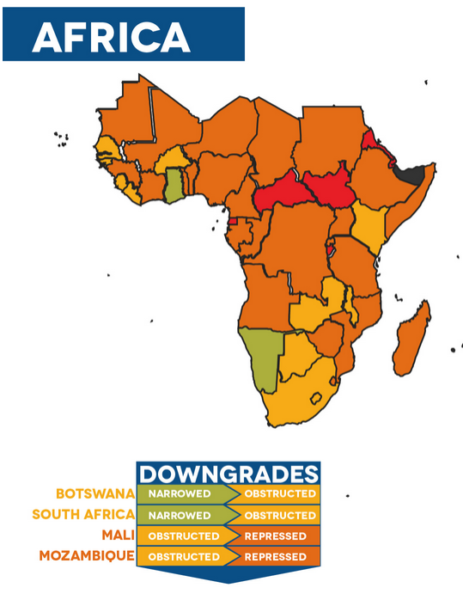
Map Source: https://findings2021.monitor.civicus.org/africa.html








