By Ayele Addis Ambelu (Investigative Report)
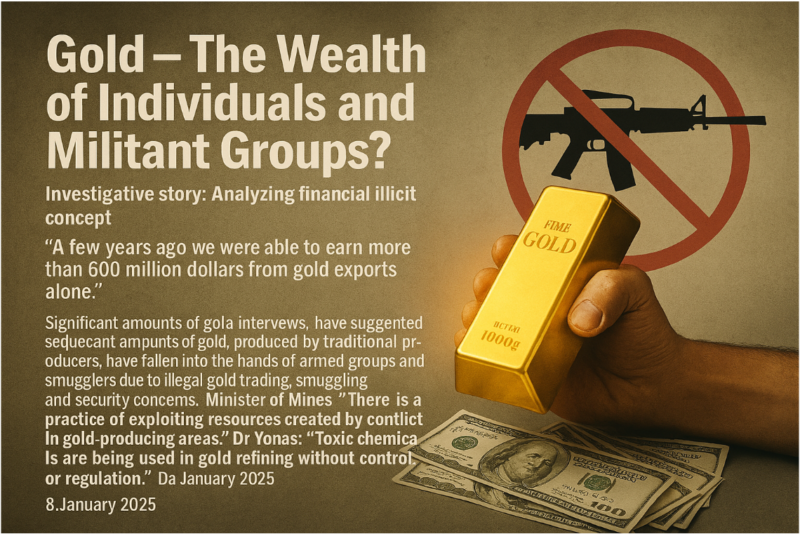
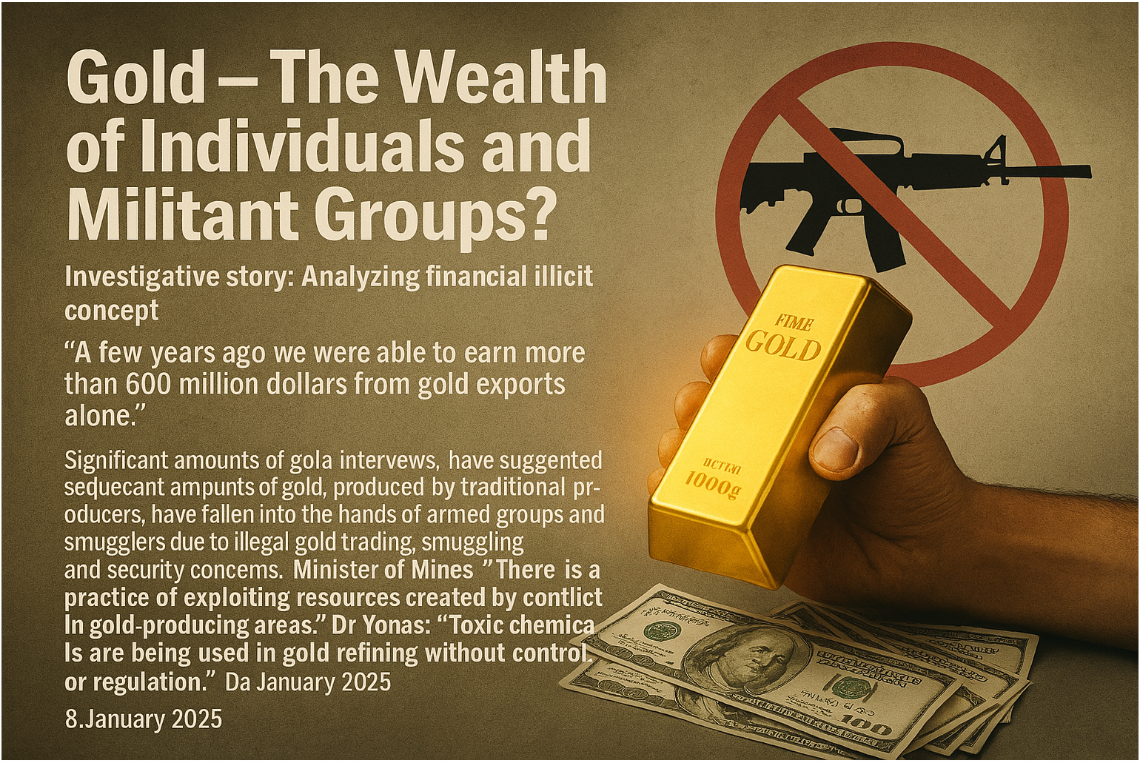
Ethiopia’s gold industry, once a vital pillar of the national economy, is now at the center of a troubling crisis. Despite gold being one of the country’s top foreign exchange earners after coffee, illicit trade and smuggling have significantly drained its potential. The Governor of the National Bank, Ato Mamo Miheret, highlighted this issue in his first-quarter performance report for 2016, stating, “Although the country’s gold is being produced, the amount being supplied to the National Bank, which has the sole authority to purchase gold, has decreased significantly.” He recalled that gold exports brought in over 600 million dollars just a few years ago, but now, those earnings have declined drastically.
The Minister of Mines, Habtamu Tegen (Eng.), echoed these concerns in his report, admitting, “We expected to earn more than $112 million from gold sales this quarter, but we received very little.” He revealed that the income from gold sales was merely $63.6 million, a stark drop from previous years when gold exports consistently exceeded 600 million.
The fundamental question remains: where is Ethiopia’s gold going? Ato Mamo addressed this concern directly: “The country’s gold has been mined, but it is not coming to the National Bank. If the mined gold was brought to the right market, it would greatly alleviate the foreign exchange pressure that Ethiopia is facing.” He attributed the declining supply of gold to the National Bank to rampant illegal trade and gold smuggling, particularly in gold-producing areas where security concerns are prevalent. “Many people are using the income from gold smuggling to perpetuate and even spread conflict and political instability,” he warned. Shockingly, Ato Mamo also implicated government officials, stating, “Some government bodies are involved in this activity,” and called for greater federal and regional accountability.
Customs Commission Commissioner Ato Debele Qabeta provided additional insight into the scale of the gold smuggling trade, explaining, “Gold smuggling is especially rampant in areas with security problems. In regions where ONLF and Shene operate, gold smuggling has become a significant source of income. The situation is beyond the capacity of the Customs Commission and even the Federal Police.” Ato Debele also placed responsibility on regional leaders, arguing that they failed to regulate gold production and trade.
Minister Habtamu (Eng.) further elaborated on the role of traditional gold producers in the industry, revealing that they contribute to approximately 70% of Ethiopia’s gold production. However, in the first quarter of 2016, traditional producers delivered only 202 kilograms of gold, far below the 500-kilogram target. He cautioned that “the sharp decline in gold production from traditional gold producers is unhealthy”. He suggested that various groups exploit the resources generated from conflict in gold-producing areas. “There must be accountability, and this is the responsibility of the regions,” he insisted.
The economic impact of gold smuggling is undeniable. Ato Mamo observed that “a few years ago, more than 600 million dollars were earned from gold exports alone.” The Ministry of Mines and National Bank records confirm that from 2003 to 2006, foreign exchange earnings from gold exceeded 600 million dollars annually. During this period, the amount of gold presented to the National Bank by traditional producers reached an average of 9,000 kilograms, sometimes even 12,000 kilograms. By 2015, however, only 3,900 kilograms were presented to the National Bank, highlighting the severity of the decline.
Minister Habtamu provided a key explanation for this trend: the widening exchange rate gap between the legal and black markets. “When the exchange rate gap was narrow, the National Bank received a large amount of gold, even increasing the world gold price by up to 35% to attract sellers,” he explained. However, when the black market rate significantly outpaced the legal exchange rate, traditional producers preferred selling illegally rather than bringing gold to the National Bank.
This illicit trade’s consequences are economic, environmental, and health-related. Researcher Dr. Yonas Woldemariam warned that “the chemicals being used in illegal gold mining are causing serious harm.” Mercury, a highly toxic substance used in gold extraction, poses severe health risks, including damage to the nervous system, heart, kidneys, and brain. “The community does not know anything about the mercury currently being used by gold miners,” Dr. Yonas said, urging immediate regulations to mitigate its impact.
Residents of gold-producing areas have already experienced the devastating effects of these toxic chemicals. A young man, Ebe Legesse, living in Midre-Falasi kebele, recounted, “My parents’ cattle started getting sick, and over the past two years, 13 of them have died. Their deaths were painful.” Residents suspect the contaminated water in their area is the cause. “The river was clear in the past, and we used to drink directly from it. But now, people still drink it despite its contamination,” Ebe lamented.
The Ethiopian government has proposed several solutions to combat gold smuggling and environmental damage. Customs Commissioner Ato Debele recommended increased oversight of licensed producers, stating, “It should be known how much gold a licensed producer plans to produce annually and be monitored.” National Bank Governor Ato Mamo emphasized working closely with security agencies and increasing the gold price by 60 to 70 percent above the world market price to incentivize legal sales. Establishing the National Mining Council aims to coordinate efforts across various stakeholders, while Minister Habtamu revealed plans to organize a mining police force to address security and smuggling concerns.
Despite these efforts, the crisis remains urgent. With militant groups and smugglers profiting from Ethiopia’s gold wealth and dangerous chemicals posing long-term health and environmental risks, the country faces a dual challenge of economic loss and security instability. As Ethiopia grapples with these issues, the question remains: Will these reforms be enough to reclaim control over its gold industry and safeguard its people and economy?