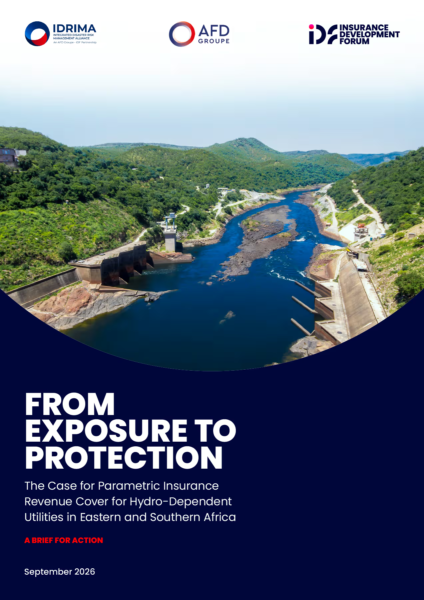
As droughts, floods and climate volatility threaten electricity supplies, a new IDRIMA paper calls for parametric insurance to protect utility revenues, energy tariffs and public finances across Eastern and Southern Africa
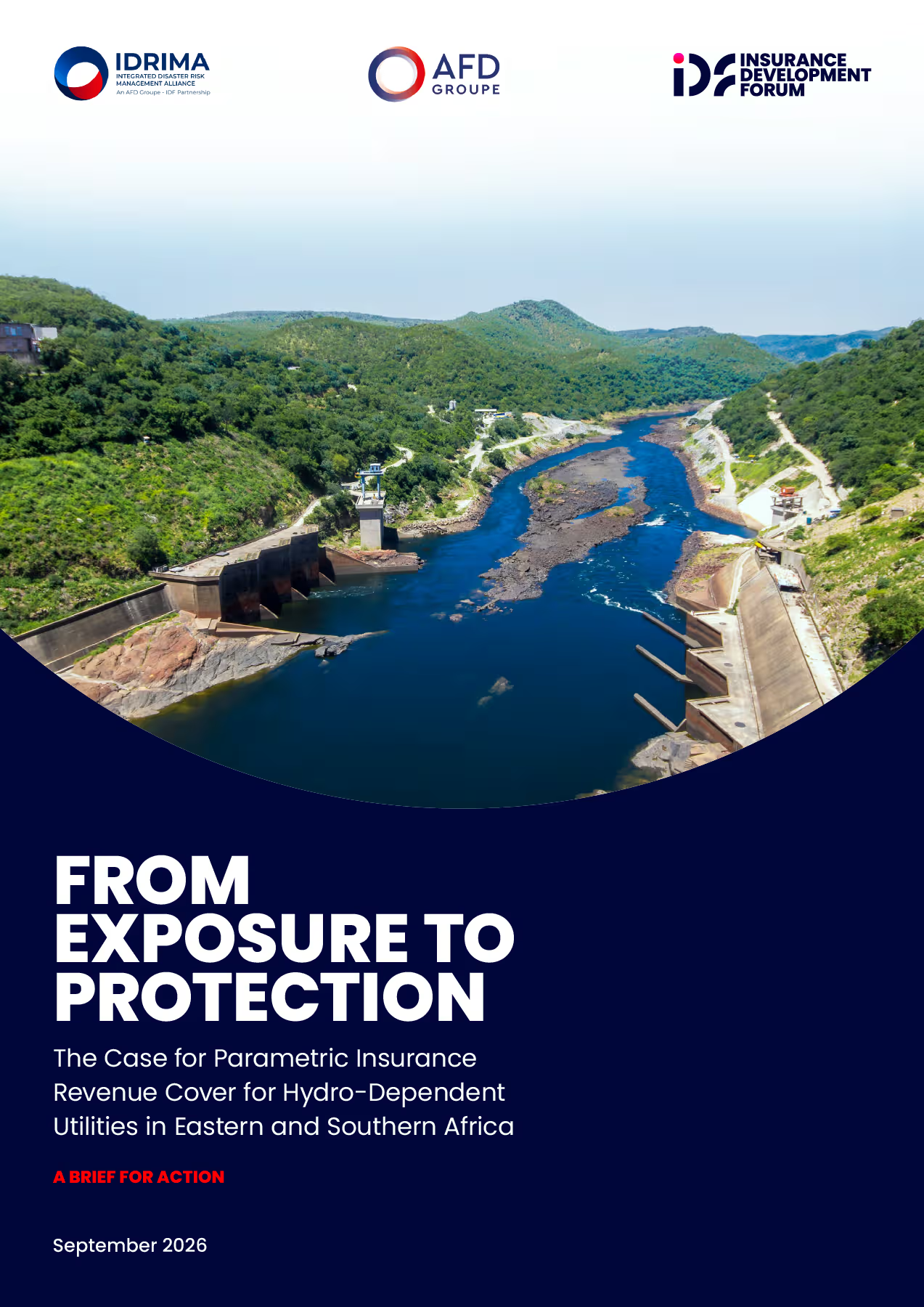
Addis Ababa, September 16, 2026 , By Ayele Addis Ameblu, Africa’s growing dependence on hydropower is creating a climate-financial vulnerability that could increasingly reach beyond dams and power stations to household electricity bills, government budgets and national economies. A new paper from the Integrated Disaster Risk Management Alliance (IDRIMA) argues that parametric insurance could provide a rapid financial shield for hydro-dependent electricity utilities facing drought-driven revenue losses.
The warning comes against a difficult electricity backdrop. According to the IDRIMA paper, 80% of firms and nearly 60% of households in sub-Saharan Africa regularly face unplanned electricity outages. At the same time, hydropower provides more than 17% of Africa’s electricity generation, while its share exceeds 80% in countries including Ethiopia, the Democratic Republic of Congo, Malawi, Mozambique, Uganda and Zambia.
When the Rain Stops, the Financial Shock Begins
The problem is not simply that drought can empty reservoirs. For hydro-dependent utilities, falling water levels can trigger a chain reaction: electricity generation declines, revenues fall, expensive thermal generation or imports become necessary, debt obligations remain fixed and governments can ultimately be forced to step in.
The 2023–24 drought in Zambia provides one of the clearest examples. Usable live storage at Kariba Dam fell to 2.89% by December 11, 2024, while ZESCO’s generation from Kariba North Bank dropped dramatically. Load shedding reached up to 21 hours a day, affecting around 80% of the population and businesses. Zambia’s 2024 economic growth projection was subsequently revised from 4.7% to 2.3%, according to the evidence compiled in the IDRIMA paper.
The paper argues that such shocks expose a structural weakness in African electricity systems: most hydropower utilities do not have dedicated financial protection against drought-related revenue shortfalls or disruptions caused by excessive rainfall. Instead, the financial burden can be transferred from the utility to consumers, government budgets and, ultimately, sovereign borrowing capacity.
A Different Insurance Model for a Different Climate Risk
IDRIMA’s proposed answer is parametric insurance, an index-based form of insurance that pays when a pre-agreed objective indicator crosses a specified threshold.
Rather than waiting for an insurance assessor to determine the physical damage to a power station, a policy can be linked to measurable indicators such as rainfall, reservoir levels, river flows or other hydrological variables. Once the agreed threshold is breached, the payout can be made rapidly, potentially within days or weeks rather than the months sometimes required for conventional indemnity claims.
For electricity utilities, the attraction is fundamentally financial. A drought can simultaneously reduce electricity generation and increase the cost of replacement power. Parametric revenue protection is designed to provide liquidity during that exact period, helping utilities manage their cash flow while maintaining operations.
The IDRIMA paper describes the concept as a way of transforming an uncertain emergency expense into a known annual insurance premium, with funds available when a climate shock occurs without necessarily increasing public debt.
Uganda’s Experience Shows Who Ultimately Pays
Uganda offers another illustration of what can happen when hydrological risk reaches the electricity market.
During the 2005–06 drought, Uganda’s available generating capacity reportedly fell from about 300 MW to 135 MW, while the production gap approached half of national demand. By late 2006, electricity prices had reached approximately US$0.24 per kWh, while the state-owned transmission company was subsidising electricity by about US$126 million that year.
The lesson highlighted by IDRIMA is that the economic cost of hydrological shocks does not disappear. It is simply transferred. Consumers may face higher tariffs, while governments and public utilities may absorb the remaining costs through subsidies or emergency financing.
Revenue protection, the paper argues, could help interrupt this transmission by providing funds to cover part of the financial shock before it becomes a wider fiscal or tariff crisis.
Kenya Emerges as a Potential Building Block
Kenya is already being examined as a potential starting point for a regional approach.
KenGen operates about 80% of Kenya’s grid and has approximately 850 MW of installed hydropower capacity, representing about 40% of national electricity output. Its Seven Forks hydropower cascade on the Tana River is particularly exposed to drought conditions. When rainfall declines, hydropower generation falls, contractual penalties can reduce revenues, expensive thermal backup may be required and debt-service obligations continue regardless of the amount of electricity generated.
IDRIMA, together with ZEP-RE, Swiss Re and Britam General Insurance, is examining a rainfall-triggered parametric product for KenGen. The project is still described as being at an early stage, but IDRIMA identifies it as a potential building block for a wider hydropower risk pool in Eastern and Southern Africa.
“When the rain fails, it is not just a dam that empties. It is a national energy system under stress,” said Austin Ouko, Insurance Director at KenGen. He added that reliable data can help the utility engage with reinsurers on pricing and make the case internally for investment in insurance solutions.
From National Protection to Regional Risk Pooling
The paper goes beyond individual utilities and proposes examining the potential for regional risk pooling.
Eastern and Southern Africa already have regional electricity markets through the Eastern Africa Power Pool and Southern African Power Pool. Cross-border electricity trade can provide a buffer when one country experiences a generation shortfall, but the same interconnectedness can become a vulnerability when neighbouring countries experience the same climate shock simultaneously.
IDRIMA argues that regional insurance could similarly diversify financial risk if drought conditions are not perfectly correlated across participating countries. Evidence cited in the paper suggests hydrological conditions in Eastern and Southern Africa have important differences, although the authors stress that the actual degree of correlation among current EAPP and SAPP members needs to be tested using historical rainfall, streamflow, reservoir and generation data before the financial benefits of a regional pool can be quantified.
The paper cites evidence that diversified hydrometeorological risk pools can potentially reduce the cost of achieving a given level of protection, with estimated reductions of 27% to 65%, depending on the correlation structure among participating risks.
The Insurance Already Exists: The Scale Does Not
Parametric insurance for energy infrastructure is not merely theoretical. The IDRIMA paper identifies existing or previously placed products in Brazil, Uruguay, Nepal, Colombia and Southern Africa, covering hydrological, rainfall, seismic and other climate-related risks.
The proposed expansion therefore focuses less on inventing an entirely new financial instrument and more on creating the institutional, regulatory and financial conditions needed to deploy it at scale.
For IDRIMA, the process involves three stages: risk assessment, solution design and placement. The first stage examines how hydrological variability translates into generation and financial losses. The second develops an insurance structure around the utility’s actual risk profile. The third moves the solution toward the market and policy placement.
AFD and IDF Call for Action
IDRIMA is a joint initiative of the Agence Française de Développement (AFD Group) and the Insurance Development Forum (IDF). Its stated purpose is to help governments, utilities, municipalities and development banks move from climate-risk exposure toward financial protection.
Céline Boulay, IDRIMA facility lead at AFD Group, said the current El Niño–Southern Oscillation conditions demonstrate the urgency of addressing climate risks facing energy utilities.
“We hope that this paper will help understanding of how parametric insurance for critical infrastructure can be integrated into national disaster risk financing strategies, alongside reserves and contingent credit – and prompt action,” Boulay said.
IDF Secretary General Ekhosuehi Iyahen similarly emphasised the wider economic significance of reliable energy supply, saying: “Energy supply is at the heart of every country’s economic and social development; when it fails people and businesses suffer real consequences and economies pay the price.”
What Governments and Utilities Are Being Asked to Do
The IDRIMA paper calls on power utilities and state-owned enterprises to assess their climate-risk and insurance readiness before the next major hydrological shock. It also calls on ministries of finance to consider parametric energy risk transfer alongside reserves and contingent credit within national disaster-risk financing strategies.
Energy regulators are urged to clarify whether insurance premiums for climate-risk protection can be recognised as eligible costs within regulated utilities’ revenue requirements. Insurance regulators, meanwhile, are encouraged to clarify how parametric revenue contracts should be legally classified and regulated and to support frameworks that enable such products to operate across borders.
The paper also points to the 2025 Zanzibar Declaration, under which insurance supervisors from 12 Eastern and Southern African countries committed to developing enabling frameworks for critical infrastructure insurance and regional risk-pooling mechanisms.
Protection, Not a Substitute for Resilience
IDRIMA stresses that parametric insurance is not a replacement for investment in resilient infrastructure, diversified generation, contingency reserves or conventional property insurance. It also carries a significant limitation known as basis risk, the possibility that the index does not perfectly correspond with actual losses.
A well-designed policy therefore requires reliable data, careful trigger calibration and transparent disclosure of what the insurance will and will not cover.
The broader message of the paper is that climate resilience in Africa’s electricity sector will require more than building dams, transmission lines and generating capacity. It will also require financial systems capable of absorbing the shocks that infrastructure alone cannot prevent.
As hydrological uncertainty grows and electricity demand rises, the debate is shifting from whether African power systems are exposed to climate risk to how that risk will be financed when the next drought arrives.
This version is written as a publishable news/feature story, rather than as a press-release rewrite. I can also turn it into a stronger investigative African media style, with a shorter 8–10 word headline, SEO headline, standfirst, pull quotes, and a more dramatic opening focused on Ethiopia, Zambia, Kenya and Uganda.