





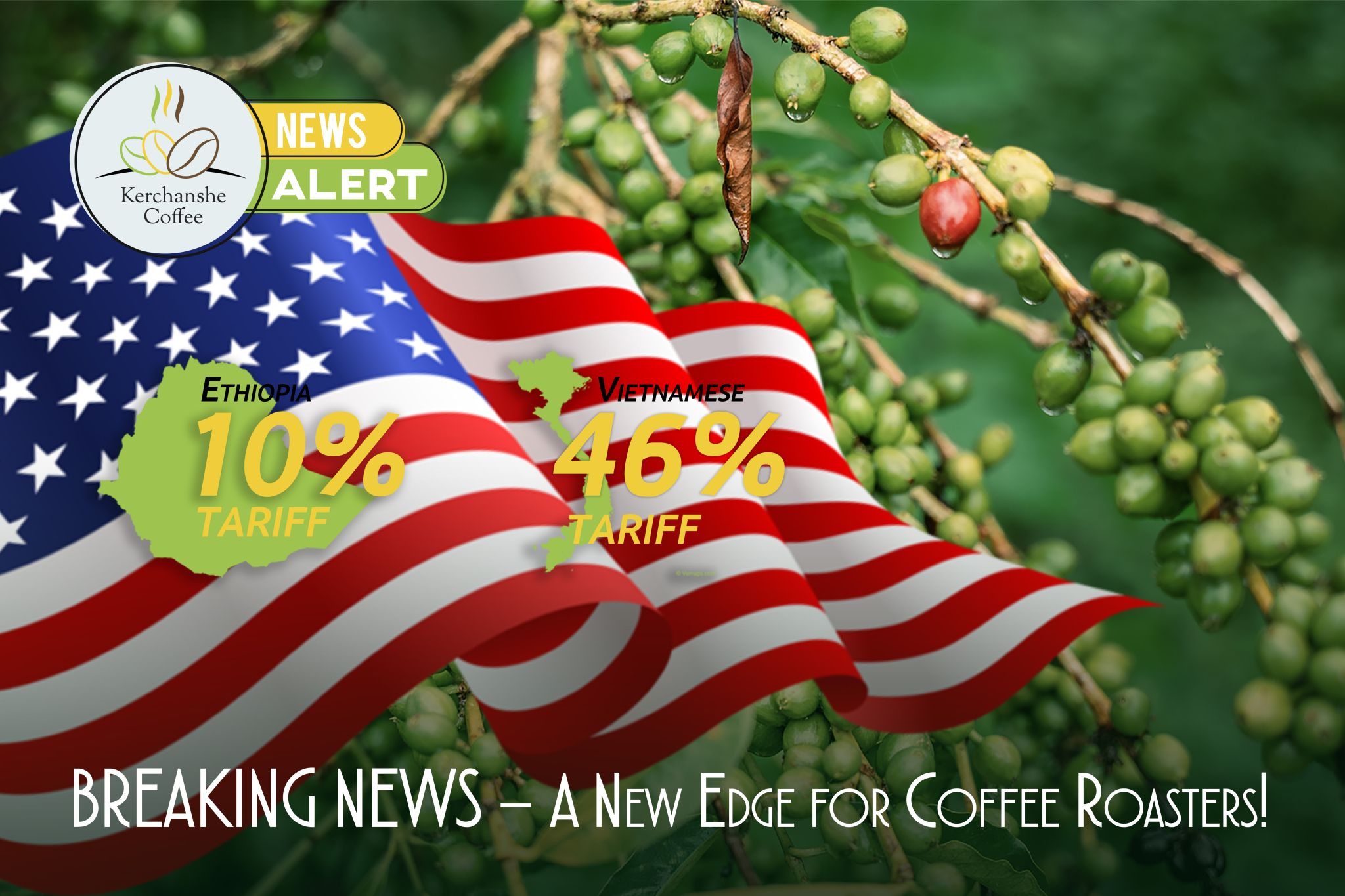
In a move sending ripples through the global coffee supply chain, the United States has implemented sweeping tariffs on green coffee imports, effective April 5, 2025. The new policy imposes duties ranging from 10% to 46%, with major coffee-producing nations like Vietnam facing the brunt of it at a steep 46%, while Nicaragua has been hit with 18%. In stark contrast, Ethiopia, the birthplace of Arabica coffee, faces a comparatively moderate 10% tariff. This differential may prove pivotal in reshaping coffee trade routes and consumer preferences.
The implications are profound, especially for the millions whose livelihoods are tied to coffee production. The country’s resilience is being tested in Ethiopia, where coffee accounts for nearly 30% of foreign exchange earnings and supports the incomes of over 15 million smallholder farmers. Yet, amid the uncertainty, Ethiopia appears poised not just to survive, but to thrive.
“These tariffs are a wake-up call,” said Dr. Lena Tesfaye, a trade policy expert at Addis Ababa University. “They reveal which countries have built sustainable, traceable systems—and Ethiopia, particularly through private sector actors like the Kerchanshe Group, has done exactly that.” She notes that Kerchanshe’s long-term investment in infrastructure, farm-to-port logistics, and digital traceability now gives Ethiopia a competitive edge beyond price alone.
The Kerchanshe Group, Ethiopia’s largest coffee exporter, has responded to the tariff announcement with strategic agility. Its flagship brand, Kerchanshe Coffee, continues to command attention in international markets through a portfolio of beans from renowned farms such as Gelana Gesha, Bale Mountain, Debeka, and Gibe Geisha. These farms produce premium Arabica varieties highly valued for their distinctive flavor profiles—from Sidamo’s citrus brightness to Guji’s floral notes.
“In the face of a 10% tariff, buyers want to know they’re still getting quality, traceability, and sustainability. That’s where Ethiopia delivers,” said Abinet Mesfin, Director of Global Sales at Kerchanshe. He explained how their efficient supply chain helps offset the added duty. “We have one of the most transparent systems in Africa. Each lot can be traced to the farm and farmer group, which gives roasters peace of mind—and keeps Ethiopian coffee in demand.”
According to a recent report by the International Coffee Organization (ICO), Ethiopia’s traceability efforts and diversified agro-climatic zones position it to weather global trade shocks better than most competitors. The report highlights that Ethiopia’s unique heirloom varieties, grown organically and often under forest canopy, offer natural advantages that tariff policies cannot dilute.
The stakes are personal for smallholder farmers like Alemnesh Kassa, who grows coffee in the Yirgacheffe region. “Our beans have always spoken for themselves,” she said. “But now, the world is listening more carefully. With Kerchanshe helping us process, package, and export directly, we’re getting better prices—and keeping our children in school.” Her story is echoed by many in Ethiopia’s coffee belt, where entire communities depend on coffee for survival.
However, while Ethiopia celebrates its relative advantage, countries like Nicaragua and Vietnam face more existential challenges. The new tariffs risk excluding them from the U.S. market altogether. A 2024 study by the Center for Global Trade and Development warns that countries without strong trade diversification or traceability mechanisms may lose up to 40% of their U.S. coffee export revenue in the next 12 months. This, the study says, could result in widespread job losses and economic contraction.
In contrast, Ethiopia is seizing the opportunity to scale up. The Ethiopian Coffee and Tea Authority announced plans to accelerate digital certification tools and expand partnerships with U.S., Canadian, and European roasters. “Ethiopia’s coffee is more than a commodity—it’s a heritage product,” said Dr. Fikru Molla, a researcher in agricultural economics. “This new policy shift is helping the world rediscover its value.”
Still, experts warn that Ethiopia’s success should not breed complacency. Climate change threatens highland coffee zones with erratic rainfall and rising temperatures. Maintaining resilience, they argue, will depend on continuing investment in climate-smart farming, youth training programs, and farmer cooperatives.
Back in Addis Ababa, as coffee traders hustle between warehouses and customs offices, there is a sense that Ethiopia’s moment has arrived—not just by default, but by design. For companies like Kerchanshe, which has built its brand on consistency, transparency, and farmer empowerment, the challenge is clear: keep raising the bar while keeping prices fair.
As tariffs reshape the global bean belt, Ethiopia is no longer just a historical birthplace of coffee. It is becoming the beating heart of a new, more equitable, innovative coffee economy.
Breaking News: Green Coffee Tariffs Shake the Industry – Ethiopia Rises to the Challenge By Ayele Addis Ambelu | April 13, 2025








