The appointment of Ahunna Eziakonwa as the United Nations Under-Secretary-General and Special Adviser on Africa represents more than a change in personnel at UN Headquarters. It comes at a moment when Africa is seeking a stronger voice in global decision-making, greater ownership of its development agenda, and more equitable partnerships with international institutions.
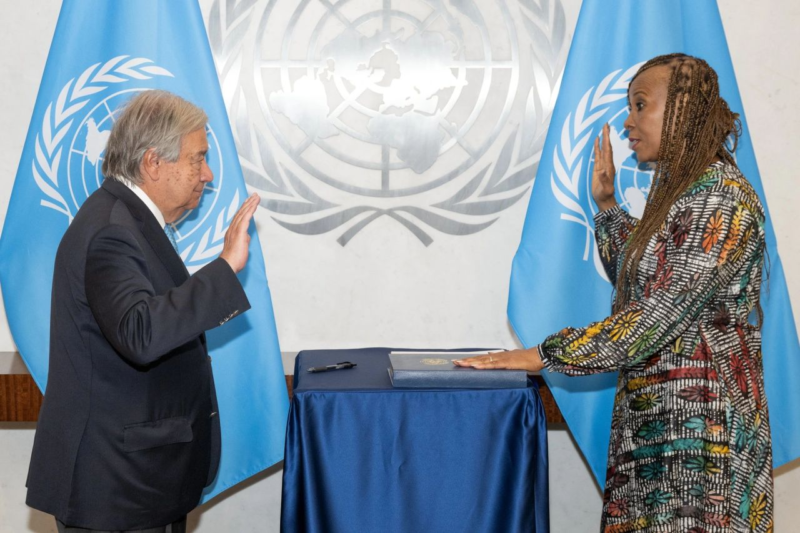
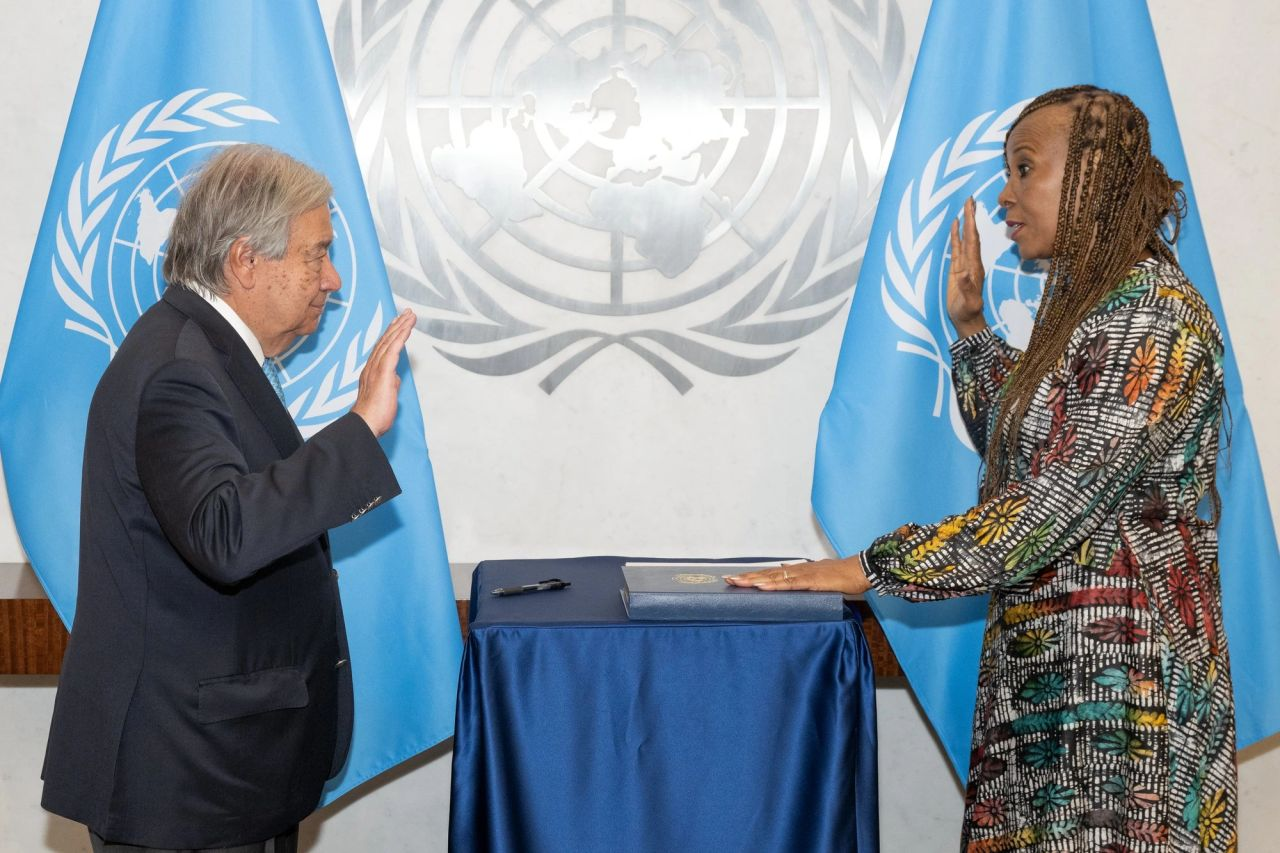
Eziakonwa was sworn in by UN Secretary-General António Guterres in New York on 28 August 2026, formally beginning her tenure in the senior UN position.
From Africa’s development leadership to the UN’s global policy centre
Eziakonwa arrives in the position with extensive experience across the African continent and within the UN system. She previously served as UNDP Assistant Administrator and Regional Director for Africa, leading UNDP’s work supporting 46 African countries toward the Sustainable Development Goals.
Her experience is particularly significant because her career has not been limited to headquarters-level policymaking. Before leading UNDP’s Africa portfolio, she served as UN Resident Coordinator and UNDP Resident Representative in Ethiopia, Uganda and Lesotho, and held senior responsibilities within the UN Office for the Coordination of Humanitarian Affairs.
Her previous assignment in Ethiopia is especially notable. She served as the UN Resident Coordinator and UNDP Resident Representative in Ethiopia from 2015 to 2018, giving her direct experience of one of Africa’s most strategically important political, economic and humanitarian environments.
Why the appointment matters for Africa
The Special Adviser on Africa operates at the intersection of African priorities and the international system. The position therefore has the potential to influence how African issues are understood and represented within the UN’s broader political and development agenda.
For decades, African governments and institutions have argued that the continent should not simply be treated as a recipient of international assistance. Increasingly, African leaders are demanding partnership rather than dependency, greater African ownership of development programmes, and stronger representation in global institutions.
Eziakonwa’s previous work suggests that she understands this shift.
In 2026, while still serving as UNDP Africa’s Regional Director, she emphasized that Africa was facing external shocks but also that the continent’s opportunities were becoming clearer.
That perspective is important because Africa’s current challenges cannot be separated from global economic and geopolitical developments.
Africa is no longer only a development story
One of the most important questions facing Eziakonwa will be whether the international community continues to frame Africa primarily through poverty, humanitarian crises, conflict and aid.
Africa is simultaneously a continent of rapid demographic growth, expanding markets, natural resources, technological innovation, renewable-energy potential and a young population.
Eziakonwa has previously advocated for changing narratives about Africa and emphasized opportunities, inclusion, youth entrepreneurship and the dignity of African people. UNDP describes her vision as using an “opportunity lens” to development practice in Africa.
Her new position gives her an opportunity to take that narrative beyond UNDP and into the wider UN system.
The youth question
Africa’s demographic transformation will be one of the defining issues of the coming decades.
A continent with one of the world’s youngest populations needs international policies that move beyond emergency assistance toward employment, entrepreneurship, education, digital transformation, innovation and meaningful political participation.
Eziakonwa has previously established and supported initiatives focused on young women leaders, youth entrepreneurship and African innovation.
Her new role could therefore become an important platform for arguing that Africa’s youth should not be viewed merely as beneficiaries of development programmes but as drivers of Africa’s economic and political future.
Women and African leadership
Her appointment also carries a strong gender dimension.
Eziakonwa is a senior African woman moving into one of the UN’s most influential leadership levels. Her career demonstrates the increasing importance of African women in shaping international development and diplomacy.
But symbolism alone will not be enough.
The larger test will be whether her tenure contributes to greater inclusion of African women in international decision-making, peacebuilding, development financing, climate negotiations and multilateral institutions.
A critical moment for global partnerships
Africa’s relationship with the global system is undergoing major changes.
The continent is simultaneously engaging with traditional Western partners, China, India, Gulf countries, Russia and emerging South-South partnerships. African states are also seeking greater influence through institutions such as the African Union and the African Continental Free Trade Area.
The UN therefore faces a changing Africa—one that increasingly expects to participate in defining the rules rather than simply implementing decisions made elsewhere.
Eziakonwa’s challenge will be to help translate African priorities into the language and mechanisms of global multilateralism.
The Ethiopia connection
For Ethiopia, Eziakonwa’s appointment is particularly interesting because of her previous service in the country.
Her experience as UN Resident Coordinator and UNDP Resident Representative means that she has firsthand knowledge of Ethiopia’s development environment and the complexities facing the country.
That experience could provide valuable institutional memory as the UN addresses Ethiopia’s development priorities, humanitarian needs, peacebuilding, economic transformation and regional role.
However, her new mandate is continental and global rather than Ethiopia-specific. Her broader responsibility will be to ensure that African priorities are effectively incorporated into UN decision-making.
The bigger question: Can Africa’s voice become Africa’s influence?
This is ultimately the central question surrounding the appointment.
Africa has a strong numerical presence in the UN system, but numerical representation does not automatically translate into decision-making power.
The continent continues to push for reforms of the international financial architecture, greater representation in global institutions, stronger African participation in peace and security decisions, and a more equitable international economic system.
Eziakonwa’s appointment therefore comes with considerable expectations.
Her success should not be measured simply by how frequently Africa is discussed at UN Headquarters. It should be measured by whether African priorities influence policies, financing, partnerships and international decisions.
A new chapter—but also a demanding mandate
Ahunna Eziakonwa brings to the position more than two decades of UN and African development experience, including senior assignments in several African countries and leadership of UNDP’s Africa portfolio.
Her transition from leading a major UN development portfolio for Africa to advising the UN Secretary-General at the Under-Secretary-General level creates an opportunity to connect development, diplomacy, peace, economic transformation and Africa’s global representation.
Her appointment is therefore significant not simply because an African woman has reached another senior international position, but because the world is entering a period in which Africa’s demographic, economic, political and strategic importance is becoming increasingly difficult to ignore.
The challenge now is to turn that growing importance into genuine influence.
For Africa, the message should be clear: representation matters—but representation must ultimately lead to influence, ownership and results.
Ahunna Eziakonwa’s new assignment begins at precisely that crossroads.
Ayele Addis Ambelu