





By Ayele Addis Ambelu (ayeleradio@gmail.com)
As the world grapples with the adverse effects of climate change, the transition from fossil fuels to renewable energy has emerged as a critical focus for nations globally. Renewable energy technologies such as solar, wind, and hydropower have taken center stage in the battle to reduce greenhouse gas emissions, promote sustainable development, and secure energy independence. However, the journey is not without its challenges, especially for countries whose economies are heavily reliant on fossil fuels.
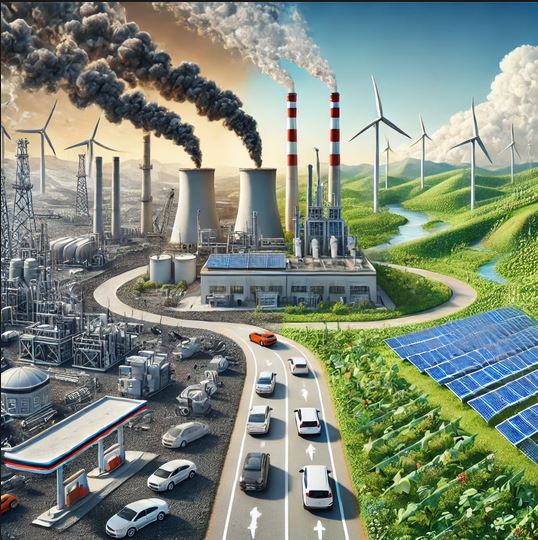
The Renewable Energy Revolution: Will Africa’s Transition Break the Chains of Oil Dependence?
Global Dependence on Fossil Fuels: A Legacy of Pollution
The United Nations Intergovernmental Panel on Climate Change (IPCC) has made it clear: fossil fuel emissions are the primary drivers of global warming. According to a 2018 IPCC report, 89% of global carbon dioxide emissions stemmed from fossil fuel combustion and industrial processes, making it the largest contributor to the global climate crisis. This has led to rising temperatures, melting polar ice caps, extreme weather patterns, and increased sea levels. Experts have warned that if countries continue to burn fossil fuels at current rates, the world will face catastrophic consequences.
In response to these threats, many nations are accelerating their renewable energy initiatives. Europe and China, for example, have made significant strides in solar and wind technology, driving the global transition away from oil. But these technologies are not equally accessible everywhere. While some countries are enjoying the benefits of cleaner energy, others face technological, economic, and political challenges in making the shift.
The Role of Renewable Energy Technology: Paving the Way Forward
Renewable energy technologies are at the heart of the global movement towards sustainability. Solar power, wind turbines, and hydropower systems are now seen as clean, sustainable alternatives to fossil fuels, offering the potential to reduce air pollution and carbon emissions significantly. Solar panels and wind turbines are becoming more efficient and affordable, while innovations in battery storage and electric vehicles are helping bridge the gap between intermittent renewable energy sources and the constant demand for electricity.
According to Besen International Group, the development of electric vehicles (EVs) has accelerated significantly since the 1970s oil crisis. Concerns over fuel shortages, inflation, and the environmental impact of fossil fuels prompted this shift. As Besen’s report explains, “Governments and car manufacturers began exploring electric vehicles to reduce reliance on oil, leading to innovations in battery technology and charging infrastructure.” Today, lithium-ion batteries dominate the market, offering longer life, more power, and faster charging times, making electric vehicles a viable alternative to gasoline-powered cars.
In 1997, Toyota’s Prius hybrid vehicle marked a significant turning point in the automotive industry, combining an electric motor with a gasoline engine. This innovation not only brought greener options to consumers but also paved the way for fully electric vehicles to gain popularity. Today, electric vehicles are not just seen as a tool for reducing emissions; they are also a driver of economic growth, creating jobs in the renewable energy sector.
African Challenges: Technological and Economic Barriers
While electric vehicles and renewable energy technologies are gaining ground globally, Africa faces significant challenges in making the transition from fossil fuels. Melsewu Shanko, founder and manager of the Ethiopian renewable energy consulting company Megen Power, noted, “Ninety percent of Ethiopia’s energy is sourced from renewables, yet technological and economic barriers persist across Africa.” In an interview, he emphasized that without the necessary political will and investment in infrastructure, the renewable energy transition will be difficult to achieve.
Africa, despite its vast renewable energy potential, remains heavily dependent on oil and gas. The REN21 Institute recently conducted a study involving 114 energy experts, many of whom expressed optimism that global energy needs could be met entirely by renewable sources by 2050. However, 17% of experts, particularly those from the U.S. and Japan, were skeptical about the feasibility of this goal, citing the continued dominance of oil and coal in the energy mix, especially in transportation.
In the same study, African and Latin American scholars highlighted the lack of technical expertise and inconsistent energy policies as major obstacles to achieving widespread use of renewable energy in their regions. The cost of renewable technologies, such as solar panels and wind turbines, remains prohibitively high for many countries, while the lack of skilled labor and infrastructure makes maintenance and repairs challenging.
Ethiopia’s Renewable Energy Journey: A Model for Africa?
Despite these challenges, Ethiopia is emerging as a leader in the renewable energy space, driven by its ambitious Green Economy Strategy. With over 60,000 megawatts (MW) of renewable energy potential, including hydropower, geothermal, wind, and solar resources, Ethiopia has the opportunity to reduce its reliance on fossil fuels and become a green energy powerhouse in Africa.
According to Ethiopia’s Ministry of Water, Irrigation, and Energy, the country’s electricity roadmap aims to increase energy capacity from 4,280 MW to 17,300 MW by 2025. Much of this expansion will come from geothermal projects like the Corbetti and Tulu Moye Geothermal Projects, which have attracted foreign investment from companies like Reykjavik Geothermal. As Ato Melaku Tolcha, Director of Communications at the Ministry, noted, “These projects are critical to achieving Ethiopia’s goal of 100% electricity coverage by 2025, providing reliable and sustainable energy to rural and urban populations alike.”
Despite the potential, hydropower still accounts for 94% of Ethiopia’s energy mix, leaving the country vulnerable to fluctuations in rainfall and water levels due to climate change. To address this, Ethiopia is diversifying its energy sources by developing its geothermal and wind power capabilities. The Great Ethiopian Renaissance Dam (GERD) is a critical part of this strategy, but as Dr. Gebremeskel Zewdie, an energy researcher, cautioned, “Hydropower alone will not be sufficient in the face of climate change. Ethiopia must prioritize other renewable sources to ensure long-term energy security.”
Renewable Energy: A Global Imperative with African Leadership
The global push for renewable energy is both an environmental and economic necessity. The REN21 Institute reports that more than 70% of energy scholars believe that the world can fully transition to renewable energy by 2050, but this goal will require political will, technological innovation, and international cooperation. For Africa, the transition is critical—not just for reducing emissions, but also for securing energy independence and creating economic opportunities.
In Ethiopia, the shift towards renewable energy is already happening, albeit slowly. Ato Melsewu Shanko believes that with the right investments and policies, Africa could become a global leader in renewable energy. “Africa has the potential to generate twice as much renewable energy as it currently consumes,” he said. “But to do so, governments must prioritize long-term sustainability over short-term economic gains from fossil fuels.”
As the world watches, Ethiopia’s progress will be a litmus test for the continent’s renewable energy future. The challenges are immense, but with visionary leadership, technological innovation, and international support, Ethiopia and other African nations have the opportunity to break free from the chains of oil dependency and lead the world into a sustainable, carbon-free future.








