





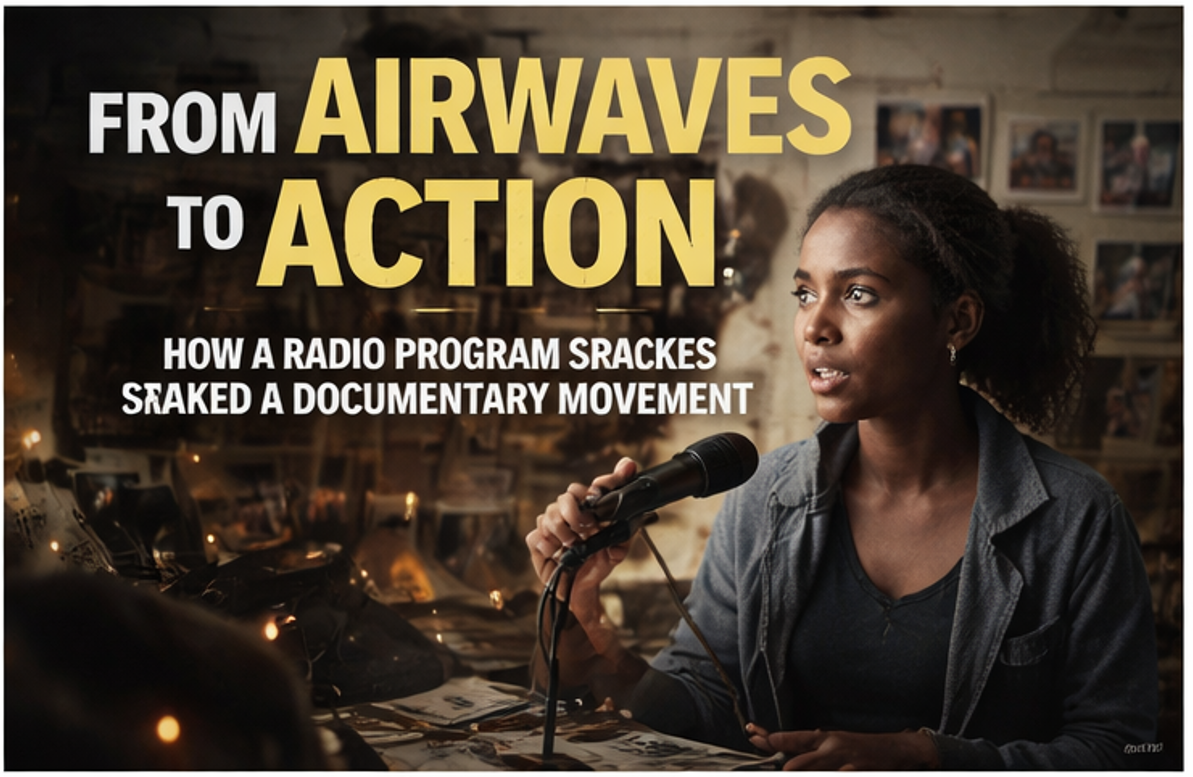
By ARMACA: When Stories Refuse to End
Some stories demand more than attention.
They demand transformation.
That is what happened when a national radio program built on the Pulitzer investigation
Falling Like Leaves: The War in Ethiopia and Its Crimes Against Civilians sparked an unexpected outcome:
A documentary movement led by young journalists
Theme
Transforming journalism into action and visual storytelling
Narrative Summary
This article explores:
- How radio inspired documentary production
- Youth-led storytelling innovation
- The evolution from listening to action
In-Depth Narrative
1. The Trigger: Emotional Impact of Radio
Listeners didn’t just hear stories.
They felt them.
One young journalist said:
“We couldn’t just listen. We had to act.”
2. Documentary as Evidence
The team began documenting:
- Survivor testimonies
- Radio discussions
- Field realities
This reflects the core principle of the Pulitzer story:
Witnessing matters
3. Linking to Global Discourse
The project aligns with global discussions on:
- Humanitarian crises
- Food insecurity
- Conflict accountability
As highlighted in expert forums:
Starvation and aid restriction are weapons of war
4. Expanding the Narrative
The documentary:
- Visualized hidden suffering
- Preserved testimonies
- Extended audience reach
5. Youth as Change Agents
Young journalists became:
- Storytellers
- Documentarians
- Advocates
6. The Future of Media in Ethiopia
This model represents a shift:
Transformation Model
- Journalism → Dialogue → Action → Film
7. Continuing Relevance
Despite peace agreements:
- Conflict impacts persist
- Stories remain untold
- Justice is incomplete
Conclusion
This is not just a media story.
It is a movement.
👉 From silence to voice
👉 From voice to action
👉 From action to transformation
“From Airwaves to Action: How a Radio Program Sparked a Documentary Movement”
Introduction: When Listening Was Not Enough
The radio program ended.
But for a group of young journalists, it was only the beginning.
They had listened.
They had heard the pain.
And they knew one thing:
👉 This story could not stop at the radio
Chapter 1: The Moment That Changed Everything
One participant described the turning point:
“When I heard the voices, I realized—this must be seen, not just heard.”
The program’s emotional weight triggered a creative response.
Chapter 2: Turning Sound into Sight
The team began transforming the radio content into a documentary.
They used:
- Eyewitness testimonies
- Audio recordings
- Field narratives
Their goal:
To visualize the invisible
Chapter 3: A New Storytelling Model
This project created a powerful transition:
📊 Media Transformation Flow:
Investigative Story → Radio Dialogue → Public Participation → Documentary Film
This model:
- Expands audience reach
- Deepens emotional impact
- Preserves testimonies
Chapter 4: Youth at the Center
Young journalists led the process.
They brought:
- Innovation
- Digital storytelling skills
- A strong sense of urgency
One of them said:
“We are not just reporting history—we are documenting it as it happens.”
Chapter 5: Challenges Behind the Camera
The process was not easy.
They faced:
- Limited resources
- Sensitive subject matter
- Emotional burden
One filmmaker shared:
“Listening to these stories every day changes you. You carry them.”
Chapter 6: Why This Matters
This transformation represents more than a project.
It signals a shift in media:
✔ From passive consumption → active creation
✔ From reporting → storytelling
✔ From silence → visibility
Conclusion: A Story That Refuses to End
The radio program gave people a voice.
The documentary gives those voices permanence.
Together, they create something powerful:
A living archive of truth, resilience, and memory
#BreakingTheSilence #VoicesThatMatter #HearTheirStories #SilencedNoMore #AfricaRising #ChangeThroughMedia #PowerOfStories #SpeakTruth #EndHumanSuffering @PulitzerCenter #PulitzerCenter #Ethiopia #VoicesOfEthiopia #JournalismMatters #Peacebuilding #CivicDialogue #HumanRights #ConflictReporting #AfricaMedia #StorytellingForChange #MediaForPeace








