





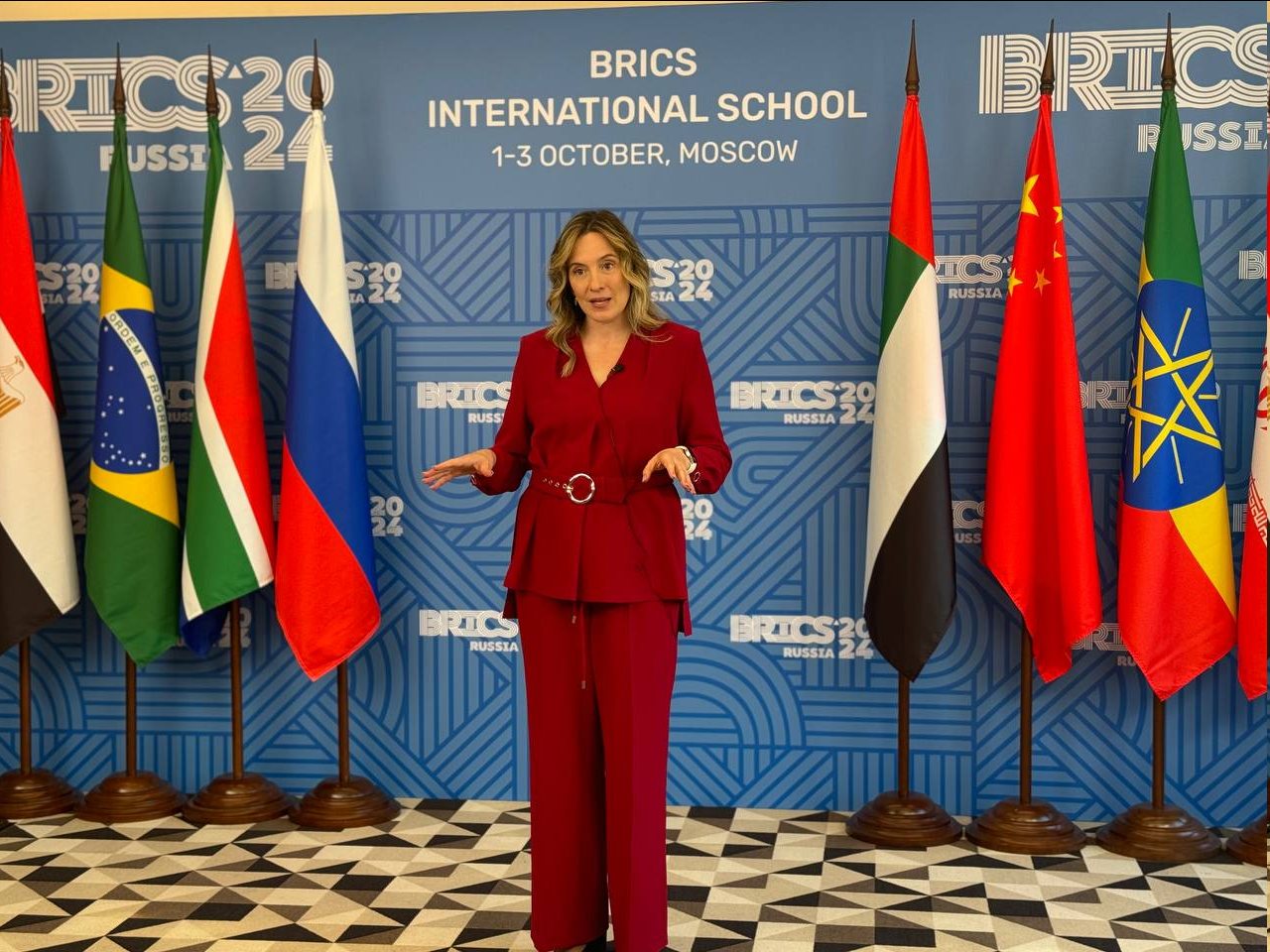
By Ayele Addis Ambelu, Moscow, Russia – October 1, 2024
The BRICS International School 2024 officially commenced today in Moscow, Russia. It will bring together 85 young leaders from 36 countries to engage in meaningful dialogue on global cooperation, innovation, and diplomacy. The event marks a significant milestone in BRICS’ mission to foster mutual understanding and collaboration among the next generation of global influencers.
“A Step Closer to a Better Future” – Victoria Panova’s Call for Global Youth Leadership
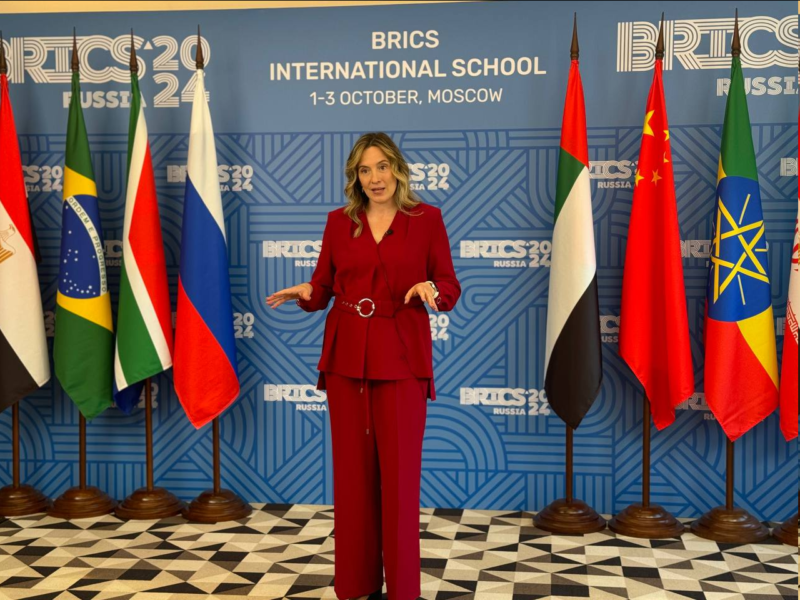
In her keynote address, Victoria Panova, head of the BRICS Expert Council and Vice Rector at HSE University, called on young leaders to unite toward a better, more cooperative future. She emphasized that mutual understanding, respect, and collaboration can only address the world’s challenges.
“We are here to make our world one step closer to a better future. As young leaders, you will have the chance to know each other better, to understand each other’s cultures, mentalities, and perspectives,” Panova told the eager audience. “No country should develop at the expense of others. This is a moment to foster collective growth, for the benefit of all.”
Panova’s remarks set the tone for the event, highlighting the importance of inclusivity and cooperation across borders. She further explained that the young participants are future diplomats or business leaders and torchbearers of a new global order where shared prosperity takes precedence over competition.
The Growing Influence of BRICS on the Global Stage
Georgy Toloraya, CEO of the National Committee on BRICS Research, reflected on the evolution of the BRICS International School, pointing out the increased participation and influence of BRICS in global governance and decision-making.
“When we began this program eight years ago, the turnout and participation were much smaller. But today, as we stand here with representatives from 36 countries, it is clear how BRICS has evolved and progressed over time,” Toloraya said. “This reflects BRICS’ growing stature on the international stage.”
Toloraya’s reflection offers a glimpse into the bloc’s expanding influence, particularly as more nations turn to BRICS as an alternative platform for global dialogue and cooperation. The significant increase in youth participation demonstrates that BRICS’ vision resonates deeply with emerging leaders, who view the alliance as an opportunity to craft innovative solutions to global challenges.
BRICS International School: A Crucible for Young Experts
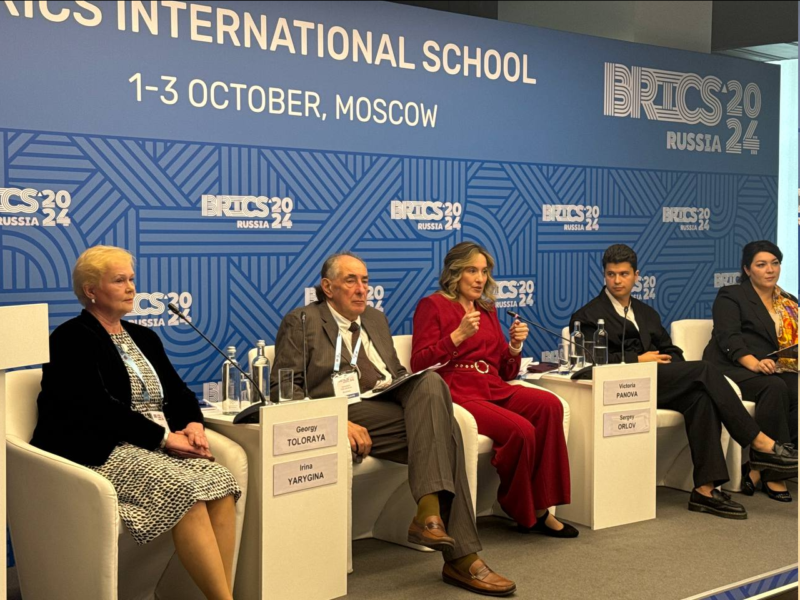
Since its founding in 2017, the BRICS International School has played a key role in developing expertise in BRICS-related studies. Panova noted the school’s critical mission of preparing the next generation of leaders, thinkers, and innovators:
“The BRICS International School is not just an educational initiative; it’s a vital platform where young people from across the world come together to learn, engage, and build lasting partnerships. By investing in youth, we are securing the future of BRICS and its ability to contribute to a fairer, more equitable world.”
Panova emphasized that the school equips participants with the skills and knowledge to tackle real-world issues, particularly those tied to international development, peacebuilding, and sustainable economic growth.
Irina Yarygina: “A Great Responsibility for All of Us”
Irina Yarygina, head of the working group on Financial and Investment Cooperation within the BRICS Expert Council, highlighted the significant responsibility borne by BRICS nations in shaping global governance. She stated:
“We, as BRICS with our partners, are more than a global alliance. This is not just an opportunity for our nations to develop, but a profound responsibility. We are tasked with creating frameworks that support sustainable growth, innovation, and equitable development across the world.”
Yarygina’s comment stresses that BRICS is not just an economic coalition, but an entity committed to influencing global policies in areas such as financial cooperation, infrastructure development, and social welfare. The alliance’s reach now extends far beyond its founding principles, reflecting its determination to reshape global governance structures.
Education at the Core of BRICS’ Long-Term Vision
Sergey Orlov, Deputy Executive Director of the Alexander Gorchakov Public Diplomacy Fund, highlighted the central role of education in BRICS’ strategic vision. He expressed optimism about the growing interest among youth in BRICS-related studies:
“It’s inspiring to see how the younger generation is engaging with BRICS topics. Education is key to building a foundation for long-term cooperation between nations. Our goal is to promote dialogue across fields such as science, culture, and technology, preparing the next generation to lead with empathy and vision.”
Orlov’s remarks underscore the idea that BRICS’ future success lies in the intellectual and cultural exchange fostered through educational initiatives like the BRICS International School. The alliance’s commitment to nurturing young leaders is a clear indication of its forward-thinking strategy.
Participants’ Voices: A Platform for Global Dialogue
The young leaders attending the event echoed these sentiments, expressing enthusiasm for the opportunities provided by the BRICS School from Russia, a participant in this year’s cohort, highlighted the unique platform BRICS offers:
“This is a once-in-a-lifetime opportunity to learn from some of the most brilliant minds in the world and engage in conversations that truly matter. BRICS has created a space where young people can not only learn but actively shape the future.”
Another participant from China, added:
“Being here among peers from different parts of the world has opened my eyes to how much we share in common despite our differences. This is the kind of dialogue that BRICS fosters—one that brings people together to solve global challenges.”
The Path Forward: BRICS 2030 and Beyond
As the BRICS International School 2024 kicks off, the gathering is more than a symbolic gesture; it represents a critical juncture for the alliance as it seeks to empower the next generation of leaders to address the world’s most pressing issues. With initiatives like BRICS 2030, which focuses on sustainable development, education, and technological innovation, BRICS is well-positioned to influence the global narrative in future years.
The event, supported by the BRICS Expert Council-Russia, Alexander Gorchakov Public Diplomacy Fund, and MGIMO University, highlights the importance of education, youth engagement, and global cooperation in shaping a more inclusive and prosperous future.
As these 85 young leaders embark on their journey, they carry the shared goal of building a world where cooperation, respect, and understanding are the guiding principles. In the words of Victoria Panova, “You are the future, and together, you will shape a better tomorrow for all of us.”
BRICSExpertCouncilRussia #BRICSExpertCouncil #InterSchool #BRICSschool








