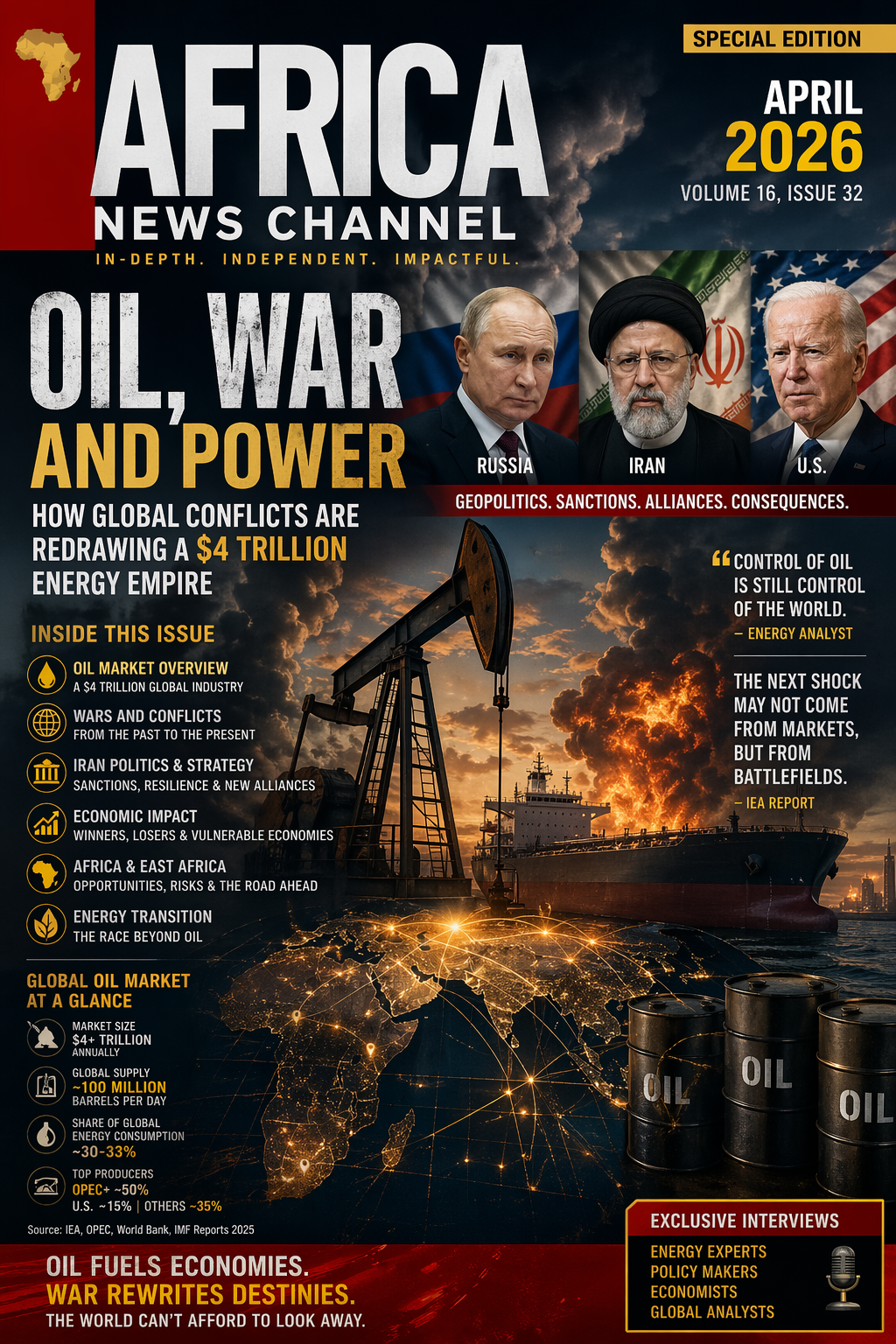
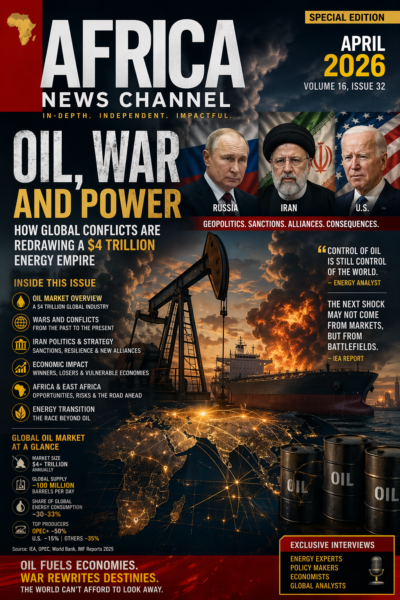
The story of oil has never been just about energy, it is about power, war, and the fragile architecture of global politics. At the center of this system stands OPEC, a group that has long held sway over global supply. Its broader alliance, OPEC+, now includes major producers like Russia, turning oil production into a geopolitical tool. The war in Ukraine exposed this reality in stark terms: Western sanctions on Russian exports disrupted global supply chains, drove prices above $100 per barrel at key moments, and forced a dramatic reorientation of trade flows toward Asia.
Yet beyond the battlefield lies an even larger story, the immense economic weight of oil itself. The global oil market today is valued at more than $4 trillion annually, making it one of the most powerful sectors in the world economy. النفط still accounts for roughly one-third of global energy consumption, according to the International Energy Agency, despite the accelerating push toward renewables.
Production remains concentrated in the hands of a few powerful nations. OPEC members supply around 40 percent of the world’s crude, while the expanded OPEC+ bloc amplifies that dominance. At the same time, the United States has surged ahead as the top producer through shale oil, reshaping traditional hierarchies of energy power.
Demand, meanwhile, is driven by industrial giants such as China, the United States, and India—economies whose growth cycles directly influence global price stability. When these nations expand, oil demand spikes; when they slow, markets tremble.
For oil-producing countries, the stakes are existential. In Saudi Arabia, oil revenues account for the majority of government income, while in Iraq and Nigeria, national budgets are overwhelmingly dependent on crude exports. This reliance creates a paradox: النفط wealth brings prosperity, yet also exposes economies to severe shocks when prices fall.
Nowhere is this tension more volatile than in Iran. For decades, Iran’s oil reserves have fueled both its ambitions and its isolation. Sanctions imposed by the United States and its allies have constrained Tehran’s ability to fully access global markets, while disputes over its nuclear program have kept النفط flows under constant threat. The Strait of Hormuz, through which a significant share of the world’s oil passes—remains one of the most strategically sensitive نقاط in global التجارة.
Recent developments inside Iran add further uncertainty. Economic pressure, domestic unrest, and shifting alliances have pushed Tehran closer to China and Russia, with long-term energy deals signaling a شرقward pivot. Analysts from institutions like the International Monetary Fund warn that such alignments could fragment global energy markets into competing blocs, weakening the unified system that has governed oil trade for decades.
“The النفط market is no longer a single النظام,” noted an analyst affiliated with the World Bank. “We are seeing the emergence of parallel trading systems shaped by politics as much as economics.”
Conflicts beyond the Middle East are reinforcing this shift. The Ukraine war has effectively redrawn Europe’s energy map, forcing countries to reduce reliance on Russian supplies while seeking alternatives from the Middle East, the United States, and Africa. In turn, this has increased competition for resources and intensified geopolitical bargaining.
Africa itself is becoming an গুরুত্বপূর্ণ player in this evolving energy order. Nations like Nigeria and Angola remain key exporters, while emerging producers such as Uganda and Mozambique are attracting significant foreign investment. Yet instability, governance challenges, and security risks continue to limit the continent’s full potential.
In East Africa, the impact of global oil dynamics is felt even in countries that do not produce crude. Kenya, for example, balances ambitions in renewable energy with vulnerability to oil price shocks. Ethiopia, though outside the النفط production chain, faces inflationary pressures and foreign exchange constraints tied directly to global fuel costs, demonstrating how deeply interconnected the system has become.
Despite its dominance, the oil market is inherently volatile. Prices are shaped not only by supply and demand but also by wars, sanctions, and political সংকট. A single escalation—whether in Ukraine or involving Iran—can send shockwaves through global markets within hours. Financial institutions consistently warn that such volatility poses significant risks, especially for developing economies dependent on imports.
Controversy continues to shadow the industry. Critics argue that major conflicts—including the Iraq War—have been deeply entangled with energy interests. At the same time, environmental concerns are intensifying, as reliance on fossil fuels delays efforts to combat climate change.
And yet, the world remains зависим on النفط. Even as renewable energy expands, oil continues to fuel transportation, الصناعة, and global التجارة. The transition to cleaner systems is underway, but it is slow, uneven, and politically contested.
What emerges is a complex, evolving picture: a multi-trillion-dollar energy system shaped as much by conflict as by commerce. From Tehran to Kyiv, from Riyadh to Washington, oil remains both a prize and a weapon—a force that not only powers economies but also reshapes the ভবিষ্যৎ of global order.
In this নতুন geopolitical era, one الحقيقة stands clear: the age of oil is not ending, it is transforming, becoming more fragmented, more politicized, and more unpredictable than ever before.
Special Editon Ayele Addis Ambelu