





By Serawdenk Zereyehuen Birhanu (ANC)
In an ambitious plan set to transform the African continent, Agenda 2063 is being hailed as the “African Century” roadmap, a vision of prosperity, unity, and global influence. Launched in 2015, this strategic framework is built on the aspirations of the African people, aiming to eradicate poverty, build sustainable economies, and position Africa as a key player on the global stage by 2063.
The initiative, spearheaded by the African Union (AU), promises nothing less than a renaissance. It focuses on seven key aspirations that highlight Africa’s potential to lead in areas ranging from economic growth to peacebuilding, climate action, and cultural identity.
“Agenda 2063 is not just a dream, it’s a commitment from all African nations to stand united and take charge of our future,” said AU Chairperson Moussa Faki Mahamat in a bold statement.
Key Pillars of Agenda 2063:
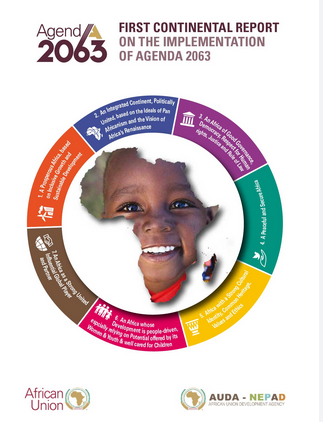
- Aspiration 1: A prosperous Africa based on inclusive growth and sustainable development.
- Aspiration 2: An integrated continent, politically united under Pan-Africanism.
- Aspiration 3: An Africa of good governance, democracy, and rule of law.
- Aspiration 4: A peaceful and secure Africa.
- Aspiration 5: A strong cultural identity, common heritage, and shared values.
- Aspiration 6: People-driven development, especially through women and youth empowerment.
- Aspiration 7: Africa as a strong, united, and influential global player.
These pillars reflect Africa’s hopes of becoming self-reliant, unified, and economically independent. The plan aims to elevate the continent’s GDP to match its vast population and natural wealth.
The Voices Behind the Plan
The creators of Agenda 2063 drew heavily from the sentiments of African citizens across the continent. “This plan reflects the hopes and dreams of every African,” said Dr. Nkosazana Dlamini-Zuma, the former Chairperson of the African Union Commission. “It is a vision for a united and prosperous Africa, free from the shackles of colonialism and economic dependence.”
In interviews with key stakeholders, officials emphasized the urgent need for infrastructure development. “We need a high-speed train network connecting all major cities across Africa. This is not a luxury, but a necessity if we are to compete globally,” commented Amadou Diop, a leading infrastructure expert in West Africa.
Graca Machel, a renowned human rights advocate, further committed to inclusivity: “The women of Africa will be central to this agenda. By 2063, we want women to hold 50% of political and managerial positions.”
Major Projects in Motion
One of the most exciting components of Agenda 2063 is its emphasis on infrastructure. A Pan-African High-Speed Rail Network is set to connect all African capitals, dramatically increasing trade and tourism. Officials believe this will be a “game-changer” for intra-African trade, which is expected to rise from 12% to over 50% by 2045.
In addition, African agriculture is on the cusp of transformation. Agenda 2063 aims to modernize farming by “banishing the hand hoe by 2025,” shifting towards advanced agricultural techniques and boosting food security.
“The agriculture sector is key. By modernizing it, we can feed our people and export surplus, making Africa a global food powerhouse,” explained Joseph Ndung’u, a leading agricultural economist.
Addressing Challenges Head-On
One of the critical challenges addressed by Agenda 2063 is climate change. Africa contributes only 5% to global carbon emissions but bears the brunt of climate-related disasters. The AU is committed to taking bold steps. “We need to prioritize adaptation efforts to protect our vulnerable populations from the devastating effects of climate change,” urged Amina J. Mohammed, Deputy Secretary-General of the United Nations.
At the heart of the plan is a desire for peace and security. By 2020, the AU had pledged to silence all guns on the continent, focusing on conflict resolution and prevention. Though this ambitious deadline has passed, officials remain optimistic. “We will not rest until Africa is free from conflict,” declared Faki Mahamat. “Peace is the foundation upon which all development will be built.”
Women, Youth, and the Future
Agenda 2063 explicitly focuses on gender equality and youth empowerment. The African Youth Charter and African Women’s Charter are set to be fully implemented, ensuring that by 2063, women will hold at least 50% of public and managerial roles and that youth unemployment will be eliminated.
Renowned human rights advocate Graca Machel emphasized: “We will not succeed unless women and young people are fully empowered. They are the future, and they must be part of every decision.”
The plan envisions an Africa where every child has access to quality education and every young adult is equipped with the skills needed for the knowledge-driven economy. “Africa’s youth will drive our continent’s transformation,” stated President Cyril Ramaphosa.
Global Implications: Africa on the World Stage
By 2063, the plan envisions Africa becoming an influential global player. Officials are advocating for reforms in international institutions like the United Nations. “It’s time Africa had a permanent seat on the UN Security Council,” remarked Kenya’s President William Ruto, calling for a “correction of historical injustices.”
Africa is also determined to redefine its partnerships with the world. “No longer will Africa accept being seen as a charity case,” declared Senegal’s President Macky Sall. “We have the resources, talent, and vision to lead our own development.”
Conclusion: A Call for Action
Agenda 2063 is not without its challenges, but its vision is bold. Africa stands at a crossroads, poised for a renaissance that could transform the lives of over 1.2 billion people.
As former South African President Thabo Mbeki famously said: “The African Renaissance is upon us.”
Is Africa ready to take the global stage? Agenda 2063 is here to make sure it is.
Editor : Ayele Addis Ambelu (ayeleradio@gmail.com)








