






Ayele Addis Ambelu (investigative) africaunionmedia@gmail.com
In the rapidly evolving digital landscape of Africa, the internet has become a double-edged sword for women. While it offers unprecedented opportunities for empowerment, education, and economic advancement, it also exposes them to new forms of exploitation and privacy violations. This in-depth investigation delves into the multifaceted issue of how the internet commodifies women in Africa, infringes upon their human rights, and examines the roles of various stakeholders, including governments, corporations, and the existing policy frameworks.
The Digital Commodification of Women
The commodification of women on the internet manifests in various insidious forms, transforming their identities and bodies into marketable assets without consent. This phenomenon is particularly pervasive in Africa, where socio-economic disparities and limited digital literacy exacerbate the vulnerability of women.
Non-Consensual Distribution of Intimate Content
One prevalent form of digital commodification is the non-consensual sharing of intimate images, often referred to as “revenge pornography.” Perpetrators, frequently former partners, upload private images to public platforms without the subject’s consent, leading to severe emotional distress, reputational damage, and, in some cases, physical harm.
Case Study: Nigeria’s Struggle with Digital Exploitation
In Nigeria, the non-consensual distribution of intimate images has reached alarming levels. Despite the existence of cybercrime laws, enforcement remains weak, and victims often face societal stigma, discouraging them from seeking legal recourse. A 2021 report highlighted that nearly three-quarters of female journalists in Nigeria experienced online harassment, including the unauthorized sharing of personal images, leading many to self-censor or abandon their professions.
Online Harassment and Cyberstalking
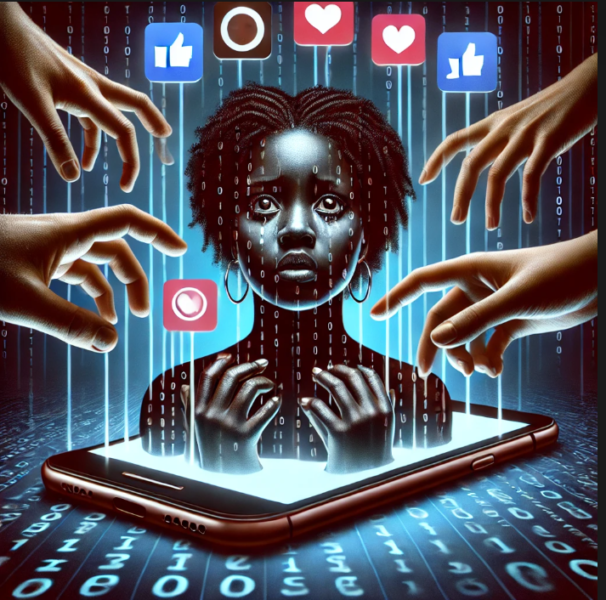
Beyond the unauthorized dissemination of images, women in Africa face rampant online harassment and cyberstalking. Social media platforms, while providing spaces for expression, have become arenas where women are subjected to threats, misogynistic comments, and relentless stalking. These actions not only infringe upon their right to free expression but also instill fear and anxiety, limiting their participation in digital spaces.
The Role of Social Media Platforms
Social media companies play a critical role in either curbing or facilitating the commodification of women. Their content moderation policies and responsiveness to reports of abuse significantly impact the prevalence of online harassment. However, many platforms have been criticized for inadequate measures in protecting users, particularly women, from digital violence.
Policy and Legal Gaps
The legal landscape in Africa regarding digital rights and privacy is evolving but remains fraught with inconsistencies and enforcement challenges. While some countries have enacted data protection laws, others lag, leaving women vulnerable to exploitation.
Data Protection Legislation
As of 2023, 37 African countries have implemented data protection laws, with 29 establishing Data Protection Authorities (DPAs) to enforce these regulations. However, the effectiveness of these laws varies. For instance, South Africa’s Protection of Personal Information Act (POPIA) serves as a comprehensive framework for data privacy, yet its enforcement faces hurdles due to limited resources and public awareness.
Case Study: Enforcement Challenges in Nigeria
Nigeria’s Data Protection Commission (NDPC) fined Fidelity Bank $358,580 in 2024 for illegally collecting personal data to open a customer account. This landmark case underscores the challenges in enforcing data protection laws, as the bank disputed the violation, highlighting ambiguities in legal interpretations and the need for robust enforcement mechanisms.
International and Regional Frameworks
At the continental level, the African Union adopted the Convention on Cyber Security and Personal Data Protection in 2014, aiming to harmonize data protection laws across member states. Additionally, the ACHPR’s Resolution 522 calls for the protection of women against digital violence, urging states to implement specific measures to combat online harassment and exploitation.
Expert Analysis
Experts emphasize the necessity for a multi-faceted approach to address the commodification of women online. Dr. Amina Ahmed, a digital rights advocate, asserts, “Legal frameworks are essential, but without proper enforcement and public awareness, they remain ineffective. Education on digital literacy and rights is crucial in empowering women to protect themselves online.”
The Influence of Corporations
Tech companies, particularly social media giants, wield significant influence over the digital experiences of users. Their policies on content moderation, data collection, and user privacy directly impact the safety and rights of women online.
Content Moderation Policies
Many platforms employ algorithms and user reporting systems to manage content, but these measures often fall short in addressing the nuanced forms of abuse women face. The lack of context-sensitive moderation can result in either the overlooking of harmful content or the unjust silencing of victims.
Data Privacy Concerns
The business models of many tech companies rely on data collection, raising concerns about how user information is stored, shared, and protected. Incidents of data breaches or unauthorized data sharing can disproportionately affect women, leading to targeted harassment or exploitation.
Governmental Roles and Internet Landscape
Governments in Africa play a dual role as regulators and, at times, perpetrators of digital rights violations. The balance between regulation for protection and censorship is delicate and often contentious.
Regulatory Measures
Some African governments have introduced cybercrime laws intended to protect citizens from online harms. However, these laws can be broad and, in some cases, have been used to suppress free speech rather than protect vulnerable groups. Ensuring that such regulations are precise and uphold human rights standards is imperative.
Internet Accessibility and Gender Divide
While internet penetration in Africa has increased, a significant gender gap persists. Women are less likely to have access to the internet due to socio-economic barriers, limiting their opportunities and exposure to digital literacy. Bridging this divide is essential in empowering women and protecting them from exploitation.
Conclusion
The commodification of women on the internet in Africa is a complex issue that infringes upon their privacy and human rights. Addressing this challenge requires a collaborative effort involving robust legal frameworks, proactive corporate policies, governmental regulation that respects human rights, and the empowerment of women through education and access to digital resources. Only through such a comprehensive approach can the digital landscape become a space of opportunity rather than exploitation for African women.








