






In what experts are calling the most alarming drought analysis in modern history, a sweeping new report warns that the years 2023 to 2025 have brought the world to the brink of a water, food, and energy collapse, driven by relentless climate change and unsustainable land and water use.
The report, Drought Hotspots Around the World 2023–2025, released jointly by the U.S. National Drought Mitigation Center (NDMC) and the UN Convention to Combat Desertification (UNCCD), with support from the International Drought Resilience Alliance (IDRA), paints a dire picture of drought’s devastating toll across continents — crippling agriculture, collapsing energy grids, and triggering mass human suffering.
“This is not a dry spell. This is a slow-moving global catastrophe — the worst I’ve ever seen,” said Dr. Mark Svoboda, co-author of the report and founding director of the NDMC. “No country, regardless of wealth or capacity, can afford to be complacent.”
Africa on the Edge: Crops Fail, Cattle Die, and Lights Go Out
Eastern and Southern Africa are among the worst hit. More than 90 million people face acute hunger as unrelenting droughts wipe out food production and water sources. In Zimbabwe, maize production in 2024 plummeted by 70%, maize prices doubled, and 9,000 cattle died of thirst. Zambia plunged into an energy nightmare as Kariba Dam’s power output fell to 7%, forcing blackouts lasting up to 21 hours per day.
“Entire hospitals and bakeries went dark. This is not just an energy crisis — it’s a societal breakdown,” said Dr. Kelly Helm Smith, NDMC Assistant Director.
In Somalia, an estimated 43,000 people died due to drought-linked hunger in 2022. By early 2025, 4.4 million face crisis-level food insecurity, including 784,000 expected to reach emergency levels.
Mediterranean in Crisis: Olive Oil, Water, and Hope Dry Up
The Mediterranean has become a harbinger of future collapse. Spain lost 50% of its olive crop due to two years of unrelenting drought and record heat. Morocco’s sheep population dropped by 38% compared to 2016, forcing a royal plea to cancel Eid sacrifices. In Türkiye, groundwater depletion triggered over 1,600 sinkholes, threatening both communities and future aquifer capacity.
“Spain, Morocco, and Türkiye are the canaries in the coal mine,” warned Dr. Svoboda. “Their struggle is a preview of water futures under unchecked global warming.”
Latin America and the Amazon: A Green Giant Under Siege
In the Amazon, rivers fell to record lows in 2023 and 2024, killing hundreds of endangered dolphins and thousands of fish. Entire towns were left without drinking water. In Panama, critically low water levels slashed daily transits of the Panama Canal from 38 to 24, derailing global trade. The impacts rippled globally: U.S. soybean exports stalled, and UK grocers faced price hikes and shortages.
“The Amazon is on the brink of flipping from a carbon sink to a carbon source,” said UNCCD Executive Secretary Ibrahim Thiaw. “That’s not just a regional crisis — it’s a planetary one.”
Asia’s Staple Crops Hit: Sugar, Rice, and Coffee Disrupted
Southeast Asia’s food supply chains were thrown into disarray. In 2023–2024, drought in Thailand and India triggered global sugar price spikes of 8.9%. Coffee and rice harvests suffered, threatening food security and economic stability across the region.
Human Tragedy Deepens: Girls Married Off, Schools Abandoned
The social fallout is as devastating as the environmental one. In Ethiopia and Eastern Africa, child marriages doubled, as families sought dowries to survive. Girls dropped out of school en masse in Zimbabwe due to hunger and a lack of sanitation. In the Amazon, pregnant women were stranded without access to medical care as river transport collapsed.
“We saw families digging holes in dry riverbeds just to find contaminated water,” said lead author Paula Guastello. “Girls pulled from classrooms and forced into marriage — this is desperation turned into tragedy.”
Wildlife in Peril: Elephants Starve, Dolphins Die
The suffering extended to wildlife. Over 100 elephants died of hunger in Zimbabwe’s Hwange National Park. In Botswana, hippos were stranded in dried riverbeds. In a grim measure, Zimbabwe and Namibia even culled 200 wild elephants to both feed communities and prevent ecological collapse from overgrazing.
Drought’s Economic Blow: Twice the Cost, Widespread Risk
A recent OECD estimate cited in the report warns that the economic cost of a drought today is at least twice as high as it was in 2000. By 2035, this burden is projected to rise by 35% to 110%. Droughts no longer stay regional — they ripple into global shocks, affecting trade, food markets, and infrastructure worldwide.
“Drought can be a global economic tsunami,” said co-author Dr. Cody Knutson. “When water-dependent systems collapse, every country feels it.”
Climate Change + El Niño = A Perfect Storm
The 2023–2024 El Niño event supercharged the already-devastating impacts of climate change. The convergence of extreme weather with fragile infrastructures and growing populations proved overwhelming for many regions.
“It’s a perfect storm — and many vulnerable ecosystems are already past their limits,” said Dr. Smith.
Call to Action: Act Now or Face Worse
The report demands urgent investment in early warning systems, real-time monitoring, and nature-based solutions such as indigenous crop revival and watershed restoration. It also calls for gender-responsive approaches and stronger global cooperation to manage transboundary water and protect trade routes.
“Drought is not just a weather event — it’s a social, economic, and environmental emergency,” said Dr. Smith. “We have the knowledge to prevent suffering. The question is: Do we have the will?”
UNCCD Deputy Executive Secretary Andrea Meza put it bluntly: “Proactive drought management is a matter of climate justice and survival. Around 85% of those affected live in low- and middle-income countries. Women and girls are hit the hardest. This is a test of our humanity.”
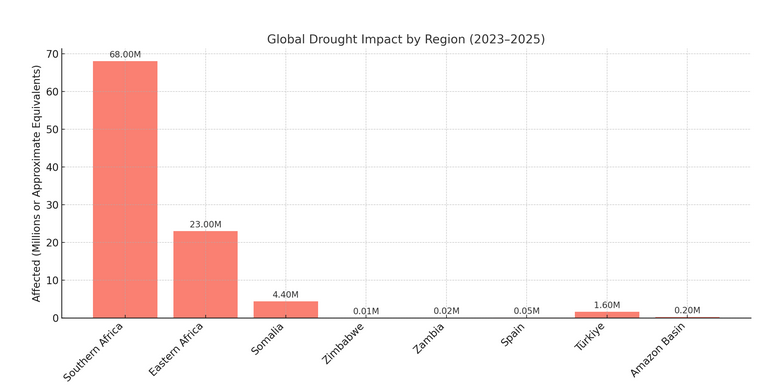
Key Numbers from the Report:
- 68 million: People needing food aid in Southern Africa
- 4.4 million: Facing hunger in Somalia
- 70%: Maize crop loss in Zimbabwe (2024)
- 21 hours/day: Blackouts in Zambia
- €22.84 billion: Spain’s investment in irrigation
- 1,600+: Sinkholes in Türkiye due to groundwater depletion
- 200+: River dolphins killed in the Amazon
- 38 to 24: Panama Canal transits slashed during drought
- 100+: Elephants dead in Zimbabwe’s Hwange National Park
As the world stares into a future shaped by drought, inequality, and escalating climate crises, the report’s message is clear: There is no more room for delay. We either act now, or watch the systems that sustain life unravel.








