





By Awot Haileslassie | 12th October 2025 | Addis Ababa, Ethiopia
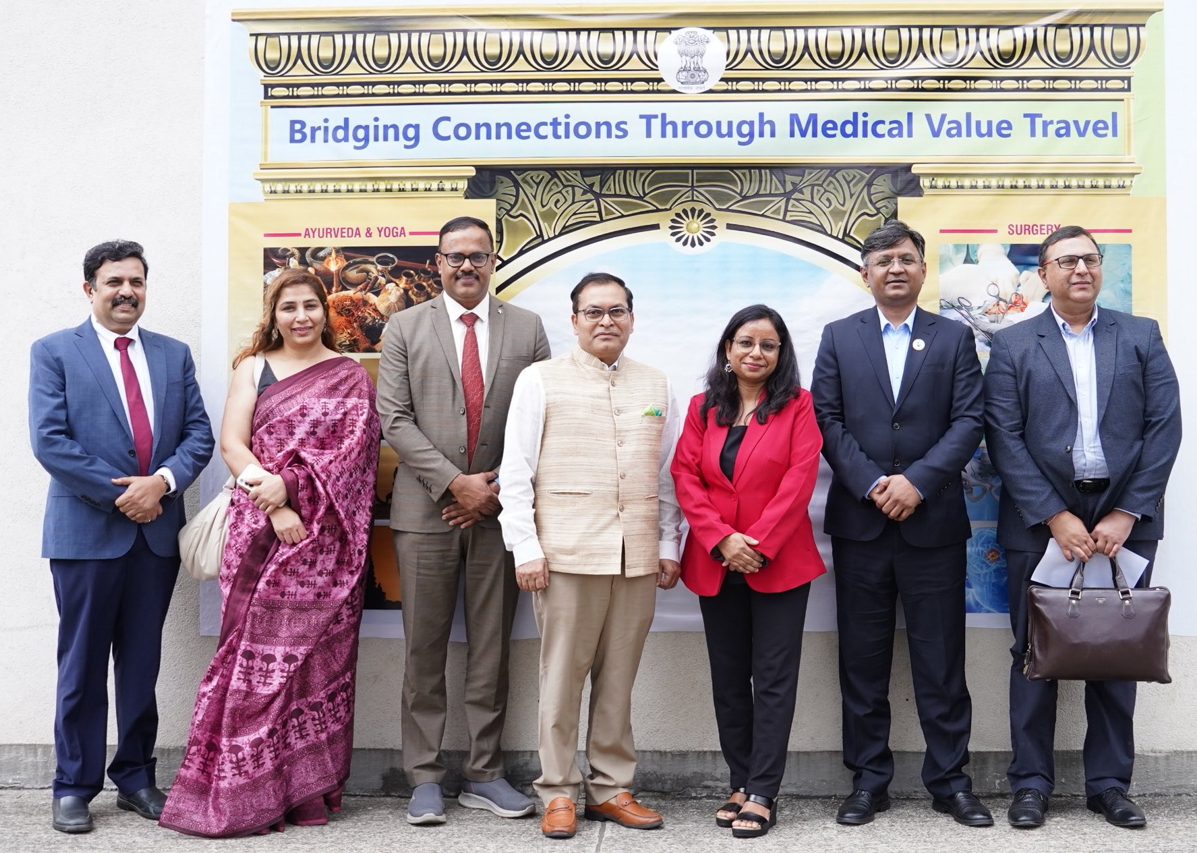
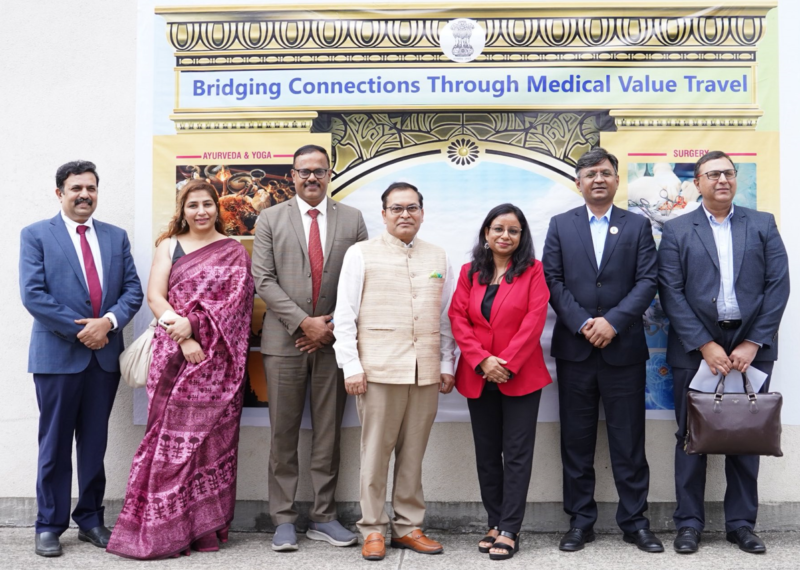
Addis Ababa — India’s growing reputation as a global healthcare powerhouse took center stage in Addis Ababa on 11th October 2025, under the theme of “Bridging Connections through Medical Value Travel,” organized by the Embassy of India to Ethiopia and the Permanent Mission to the African Union. The event, which brought together senior Ethiopian government officials, Indian healthcare investors, academicians, medical practitioners, and diplomatic dignitaries, underscored how cross-border medical partnerships are transforming lives and redefining global healthcare diplomacy.
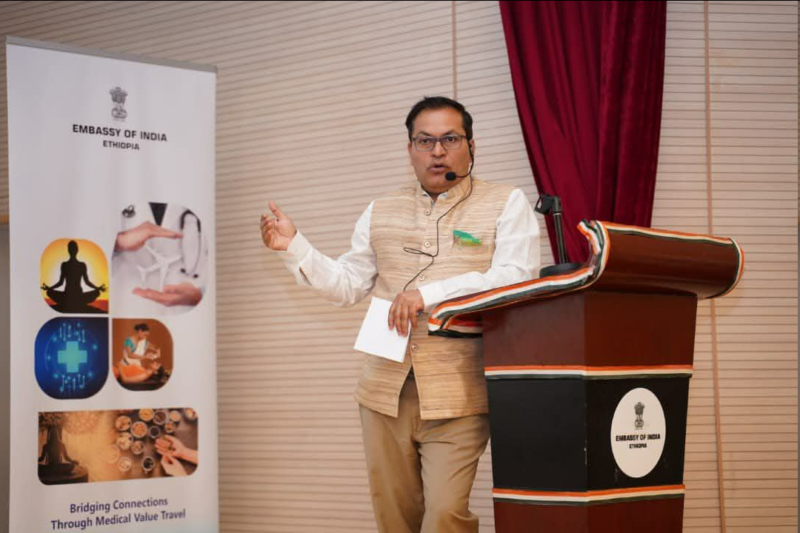
Opening the forum, H.E. Ambassador Mr. Anil Kumar Rai reaffirmed India’s commitment to strengthening medical and technological collaboration with Ethiopia and the African continent at large. “India is catching the attention of low and lower-middle-income countries through its dynamic pharmaceutical advancements and cost-effective healthcare solutions,” he remarked, emphasizing the shared vision of accessible, affordable, and innovative healthcare. Ambassador Rai also applauded Ethiopian Airlines for its strategic role in medical mobility—transporting thousands of patients annually to Indian medical hubs such as Delhi, Mumbai, Chennai, Hyderabad, and Bengaluru. These cities have evolved into global centers of medical excellence, attracting patients from across Africa, the Middle East, and Southeast Asia.
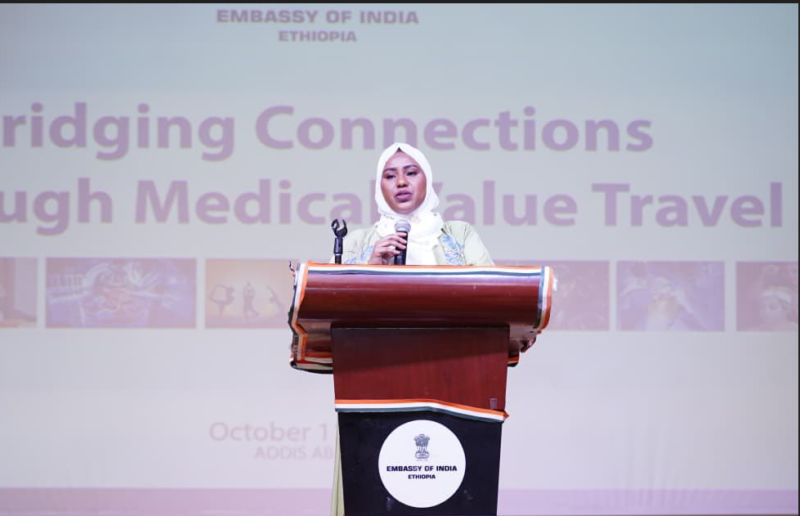
H.E. Mrs. Huria Ali Mahdi, State Minister for the FDRE Ministry of Women and Social Affairs, highlighted Ethiopia’s evolving healthcare environment, rooted in the government’s homegrown economic reform agenda. She noted that the policy reforms are creating favorable conditions for foreign investment in health and pharmaceutical industries. “Ethiopians seeking treatment in India have witnessed first-hand the impact of world-class medical expertise and advanced technologies at an affordable cost,” she said, commending the Embassy of India in Addis Ababa for facilitating smooth medical travel experiences through its dedicated health and visa services.
Beyond the diplomatic courtesies, the event delved deep into the realities and opportunities of global healthcare collaboration. Expert-led discussions explored innovations in cardiovascular interventions, biotechnology, telemedicine, and hospital infrastructure—all areas where India’s health system has shown remarkable growth. According to a 2024 report by the World Health Organization (WHO), India ranks among the top five nations globally in healthcare accessibility and affordability, while its medical tourism industry is projected to surpass USD 14 billion by 2027, growing at a rate of 19% annually.
India’s Healthcare Strength: Skill, Speed, and Compassion
India’s rise as a global medical destination is not accidental—it’s a product of decades of investment in medical education, pharmaceutical research, and hospital infrastructure. With more than 1.3 million registered doctors, India’s healthcare workforce is among the largest in the world. The country performs over 300,000 complex surgeries annually for international patients, from cardiac bypasses to organ transplants. In 2023 alone, India completed 13,642 kidney transplants, with outcomes comparable to those in high-income nations but at a fraction of the cost.
According to the Federation of Indian Chambers of Commerce and Industry (FICCI), patients traveling to India can save between 65–90% on medical procedures compared to the United States or Europe. Furthermore, India’s hospitals—such as Fortis, Max, Apollo, and Asian Hospital—offer internationally accredited facilities, cutting-edge robotic surgery systems, and multilingual patient care units.
But beyond numbers, what sets India apart is its “no waiting time” approach and patient-centered model. Medical travelers, particularly from Ethiopia and neighboring African countries, benefit from the dedicated Medical Visa Help Desk at the Embassy of India, ensuring seamless processing and immediate hospital referrals. In a world where delayed treatment can mean the difference between life and death, India’s efficiency has become a lifeline.
Human Stories Behind the Statistics
At the Addis Ababa forum, a series of emotional testimonies from Ethiopian “medical ambassadors”—former patients who had been treated in India—brought the conversation to life. Tola Beyene, a 64-year-old father of three who triumphed over prostate cancer at Asian Hospital, recalled his journey across continents seeking a cure. “After years of uncertainty and failed treatments, India gave me a second chance at life,” he said. Today, Tola continues his follow-up sessions virtually through telemedicine services connecting Addis Ababa to New Delhi.
Another voice, Tilahun Melaku, who underwent a double kidney transplant in 2023, described his experience as “miraculous and humane.” “The Embassy processed my medical visa in record time, and within days I was receiving dialysis in India,” he said, crediting the responsiveness of the Indian healthcare system for saving his life.
Among the testimonies stood Dr. Girmachew Mammo, a veteran Ethiopian physician who became a patient himself after suffering a heart attack. Initially hesitant about seeking care abroad, he found reassurance in a former patient’s success story and decided to travel to India. “As a doctor, I have seen many hospitals, but none compare to the professionalism and empathy I experienced in India,” he reflected.
Yesuf Yeshanew, speaking on behalf of his brother Dawud, who underwent a successful kidney transplant at Fortis Hospital, expressed deep gratitude to both the hospital and the Indian Embassy. “They didn’t just treat a patient—they restored a family’s hope,” he said. Likewise, Zekaria Mohammed, treated at Max Hospital, praised the cultural sensitivity and hospitality of the Indian medical staff. “It felt like receiving care at home, not abroad,” he added.
Global Context: South–South Cooperation in Healthcare
The partnership between India and Ethiopia represents a broader paradigm shift in global health diplomacy—what experts describe as “South–South Cooperation in Medicine.” Rather than relying solely on Western aid models, countries like India are providing accessible and sustainable healthcare pathways to the Global South. The World Bank estimates that Africa spends nearly USD 6 billion annually on medical travel, with India capturing a growing share due to its affordability and trusted expertise.
Moreover, India’s pharmaceutical industry—valued at over USD 50 billion in 2024—supplies nearly 60% of Africa’s generic medicines, including life-saving antiretrovirals and antibiotics. Ethiopia, which imports over 70% of its pharmaceuticals, stands to benefit immensely from strengthened bilateral ties and technology transfer agreements.
A Shared Vision for a Healthier Future
As the event concluded, participants emphasized that the collaboration between India and Ethiopia is no longer limited to patient referrals—it is evolving into a strategic partnership in medical education, telemedicine, and pharmaceutical innovation. Plans are underway for joint medical research initiatives, training programs for Ethiopian healthcare professionals, and increased investment in diagnostic and rehabilitation centers.
“The future of healthcare lies in solidarity,” Ambassador Rai noted in his closing remarks. “India and Ethiopia are not just exchanging medical expertise; they are building bridges of trust, compassion, and shared progress.”
As global health challenges become increasingly interconnected, the India–Ethiopia partnership offers a blueprint for how nations of the Global South can unite—not in dependency, but in collaboration—to heal, innovate, and grow together.
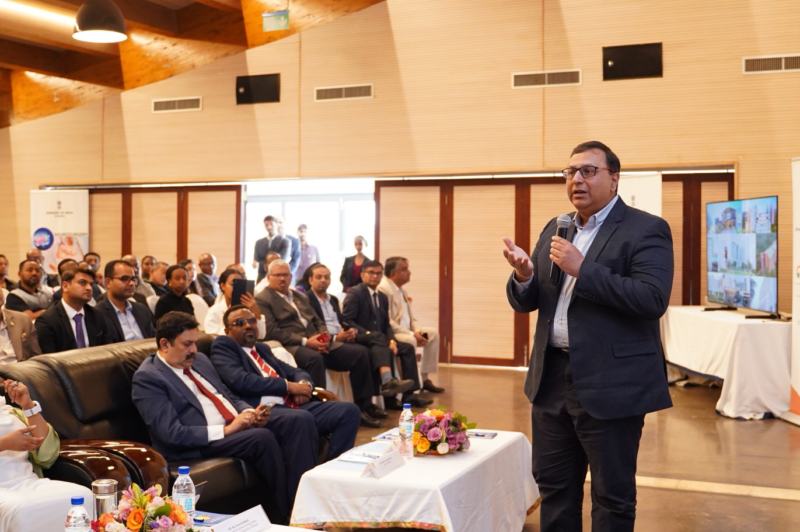
Photo Credit: The Embassy of India in Ethiopia








