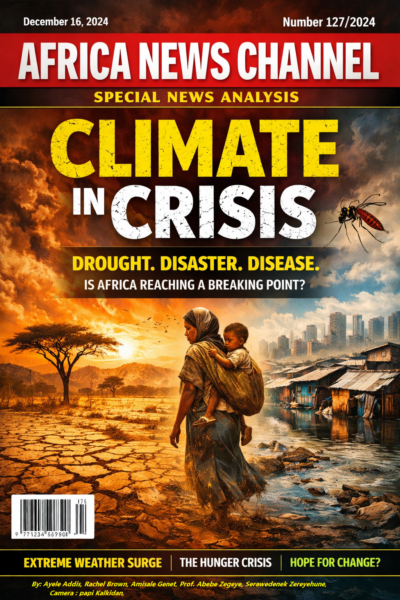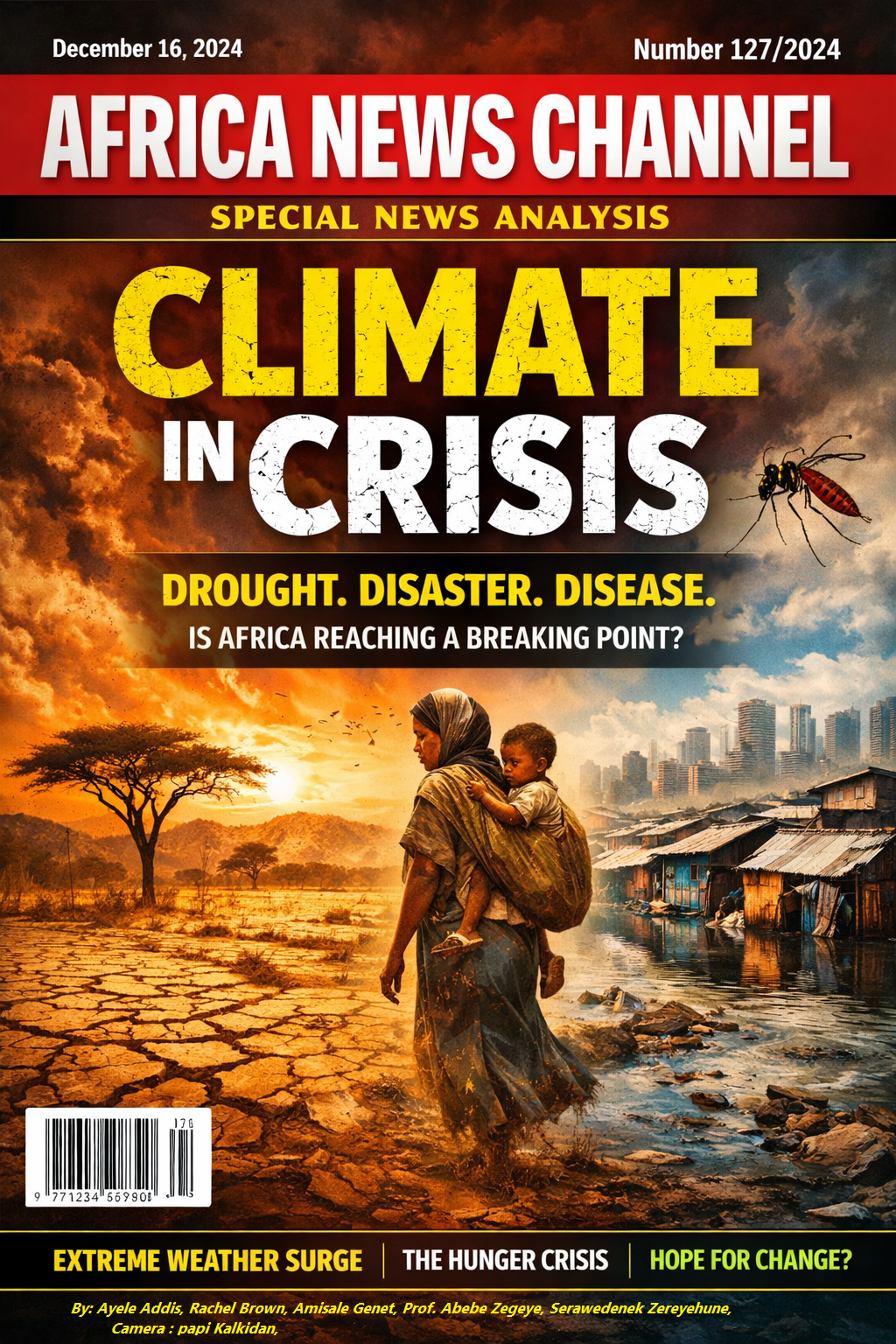
PLANET ON THE BRINK: WHEN BIODIVERSITY, WATER, FOOD, HEALTH AND CLIMATE COLLIDE
Africa News Channel | Special News Analysis, By Ayele Addis Ambelu
December 16, 2024
The world is sliding into a dangerous new era where environmental, social and economic crises are no longer unfolding separately but crashing into one another with devastating force. Biodiversity loss, water scarcity, food insecurity, rising health risks and accelerating climate change are now operating as a single, interconnected emergency. A landmark assessment released by the Intergovernmental Platform on Biodiversity and Ecosystem Services, known as the Nexus Report, delivers one of the most alarming scientific verdicts of our time: humanity is attempting to manage a deeply interwoven planetary crisis with fragmented, outdated and often contradictory responses — and the cost of this failure is rising rapidly.
Across Africa and much of the developing world, the consequences of these interlinked crises are already visible. Rivers are shrinking, soils are degrading, ecosystems are collapsing and communities are facing hunger, disease and climate shocks simultaneously. The report finds that more than half of the global population now lives in areas experiencing the most severe impacts from declining biodiversity, worsening water availability, food insecurity and escalating climate-related health risks. These impacts are not evenly distributed. They fall hardest on developing countries, Indigenous Peoples and local communities, who have contributed least to the crisis yet bear its most brutal consequences.
At the heart of the problem lies a dangerous illusion that global challenges can be solved one at a time. For decades, governments have treated food production, public health, biodiversity protection and climate action as separate policy arenas. The Nexus Report exposes how this siloed thinking often makes matters worse. Efforts to maximize food production without environmental safeguards, for example, have increased caloric supply while degrading ecosystems, polluting water sources, accelerating climate change and ultimately undermining long-term food security itself. Similarly, climate policies that ignore biodiversity can intensify land competition, weaken ecosystems and damage livelihoods. The report’s central conclusion is stark: when one part of the system fails, the others soon follow.
Perhaps the most explosive finding is economic. The global economy, the report reveals, is operating on a massive deception. More than half of the world’s annual economic activity — exceeding fifty trillion dollars — depends directly on nature, yet decision-making systems systematically ignore the true costs of environmental destruction. The unaccounted-for damage caused by current approaches to agriculture, fossil fuels and resource extraction is estimated at between ten and twenty-five trillion dollars every year. At the same time, trillions in public subsidies and private investment continue to incentivize activities that degrade ecosystems, erode water systems and fuel climate instability. This distorted economic model rewards short-term profit while quietly transferring the real costs to future generations and the world’s poorest communities.
Africa’s experience illustrates how these crises compound on the ground. Freshwater biodiversity is disappearing faster than life on land, driven by unsustainable water withdrawals, deforestation and pollution. Food systems, while producing more than ever before, are becoming increasingly fragile as agrobiodiversity declines and healthy diets become unaffordable for millions. Health systems are under growing strain as pollution, poor water quality and ecosystem disruption drive both communicable and non-communicable diseases. Climate change intensifies every one of these pressures, amplifying droughts, floods, heatwaves and disease outbreaks while eroding the natural buffers that once protected vulnerable populations.
The report also exposes the profound injustice embedded in this global crisis. While wealthy economies continue to externalize environmental costs, developing regions face mounting barriers to adaptation, financing and resilience. Delaying action only deepens these inequalities. The assessment warns that postponing biodiversity protection could double future costs while increasing the likelihood of irreversible losses such as species extinctions. Delayed climate action already adds hundreds of billions of dollars annually to the price of meeting global targets, while pushing vulnerable societies closer to the brink.
Yet amid the warnings, the Nexus Report delivers a message of cautious hope. The solutions, it argues, are neither theoretical nor unreachable. More than seventy response options already exist that can generate benefits across biodiversity, water, food, health and climate simultaneously. When designed inclusively and implemented together, these approaches can reduce costs, strengthen resilience and advance all major global agreements, from the Sustainable Development Goals to the Paris Climate Agreement. Central to their success is the recognition that Indigenous knowledge, local governance and equity are not optional extras but essential pillars of effective action.
The greatest obstacle, the report makes clear, is governance itself. Fragmented institutions, short-term political incentives and non-inclusive decision-making systems are fundamentally misaligned with the scale and complexity of today’s crises. The authors call for a transition toward integrated “nexus governance” — approaches that are coordinated across sectors, adaptive to change and grounded in justice. Without this transformation, global commitments risk becoming symbolic gestures rather than engines of real change.
The message from science could not be clearer. The world is standing at a narrowing crossroads where delay carries escalating risks and irreversible losses. The intertwined crises of biodiversity, water, food, health and climate are not future threats but present realities. Whether this moment becomes a turning point or a point of no return will depend on the willingness of leaders to abandon fragmented thinking and embrace solutions equal to the complexity of the challenge. For Africa and the world, the clock is no longer ticking quietly — it is sounding an alarm that can no longer be ignored.
| >70 response options assessed for maximum co-benefits across cascading or compounding crises Unaccounted-for costs of current approaches are estimated to be at least US$10-25 trillion per year |

Windhoek, Namibia – Environmental, social and economic crises – such as biodiversity loss, water and food insecurity, health risks and climate change – are all interconnected. They interact, cascade and compound each other in ways that make separate efforts to address them ineffective and counterproductive.
A landmark new report was launched today by the Intergovernmental Platform on Biodiversity and Ecosystem Services (IPBES). The Assessment Report on the Interlinkages Among Biodiversity, Water, Food and Health – known as the Nexus Report – offers decision-makers around the world the most ambitious scientific assessment ever undertaken of these complex interconnections and explores more than five dozen specific response options to maximize co-benefits across five ‘nexus elements’: biodiversity, water, food, health and climate change.
Approved on Monday by the 11th session of the IPBES Plenary, composed of representatives of the 147 Governments that are members of IPBES, the report is the product of three years of work by 165 leading international experts from 57 countries from all regions of the world. It finds that existing actions to address these challenges fail to tackle the complexity of interlinked problems and result in inconsistent governance.
“We have to move decisions and actions beyond single issue silos to better manage, govern and improve the impact of actions in one nexus element on other elements,” said Prof. Paula Harrison (United Kingdom), co-chair of the Assessment with Prof. Pamela McElwee (USA). “Take for example the health challenge of schistosomiasis (also known as bilharzia) – a parasitic disease that can cause life-long ill health and which affects more than 200 million people worldwide – especially in Africa. Treated only as a health challenge – usually through medication – the problem often recurs as people are reinfected. An innovative project in rural Senegal took a different approach – reducing water pollution and removing invasive water plants to reduce the habitat for the snails that host the parasitic worms that carry the disease – resulting in a 32% reduction in infections in children, improved access to freshwater and new revenue for the local communities.”
“The best way to bridge single issue silos is through integrated and adaptive decision-making. ‘Nexus approaches’ offer policies and actions that are more coherent and coordinated – moving us towards the transformative change needed to meet our development and sustainability goals,” said Prof. McElwee.
Past and Current Challenges
The report states that biodiversity – the richness and variety of all life on Earth – is declining at every level from global to local, and across every region. These ongoing declines in nature, largely as a result of human activity, including climate change, have direct and dire impacts on food security and nutrition, water quality and availability, health and wellbeing outcomes, resilience to climate change and almost all of nature’s other contributions to people.
Building on previous IPBES reports, in particular the 2022 Values Assessment Report and the 2019 Global Assessment Report, which identified the most important direct drivers of biodiversity loss, including land- and sea-use change, unsustainable exploitation, invasive alien species and pollution, the Nexus Report further underscores how indirect socioeconomic drivers, such as increasing waste, overconsumption and population growth, intensify the direct drivers – worsening impacts on all parts of the nexus. The majority of 12 assessed indicators across these indirect drivers – such as GDP, population levels and overall food supply, have all increased or accelerated since 2001.
“Efforts of Governments and other stakeholders have often failed to take into account indirect drivers and their impact on interactions between nexus elements because they remain fragmented, with many institutions working in isolation – often resulting in conflicting objectives, inefficiencies and negative incentives, leading to unintended consequences,” said Prof. Harrison.
The report highlights that more than half of global gross domestic product – more than $50 trillion of annual economic activity around the world – is moderately to highly dependent on nature. “But current decision making has prioritized short-term financial returns while ignoring costs to nature, and failed to hold actors to account for negative economic pressures on the natural world. It is estimated that the unaccounted-for costs of current approaches to economic activity – reflecting impacts on biodiversity, water, health and climate change, including from food production – are at least $10-25 trillion per year,” said Prof. McElwee.
The existence of such unaccounted-for costs, alongside direct public subsidies to economic activities that have negative impacts on biodiversity (approximately $1.7 trillion per year), enhances private financial incentives to invest in economic activities that cause direct damage to nature (approximately $5.3 trillion per year), in spite of growing evidence of biophysical risks to economic progress and financial stability. Delaying the action needed to meet policy goals will also increase the costs of delivering it. Delayed action on biodiversity goals, for example, could as much as double costs – also increasing the probability of irreplaceable losses such as species extinctions. Delayed action on climate change adds at least $500 billion per year in additional costs for meeting policy targets.
Unequal Impacts and Need for Inclusive Decision-Making
“Another key message from the report is that the increasingly negative effects of intertwined global crises have very unequal impacts, disproportionately affecting some more than others,” said Prof. Harrison.
More than half of the world’s population is living in areas experiencing the highest impacts from declines in biodiversity, water availability and quality and food security, and increases in health risks and negative effects of climate change. These burdens especially affect developing countries, including small island developing states, Indigenous Peoples and local communities, as well as those in vulnerable situations in higher-income countries. 41% of people live in areas that saw extremely strong declines in biodiversity between 2000 and 2010, 9% in areas that have experienced very high health burdens and 5% in areas with high levels of malnutrition.
Some efforts – such as research and innovation, education and environmental regulations – have been partially successful in improving trends across nexus elements, but the report finds these are unlikely to succeed without addressing interlinkages more fully and tackling indirect drivers like trade and consumption. Decision-making that is more inclusive, with a particular focus on equity, can help ensure those most affected are included in solutions, in addition to larger economic and financial reforms.
Future Scenarios
The report also examines future challenges – assessing 186 different scenarios from 52 separate studies, which project interactions between three or more of the nexus elements, mostly covering the periods up to 2050 and 2100.
A key message from this analysis is that if current “business as usual” trends in direct and indirect drivers of change continue, the outcomes will be extremely poor for biodiversity, water quality and human health – with worsening climate change and increasing challenges to meet global policy goals.
Similarly, a focus on trying to maximize the outcomes for only one part of the nexus in isolation will likely result in negative outcomes for the other nexus elements. For example, a ‘food first’ approach prioritizes food production with positive benefits on nutritional health, arising from unsustainable intensification of production and increased per capita consumption. This has negative impacts on biodiversity, water and climate change. An exclusive focus on climate change can result in negative outcomes for biodiversity and food, reflecting competition for land. Weak environmental regulation, made worse by delays, results in worsening impacts for biodiversity, food, human health and climate change.
“Future scenarios do exist that have positive outcomes for people and nature by providing co-benefits across the nexus elements,” said Prof Harrison. “The future scenarios with the widest nexus benefits are those with actions that focus on sustainable production and consumption in combination with conserving and restoring ecosystems, reducing pollution, and mitigating and adapting to climate change.”
An important aim of IPBES work is to provide the science and evidence needed to support achievement of the Sustainable Development Goals (SDGs), Kunming-Montreal Global Biodiversity Framework and the Paris Agreement on climate change. The Nexus Report shows that scenarios focusing on synergies among biodiversity, water, food, health and climate change have the best likely outcomes for the SDGs – and that focusing on addressing the challenges in just one sector – such as food, biodiversity or climate change in isolation – seriously limits the chances of meeting other goals.
Response Options
The report shows that there are a significant number of responses – on a policy, political and community level – currently available to sustainably manage across biodiversity, water, food, health and climate change, some of which are also low cost.
The authors present more than 70 of these ‘response options’ to help manage the nexus elements synergistically, representing 10 broad categories of action. Examples of these response options that have broadly positive impacts across nexus elements are: restoring carbon-rich ecosystems such as forests, soils, mangroves; managing biodiversity to reduce risk of diseases spreading from animals to humans; improving integrated landscape and seascape management; urban nature-based solutions; sustainable healthy diets; and supporting Indigenous food systems.
Other response options are important, but may not have as many synergistic benefits for all nexus elements. Some, such as offshore wind power and dams, may have negative impacts on other nexus elements if not carefully implemented.
The more than 70 response options presented in the report, taken together, support the achievement of all 17 SDGs, all 23 targets of the Kunming-Montreal Global Biodiversity Framework and the long-term goals for climate change mitigation and adaptation of the Paris Agreement. Twenty four of the response options advance more than five SDGs and more than five of the Global Biodiversity Framework targets.
Implementing response options together or in sequence can further improve their positive impacts and achieve cost savings. Ensuring inclusive participation, such as including Indigenous Peoples and local communities in the co-design, governance and implementation of response options, can also increase the benefits and equity of these measures.
“Some good examples include marine protected areas that have included communities in management and decision-making,” said Prof. McElwee. “These have led to increases in biodiversity, greater abundance of fish to feed people and improved incomes for local communities and often increased tourism revenues as well.”
Nexus Governance Approaches & Action
Speaking about what will be needed to advance effective responses, policies and actions, Prof. McElwee said: “Our current governance structures and approaches are not responsive enough to meet the interconnected challenges that result from the accelerated speed and scale of environmental change and rising inequalities. Fragmented and siloed institutions, as well as short-term, contradictory and non-inclusive policies have significant potential to put achievement of the global development and sustainability targets at risk. This can be addressed by moving towards ‘nexus governance approaches’: more integrated, inclusive, equitable, coordinated and adaptive approaches.”
The report offers a series of eight specific and deliberative steps to help policymakers, communities, civil society and other stakeholders identify problems and shared values in order to work together towards solutionsfor just and sustainable futures – presented as a graphical road map for nexus action.
Speaking about the immediate relevance and value of the report, Dr. David Obura, Chair of IPBES said: “The past two months have seen three separate major global negotiations – COP16 of both the Convention on Biological Diversity and the Convention to Combat Desertification, as well as COP29 of the climate Convention. Together with the 2030 Agenda for Sustainable Development and SDGs, it is clear that the Governments of the world are working harder than ever before to address the global challenges – grounded in the environmental crises – that confront us all. The Nexus Report helps to better inform all of these actions, policies and decisions, particularly in addressing their interlinkages, and the greater benefits achieved by devising integrated solutions at all scales. I would like to thank and congratulate the co-chairs, authors and everyone who has contributed to this tremendously complex and important assessment process.”
– ENDS –
Please note: The French and Spanish versions of this media release are provided as courtesy translations for media. Some terminology may still change, based on official translations yet to be completed. In the event of a discrepancy between the French or Spanish versions and the English version of the media release, the English version should be regarded as definitive.
By the Numbers – Key Statistics and Thematic Findings from the Report 2-6%: Biodiversity decline per decade across all assessed indicators for the last 30-50 years
>50%: Global population living in areas experiencing highest impacts from declines in biodiversity, water availability and quality and food security, and increases in health risks and negative effects of climate change
~$58 trillion: Value in 2023 of global annual economic activity generated in sectors moderately to highly dependent on nature (i.e. more than 50% of global GDP)
Up to $25 trillion: Annual ‘external’ costs (not considered as part of decision-making) across the fossil fuel, agriculture and fisheries sectors, reflecting the negative impacts of production and consumption in these sectors on biodiversity, climate change, water, and health
$5.3 trillion: Annual private-sector financial flows directly damaging to biodiversity
$1.7 trillion: Annual public subsidies incentivizing damage to biodiversity, distorting trade and increasing pressure on natural resources
$100 billion-$300 billion: Annual value of illegal resource extraction activities including in the wildlife, timber and fish trades
Up to $200 billion: Annual expenditure aimed at improving the status of biodiversity
Up to $1 trillion: Estimated annual financing gap to meet global resource needs for biodiversity
At least $4 trillion: Estimated annual financing gap to meet the SDGs in addition to the biodiversity funding gap Economic impacts of biodiversity loss are expected to affect developing countries, where there are also higher barriers to mobilizing sustainable financial flows (exacerbated in some cases by burdens of high debt) 43%: Proportion of total biodiversity-financing flows that also directly include benefits for another nexus element 81%: Proportion of funding for biodiversity that comes from public institutions $42 billion: Current funding for payments for ecosystem services, which often fund activities for both biodiversity and another nexus element like water €47 million: Investment by the city of Paris to help farmers transition to ecological intensification, resulting in reduced pollution and cleaner water
30%: Proportion of world’s land, waters and seas to be protected by 2030 under target 3 of the Kunming-Montreal Global Biodiversity Framework – supported by the scenario analysis of the assessment and can provide nexus-wide benefits if effectively managed for nature and people Reduction of plastics has led to increased water quality and wildlife protection, fewer floods and reductions in incidence of associated water-borne diseases Urban nature-based solutions that increase urban green and blue space help to manage heat island effects, improve water quality and availability and reduce air pollution, as well as reducing allergens and zoonotic disease risk Response options that are implemented in more equitable ways also provide greater potential benefits across the nexus elements, indicating that effectiveness and equity often are not trade-offs but go hand-in-hand Knowledge and practices of Indigenous Peoples and local communities can help successfully conserve biodiversity and sustainably manage other nexus elements. For example, strong reductions in deforestation in the Brazilian Amazon were achieved after formalizing and enforcing tenure rights to territories of Indigenous Peoples and local communities.
Water
Freshwater biodiversity is being lost faster than terrestrial biodiversity. Unsustainable freshwater withdrawal, wetland degradation and forest loss have decreased water quality and climate change resilience in many areas of the world, impacting biodiversity, water and food availability with consequences for humans, plants, and animals.
Many marine systems globally have been overharvested and degraded through human activities
The water cycle is regulated by ecosystem and geophysical processes – supporting biodiversity and providing many contributions that are essential to human health and well-being
Forest cover loss decreases water regulation, quality and availability, resulting in increasing water treatment costs and negative health outcomes
~80%: Proportion of humanity’s demand for freshwater used to meet food production needs
75%: Proportion of global population in 2005 dependent on forests for accessible freshwater
At least 50: Diseases attributable to poor water supply, water quality and sanitation
~33%: Reef-building coral species at high risk of extinction
Nearly 1 billion: people living within 100km of a coral reef and who benefit from them in terms of food, medicine, protection from coastal storms and erosion, tourism and recreation and livelihoods
Transboundary water cooperation facilitates the sustainable management of resources at the basin scale, and better collaboration between sectors and stakeholders. Improving groundwater governance through cooperation across scales, including support for community water management, increases benefits across the nexus elements, while integrated water infrastructure and water-sensitive urban infrastructure take advantage of natural systems to reduce risks from floods and other hazards, deliver benefits for food production and contribute to climate change mitigation
Food
Increases in food production have improved health through greater caloric intake, but unsustainable agricultural practices have also resulted in loss of biodiversity, unsustainable water usage, reduced food diversity and quality, and increased pollution and greenhouse gas emissions
Negative impacts on the nexus elements from food systems have decreased biodiversity and consequently many of nature’s contributions to people, especially through diminished regulating contributions (e.g., regulation of water quality and climate); increased non-communicable disease risks; emerging infectious diseases; and global temperatures and other climatic changes
Global agrobiodiversity is declining, including genetic resources for food and agriculture, with impacts on ecosystem functioning, food system resilience, food security and nutrition, as well as on social (employment and health) and economic (income and productivity) systems
Global malnutrition and inequalities in food security persist despite a decline in the total number of undernourished people –the cost of healthy diets can be high, particularly in developing countries, and consequently inaccessible to many
Unsustainable exploitation and pollution of freshwater and marine ecosystems impact millions of people, including those highly dependent on protein-rich food obtained from these ecosystems, such as Indigenous Peoples and local communities
42%: Proportion of global population in 2021 unable to afford healthy diets, 86% for low-income and 70% for lower-middle income countries
80%: Proportion of total undernourished people who live in developing countries, primarily living in rural areas
>800 million: People affected by food insecurity in Asia and Africa
Nearly 3 million: Deaths in 2017 associated with diets low in whole grains
Adopting sustainable agricultural practices (such as improving nitrogen use efficiency, integrated pest management, agroecology, agroforestry and sustainable intensification, reductions in food losses and waste, adoption of novel food/feed sources and sustainable healthy diets would enable the current agricultural land area to meet the calorific and nutritional needs of future generations in the medium to long term
30%: Increase in cereal yields, as well as enhancing soil health and biodiversity in some parts of south-central Niger through farmer-managed natural regeneration of 5 million hectares with native trees and agroforestry systems
Indigenous food systems, grounded in reciprocal worldviews and values regarding people and nature in balance and in the sustainable use of biodiversity are supplying sustainable and healthy foods while also contributing to biodiversity conservation and climate change mitigation and adaptation
Health
Greater life expectancy and childhood survival are partly a result of increased production and access to food. Worsening outcomes from several communicable and non-communicable diseases are linked to biodiversity loss, unhealthy diets, lack of clean water, pollution and climate change among other causes
Unsustainable farming systems contribute to biodiversity loss, excessive water use, pollution and climate change
20: Years of average life expectancy difference between regions
10x: Extent to which child mortality rates are higher in least-developed-countries compared to high-income countries
11 million: Adult deaths in 2017 (and 255 million disability-adjusted life years among adults) accounted for by unhealthy diets
9 million: Premature deaths in 2019 (16% of all deaths) estimated to have been caused by increased air and water pollution
50%: Proportion of emerging and reemerging infectious disease events driven by changes in land use, agricultural practices and activities that encroach on natural habitats and lead to increased contact between wildlife, domestic animals and humans – highlighting the interconnections between ecosystem, animal and human health
The One Health approach supports integrating food system and biodiversity management with local health services to reduce risks from zoonotic pathogen emergence and spillover at source, malnutrition and other risks such as to wildlife health, food production and ecosystems. For example, Brazil’s successful Unified Health System joins human health professionals, veterinarians and environmental health practitioners working together with farmers and policymakers to jointly design holistic practices aimed at addressing social and environmental determinants of health and contributing to preventing pathogen emergence and disease outbreaks for both people and animals
Climate Change
Climate change affects biodiversity, water, food and health through changes in average climatic conditions and the frequency and magnitude of extreme weather events
Climate change impacts terrestrial food production with consequences for human health and well-being including exacerbating food insecurity for vulnerable populations
Intensifying climate change will stress water resources and undermine agricultural productivity and food productivity in food production systems, cause increased mortality from heat waves and expand the epidemic belt for vector-borne diseases towards higher latitudes and altitudes
Extreme weather events, such as heatwaves, flooding, droughts and wildfires result in direct health impacts and increased dispersal of pathogens and pollutants (e.g., untreated wastewater, fertilizers, pesticides, sediments and air pollutants)
Under current trends, climate change leads to irreversible loss of marine biodiversity, such as coral reefs, and negative effects on coastal fisheries; both provide diets that prevent malnutrition, stunted child growth and other conditions
Exposure to risks from climate change is projected to double between the 1.5°C and 2°C global warming levels and double again between a 2°C and 3°C world, across multiple sectors
21-37%: Proportion of total greenhouse gas emissions attributable to the global food system
58%: Proportion of known human infectious diseases likely to worsen due to climate change
12,000-19,000: Heat-related child deaths in Africa between 2011 and 2020 to which climate change directly contributed
62,000: Heat-related deaths in Europe in 2022
1,500: Heat-related deaths in the United States in 2023
12,000: Disasters caused in the last 50 years by extreme weather-, climate and water-related events, leading to 2 million human deaths (90% in low- and lower-middle-income countries) and $4.3 trillion in total costs
>50%: Proportion of carbon sequestration in the ocean attributable to coastal ecosystems
>$500 billion: Minimum additional annual costs for delivering adaptation and mitigation to meet climate change goals for each year of additional delay
Restoration contributes to climate change adaptation and socio-ecological resilience and can also contribute to climate change mitigation when it targets carbon storage in forests, peatlands, seagrass beds, salt marshes and marine and coastal ecosystems that contribute to carbon sequestration
IPBES Partner Comments
“Biodiversity loss, water scarcity, food security, human health, and climate change are not isolated issues. They are indivisible, interrelated and interdependent. As they are intricately linked when one falters, the others follow.
Despite these challenges being interconnected, our responses are far too often siloed, fixing one problem while creating another.
The IPBES Nexus Assessment is the first comprehensive global assessment that looks at the interlinkages between these crises and identifies solutions.
As governments continue work toward achieving commitments made in the Sustainable Development Goals, the Global Biodiversity Framework, and the Paris Agreement, this report comes at a critical moment to support countries achieve our global goals.”
Inger Andersen, Executive Director, United Nations Environment Programme (UNEP) said ;
“Biodiversity is vital to the efforts to meet humanity’s growing need for food, feed, fibre and fuel, while protecting the planet for future generations. We need to produce more with less, through the Four Betters: better production, better nutrition, a better environment and a better life – leaving no one behind.
The IPBES assessments help us to understand the interlinkages between biodiversity, food, and livelihoods, as well as the urgent need to address biodiversity loss with solutions that enhance sustainability and resilience. These assessments clearly highlight the essential role of agrifood system solutions in meeting the Paris Agreement, the Global Biodiversity Framework, and the Sustainable Development Goals (SDGs) – especially SDG 2 to end hunger.
FAO’s mandate aligns closely with the 2050 vision for biodiversity, promoting sustainable agrifood systems that ensure food security – by ensuring food availability, food accessibility and food affordability – with safe, sufficient and nutritious food for all, while conserving biodiversity and addressing the impacts of the climate crisis.
With decades of experience in technical and policy support and guided by its Strategy on Mainstreaming Biodiversity Across Agricultural Sectors, FAO is well-positioned to lead the transition towards more sustainable agrifood systems. By leveraging our expertise, resources, and global network, we can help implement the assessments’ recommendations, ensuring agrifood systems contribute positively to biodiversity conservation, sustainable use, and climate action.
Together, we can build a future where agrifood systems support sustainability and resilience, benefiting both people and the planet. Let us seize this opportunity to create a lasting impact.”
QU Dongyu, Director-General, Food and Agriculture Organization of the United Nations (FAO)
“Our ecological and planetary systems are deeply interconnected with all life on Earth, including humanity. Yet, decisions to address threats to biodiversity, water, food, health, and climate, are too often made in isolation, leading to misalignment, unplanned trade-offs, or unintended consequences at best — and negative outcomes at worst. By illuminating the intersections between environmental, social, and economic crises, the IPBES Nexus Assessment exposes both the limitations of isolated action — and the opportunities and acceleration possible from better aligning our global efforts. The United Nations Development Programme (UNDP) welcomes the insights of this assessment as we work with the United Nations (UN) family and our many partners to drive systemic, rather than linear shifts. This is essential to enabling the scale and urgency of action needed to protect and restore our planet’s irreplaceable ecosystems and biodiversity.”
Achim Steiner, Administrator, United Nations Development Programme (UNDP)
“The environmental and social crises our planet is facing are interconnected and cannot be addressed in isolation. It is therefore essential to fully understand the interlinkages that exist between biodiversity, water and food systems, health and well-being, climate disruption and global energy systems.
As an institutional partner of IPBES, UNESCO is proud to have supported this new assessment report, which demonstrates that we can – and must – move beyond a siloed approach. We must design holistic strategies to manage environmental and social challenges while accounting for trade-offs and enhancing mutual benefits in our global system. The report underscores the need for diverse knowledge systems, values and governance approaches to effectively tackle today’s interconnected global challenges. UNESCO takes pride in having supported the work on indigenous and local knowledge in this assessment, which illustrates the importance of these knowledge systems in conceptualizing, understanding and managing the complex relationships between people and nature.
By recognizing and integrating diverse perspectives, the assessment report will be invaluable for policymakers and decision makers at all levels. UNESCO stands ready to support efforts towards holistic approaches to governance and action.”
Audrey Azoulay, Director-General, United Nations Educational, Scientific & Cultural Organisation (UNESCO)
“One of the most challenging aspects of policymaking is to navigate complexity while avoiding unintended negative consequences. Actions to address global challenges affecting biodiversity, water, food, health and the climate system are often taken without sufficient regard to the interlinkages between them. Such actions inevitably result in shortcomings, if not adverse impacts on biodiversity and nature’s contributions to people.