





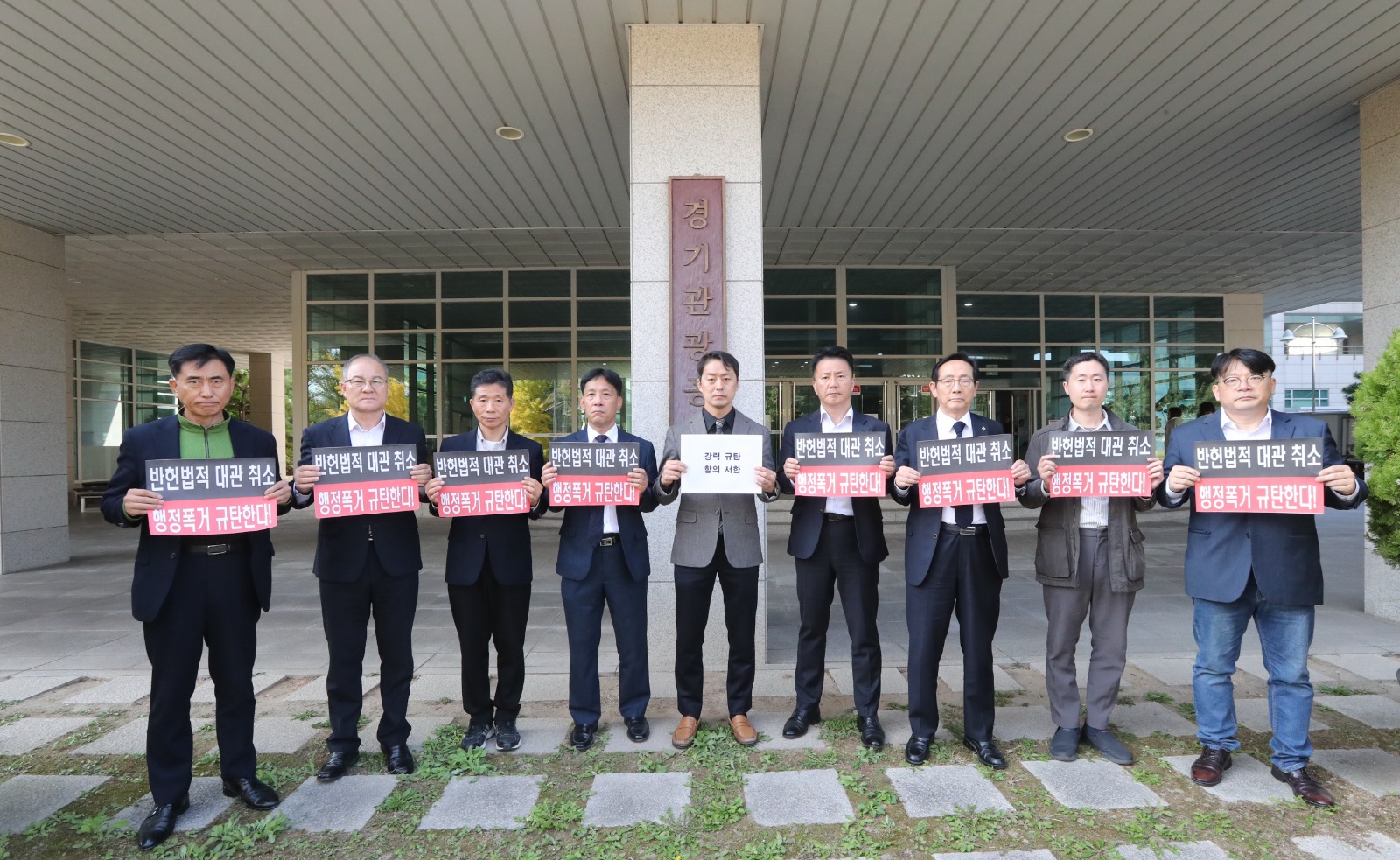
South Korean local government cancels an international event with 30,000 participants from 78 countries, causing international damage.
On October 29th, a South Korean government agency’s administrative decision sparked international controversy, raising concerns about religious freedom and causing substantial financial loss.
The “Religious Leaders Forum and Graduation Ceremony,” a joint initiative by two prominent religious organizations, was set to take place in Paju, South Korea. The event was expected to draw over 30,000 participants from 57 countries, including 1,000 religious leaders representing Christianity, Buddhism, Islam, and Hinduism.
However, the Gyeonggi Tourism Organization, a public entity under Gyeonggi Province, abruptly canceled the venue rental without prior notice. This last-minute decision has resulted in significant financial damage to the international event. Organizers of this event stated that the cancellation constituted an unconstitutional act of discrimination against a specific religion, violating religious freedom, human rights, and due process of law.
The hosting organizations, the Association for Buddhist National Unification of Korea and Shincheonji Church of Jesus, said they had received official confirmation on October 23rd and 28th that there was no cancellation plan. They also said the unilateral cancellation was an unreasonable administrative action targeting a specific religious group. They further emphasize that other events scheduled for the same day were not affected, suggesting that the cancellation was an “administrative decision caused by opposition from a specific religious group,” which “violates the principle of separation of church and state guaranteed by the Constitution.”
The Gyeonggi Tourism Organization cited security concerns related to recent North Korean actions and the planned activities of a North Korean defector group as reasons for the cancellation. However, it was pointed out that other events, such as civilian bike rides and foreign tourist visits to the DMZ, were permitted within the same designated area.
The incident has reignited international debate about religious freedom and tolerance in South Korea. The U.S. State Department’s International Religious Freedom Report has previously highlighted concerns such as the prosecution of Shincheonji Church of Jesus and the government’s refusal to approve mosque construction.
The Association for Buddhist National Unification of Korea and Shincheonji Church of Jesus call upon the South Korean government to respect religious freedom, uphold human rights, and rectify this unjust decision. They urge international organizations to monitor this situation and take appropriate action to protect religious liberty.
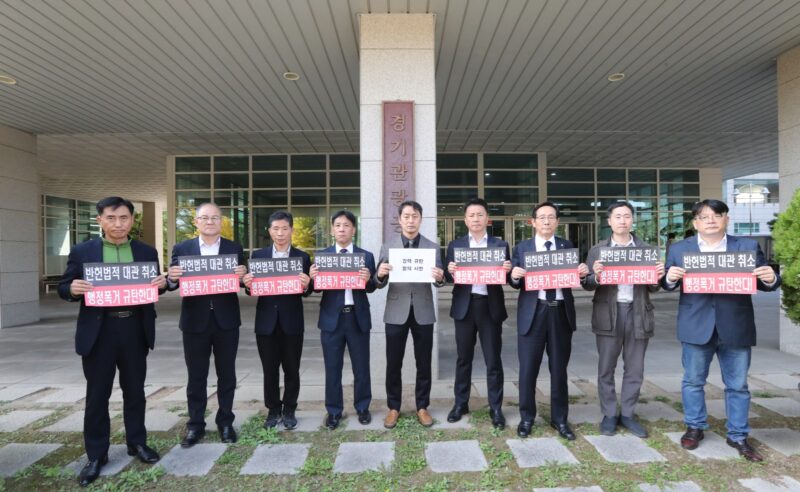
Condemning the Anti-Constitutional Venue Cancellation by Gyeonggi Tourism Organization
We strongly condemn the unconstitutional decision by the Gyeonggi Tourism Organization to cancel our venue reservation.
Shincheonji Church of Jesus and the National Unification Buddhist Central Council had planned to host the Religious Leaders’ Forum and Graduation Ceremony at ImjingakPyeonghwaNuri Park in Paju, Gyeonggi Province, on October 30. Accordingly, we formally reserved the venue for October 29-31 and diligently prepared for the event. However, on October 29, just one day before the main event, the Gyeonggi Tourism Organization unilaterally revoked our reservation without any prior consultation. Canceling the reservation at such a late stage, with tens of thousands of attendees from Korea and abroad en route, without any prior notification or attempt at dialogue, constitutes an egregious abuse of administrative power that cannot be overlooked.
For this ceremony, tens of thousands of graduates and religious leaders have traveled from abroad, and approximately 20 billion KRW has been invested in preparations. In its cancellation notice, the Gyeonggi Tourism Organization cited concerns over the designation of Paju as a risk zone and the potential impacts on residents due to anticipated leaflet launches by a group advocating for North Korean defectors during the event. However, the risk designation in the Paju area was established on October 16, and the leaflet campaign notice had also been publicly announced well in advance. Despite these developments, no issues were raised concerning our event until October 28, nor were any preparatory meetings to address the potential situation. Instead, the Gyeonggi Tourism Organization abruptly informed us of the cancellation on October 29, the very day the reservation was set to begin.
This event is purely religious in nature, and the administrative body, fully aware that preparations had been finalized, abruptly canceled it one day prior. This action severely infringes upon the freedom of religion and the principle of equality guaranteed by the Constitution, constituting an undeniable act of unconstitutional administrative overreach.
We view this cancellation as a consequence of undue interference not only by the Gyeonggi Tourism Organization but also by the Gyeonggi Provincial Government, and we strongly denounce this unlawful action. We call for responsible measures and vow to pursue all legal and administrative avenues to address the costs and damages incurred by this situation. We urge the Gyeonggi Tourism Organization to immediately retract this unjust decision and uphold transparent and accountable administration, ensuring fair treatment for all religious organizations.
On October 29th, a South Korean government agency’s administrative decision sparked international controversy, raising concerns about religious freedom and causing substantial financial loss.
The “Religious Leaders Forum and Graduation Ceremony,” a joint initiative by two prominent religious organizations, was set to take place in Paju, South Korea. The event was expected to draw over 30,000 participants from 57 countries, including 1,000 religious leaders representing Christianity, Buddhism, Islam, and Hinduism. However, the Gyeonggi Tourism Organization, a public entity under Gyeonggi Province, abruptly canceled the venue rental without prior notice. This last-minute decision has resulted in significant financial damage to the international event.








