





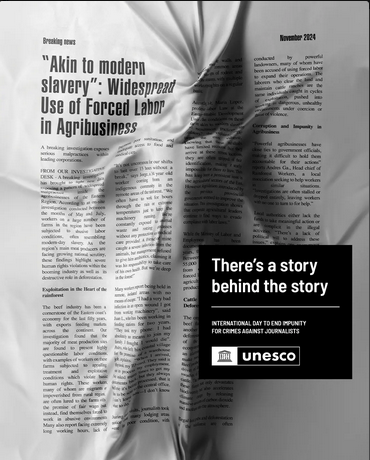
UNESCO’s 2024 Director-General’s Report Reveals Alarming Spike in Journalist Fatalities Amid Global Crisis in Accountability
The recently published UNESCO Director-General’s Report on the Safety of Journalists, released for the International Day to End Impunity for Crimes against Journalists, reveals a distressing 38% increase in journalist killings over the past two years, with 162 deaths reported globally. Shockingly, a journalist is killed every four days, with perpetrators evading justice in 85% of cases. As impunity remains widespread, particularly in conflict regions, this crisis calls for urgent international and governmental intervention.
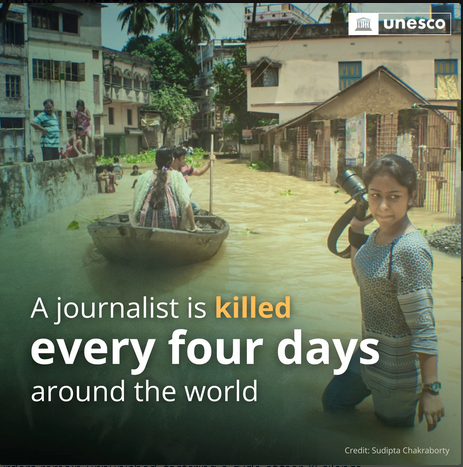
According to UNESCO, killings of journalists spiked in conflict zones, where they often operate in “zones of silence” amidst war and political unrest, attempting to uncover critical truths. In Latin America alone, organized crime and governmental corruption present daily threats to reporters. “Just last year, two of my colleagues were killed reporting on drug trafficking,” shares Maria, an investigative journalist in Mexico. “Every day, I wonder if I’ll make it back home.”
Maria’s story illustrates the grim reality faced by many journalists in regions with deeply entrenched criminal networks and weak judicial systems. She emphasized, “The threats are constant—one wrong story and you’re a target. The fear is always there, and sadly, justice for these attacks is rare.” UNESCO’s findings echo her words, showing that 86% of journalists killed in conflict zones are local reporters, highlighting their vulnerability within their own communities.
Rising Violence Against Women Journalists
The report also highlights a disturbing rise in violence against women journalists, with 2022 marking the highest number of female journalist killings since 2017. Alongside physical threats, women reporters face relentless online harassment. In a survey conducted by UNESCO, 83% of women journalists reported experiencing digital abuse, with 25% receiving direct threats of physical violence and 18% targeted with threats of sexual assault.
Diana, an environmental journalist from Asia, shared her experiences with gender-specific threats. “As a woman, I feel there’s a different level of scrutiny,” she explained. “Reporting on environmental issues, especially when powerful industries are involved, brings unique risks. I’ve faced threats that target me specifically as a woman—it’s about intimidation on a deeply personal level.”
These gendered threats compound the dangers of journalism, creating a climate where women are disproportionately targeted to discourage investigative work. UNESCO stresses the urgent need for gender-sensitive protections and policies to address these particular threats faced by female journalists worldwide.
Conflict Zones and Systematic Failures
Journalist fatalities are on the rise in countries experiencing conflict, with UNESCO reporting 44 journalists killed in such regions in 2023 alone, the highest number since 2018. In these areas, journalists face significant challenges as both state and non-state actors seek to control narratives. Maria adds, “In many conflict zones, reporting is seen as a direct threat. Governments and armed groups want to keep control, and journalists become targets when they expose the truth.”
UNESCO’s data show a disturbing increase in cases where journalists were killed following abductions or enforced disappearances, with Latin America and the Caribbean experiencing the highest number of these incidents. The report emphasizes the urgent need for international oversight to address these systematic failures that prevent justice from being served.
A Demand for State Accountability and Reform
UNESCO’s report, while highlighting a slight decrease in impunity, urges governments to take substantial steps toward justice. While the state response rate has increased to 77%, judicial resolution remains insufficient. UNESCO Director-General Audrey Azoulay underscored the implications of inaction: “Justice delayed is justice denied. The lack of action on these crimes undermines public trust in our institutions and erodes press freedom globally.”
Moving Forward: A Collective Responsibility
For journalists like Maria and Diana, the risks are as real as they are pervasive. “We do this because the truth matters,” says Maria. “But we need protection and justice to keep going. Without accountability, the cycle of violence against us will never end.” Diana, reflecting on her own experiences, adds, “The work we do is critical for society. We’re on the frontlines because people need to know what’s happening. But the threats can be overwhelming without support.”
UNESCO’s report is a stark reminder of the high price of truth and the critical need for action. Ending impunity is not only a matter of protecting journalists but upholding the public’s right to information and preserving democratic freedoms. As the report emphasizes, the fight against impunity is one that governments, civil society, and the global community must tackle together.








