





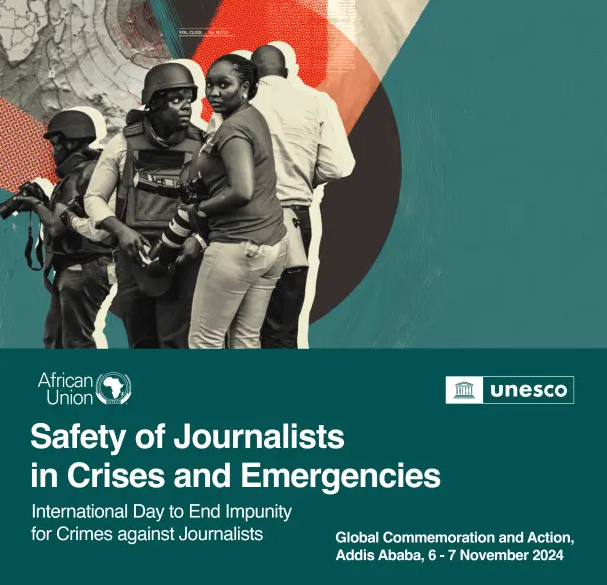
Over 1,700 journalists have lost their lives in the pursuit of truth, with almost 90% of these cases unresolved.
Every year, the world comes together on November 2 to observe the International Day to End Impunity for Crimes against Journalists (IDEI), an event established in 2013 by the United Nations General Assembly through Resolution A/RES/68/163. This day not only commemorates the assassination of French journalists Ghislaine Dupont and Claude Verlon in Mali but also serves as a critical reminder of the widespread culture of impunity that continues to endanger journalists worldwide. Between 2006 and 2024, over 1,700 journalists have lost their lives in the pursuit of truth, with almost 90% of these cases unresolved, according to UNESCO’s Observatory of Killed Journalists. This impunity crisis underlines a troubling trend for global freedom of expression and justice.
Impunity and the Erosion of Democratic Institutions
Impunity for crimes against journalists poses a serious threat to the rule of law and democratic institutions, acting as a green light for further violence and repression. In regions plagued by conflict, weak judicial systems, and limited press freedom, the lack of accountability is often directly linked to an erosion of trust in the state. UNESCO asserts that the unresolved murders of journalists harm societies as a whole by concealing severe human rights abuses, corruption, and crime. The failure to resolve these cases disincentivizes honest journalism, as journalists face daily threats without assurance of state protection.
Dr. Agnès Callamard, Secretary-General of Amnesty International and a prominent advocate for press freedom, explains, “The impunity enjoyed by perpetrators of violence against journalists is often a function of corrupt and dysfunctional legal systems.” Her statement aligns with data suggesting that in countries experiencing frequent violence against journalists, political instability and corruption are primary barriers to justiceamard and others have emphasized, the implications of such impunity reach beyond individual cases, contributing to a culture of fear and self-censorship.
Global Efforts and the UNESCO Observatory
The UN and UNESCO have developed comprehensive initiatives to address impunity and protect journalists. The UNESCO Observatory of Killed Journalists is a valuable tool within the UN system, tracking cases since 1993 and providing detailed data on ongoing investigations and unresolved cases. The Observatory offers transparency into government responses, or lack thereof, regarding judicial processes for journalist killings. This transparency is an essential element of the UN’s broader Action Plan on the Safety of Journalists and the Issue of Impunity, which mobilizes governments, media organizations, and civil society to work towards justice.
Every two years, the UNESCO Director-General’s Report provides an updated analysis of the current state of global and regional impunity, spotlighting both progress and continued failures in upholding justice. Recent findings indicate that certain regions, particularly conflict-ridden areas like Syria, Yemen, and parts of Latin America, remain highly unsafe for journalists. According to a report by the Committee to Protect Journalists (CPJ), journalist fatalities in these areas are often deliberate, and the perpetrators—frequently state-affiliated actors or militant groups—seldom face accountability .
Tost of Silence
The human impact of these unresolved cases cannot be overstated. When justice is denied, the families of journalists are left to bear not only the loss of their loved ones but also the weight of an unfulfilled pursuit of truth. Al Jazeera journalist Shireen Abu Akleh’s killing in the West Bank in 2022, and the prolonged lack of resolution, exemplifies the deep personal and societal costs of impunity. “The lack of accountability affects our trust in the system and violates our right to information,” notes Dima Khatib, Managing Director of AJ+, who argues that society as a whole suffers each time a journalist’s murder remains unresolved .
Khatib’s persphlights the larger societal stakes in the fight against impunity. Journalists are essential conduits of information, especially in fragile or oppressive states where they often report under threat to expose truths that affect national and international interests. Each unresolved murder suppresses vital narratives, halting investigations into issues that could spark public action or policy change.
Strengthening Justice Systems for Journalist Protection
Effective measures to combat impunity require more than symbolic actions; they demand structural changes within national and international judicial systems. The UN’s call for governments to adopt “definite measures” includes enhancing legal protections for journalists and establishing specialized units to investigate and prosecute crimes against them. Experts emphasize that these units should operate independently, free from political or financial pressures, to avoid bias and promote transparency.
A recent study by Reporters Without Borders (RSF) underscores the effectiveness of independent commissions and judicial oversight in nations like Sweden and Finland, where journalist murders are rare and impunity is low. The study shows that in these countries, robust media laws and a commitment to press freedom create an environment where journalists can safely perform their duties without fear of reprisal. Such models offer hope for countries grappling with violence against journalists.
Civil Society and Media Mobilization
Civil society organizations are equally vital in advocating for justice and press freedom. Groups like the International Federation of Journalists (IFJ) and CPJ are instrumental in documenting cases, pressuring governments, and providing legal support to affected journalists’ families. The global media community, too, is responsible for keeping these stories alive, countering attempts to silence journalists’ voices and encouraging continuous public pressure on state actors.
Looking Forward: A Collective Responsibility
IDEI is not just a day of remembrance but a clarion call for global solidarity against the injustices journalists face. Governments, international bodies, and civil society must collaborate to dismantle the structures enabling impunity. Protecting journalists is fundamental to achieving transparent governance and upholding human rights. As UNESCO underscores, ending impunity is not just about achieving justice for individual journalists; it is about preserving everyone’s right to information.
By Ayele Addis Ambelu (Ayeleradio@gmail.com)








