





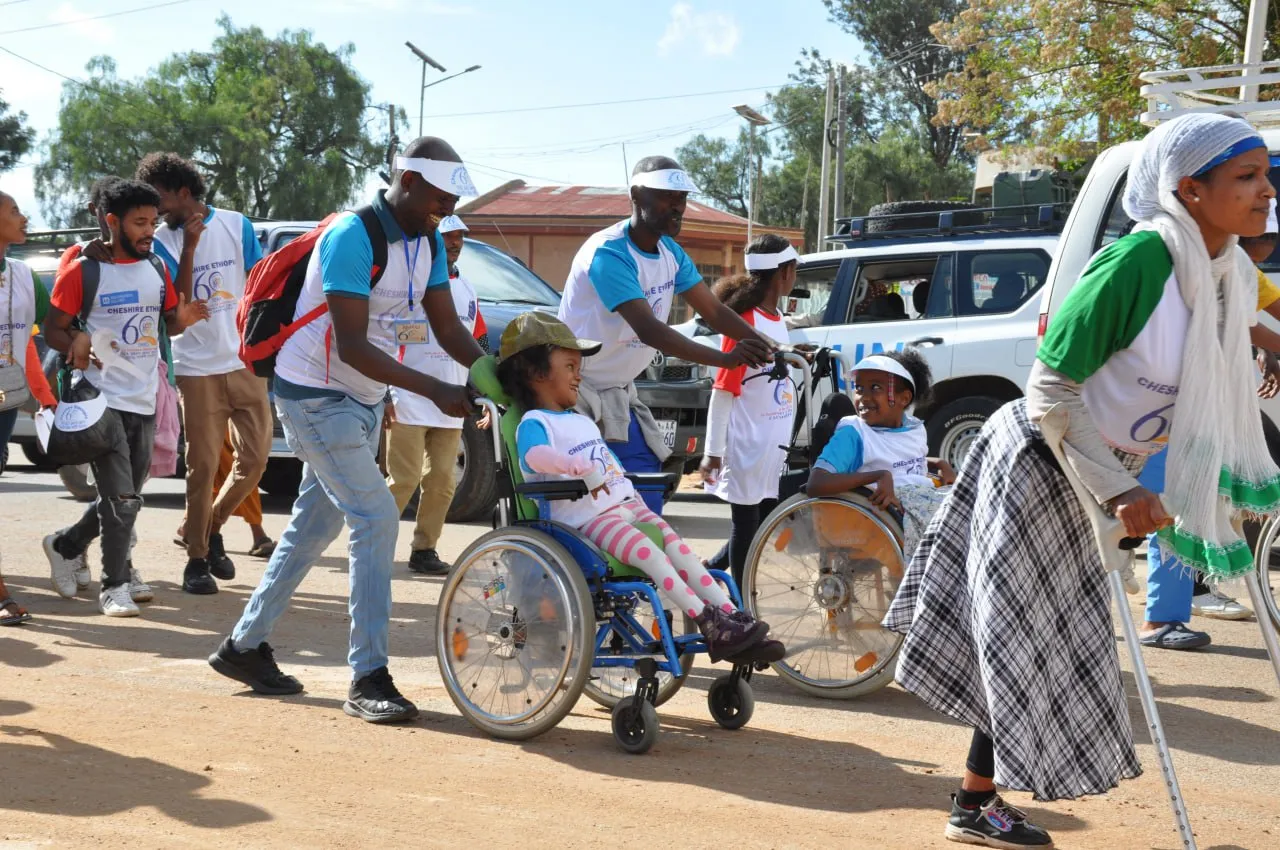
By Ayele Addis Ambelu (Special edition SRHR)
In the heart of Africa’s bustling cities and forgotten rural corners, a silent crisis brews—one that has long gone unspoken in policy rooms, aid corridors, and health campaigns. Young people with disabilities—already marginalized by physical, social, and systemic barriers—are being denied a fundamental human right: access to sexual and reproductive health (SRH) information. Their exclusion, driven by stigma, neglect, and policy failures, is costing Africa its future.
“I asked the clinic nurse for information on family planning, and she laughed and said, ‘Why would someone like you need that?’” says 19-year-old Miriam Achieng, a blind student from Kisumu, Kenya. Her voice trembles. “They don’t see us as full human beings.”
Across Africa, an estimated 15% of people live with some form of disability, and 60% of them are under the age of 25, according to the African Disability Forum (ADF). Yet less than 5% of national reproductive health strategies explicitly address the needs of youth with disabilities, a glaring omission echoed by multiple reports from UNFPA, WHO, and Human Rights Watch.
A 2022 multi-country study by The Guttmacher Institute revealed that in eight Sub-Saharan African countries, only 12% of adolescents with disabilities had received any form of SRH education, compared to over 40% of their non-disabled peers. Even worse, less than 2% of health facilities across the continent offer disability-friendly SRH services.
“This is not just a health issue—it’s a justice issue,” says Dr. Mpho Ndlovu, a reproductive rights researcher at the University of Pretoria. “When young people with disabilities are denied SRH information, they’re left vulnerable to sexual abuse, unwanted pregnancy, and sexually transmitted infections without the tools to protect themselves or seek help. This reinforces poverty, exclusion, and lifelong trauma.”
The economic toll is devastating. Disabled youth often drop out of school due to pregnancy or lack of menstrual hygiene resources. Girls with disabilities are up to 10 times more likely to experience sexual violence, says a 2021 UNICEF report. These realities deepen dependence and reduce economic participation, draining families and communities.
Politically, the issue exposes a breach in Africa’s commitment to inclusive development. The African Union’s Agenda 2063 emphasizes the need to “leave no one behind,” yet only 12 African countries have passed comprehensive disability rights laws that address SRH. Many rely on outdated, colonial-era perceptions of disability as a medical issue rather than a social and rights-based concern.
“It’s a double invisibility,” says Fatoumata Diallo, an advocacy officer at Disabled Women Africa (DiWA). “Young people are not taken seriously in health policy. Disabled people are ignored in development. When you are both, you are erased.”
The international community is also complicit. Although international agreements like the Convention on the Rights of Persons with Disabilities (CRPD) and the International Conference on Population and Development (ICPD) urge inclusive SRH access, funding for disability-inclusive health programs remains under 1% of total health aid, as reported by the OECD in 2023.
And yet, solutions exist. In Rwanda, the Ministry of Health partnered with youth-led disability organizations to develop braille-based SRH materials and sign language videos, increasing access by 60% in pilot districts. In South Africa, peer-educator programs in inclusive schools are bridging the information gap.
“Access to reproductive health is not a luxury—it is our right,” says Daniel Atwine, a Ugandan youth activist living with cerebral palsy. “We don’t need pity. We need access. We need information. We need dignity.”
The time has come for African governments, the African Union, and international partners to stop treating disabled youth as invisible. Their rights are not optional. They are overdue. To deny them access to reproductive health information is to deny them autonomy, future, and humanity itself.
The visual chart showing the disparity in access to Sexual and Reproductive Health (SRH) education between youth with and without disabilities across eight Sub-Saharan African countries.
📊 Chart Title: Access to SRH Education Among Youth in Sub-Saharan Africa
The image above illustrates a disturbing truth: youth with disabilities are consistently left behind in SRH education efforts across Africa. In countries like Kenya and Rwanda, where over 50% of youth without disabilities report receiving some form of SRH education, less than 15% of their peers with disabilities report the same. In Ethiopia and Malawi, the gap is even wider, dropping below 10% for disabled youth.
This disparity isn’t just a statistic—it’s a reflection of systemic exclusion, where educational materials are inaccessible, health workers are untrained in inclusive communication, and societal attitudes dismiss the sexual agency of persons with disabilities altogether.
“These numbers represent real lives. They show how we are seen as asexual, invisible, or irrelevant to public health,” says Ruth Kedir, a 23-year-old disability rights advocate from Addis Ababa. “Without access to reproductive health knowledge, we face higher risks of abuse, unsafe sex, and unwanted pregnancy.”
The data further underscores the failure of health systems and policy frameworks to bridge the knowledge gap. While SRHR campaigns flood airwaves and classrooms, they often do not reach young people in wheelchairs, those who are blind or deaf, or those living in specialized institutions.
“Disability-friendly SRH content is almost non-existent in our curriculum,” admits a senior official from a Ministry of Health in East Africa, who asked to remain anonymous. “It’s a blind spot we’ve ignored for too long.”
This invisible divide, visualized starkly in the chart, highlights an urgent call to action for governments, donors, and health professionals: Inclusion is not charity—it is a right. And it begins with access to information.








