





“We are not just planting trees; we are bringing life back to our soil, our communities, and our future,” says Mr. Amanuel Tesfahun, the Regional Coordinator for the groundbreaking FMNR project in Amhara. His eyes beam with conviction as he surveys the once-barren fields now flourishing with greenery. “This is more than restoration; it is a revolution led by farmers themselves.”
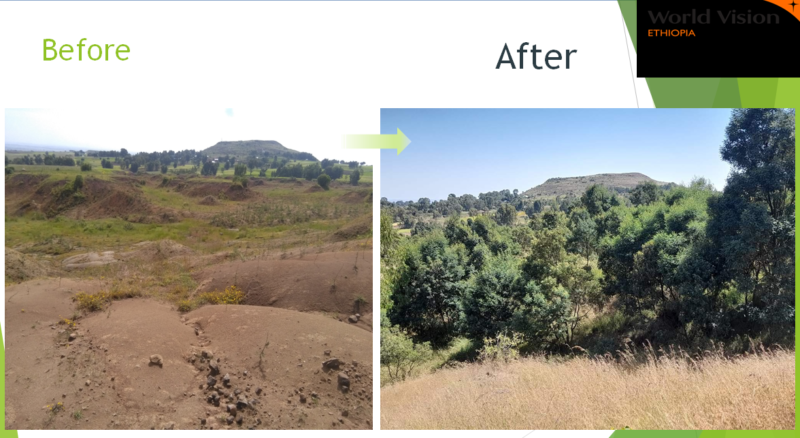
In a nation where 54 million hectares of land are classified as highly degraded, FMNR is rewriting the narrative of despair. Spearheaded by World Vision Ethiopia, in collaboration with local communities and government bodies, the FMNR project aims to restore 2.5 million hectares of degraded land by 2028. And the progress is nothing short of miraculous.
By Staff Reporter, BAHIR DAR, ETHIOPIA – April 29, 2025
A Revolution Rooted in Simplicity
FMNR is not just another environmental project; it is a community-driven movement that empowers farmers to manage and regenerate natural tree growth from stumps and root systems already present in the soil. Unlike traditional reforestation methods, FMNR harnesses what experts call an “underground forest”—a hidden network of roots waiting for a chance to breathe again.
“We thought the land was dead. But through FMNR, we discovered it was only sleeping,” says Tesfahun. In regions like Humbo, Soddo, and Abreha Weatsbeha, communities have already witnessed the power of FMNR, transforming dry, lifeless soil into lush landscapes rich with biodiversity. In Niger, where FMNR was first pioneered, farmers produced an additional 500,000 tons of cereal per year, enhancing food security for 2.5 million people.
Amhara Leading the Way: A Bold Vision for 2028
The Amhara region, long plagued by deforestation and soil erosion, has become the epicenter of Ethiopia’s FMNR revolution. With World Vision Ethiopia’s ambitious roadmap, 350,000 hectares will be directly restored through community-based initiatives, while 2.15 million hectares are targeted for indirect restoration by 2028.
According to project statistics from the recent FMNR Conference held in Bahir Dar, Amhara’s FMNR project has already restored 72,000 hectares of land, impacting more than 45,000 households. Water tables have risen, biodiversity has returned, and farmers report an average 35% increase in crop yields since the project’s inception.
“We are creating green corridors—an unbroken chain of life stretching across the landscape,” explains Tesfahun. This vision is not just about planting trees; it is about building resilience. Farmers are now seeing their soil regain fertility, water tables rise, and wildlife return to areas once considered barren.
The Human Impact: Voices from the Field
In the village of Gondar Zuria, farmer Alemnesh Tsegaye proudly walks through rows of acacia and moringa trees. “We used to depend on food aid. Now, we grow enough to feed our children and sell at the market,” she shares, her hands brushing against green leaves that didn’t exist just two years ago.
For Alemnesh and thousands like her, FMNR is not just a method—it is a lifeline. Local markets are beginning to thrive as communities reap the benefits of non-timber products like honey, fodder, and fruit. Women and youth are becoming leaders in environmental stewardship, guided by practical FMNR training and hands-on workshops facilitated by World Vision Ethiopia.
The numbers are clear: Ethiopia plans to restore 4.6 million hectares of land through FMNR in the next decade. Yet, Tesfahun believes more can be done. “This is our chance to not just restore our land, but to restore hope. I urge policymakers, donors, and community leaders to join us in scaling this revolution.”
World Vision Ethiopia’s FMNR initiative is more than a project—it is a proof of concept that sustainable, community-led environmental restoration is not just possible; it is happening now. And as the sun sets over Bahir Dar, the green hills stand as living monuments to what collaboration, resilience, and local empowerment can achieve.
nce barren and hopeless, vast tracts of land in the Amhara region are now springing back to life thanks to an innovative natural regeneration technique. The Farmer Managed Natural Regeneration (FMNR) method, coordinated by Amanuel from World Vision Ethiopia, is rapidly turning the tide on Ethiopia’s land degradation crisis.
“FMNR is more than a technique; it’s a transformation in thinking,” said Amanuel, FMNR Coordinator for the Amhara region. “We’re not just regreening the land—we’re restoring dignity, livelihoods, and resilience.”
Over 32 million hectares of land in Ethiopia are suitable for FMNR, according to World Vision Ethiopia, and the target is to restore 2.5 million hectares by 2028. The Amhara region stands at the heart of this restoration revolution.
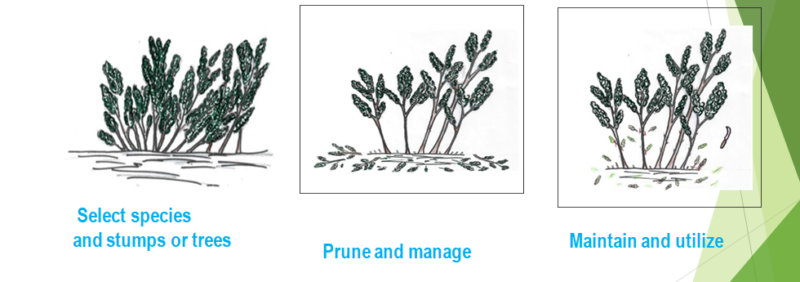
“We are empowering communities with the simplest yet most powerful tool—nature’s own regeneration process,” said Amanuel. The FMNR approach leverages existing tree stumps and seeds buried in the soil, offering a low-cost, scalable solution.
With the support of district leaders, 36 districts across 7 regions are actively engaged in restoring landscapes, increasing food security, and fighting poverty.
Deep beneath the dry soil of Amhara lies a hidden treasure: an “underground forest.” Through FMNR, this forgotten resource is being revived to combat drought, erosion, and famine.
“Even when a tree is cut down, hope is not lost,” Amanuel explained, referencing Job 14:7-9. “FMNR brings this scripture to life—new shoots emerge from stumps, water sources are replenished, and communities thrive.”
This method, first piloted in Ethiopia in 2004 in Humbo and Abreha Weatsbeha, has since become a cornerstone of Ethiopia’s land restoration strategy.
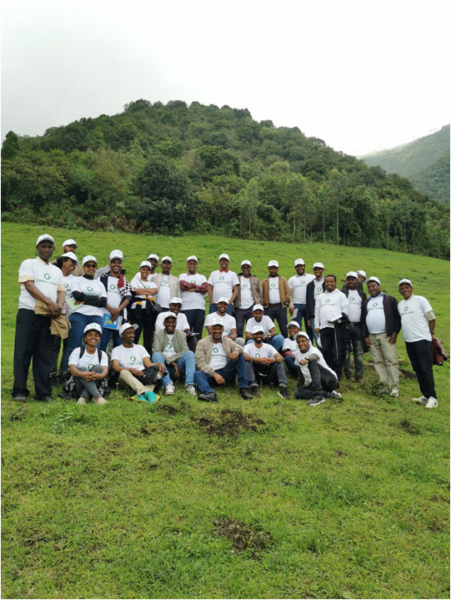
FMNR is not only reversing deforestation—it’s boosting rural economies. Beekeeping, agroforestry, and tree-based value chains are blossoming across FMNR sites in the Amhara region.
According to Amanuel, “FMNR integrates economic activities, which encourages communities to adopt it widely. From honey production to fuelwood harvesting, we’re seeing real economic empowerment.”
World Vision Ethiopia reports that communities using FMNR report increased cereal yields and reduced reliance on food aid. The method is rapidly gaining favor among farmers and policymakers alike.
What started as a small experiment with 10 farmers in Niger has grown into a global phenomenon—and Ethiopia’s Amhara region is now a leader in this transformation.
FMNR, supported by World Vision and guided by Amanuel in Amhara, is not just an environmental initiative—it’s a movement. Ethiopia has adapted the model to its own challenges, blending local knowledge with technical training.
With over 54 million hectares of land considered highly degraded nationwide, FMNR offers an immediate, cost-effective answer that communities can lead.








