





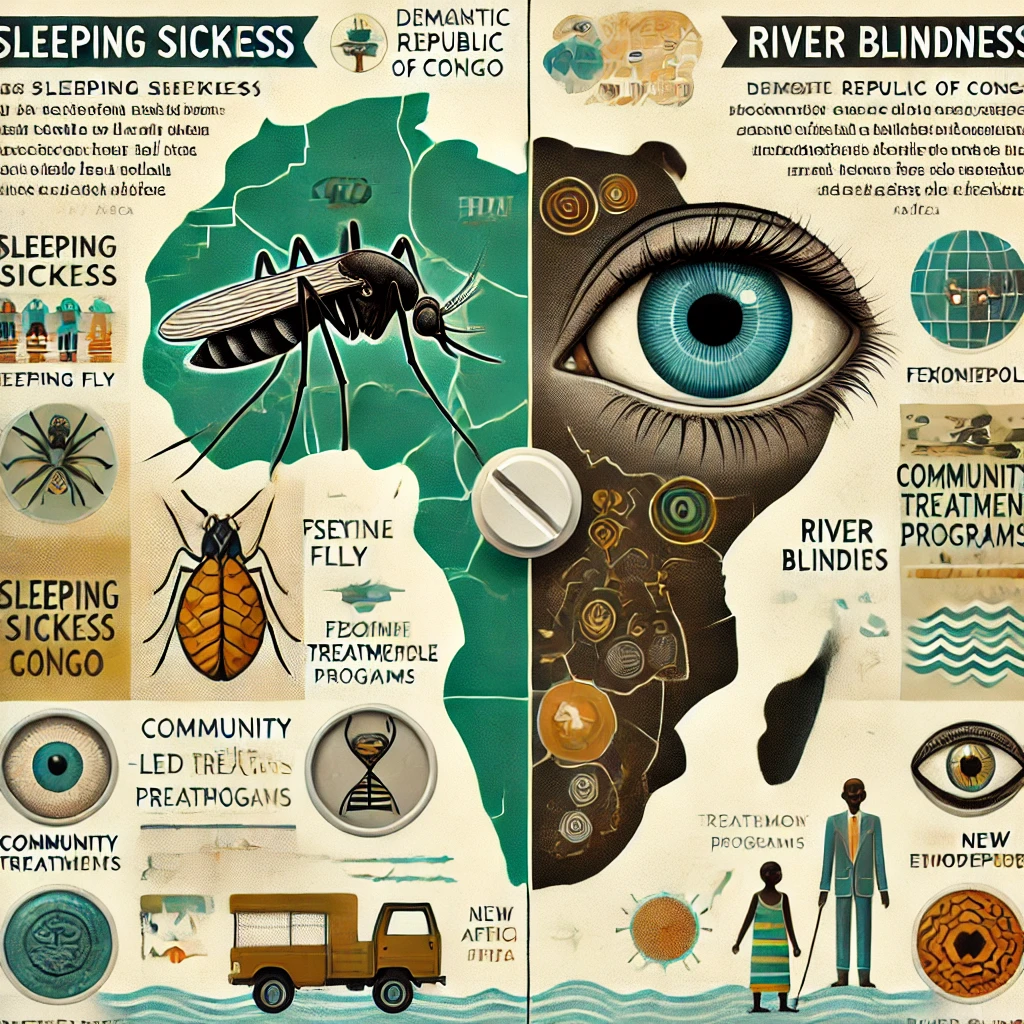
Sleeping sickness (human African trypanosomiasis) and river blindness (onchocerciasis) are two of the most neglected yet devastating diseases in Africa. With millions at risk, these diseases have long posed a significant public health threat, particularly in regions like the Democratic Republic of Congo (DRC) and West Africa. Thanks to new developments, innovative treatments are now on the horizon, bolstered by recent financial support from global health organizations.
By Ayele Addis Ambelu for the detailed story (ayeleradio@gmail.com)
Progress and Challenges
Sleeping sickness, caused by the bite of the tsetse fly, leads to severe neurological damage and is nearly always fatal without treatment. River blindness, spread by blackflies, can cause debilitating skin conditions and eventual blindness. While control efforts have significantly reduced the incidence of these diseases, especially in countries like Uganda, DRC, and Nigeria, reaching total elimination remains a challenge. Over 3 million people are still at moderate to high risk of sleeping sickness, particularly in DRC, which accounts for over 60% of global cases. Similarly, river blindness continues to afflict millions across West and Central Africa.
“We’ve made substantial strides in controlling these diseases, but full elimination requires a breakthrough in treatment. The road ahead demands sustained innovation and commitment,” says Dr. Luis Pizarro, Executive Director of the Drugs for Neglected Diseases initiative (DNDi).
New Investments for Innovative Solutions
The Bill & Melinda Gates Foundation has provided DNDi with a crucial USD 20 million grant to develop groundbreaking treatments for both diseases. This grant, which will support research and clinical trials until 2027, represents a key step toward achieving the elimination of sleeping sickness and river blindness.
For sleeping sickness, DNDi aims to develop a single-dose oral cure that could dramatically simplify treatment and increase accessibility. This new treatment builds on the success of fexinidazole, an oral therapy that DNDi introduced in 2019. Fexinidazole, the first all-oral treatment for sleeping sickness, has already transformed care by reducing the need for hospitalization. Now, the promising acoziborole, a single-dose therapy currently in Phase II/III clinical trials, has shown a 95% success rate in treating the most common form of the disease in Central and West Africa. Once approved, it will be a game-changer for healthcare providers in rural and underserved areas.
“With a simple, safe, and highly effective treatment like acoziborole, we could truly shift the landscape of disease elimination,” says Dr. Pizarro. “Patients could be diagnosed and treated on-site, which will be vital in reaching remote communities.”
River blindness, too, could see a revolutionary shift in treatment. Current efforts rely on mass distribution of ivermectin, a drug that effectively kills juvenile worms but requires yearly distribution for 10-12 years. This long treatment timeline has been a barrier to total eradication, as it doesn’t target adult worms that live in the body for a decade. DNDi’s solution is a new drug, emodepside, which targets adult worms, thereby shortening the timeline to elimination. The drug has progressed through successful clinical trials, with more studies planned for the coming years.
Learning from Africa’s Elimination Efforts
Several African countries have made considerable progress toward eliminating these diseases, offering valuable lessons for the rest of the continent. Uganda, for instance, has made major strides in controlling sleeping sickness by implementing active surveillance and widespread treatment with fexinidazole. Their success underscores the importance of early diagnosis, local engagement, and strong health systems in disease elimination.
In the case of river blindness, countries like Senegal and Mali have demonstrated the effectiveness of community-led treatment programs. These nations have shown that integrating local leaders into health initiatives can dramatically increase treatment compliance and success.
“We’ve seen how essential it is to involve communities in every step of the process,” explains Dr. Oumar Ba, a public health expert from Senegal. “From education to treatment, the local population needs to understand the importance of the effort and take ownership of it.”
The Road Ahead: Eliminating Sleeping Sickness and River Blindness by 2030
DNDi’s efforts align with the World Health Organization’s (WHO) Neglected Tropical Diseases (NTD) Roadmap, which aims to eliminate these diseases as public health threats by 2030. With the new treatments in the pipeline, the prospect of eradicating sleeping sickness and river blindness is within reach, but sustained investment is crucial.
In countries like DRC, where vast rural populations are still at risk, access to healthcare remains a key challenge. Remote communities often struggle with infrastructure and lack the resources needed to diagnose and treat diseases like sleeping sickness. However, with treatments like acoziborole on the horizon, which can be administered in a single dose, these barriers may soon be overcome.
Conclusion
While significant progress has been made in controlling sleeping sickness and river blindness in Africa, the goal of total elimination remains a complex challenge. DNDi’s innovative treatments, supported by the Bill & Melinda Gates Foundation, offer new hope for millions of people still at risk. By learning from the successes of countries like Uganda and Senegal, the international health community can take the final steps toward a world free of these neglected diseases.
As Dr. Pizarro emphasized, “The last mile is always the hardest. But with continued investment and innovation, we can finally eliminate these diseases and ensure a healthier future for generations to come.”
By Ayele Addis Ambelu (Ayeleradio@gmail.com)








