NEWS ANALYSIS | ADDIS ABABA, ETHIOPIA | 4 NOVEMBER 2026
By Ayele Addis Ambelu | Africa News Channel
ADDIS ABABA, Ethiopia – Africa and Europe have renewed their commitment to a 25-year strategic partnership, but the central question emerging from their latest high-level diplomatic engagement is whether decades of political declarations, trade preferences and investment promises can translate into tangible improvements in the lives of ordinary Africans.
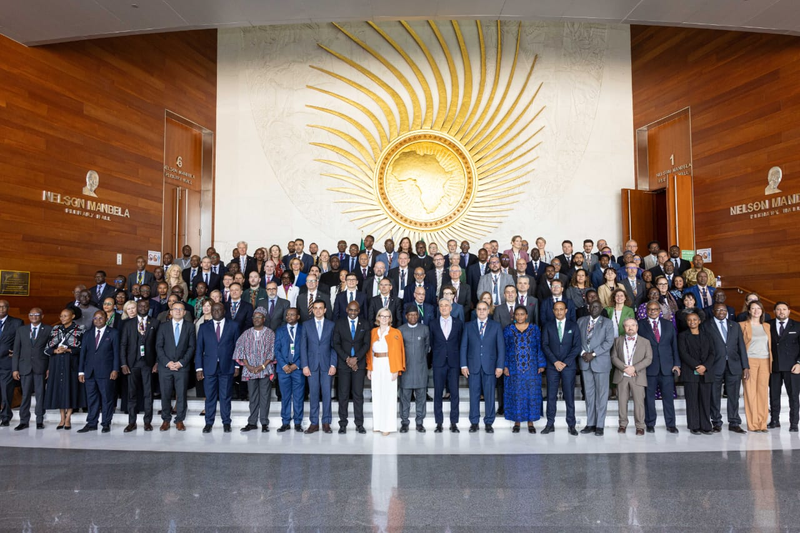
At the African Union–European Union (AU–EU) Senior Officials Meeting (SOM), held in Addis Ababa on 4 November 2026, senior representatives from both continents moved to strengthen the implementation of commitments made at the seventh AU–EU Summit in Luanda, Angola, in November 2025.
The meeting adopted a new Partnership Implementation Plan covering four priority areas: prosperity; peace, security and governance; people; and multilateralism. It also introduced a follow-up mechanism intended to monitor implementation, strengthen institutional coordination and improve accountability.
The decisions represent an attempt to move the relationship beyond diplomatic declarations towards measurable outcomes. However, the success of the renewed partnership will ultimately depend on whether its commitments produce employment, industrial development, affordable infrastructure, improved security and greater African influence in international decision-making.
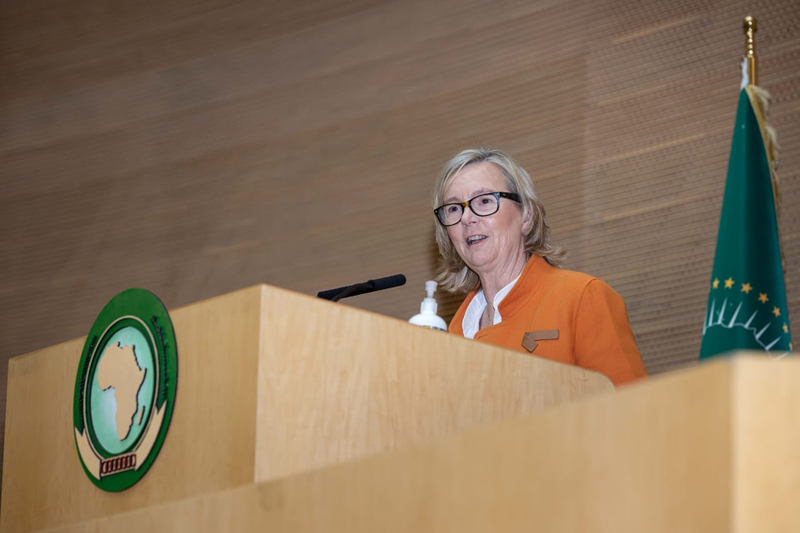
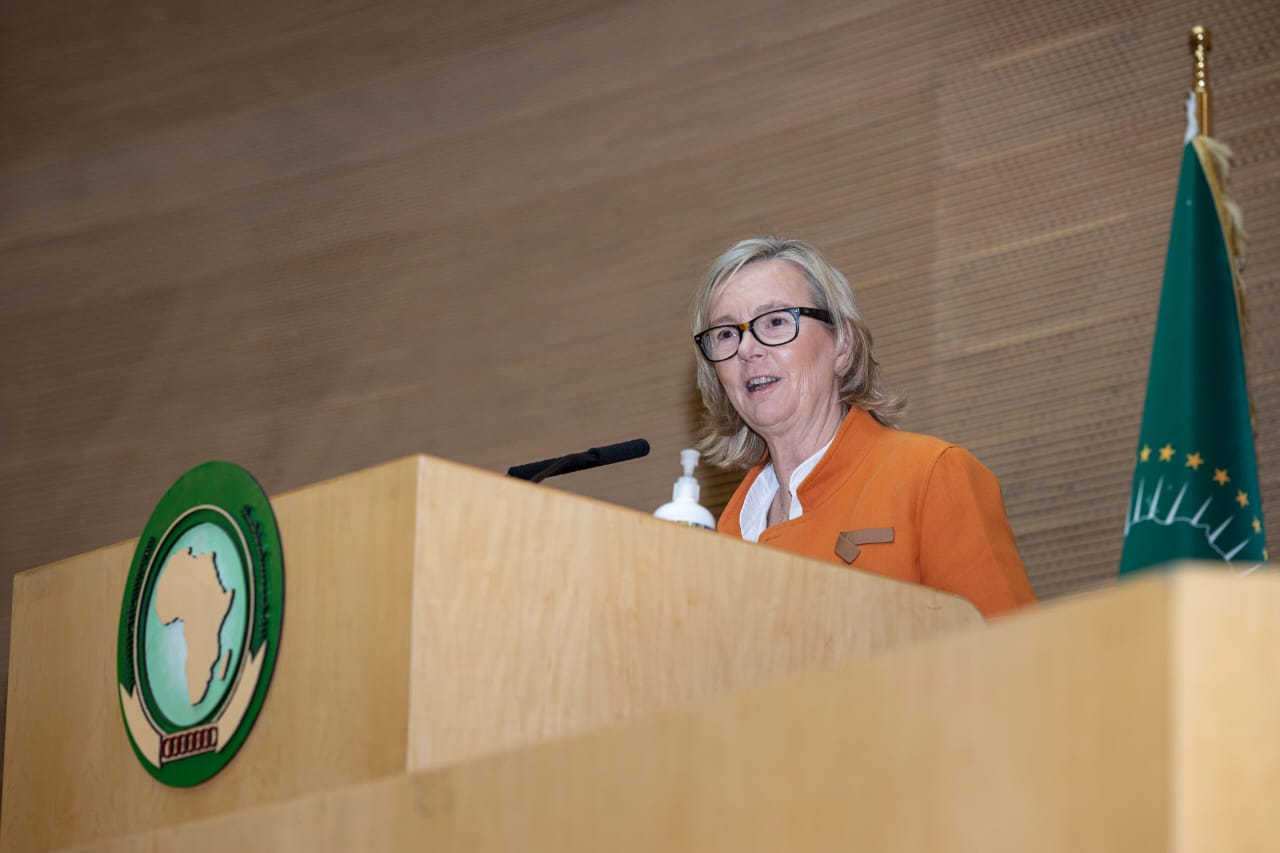
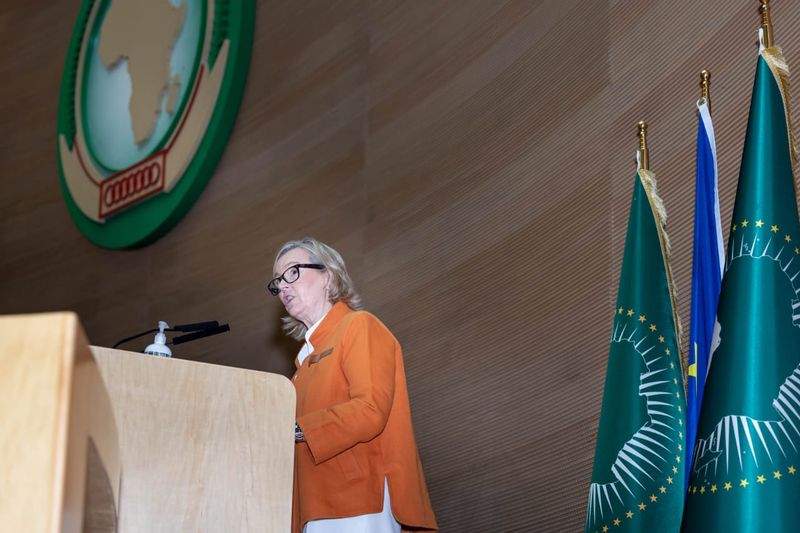
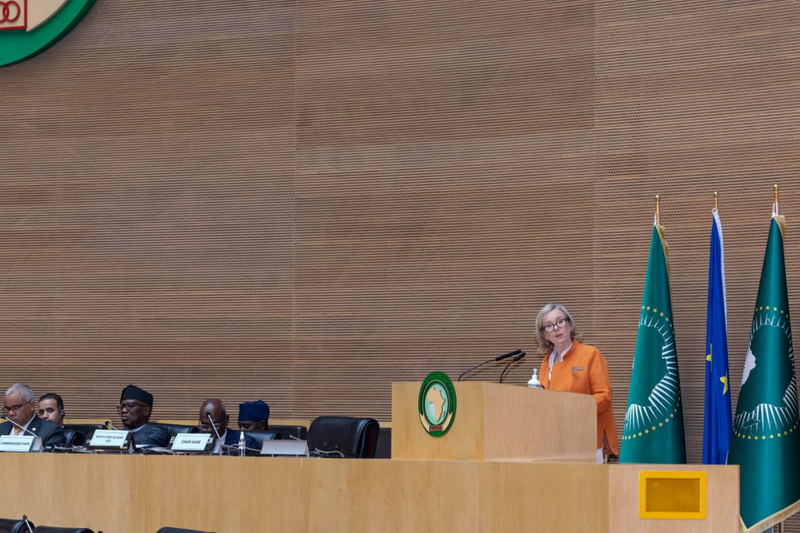
The meeting was co-chaired by Ambassador Willy Nyamitwe, Chairperson of the AU Permanent Representatives Committee and Burundi’s Ambassador to Ethiopia, and Patricia Llombart Cussac, Managing Director for Africa at the European External Action Service (EEAS).
“Our partnership must open doors: to opportunity for our youth, to growth for our economies and to a stronger voice for our two continents,” Nyamitwe said, emphasizing the need to transform shared ambitions into shared prosperity.
For the European Union, the meeting was also an opportunity to demonstrate that the partnership has delivered economic benefits over time. Cussac highlighted trade preferences, investment and long-term economic cooperation as evidence of the relationship’s practical value.
Yet beneath the diplomatic optimism lies a more complicated reality: Africa is seeking investment, technology, industrialisation and greater control over its economic future, while Europe is navigating geopolitical competition, security pressures and changing global trade relationships.
The question is no longer simply whether Africa and Europe need each other. It is whether their partnership can become more equitable, accountable and economically transformative.
The economic relationship: €355 billion in trade, but who captures the value?
The economic relationship between the two continents is substantial. According to European Union trade statistics, EU–Africa trade in goods reached approximately €354.6 billion in 2024.
The figures reveal both the scale of the relationship and the opportunities for greater economic transformation.
EU–Africa trade in goods, 2024
€189.5bn
EU imports from Africa
€165.2bn
EU exports to Africa
€354.6bn
Total merchandise trade
€110bn+
Trade in services
Source: European Council and European Commission trade statistics, 2024.
These figures demonstrate that Africa is an important trading partner for Europe. However, the volume of trade alone does not reveal the quality of the economic relationship.
One of the most important questions is whether Africa is moving from exporting raw materials towards exporting finished products, manufactured goods and higher-value services.
The EU’s own 2025 AU–EU Summit factsheet indicates that approximately 71% of African exports to the European market consist of raw materials, nearly half of which are fuels.
This presents a significant challenge for African governments seeking industrialisation and economic independence.
Africa produces minerals, agricultural commodities, energy resources and other valuable raw materials. Yet the transformation of these resources into finished products, the creation of manufacturing jobs and the retention of greater economic value remain major development priorities.
For example, exporting raw cotton generates income, but developing textile industries creates opportunities across cotton production, processing, spinning, garment manufacturing, packaging, transport and international marketing.
The same principle applies to coffee, leather, minerals and other African commodities.
The real measure of the AU–EU partnership should therefore not simply be how much Africa exports to Europe, but how much value Africa creates before those products reach European markets.
The €250 billion investment question: Opportunity or competition for Africa’s resources?
One of the strongest economic arguments presented by the EU delegation concerned European investment in Africa.
In her opening remarks, Patricia Llombart Cussac stated that European foreign direct investment stock in Africa was worth approximately €250 billion, six times China’s investment stock on the continent.
This is a significant figure, but it requires careful interpretation.
Investment stock is the accumulated value of investments held over time. It should not be confused with new investment entering Africa in a particular year or with money directly transferred to African governments.
The EU’s position as a major long-term investor provides opportunities for infrastructure development, energy, transport, digital connectivity, health and industrial development.
However, the critical question for African countries is how much of this investment creates local industries, transfers technology, develops African businesses and provides decent employment.
The EU’s Global Gateway Africa–Europe Investment Package provides an important framework for this ambition.
The package initially set an ambition to mobilise €150 billion in investments in Africa between 2021 and 2027. In May 2025, the EU reported 99 initiatives developed with Africa and 138 Global Gateway flagship projects adopted between 2023 and 2025. A subsequent EU report indicated that €120 billion had been mobilised by 2025.
These investments cover strategic areas including:
- Transport infrastructure and regional trade corridors.
- Renewable energy and electricity connectivity.
- Digital transformation and telecommunications.
- Health systems and pharmaceutical development.
- Education, research and vocational skills.
- Sustainable industrialisation and job creation.
Nevertheless, mobilised investment is not necessarily the same as money already disbursed or projects completed. African citizens need transparent reporting on actual financing, completed infrastructure, employment created and economic benefits delivered.
The partnership must also ensure that African countries retain meaningful ownership of development priorities rather than becoming merely destinations for external investment.
AfCFTA: Can Africa become a manufacturing and trading powerhouse?
The discussions in Addis Ababa placed the African Continental Free Trade Area (AfCFTA) among the important priorities of AU–EU economic cooperation.
The agreement offers Africa an opportunity to create a more integrated continental market, reduce trade barriers and develop regional value chains.
However, the scale of the challenge is considerable.
According to the African Union’s African Integration Report, intra-African exports represented approximately 14.6% of total African exports in 2024, compared with more than 60% within the European Union and 38% in Asia. African Integration Report.
Share of exports traded within the region
Selected regional comparisons reported in the African Union’s integration analysis.
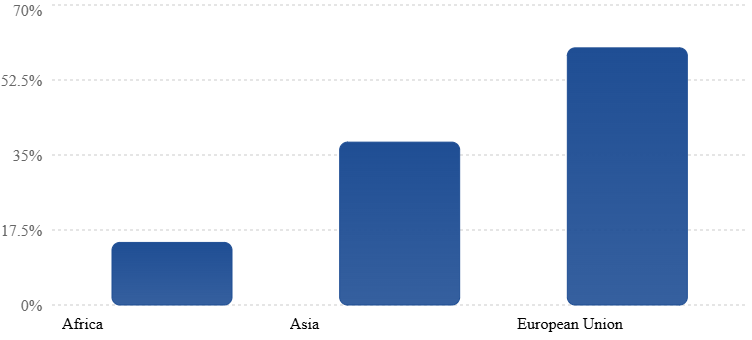
This comparison illustrates why African economic integration remains essential.
While European countries benefit from deeply integrated markets, African economies continue to face transport barriers, fragmented regulations, customs delays, inadequate infrastructure and limited industrial capacity.
For the AU–EU partnership, supporting AfCFTA should mean more than facilitating exports to Europe. It should also mean helping African countries trade with one another, establish regional manufacturing industries and develop products that can compete globally.
Africa needs investment that strengthens its own productive capacity.
Africa’s youth: The biggest opportunity and the greatest test
The question of youth employment is perhaps the most important social test of the renewed partnership.
Africa’s young population represents an enormous economic opportunity, but that opportunity cannot be realised without jobs, skills, entrepreneurship and access to productive economic activities.
The Africa Youth Employment Outlook 2026 estimates that the continent has approximately 532 million young people aged 15–35. It projects that Africa’s youth population will increase by 132 million during the 2020–2030 decade.
This demographic reality raises a fundamental question for the EU and African governments: how can investment translate into employment for millions of young people?
Infrastructure investment, for example, should not be evaluated only by the amount of money invested or the kilometres of roads constructed. Its impact should also be assessed through the jobs created, the skills transferred, the businesses supported and the economic opportunities generated for local communities.
Similarly, digital investment should enable African innovators, technology companies, researchers and entrepreneurs to participate in the global digital economy.
The AU–EU partnership will be judged not only in diplomatic meeting rooms but also in factories, universities, farms, technology hubs and communities where young Africans are seeking opportunities.
Peace and security: A partnership tested by global conflicts
The Addis Ababa meeting took place against a background of growing geopolitical tensions and security challenges affecting both continents.
In her opening statement, Cussac described a world increasingly characterised by war, rivalry, fragmentation and weakening international institutions.
She highlighted the war in Ukraine and its consequences for Europe, including displacement, destruction of infrastructure and rising food prices.
She also identified several African security challenges, including terrorism in the Sahel, the conflicts in Sudan and eastern Democratic Republic of Congo, regional rivalries, external interference and instability in the Red Sea.
She further raised concerns about the Israeli-Palestinian conflict and the situation in Gaza.
Her remarks underline an important reality: instability in one region can have consequences far beyond its geographical borders.
Conflict affects food security, trade, migration, investment, humanitarian assistance and regional stability.
The AU and EU therefore need a partnership that prioritises conflict prevention, peacebuilding, mediation, humanitarian protection and institutional capacity.
However, African governments must also have meaningful leadership in determining the priorities, approaches and solutions to conflicts affecting the continent.
The relationship should be based on cooperation between equal partners rather than a donor-recipient approach.
The global governance question: Africa wants more than a seat at the table
One of the most politically significant arguments in Cussac’s opening statement concerned the representation of Africa in global governance.
She noted that Africa and Europe together represent more than 40% of the United Nations.
This gives the two continents considerable diplomatic influence when they coordinate their positions.
However, Africa continues to demand a stronger voice in international institutions, particularly the United Nations Security Council and global financial governance structures.
The EU acknowledged that Africa remains underrepresented in global governance and called for reforms to make the international system more inclusive, representative and effective.
This issue is particularly important because decisions concerning international finance, debt, security, climate change, trade and technological governance directly affect African countries.
The Addis Ababa discussions also addressed UN reform, the UN80 initiative, the G20, G7 engagement and global digital governance, including artificial intelligence.
For Africa, the challenge is to transform its demographic, economic and diplomatic importance into greater influence over decisions affecting its future.
For Europe, working with Africa as a coordinated political partner could strengthen its influence in an increasingly competitive international environment.
A stronger AU–EU relationship should therefore be measured not only by the number of joint statements issued, but also by how effectively the two continents work together to reshape international institutions.
Everything But Arms: Twenty-five years of preferential trade access
Another significant issue highlighted at the meeting was the 25th anniversary of the EU’s Everything But Arms (EBA) trade arrangement.
Established in 2001, the arrangement provides eligible least-developed countries with duty-free and quota-free access to the European market for almost all products, except arms and ammunition.
According to the EU Council, 35 African countries benefit from the EBA arrangement, while other African countries benefit from different preferential trade arrangements.
The EU Co-Chair highlighted that 97% of African exports enter the European market without tariffs under the broader system of trade preferences.
There is, however, a distinction worth noting: her opening remarks described access for more than 90% of African exports, while the joint meeting statement and the EU’s 2025 trade overview cited 97%. These figures refer to broader preferential market access and should not be interpreted as meaning that every African country receives identical treatment under EBA.
The arrangement offers significant opportunities for African agricultural producers, manufacturers and exporters.
But preferential market access alone cannot guarantee economic transformation. African businesses still need productive capacity, financing, modern technology, quality certification, reliable logistics and the ability to meet European market requirements.
The next phase of the partnership should therefore focus on helping African businesses move beyond exporting unprocessed commodities towards competitive manufactured products.
Migration, mobility and the human dimension of the partnership
Migration and mobility were also among the issues addressed during the meeting.
For Africa, migration is connected to employment opportunities, education, economic inequality, conflict, climate pressures and the aspirations of young people.
For Europe, migration is a major political and policy concern, involving border management, labour shortages, irregular migration, asylum systems and security.
However, a sustainable AU–EU approach must recognise that migration is not exclusively a security issue.
Legal migration pathways, educational exchanges, professional mobility, skills development and investment in African employment opportunities are essential elements of a balanced relationship.
The partnership should also address the protection of migrants, human trafficking and the vulnerabilities faced by people travelling through dangerous migration routes.
The challenge is to develop policies that protect human dignity while responding to the legitimate development and security priorities of both continents.
The accountability test: What happens after the Addis Ababa meeting?
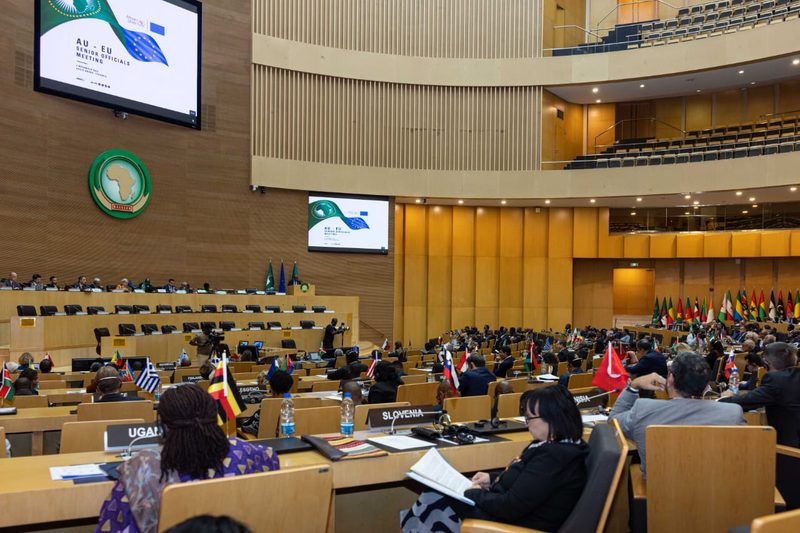
Perhaps the most important institutional achievement of the 4 November meeting was the adoption of a new Partnership Implementation Plan and a Follow-up Mechanism.
These decisions are particularly important because international partnerships often produce ambitious declarations, but implementation can become difficult when responsibilities, timelines and monitoring arrangements are unclear.
The new mechanism is intended to strengthen institutional coordination, monitor progress and improve accountability.
The meeting also released a Joint Monitoring Report reviewing achievements between 2022 and 2025, covering the period between the sixth and seventh AU–EU summits.
The significance of these decisions lies in their potential to make implementation a continuous process rather than an activity that happens only when political leaders meet.
However, meaningful accountability will require more than institutional coordination.
The two sides should regularly publish measurable progress on:
- The actual amount of investment delivered and projects completed.
- The number of jobs created, particularly for African youth and women.
- Technology transfer and the development of local industries.
- Growth in African manufactured exports.
- Support for AfCFTA and intra-African trade.
- Progress in peacebuilding and conflict prevention.
- Education, research and professional mobility.
- Africa’s representation and influence in international institutions.
Without measurable indicators, the new implementation mechanism risks becoming another administrative structure rather than a genuine instrument of transformation.
What does the renewed partnership mean for Ethiopia and East Africa?
The choice of Addis Ababa as the venue for the Senior Officials Meeting carries particular diplomatic significance.
As the headquarters of the African Union, Addis Ababa remains a major centre of continental diplomacy and international engagement.
For Ethiopia and the wider East African region, stronger AU–EU cooperation could create opportunities in infrastructure, renewable energy, agriculture, manufacturing, digital transformation, education and regional connectivity.
The EU’s investment priorities could support regional transport corridors, cross-border trade and economic integration, particularly through connections linking landlocked countries to international markets.
Ethiopia’s economic transformation also depends on expanding manufacturing, improving agricultural productivity, developing energy infrastructure and strengthening export competitiveness.
The partnership could contribute to these priorities through investment, technology cooperation, skills development and access to European markets.
Nevertheless, such opportunities depend on effective national policies, a predictable investment environment, regional stability and the capacity of local businesses to participate in international value chains.
For East Africa, the broader challenge is to ensure that international partnerships complement regional integration rather than create disconnected national projects.
The AU–EU relationship could become an important instrument for strengthening the economic connections between the Horn of Africa, the Great Lakes region and the wider African market.
The road ahead: From Addis Ababa to Brussels
The 4 November meeting is part of a broader diplomatic process following the seventh AU–EU Summit in Luanda in November 2025.
The two sides identified further milestones, including:
- A Commission-to-Commission meeting in 2027.
- An AU–EU Ministerial Meeting in 2027.
- The next AU–EU Summit in Brussels in 2028.
These meetings will provide opportunities to assess implementation and strengthen political coordination.
The real challenge, however, is whether the new implementation framework will produce visible progress before the next summit.
Africa needs investment that creates industries, employment and technological capacity. Europe needs reliable partnerships in a world of increasing geopolitical competition. Both continents need stronger cooperation to address conflict, climate change, economic uncertainty and global governance challenges.
Their interests are interconnected, but a successful partnership must also recognise their different economic capacities, political priorities and historical experiences.
Conclusion: Africa needs results, not another generation of promises
The AU–EU Senior Officials Meeting in Addis Ababa represents an important attempt to renew the strategic relationship between two continents that share deep economic, political and historical connections.
The adoption of the Partnership Implementation Plan, the Follow-up Mechanism and the Joint Monitoring Report provides an institutional foundation for translating political commitments into practical cooperation.
But the ultimate test will not be the number of agreements signed, diplomatic photographs taken or investment announcements made.
It will be whether African countries can create more jobs, process their own resources, expand manufacturing, strengthen regional trade, improve security and exercise greater influence in international decision-making.
For Europe’s part, the credibility of its partnership with Africa will depend on whether it supports these ambitions through transparent investment, fair economic cooperation, technology transfer and respect for African priorities.
Twenty-five years after the establishment of the AU–EU strategic partnership, the relationship has reached another important moment.
The question is whether the next 25 years will be remembered for the promises made or the transformation delivered.
Africa does not simply need access to European markets. It needs the capacity to produce, manufacture, innovate, compete and prosper. And that is where the real test of the AU–EU partnership begins.