





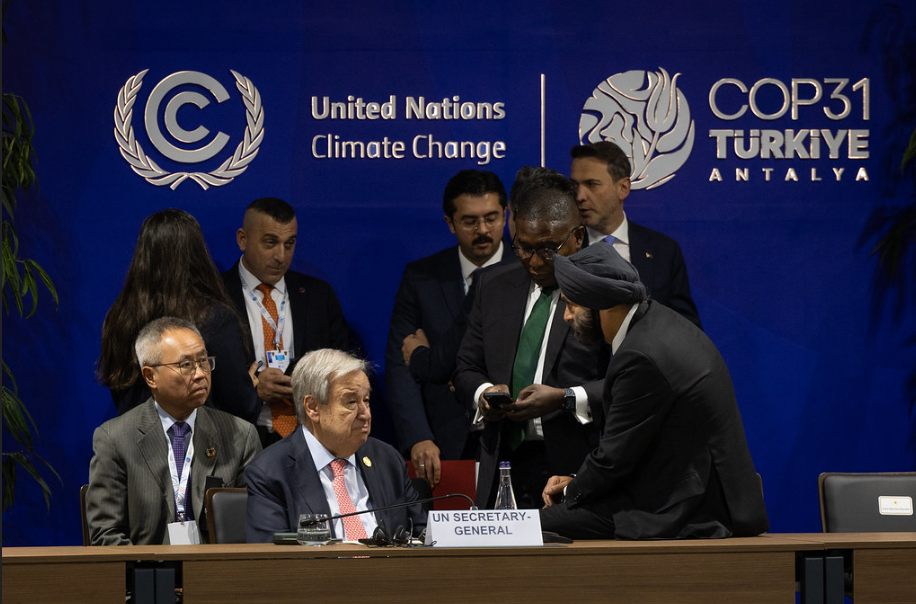
ANTALYA, TÜRKİYE | 11 November 2026
By Ayele Addis Ameblu
The central message emerging from the Moreover, COP31 highlights that the climate crisis is accelerating faster than governments are acting. Leaders’ Summit is becoming increasingly difficult for world leaders to avoid: the climate crisis is accelerating faster than governments are implementing solutions.
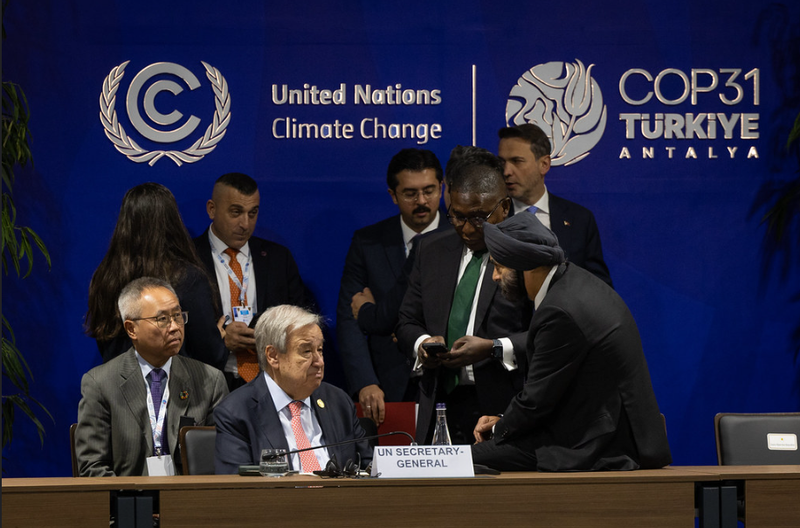
In one of his strongest climate warnings, United Nations Secretary-General António Guterres told world leaders that the world must confront the truth about rising emissions, the continued expansion of fossil fuels, inadequate climate finance and the widening gap between international commitments and actual action.
His message was particularly consequential for developing countries. He argued that climate justice cannot be achieved by demanding that poorer economies transform their energy systems while denying them affordable finance, technology and the resources necessary to protect vulnerable populations.
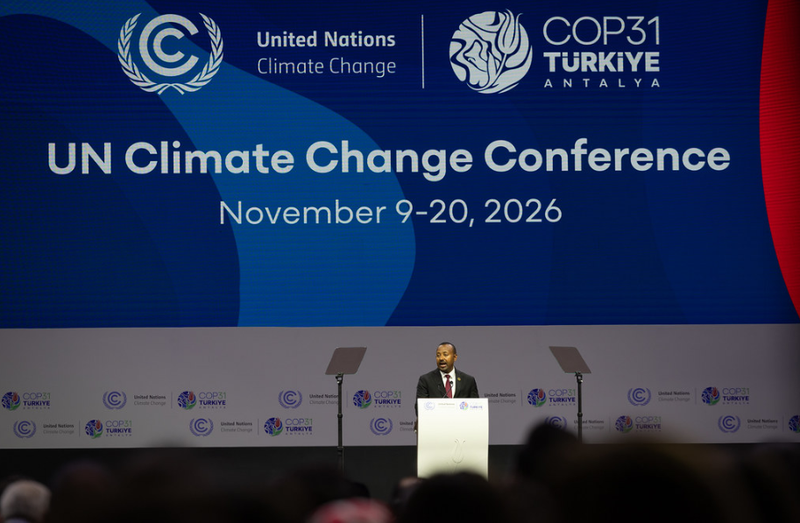
Against this backdrop, Ethiopia’s Prime Minister Abiy Ahmed used the Leaders’ Summit to outline his country’s vision for COP32, which Ethiopia is preparing to host in Addis Ababa in 2027. Meanwhile, Ethiopia’s ministers held discussions with the Asian Infrastructure Investment Bank (AIIB) over financing the proposed Bishoftu International Airport and wider development cooperation.
Turkish President Recep Tayyip Erdoğan also expressed support for Ethiopia’s forthcoming COP32 leadership while calling on wealthy countries to deliver climate finance and accelerate emissions reductions.
These developments bring an important question to the centre of international climate diplomacy: Will COP31 become the turning point between climate promises and implementation, or will the world enter another year of increasingly ambitious declarations without sufficient delivery?
Guterres delivers a blunt warning: The climate crisis is outrunning political action
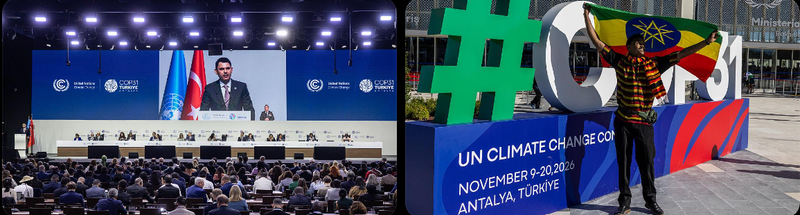
The most consequential intervention of the Leaders’ Summit came from UN Secretary-General António Guterres, whose address challenged governments to confront what he described as the widening distance between climate science and political action.
Opening with the declaration that “Our first climate duty is to tell the truth,” Guterres argued that the climate crisis is advancing faster than the international response.
He identified three lessons from the previous decade that should guide the next ten years.
First: exponential change is possible.
Guterres pointed to the rapid expansion of solar power and electric vehicles as evidence that technological transformation can happen much faster than previously anticipated.
According to his speech:
- Solar power generated approximately 1% of global electricity a decade ago.
- In 2025, solar reportedly met nearly three-quarters of the growth in global electricity demand.
- Electric vehicles represented approximately one in every hundred cars sold a decade ago, compared with an anticipated one in three in 2026.
These figures, as presented by the Secretary-General, illustrate the accelerating potential of clean-energy technologies. They should nevertheless be checked against the underlying energy and automotive datasets before being reproduced as independently established statistics.
Second: the economic and security arguments for fossil fuels are weakening.
Guterres challenged the continued dependence on fossil fuels, particularly among countries vulnerable to international energy-price shocks.
His central argument was that energy security and climate security are increasingly interconnected.
He also accused powerful fossil-fuel interests of obstructing progress through three mechanisms:
“Distort the science. Delay the policy. Delay the action. Delay the accountability.”
This is one of the strongest quotations from today’s address and provides an important accountability framework for examining the activities of governments, fossil-fuel companies and financial institutions.
Third: the world is moving too slowly.
Guterres said global emissions need to decline by approximately 6% annually, while current national climate plans deliver at best one-third of that required pace.
He warned that even full implementation of existing national plans, including conditional commitments, would leave global temperatures above 2.5°C by the end of the century.
The important distinction is that these are the Secretary-General’s characterisations of climate-policy projections. The underlying emissions scenarios and assumptions should be examined separately when preparing a detailed statistical comparison.
The political significance: Guterres is shifting the climate debate away from whether governments have announced ambitious targets towards whether they have credible policies, investment plans and accountability mechanisms capable of achieving them.
Climate justice becomes the central test: The finance gap and the fossil-fuel profit controversy
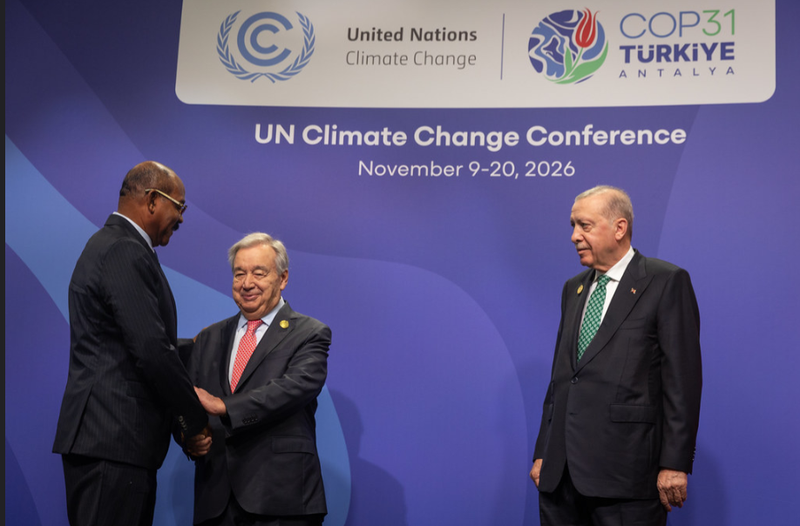
Perhaps the most politically significant part of Guterres’s address was his proposal for a new Climate Justice Compact, based on four pillars:
- A just transition away from fossil fuels.
- Protection of people through adaptation and early-warning systems.
- Adequate, affordable and accessible climate finance.
- International cooperation instead of geopolitical fragmentation.
This proposal is particularly important for African countries, which face growing climate-related losses while struggling to secure sufficient affordable finance for adaptation and development.
The $95 billion versus $600 million comparison
Guterres presented a striking financial comparison:
- The nine largest oil companies reportedly earned $95 billion in profits in the preceding quarter.
- The Loss and Damage Fund had received approximately $600 million.
- According to his comparison, the companies generated profits equivalent to the Fund’s entire amount in approximately 14 hours.
He concluded:
“Polluters must pay.”
Source: Secretary-General’s remarks as delivered, 11 November 2026; contemporaneous reporting by TheCable and Diário de Notícias.
The comparison is politically powerful, but journalists should explain what it does and does not establish. Corporate profits are not the same as available tax revenue, and the amount received by the Loss and Damage Fund is not necessarily the same as all international loss-and-damage finance. The two figures are not directly equivalent financial categories.
Nevertheless, the comparison raises an important policy question: why does the international system struggle to mobilise climate-recovery finance on a scale comparable to the wealth generated by the fossil-fuel industry?
The finance commitments that need scrutiny
Guterres called on developed countries to:
- Deliver at least $300 billion annually in climate finance by 2035.
- Establish concrete milestones to at least triple adaptation finance by 2035.
- Turn the wider $1.3 trillion climate-finance goal into actual flows to developing countries.
- Strengthen multilateral development banks.
- Replenish the Green Climate Fund and the Fund for Responding to Loss and Damage.
- Mobilise private investment and increase South-South cooperation.
These proposals must be examined against the actual negotiated climate-finance arrangements, particularly the New Collective Quantified Goal agreed at COP29 in Baku.
The critical issue is not simply how much finance is announced, but how much reaches developing countries, whether it is provided as grants or loans, how affordable it is, and whether vulnerable communities can access it.
Africa’s central question: Will the next climate-finance framework provide African countries with the resources to adapt without increasing their debt burdens?
Fossil fuels, renewables and the 1.5°C challenge: A demand for credible national roadmaps
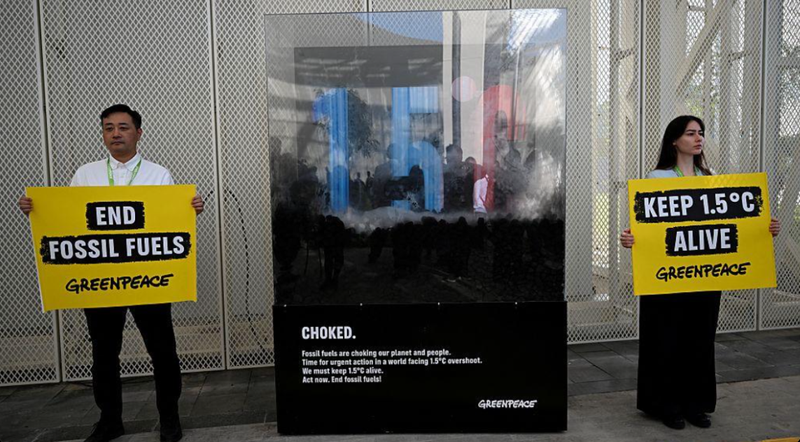
Guterres called for governments to move beyond general statements supporting clean energy and adopt credible national roadmaps for transitioning away from fossil fuels.
His speech referred to the following benchmarks for the transition:
| Target | Benchmark presented in the speech |
|---|---|
| Renewable energy capacity by 2035 | At least triple 2025 levels |
| Unabated coal power by 2035 | Reduce by at least 75% |
| Unabated coal power by 2040 | Nearly phased out |
| Oil and gas use by 2040 | Reduce by around one-third |
These are benchmarks cited by Guterres from the climate-policy pathways discussed in the speech, not new binding COP31 decisions.
The scientific context is important. UNEP’s Emissions Gap Report 2025 discusses pathways consistent with limiting warming to 1.5°C, including the expansion of renewables and reductions in fossil-fuel use. Its analysis also identifies the scale of the emissions reductions required during the coming decade. UNEP – UN Environment Programme
Why this matters for Africa
Africa faces a complex energy transition challenge.
Many countries need more electricity to support industrialisation, health services, education, transport and economic development. At the same time, they must avoid locking future infrastructure into high-emissions energy systems.
Guterres highlighted an important inequality: emerging and developing economies outside China are home to nearly two-thirds of humanity but receive less than one-fifth of global clean-energy investment, according to the figures in his address.
He also said many developing economies pay two to three times more to borrow.
This creates a structural disadvantage: countries with limited access to affordable capital face greater difficulties building renewable energy infrastructure, even when renewable technologies are increasingly competitive.
The connection with today’s 35-by-35 pledge
The COP31 Presidency’s Global Electrification Pledge proposes increasing electricity’s share of global final energy consumption to 35% by 2035.
Importantly, the pledge recognises that electrification must be supported by investment in transmission and distribution grids, energy storage and system-strength infrastructure, with particular attention to developing economies. COP31
This provides an opportunity to connect Guterres’s speech with the Presidency’s electrification initiative.
The accountability question is straightforward:
Will the 35-by-35 pledge be accompanied by affordable financing, renewable generation and grid investment, or will it remain a global ambition without sufficient implementation mechanisms?
Ethiopia’s COP32 vision: Abiy puts early action, renewable energy and predictable finance at the centre
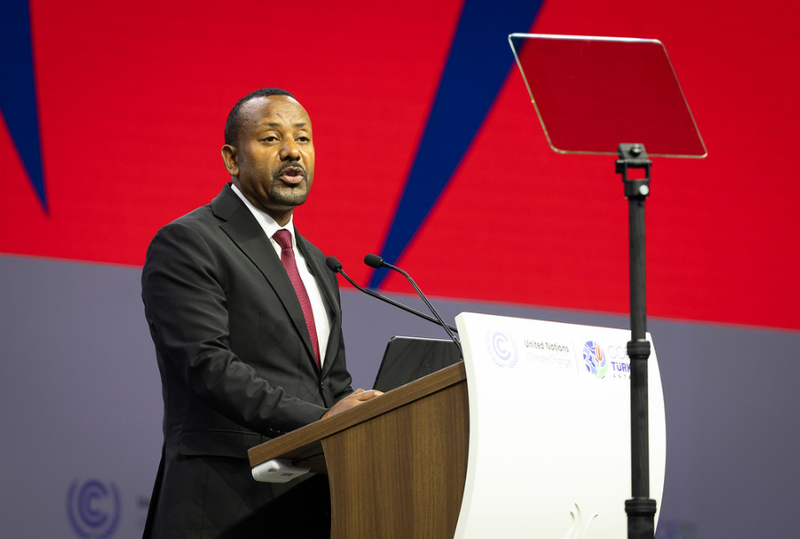
Prime Minister Abiy Ahmed’s intervention adds an important African dimension to the debate.
According to the Ethiopian News Agency’s report on his COP31 address, Abiy presented climate action as an integral component of Ethiopia’s economic and development strategy, rather than an environmental programme separate from national development.
His central statement was:
“In Ethiopia, climate action is economic policy.”
This is a particularly important message for Ethiopia as it prepares to assume the COP32 Presidency.
Five priorities emerging from Abiy’s address
1. Climate finance must arrive before disasters.
Abiy called for predictable climate finance that reaches vulnerable communities before droughts, floods and other climate-related emergencies.
One of his most important statements was:
“Funding should be agreed in advance. It can then move at the speed of our forecasters, while there is still time to save lives.”
This suggests that Ethiopia wants to connect climate finance more directly with early-warning systems and anticipatory action.
For farmers, pastoralists and communities exposed to recurring droughts and floods, early warnings without the resources to respond offer limited protection.
2. Hydropower creates both opportunity and vulnerability.
Abiy stated that more than 90% of Ethiopia’s electricity comes from water.
This is significant for regional energy security because Ethiopia also exports electricity to neighbouring countries.
However, dependence on rainfall exposes the national electricity system to changing precipitation patterns and prolonged drought.
The Prime Minister therefore highlighted investment in wind, solar and geothermal energy, alongside plans to explore nuclear energy.
3. The Green Legacy Initiative becomes part of Ethiopia’s international climate narrative.
Abiy said Ethiopia has planted more than 56 billion seedlings through the Green Legacy Initiative.
He presented the initiative as a programme that combines environmental restoration, employment, livelihood improvements and civic participation.
This figure should be attributed to the Ethiopian government rather than presented as an independently verified count of surviving trees or restored forest cover.
A critical follow-up for COP32 is whether the government can publish independently assessed information on seedling survival, land restoration, biodiversity outcomes and carbon benefits.
4. Climate technology and early-warning systems.
Abiy highlighted the use of satellite data and artificial intelligence to improve weather forecasting and provide farmers with earlier warnings.
He also referred to Ethiopia’s Fayda digital identification system as a tool supporting the delivery of assistance to vulnerable households.
The opportunity is significant, but the real test is whether forecasting technology translates into timely information, accessible communication and practical support for people at risk.
5. Ethiopia wants a stronger international climate-finance system.
Abiy argued that developing countries face high borrowing costs and substantial debt-service burdens, limiting their ability to invest in climate resilience.
He called for climate-finance commitments to be clear and measurable, with three essential elements:
- How much finance will be provided?
- When will it be delivered?
- Under what financial terms?
These are useful questions to carry directly into COP32 preparations.
The Green Legacy accountability question
Ethiopia’s Green Legacy Initiative has become an important element of its climate diplomacy. However, COP32 offers an opportunity to move beyond the headline number of seedlings planted.
The international community should be able to assess:
- How many planted seedlings survive after one, three and five years?
- How much degraded land has actually been restored?
- What measurable changes have occurred in forest cover and biodiversity?
- How much carbon has been removed or stored?
- How are local communities benefiting economically?
These are not arguments against the initiative. They are the measurements needed to demonstrate its effectiveness and credibility internationally.
5. Bishoftu International Airport and AIIB: Development diplomacy enters the COP32 conversation

Another important development from the Ethiopian delegation concerns discussions with the Asian Infrastructure Investment Bank.
According to the Federal Media Corporation (FMC) information supplied for this briefing, Foreign Affairs Minister and COP32 President-Designate Gedion Timothewos and Finance Minister and COP32 Chief Negotiator Fitsum Assefa met AIIB President Zou Jiayi in Antalya.
The reported discussions covered:
- Financing possibilities for Bishoftu International Airport.
- Broader long-term cooperation between Ethiopia and AIIB.
- Additional development and infrastructure projects.
- Potential AIIB support for Ethiopia’s COP32 Presidency.
This engagement is important because Ethiopia’s preparations for COP32 are taking place alongside wider efforts to mobilise international development partnerships.
However, there is a crucial distinction: discussions about financing are not the same as approved financing, a signed agreement or a disbursement.
Earlier Ethiopian News Agency reporting, dated September 2026, documented discussions between Finance Minister Ahmed Shide and AIIB President Zou Jiayi about potential AIIB participation in the Bishoftu airport project. ENA+1
The latest FMC report indicates that the issue remains part of Ethiopia’s high-level engagement with the Bank.
Aviation infrastructure can support trade, tourism, investment and regional connectivity. At the same time, airport development involves construction-related emissions, energy consumption, land-use change and the longer-term climate implications of aviation growth.
These issues do not establish that the airport is environmentally unsound. They establish the need for transparent environmental and climate assessments.
Erdoğan backs Ethiopia’s COP32 leadership and calls for climate finance accountability
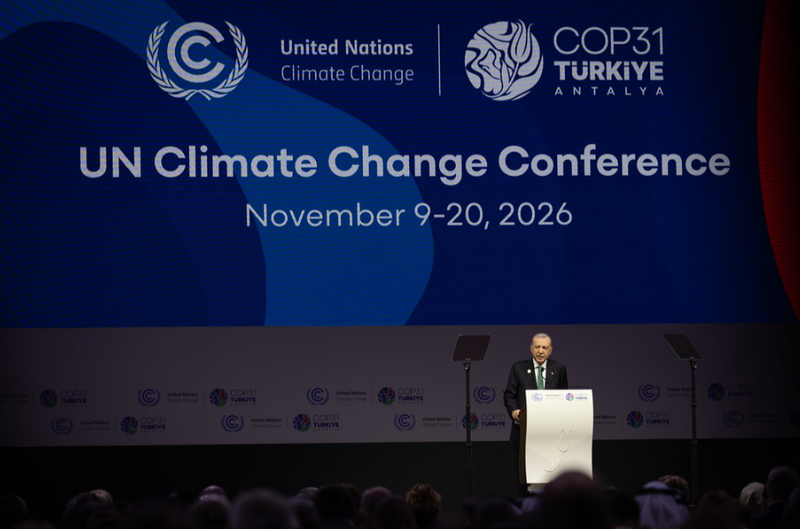
Turkish President Recep Tayyip Erdoğan’s address was significant for two reasons: his criticism of the gap between climate commitments and implementation, and his explicit expression of support for Ethiopia’s forthcoming COP32 Presidency.
According to the information supplied by FMC, Erdoğan said:
“I wish Ethiopia to assume the COP32 presidency every success already.”
This is an important diplomatic signal as Ethiopia prepares to host the next climate conference.
In his wider address, Erdoğan argued that developed countries must assume greater responsibility for reducing emissions and providing climate finance, particularly to least-developed countries and small island developing states.
He also called for financing that is accessible, predictable and responsive to the needs of vulnerable economies.
Anadolu Agency independently reported his emphasis on the responsibility of developed countries and his call for stronger climate-finance and technology support. AA News
Türkiye’s own implementation challenge
Erdoğan also highlighted Türkiye’s domestic climate ambitions, including:
- A net-zero emissions target for 2053.
- Expansion of renewable electricity.
- The Zero Waste Initiative.
- Improvements in recycling.
- Greater circular material use.
- Climate action across energy, industry, transport and agriculture.
He said Türkiye’s renewable sources exceeded 60% of installed electricity capacity and that its recycling rate had risen to nearly 40% by the end of 2025. These are figures attributed to his speech and should be checked against national statistical and energy datasets before being treated as independently verified outcomes. AA News
The diplomatic significance: Türkiye is attempting to position COP31 as an implementation-focused conference, while supporting Ethiopia’s transition into the next phase of climate diplomacy.
The real measure of this partnership will be whether the political support expressed in Antalya translates into practical cooperation, financing and a stronger negotiating position for Africa at COP32.
The international response: Leaders agree on urgency, but differ on responsibility and delivery
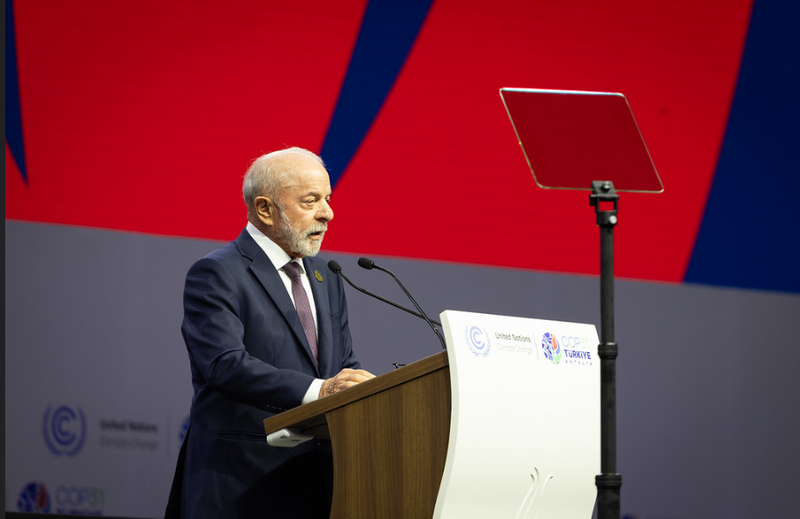
Guterres’s intervention was not an isolated warning. Other leaders at the summit also highlighted the need to accelerate climate action, although their approaches reflected different national priorities.
Reuters’ coverage of the Leaders’ Summit identified several important interventions:
| Leader | Main message |
|---|---|
| António Guterres, UN Secretary-General | Climate justice, fossil-fuel transition and a new global finance compact |
| Recep Tayyip Erdoğan, Türkiye | Developed-country responsibility and implementation |
| Abiy Ahmed, Ethiopia | Predictable finance, early action and climate-resilient development |
| Luiz Inácio Lula da Silva, Brazil | Renewed international cooperation amid geopolitical fragmentation |
| Anthony Albanese, Australia | Practical cooperation on electrification, clean energy and climate finance |
| Han Zheng, China | Developed countries’ responsibility for emissions reductions and climate finance |
| Mohamed Muizzu, Maldives | Predictable, grant-based finance without increasing debt burdens |
Three issues stand out.
First, the responsibility question remains unresolved. Developing countries continue to insist that historical responsibility and financial capacity must influence who pays for the transition.
Second, the finance question is increasingly connected to debt justice. The Maldives’ call for grant-based finance and Abiy’s concerns about high borrowing costs reinforce the argument that loans alone cannot meet the needs of vulnerable economies.
Third, the implementation debate is expanding beyond emissions reductions. Electrification, grids, oceans, climate resilience, industrialisation and adaptation are increasingly connected in leaders’ discussions.
The challenge is converting this political convergence into negotiated outcomes and financial commitments.
Africa and East Africa: What today’s speeches mean beyond the conference hall
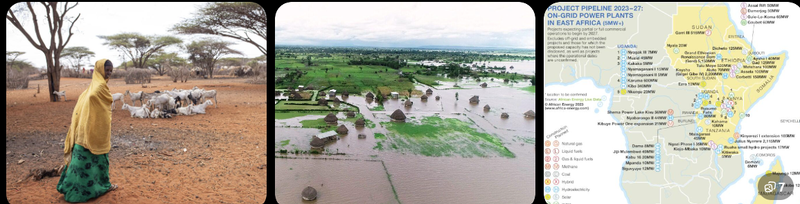
For Africa, the significance of today’s discussions extends beyond diplomatic recognition.
The continent needs a climate transition that addresses three interconnected challenges: development, climate vulnerability and access to finance.
Ethiopia
Ethiopia’s COP32 leadership provides an opportunity to put African priorities at the centre of international climate negotiations.
Its most important opportunities include:
- Securing predictable adaptation finance.
- Strengthening early-warning and anticipatory-action systems.
- Expanding renewable energy and regional electricity trade.
- Supporting climate-resilient agriculture.
- Protecting forests and biodiversity.
- Improving the accessibility of loss-and-damage support.
Ethiopia should also demonstrate how its own domestic policies will meet the standards of transparency and accountability it expects from other countries.
The Horn of Africa
The Horn of Africa is particularly vulnerable to interconnected drought, flooding, food insecurity and displacement.
The emphasis on early-warning systems is therefore important, but regional coordination is equally necessary.
Climate risks do not respect national borders. Ethiopia, Kenya, Somalia, Djibouti and other countries need better cooperation on climate information, water resources, disaster preparedness and cross-border resilience.
African coastal and island countries
The Ocean Dialogue and Guterres’s call to safeguard oceans provide an important opportunity for African ocean journalism.
Countries such as Kenya, Tanzania, Mozambique, Madagascar and island states face threats associated with coastal erosion, sea-level rise, ocean warming and ecosystem degradation.
Their priorities include:
- Mangrove and seagrass protection.
- Sustainable fisheries.
- Coastal adaptation.
- Marine biodiversity.
- Ocean-related climate finance.
- Protection of coastal livelihoods.
The challenge is ensuring that ocean protection becomes part of national climate planning and receives adequate funding.
This story was produced as part of the COP31 Climate Change Media Partnership, a journalism fellowship organized by Internews’ Earth Journalism Network, Informed Earth and the Stanley Center for Peace and Security.
This story was produced as part of the COP31 Climate Change Media Partnership, a fellowship for journalists covering the UN climate talks.








