





Bahir Dar, Ethiopia – June 19, 2025 — As cholera outbreaks surge to alarming levels in Bahir Dar, a city facing mounting health and sanitation challenges, Afro–Ethiopia Integrated Development (AEID) has launched an aggressive and integrated emergency intervention aimed at halting the spread and saving lives.
As deadly cholera outbreaks tighten their grip on Bahir Dar and surrounding areas, Afro–Ethiopia Integrated Development (AEID) has launched a high-impact, multi-sectoral emergency response. With a $400,000 grant from the Ethiopian Humanitarian Fund (EHF), AEID’s latest project aims to save lives and restore hope for over 100,000 vulnerable residents, many of whom are fighting for survival.
🔹 The Crisis: “We Drink Water and Pray It Won’t Kill Us”
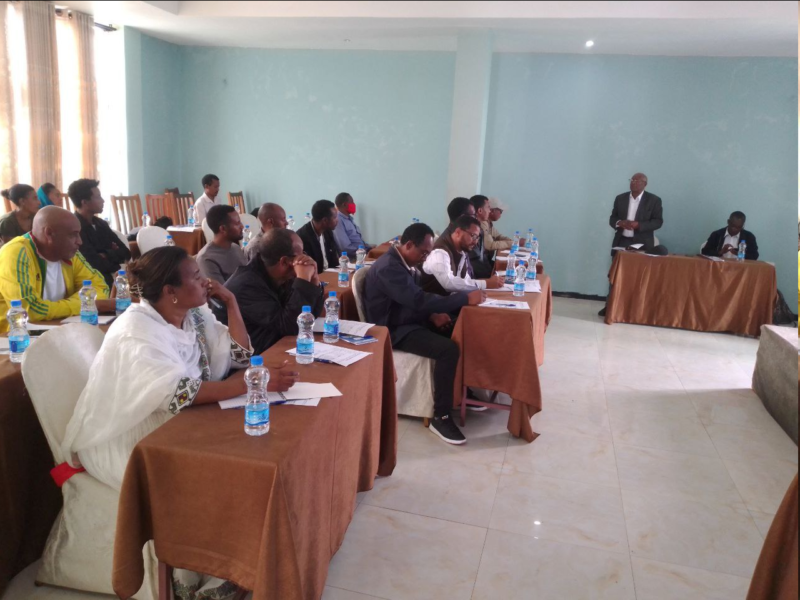
With an urgent call to action, AEID officially kicked off its Integrated Multi-Sectoral Cholera Emergency Response Project on June 1, 2025, a critical step in protecting over 100,000 people in Bahir Dar and surrounding areas. The initiative, funded by the Ethiopian Humanitarian Fund (EHF) with a budget of $400,000, spans until January 31, 2026.
and targets 24,000 women, 26,000 girls, 25,000 boys, and 25,000 men, underlining AEID’s commitment to inclusive, gender-responsive, and community-driven health solutions.
“We are determined to learn from past challenges and make another effort to ensure a healthier future,” said Shimeta Ezezew, Executive Director of AEID. “This project is not just a response; it is a declaration of solidarity with vulnerable communities.”
The project’s dual pillars are Health and Water, Sanitation and Hygiene (WASH) — sectors critically hit by recent cholera flare-ups in Bahir Dar Town and Bahir Dar Zuria Woreda. According to AEID’s field assessments, contaminated water sources, open defecation, and inadequate hygiene practices have accelerated the spread of cholera in several kebeles.
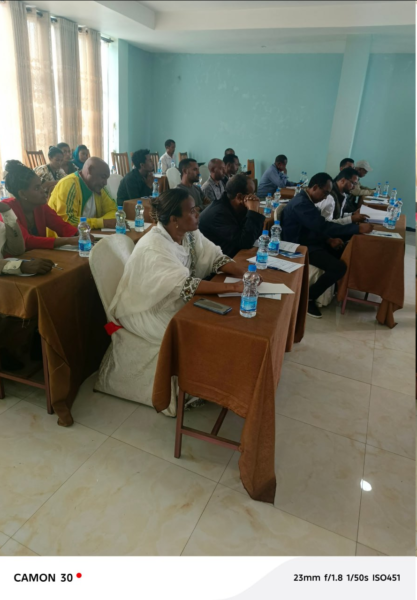
During the official launch ceremony, held in Bahir Dar, representatives from regional bureaus, Bahir Dar Town Administration, Bahir Dar Zuria Woreda, and local community and religious leaders gathered in a strong show of solidarity. Their presence underscored not only the urgency of the situation but also AEID’s grassroots approach to problem-solving.
“AEID stands with the venerable,” affirmed Abdissa Bekele, Programs Manager of AEID, echoing the organization’s philosophy of empathy-driven humanitarian work.
The project strictly adheres to Sphere Standards and Core Humanitarian Principles, with particular attention to safeguarding, protection, and the needs of older persons and persons with disabilities. AEID emphasizes community engagement, participatory planning, and feedback systems to ensure that assistance is both dignified and accountable.
🔹 AEID: A Proven Record of Compassion in Crisis
This is not AEID’s first battle on the humanitarian front. In recent months, the organization raised alarm over severe malnutrition in Bugina Woreda, sparking swift intervention by humanitarian agencies. That response saved hundreds of children — a testament to AEID’s impact when it speaks out.
Founded in 2003, AEID has implemented nearly 120 projects, reaching approximately 5 million people across Ethiopia’s regions, including Amhara, Oromia, Tigray, Benshangul-Gumuz, and SNNPR. Their focus areas include WASH, health, agriculture, education, MPCA (multi-purpose cash assistance), protection, and community empowerment.
Recent successes include:
- North Gojjam (Adet and Merawi) focused on WASH and MPCA in Adet, and health and MPC in Merawi, respectively.
- North Wollo (Bugina Woreda) Nutrition, health, and WASH delivery in hard-to-reach areas with funds sourced from EHF and last-mile delivery in collaboration with UNICEF.
- Currently, AEID is enhancing its capacity with the ‘ToGETHER 2.0’ project in partnership with WHH. AEID is also implementing projects in North Gondar, Dabat Woreda, funded by BMZ and the US Embassy.
AEID’s monitoring, evaluation, accountability, and learning (MEAL) team, led by Dr. Alebachew Fentaw, ensures that data-driven insights continuously improve the organization’s effectiveness.
“In the absence of that which you are not, that which you are is not,” reads a quote favored by the organization, encapsulating its commitment to learning through adversity and evolving to meet new challenges.
🛑 A Race Against Time
With the cholera threat evolving rapidly, AEID’s work is nothing short of a race against time. The organization is currently dispatching mobile health teams, distributing hygiene kits, chlorinating water sources, and conducting community awareness campaigns.
“This is a fight we can’t afford to lose — but with determination, community support, and coordinated action, we won’t,” concluded Shimeta Ezezew.
In a landscape often marked by bureaucracy and delays, AEID’s prompt mobilization offers hope — a reminder that when compassion meets capacity, real change is not just possible, but inevitable.
In the dusty kebeles of Bahir Dar Zuria, the situation is dire. Residents like Wubet Ayalew, a mother of five, recount days of terror:
“We lost two neighbors in one week. We drink water and pray it won’t kill us.”
In Wubet’s village, a single contaminated stream has served as the main water source. The area has no functioning latrines, and the nearest clinic is 10 kilometers away. Children, especially under five, are the worst affected, with high fevers, vomiting, and dehydration appearing overnight and claiming lives before families can seek help.
AEID’s swift response includes deploying emergency health workers, setting up chlorine water treatment units, distributing family hygiene kits, and launching door-to-door awareness campaigns in high-risk zones.
🔹 A Generation at Risk: Voices from the Field
In Tis Abay kebele, 14-year-old Meaza Yibeltal missed school for nearly three weeks while recovering from cholera.
“I just want to go back to school. I don’t want to die from water,” she says softly.
Meaza’s case underscores how public health crises ripple across sectors — education, family income, and mental health. AEID’s integrated approach will address these intersecting challenges, delivering not just health care but psychosocial support and public education for affected children and youth.
🔹 A Community Awakens: Religious and Local Leaders Speak Out
During the launch event, Sheikh Hassen Yusuf, a local religious leader, addressed the gathering with a heartfelt plea:
“This is not just a health issue — it’s a test of our morality. If we can’t save our children from preventable disease, who are we?”
Representatives from the Amhara Regional Health Bureau, Bahir Dar Town Administration, and Woreda Disaster Risk Management Office echoed this urgency. The coordinated presence of officials and religious figures signals strong institutional alignment and commitment to making this response effective.
🔹 Beyond Bahir Dar: AEID’s Broader Humanitarian Footprint
While Bahir Dar takes center stage today, AEID’s intervention history spans Ethiopia. In North Wollo’s Bugina woreda, a recent AEID-UNICEF partnership reached starving children trapped in conflict-affected zones. A staff member from AEID recalls, a nutrition nurse with AEID, recalls:
“Some children were so weak they couldn’t cry. Within weeks, after receiving ready-to-use therapeutic food, they were running again.”
In Adet and Merawi, AEID’s projects combined cash assistance and hygiene promotion, showing measurable reductions in child morbidity within just three months.
🔹 AEID’s Commitment: Compassion Meets Capacity
“We are not just responding — we are transforming,” said Shimeta Ezezew, AEID’s Executive Director. “Cholera, malnutrition, displacement — these are human tragedies, not statistics. We must address them with human solutions.”
“AEID stands with the vulnerable,” affirmed Abdissa Bekele, Programs Manager of AEID, echoing the
organization’s philosophy of empathy-driven humanitarian work.
“Feedback is a right, not a favor,” noted Dr. Alebachew Fentaw, AEID’s MEAL and Communications Manager. “We listen, adapt, and act.”
🔹 A Call for Support: “We Can’t Do This Alone”
Despite this major step, AEID acknowledges the need for collaborative action. The organization is appealing to additional donors, INGOs, and local partners to scale up interventions and reach neighboring woredas already showing early signs of cholera transmission.
“Every minute counts. Every dollar can save a life. We welcome partnerships that uphold dignity and
action,” said Abdissa Bekele, Programs Manager
✅ Impact in Numbers (as of June 19, 2025)
- 100,000+ beneficiaries targeted
- 12 high-risk kebeles prioritized
- 400+ health professionals and volunteers mobilized
- Sphere Standards and Core Humanitarian Principles guiding implementation
- 6 partner institutions involved in multi-level coordination
🔹 Looking Ahead: The Spirit of AEID
From a modest NGO founded in 2003 to a powerhouse of community-based development, AEID has reached over 5 million people through nearly 120 projects. Its secret? A philosophy rooted in empathy, persistence, and purpose.
“Where there’s a will, there’s a way,” is more than a slogan at AEID. It is a battle cry. And in the fight against cholera, AEID is marching forward — with the people, for the people.
By Alebachew Fentaw (PhD), MEAL and Communications Manager, AEID HQ, Addis Ababa, Ethiopia
“AEID has revised and approved its financial manual. The manual was developed with the support of LCD and revised by the OCHA finance team. AEID uses a computerized double-entry accounting system and utilizes a licensed version of SAG-50 (Peachtree software). All financial reports are automatically generated from the system by the donor, by project, and for management. AEID follows International Public Sector Accounting Standards (IPSAS) for high-quality financial reporting that is accountable and transparent for better decision-making. Additionally, AEID has a report approval letter from the ACS
(Agency for Civil Society Organizations),” affirmed Abeba Mengiste, Admin and Finance Manager at AEID HQ.








