Ethiopia is rewriting its destiny. Once known for its humanitarian crises, the nation is now emerging as Africa’s most electrifying investment frontier—and the just-released “Invest in Ethiopia 2025 Deal Book” is a thunderous declaration of intent. With over $13 billion in investor-ready projects across energy, agriculture, manufacturing, finance, and tech, Ethiopia is flinging open its doors to global capital like never before. The transformation is breathtaking: from a closed, state-dominated economy to a liberalized, reform-hungry powerhouse poised for 8.4% GDP growth in 2025, one of the fastest rates globally. Backed by bold reforms under the Homegrown Economic Reform Agenda 2.0, the government is slashing red tape, liberalizing the financial sector for the first time in history, and greenlighting full foreign participation in banks and power projects. The stakes are enormous: mega solar and wind farms, irrigation schemes covering tens of thousands of hectares, and the opening of previously impenetrable industries are all on the table. Ethiopia’s youthful population—projected to soar past 225 million by 2050—offers a labor and consumer goldmine, while its geographic location as a trade gateway to Europe, Asia, and the Middle East multiplies its appeal. Inflation is falling, debt is shrinking, and foreign reserves are surging. In this moment, Ethiopia isn’t just asking for investment—it’s staging a full-throttle economic revolution. This is more than a pitch—it’s a clarion call to venture capitalists, sovereign wealth funds, and visionary investors: get in now or get left behind. Ethiopia is not the future—it’s the now.
BY: Special Report by Ayele Addis Ambelu (africaunionmedia@gmail.com), Addis Ababa
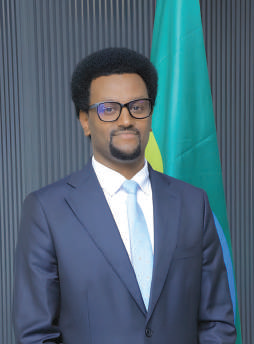
“Ethiopia is open for business. We invite global investors and partners to explore the prospects outlined in this Deal Book… to shape a resilient and prosperous future.” — H.E. Ahmed Shide, Minister of Finance, Federal Democratic Republic of Ethiopia
“This Deal Book is more than a collection of projects; it is a testament to Ethiopia’s readiness to welcome responsible investment that creates value, drives innovation, and delivers shared prosperity.” — H.E. Dr. Zeleke Temesgen, Commissioner, Ethiopian Investment Commission (EIC)
ADDIS ABABA — The drumbeat of reform is growing louder in Ethiopia, and the world is beginning to listen. With the launch of the “Invest in Ethiopia 2025 Deal Book”, the government has officially unveiled a $13 billion portfolio of investor-ready opportunities across 11 high-impact sectors—ranging from solar power and agribusiness to fintech, infrastructure, and green mining.
Once viewed through a humanitarian lens, Ethiopia now demands to be seen as a rising economic titan, determined to lead Africa’s next investment frontier. The message from Ethiopia’s top officials is clear: the era of aid dependency is over—this is the age of enterprise, and the gates are open for global capital.
AWAKENING THE GIANT: ETHIOPIA’S $13 BILLION BID TO BECOME AFRICA’S NEXT ECONOMIC POWERHOUSE”
In the heart of the Horn of Africa, a nation long associated with struggle is now scripting a new narrative. Ethiopia, once a symbol of humanitarian aid dependency, is transforming into an investment beacon for Africa. The government’s newly launched “Invest in Ethiopia 2025 Deal Book” is not just a policy document—it’s a revolutionary manifesto calling on the world’s investors to take part in the rise of a giant. Backed by over $13 billion worth of carefully curated, investor-ready projects, this Deal Book paints a vivid picture of ambition, reform, and unrealized potential.
🚜 AGRICULTURE: A GREEN ENGINE FOR GROWTH
Few nations possess the agricultural potential of Ethiopia. The Deal Book highlights projects like the Erer Ibada, Jema, and Lower Genale irrigation schemes, each covering thousands of hectares and designed to transform rain-fed subsistence farming into climate-resilient, export-grade agribusiness.
According to the Ethiopian Investment Commission, agriculture contributes over 34% of GDP and employs 73–80% of the population, yet still operates at just a fraction of its productive potential. Major crops include coffee (30% of exports), cereals (wheat, maize, barley), and livestock—where Ethiopia is Africa’s largest producer of cattle, goats, and camels.
Strategic opportunities for investors include:
Animal feed production for a growing $2.9 billion regional market
Ranch development and meat processing
Agro-industrial zones and cold-chain logistics
Mechanization, such as 400,000+ walking tractors needed to modernize smallholder farms
“The agriculture sector is both an economic foundation and a hedge against global food instability,” reads the Deal Book’s agriculture section.
“Agriculture remains central to Ethiopia’s economy, contributing 34–36% to GDP, 75% to exports, and employing 73–80% of the workforce.” — Invest in Ethiopia 2025 Deal Book, p. 81
Ethiopia’s farmland stretches like a green canvas—12 million hectares of it, most still cultivated by smallholder farmers. But with projects like the Erer Ibada, South Gode, and Lower Genale irrigation developments, the nation is shifting toward large-scale, export-oriented farming. From wheat and maize to sesame and livestock, the agricultural portfolio reads like a food security dream—one aligned with climate-resilient methods, solar-powered irrigation, and mechanized farming systems. Livestock, often overlooked in Africa’s economic planning, shines here too: Ethiopia leads the continent in cattle, goat, and camel slaughter, offering untapped opportunities in meat processing, feed production, and dairy. The potential? A $2.9 billion regional animal feed market and full self-sufficiency in wheat by 2030.
⚡ ENERGY: THE CONTINENT’S NEW RENEWABLE POWERHOUSE
Ethiopia is aiming to quadruple its installed electricity capacity—from 4,500 MW to nearly 20,000 MW by 2030. Already powered by 90% renewables, the country is doubling down with transformative investments in hydropower (GERD, 5,150 MW), solar (Gad II, Weranso, Dichetto), and wind (Aysha I Wind IPP, 300 MW).
The country’s green energy shift isn’t just rhetoric. In 2024, Ethiopia became the first African country to ban imports of gasoline vehicles, jumpstarting a new electric vehicle (EV) industry backed by policy and infrastructure investment.
“We are not only electrifying Ethiopia—we are powering East Africa,” said a senior official from the Ministry of Water and Energy. Ethiopia already exports electricity to Kenya, Djibouti, and Sudan, with plans to join the Eastern African Power Pool.
Investors in energy benefit from:
Guaranteed Power Purchase Agreements (PPAs)
Full foreign ownership rights
Duty-free imports and tax holidays
Government revenue guarantees and repatriation rights
“The Grand Ethiopian Renaissance Dam (GERD)… will add 5,150 MW, becoming a cornerstone of future energy supply.” — Invest in Ethiopia 2025 Deal Book, p. 124
Ethiopia’s energy story is nothing short of electrifying. Already 90% powered by renewables, it now aims to raise installed capacity from 4,500 MW to nearly 20,000 MW by 2030. With solar irradiation exceeding 5.2 kWh/m²/day and winds sweeping across the Somali region, Ethiopia is becoming Africa’s renewable energy heartland. The Aysha Wind IPP (300 MW, $812M) and solar power plants like Gad II and Weranso offer risk-mitigated PPAs and full foreign ownership. A recent interview with Dr. Samuel Getachew, an Ethiopian renewable energy consultant, underscored the shift: “Ethiopia is no longer just lighting homes; it’s wiring itself into the regional power market.” With export agreements to Djibouti, Kenya, and Sudan, Ethiopia’s electricity is becoming a tradable asset.
🏦 FINANCE & CAPITAL MARKETS: THE GATES SWING OPEN
“Foreign investors can now hold up to 49% in an Ethiopian bank—marking the first real opening of the sector.” — Invest in Ethiopia 2025 Deal Book, p. 155
One of the boldest reforms lies in the country’s financial liberalization. For decades, Ethiopia’s banking sector was closed to outsiders. Today, not only are foreign banks welcome, but capital markets are finally taking shape with the creation of the Ethiopian Securities Exchange (ESX). Strategic investors can establish subsidiaries or buy equity in existing banks. With over 130 million people—65% under the age of 25—Ethiopia’s underbanked population is a fertile ground for fintech, digital credit, and mobile money. Helen Mesfin, a fintech entrepreneur based in Addis Ababa, says, “We’re finally catching up with the mobile banking revolution happening across Africa. The regulatory space is still fresh, but it’s moving.” The National Bank of Ethiopia is ensuring risk controls, while incentives like profit repatriation and tax holidays sweeten the deal.
For the first time in its modern history, Ethiopia is inviting foreign ownership in its financial sector, including:
Up to 49% foreign ownership in local banks
100% ownership through new subsidiaries
Participation in the newly launched Ethiopian Securities Exchange (ESX)
The National Bank of Ethiopia (NBE) has implemented sweeping monetary reforms: market-based interest rates, an open interbank FX market, and inflation-curbing policies that have cut inflation from 29.3% in 2023 to 13.6% in early 2025.
Ethiopia’s banking sector, microfinance institutions, and capital goods financing are primed for rapid expansion. With over 130 million people (65% under 25) and a massive underbanked population, fintech players have a clean slate to operate.
“This is not just liberalization—it’s an economic awakening,” said Dagmawi Abebe, managing director of a pan-African private equity firm now scouting deals in Addis.
🏗️ INFRASTRUCTURE & LOGISTICS: FROM FRAGILITY TO FLUIDITY
The Deal Book showcases a pivot in government strategy—from public-heavy infrastructure to PPP-structured megaprojects, particularly in logistics, roads, airports, and agro-industrial parks.
Projects are linked with trade facilitation corridors and Ethiopia’s access to the Djibouti port, which handles 95% of its international trade. Investors can engage in:
Dry ports, rail terminals, and warehousing
Highway upgrades through BOT contracts
Smart logistics & cold chain systems
These investments support Ethiopia’s plan to become the East African logistics hub under the AfCFTA (African Continental Free Trade Area) framework.
“The government has embraced public-private partnerships (PPP) to fund large-scale infrastructure projects.” — Invest in Ethiopia 2025 Deal Book, p. 105
Ethiopia’s roads, rails, and dry ports are being rapidly modernized to serve as arteries for trade and investment. The government is shifting away from fully public infrastructure toward PPP and Build-Operate-Transfer (BOT) models. This includes everything from irrigation systems to high-speed rail networks and airport modernization. The strategic position next to Djibouti’s ports allows Ethiopia to control a major portion of Africa’s logistics corridor. For global logistics firms and construction giants, the opportunity is massive: build Ethiopia’s physical foundation and reap long-term returns in a growing consumer economy.
🧠 HUMAN CAPITAL: THE UNTAPPED SUPERPOWER
Population is power. Ethiopia’s population is expected to reach 225 million by 2050, with a median age of just 18.9 years today. This young, trainable, and increasingly urbanized workforce is already being mobilized through:
National coding and digital skills campaigns
Technical and vocational training aligned to sector demand
Youth entrepreneurship incubators
“We are building not just infrastructure, but human capital,” stated H.E. Dr. Zeleke Temesgen, EIC Commissioner.
Combined with lower dependency ratios, rising incomes, and urban expansion, Ethiopia is poised for a productivity explosion.
“With a population projected to reach 225 million by 2050, Ethiopia is poised to benefit from a demographic dividend.” — UN Population Division, 2025 Report
The numbers are staggering. By mid-century, Ethiopia will be the third most populous country in Africa. A youthful, hungry, and increasingly educated workforce is emerging, and the government is investing heavily in technical education and digital skills. The “Training 5 Million Coders” initiative is already underway. This labor force isn’t just a statistic—it’s a multiplier. As fertility rates decline and dependents shrink, savings and productivity are expected to surge. Investment in this human capital—through education, entrepreneurship, and upskilling—will be the single most important catalyst for long-term growth.
📊 THE BIG PICTURE: WHY NOW?
Despite challenges, Ethiopia is registering one of the highest growth rates in the world:
GDP growth: 7.2% in 2023 → 8.4% projected for 2025 (FDRE Ministry of Planning)
Inflation: Dropping steadily to a target of 12% by mid-2026
External debt: Slashed from 29% to 15% of GDP since 2020
Reserves: Climbing, now at $3.4 billion as of October 2024
The reform engine—HGER 2.0 (Homegrown Economic Reform Agenda)—continues to liberalize trade, open markets, restructure SOEs, and empower the private sector.
📣 FINAL VERDICT: “THE FUTURE IS MADE IN ETHIOPIA”
What makes Ethiopia’s Deal Book unique is not just the projects it lists—but the vision it presents. It’s a nation moving from aid to enterprise, from isolation to integration, and from potential to performance.
“We are transitioning from a state-led to a market-led economy… This is a call for partnerships, not charity,” said Minister Ahmed Shide.
H.E. Ahmed Shide Minister of Finance
Final Chapter: Risk, Reform, and the Return on Belief
Ethiopia’s path isn’t without risk. Inflation has recently eased but remains vulnerable. Political and regional stability remain challenges. Yet the government’s commitment is unflinching. Inflation dropped from 29.3% in mid-2023 to 13.6% by March 2025. External debt has fallen from 29% to 15% of GDP, and the country now holds $3.4 billion in reserves. The National Bank of Ethiopia is capping credit growth and floating the exchange rate—radical steps that signal maturity.
From Lucy the hominid to lithium the export, Ethiopia is writing a story 3,000 years in the making. Investors are not just being invited to fund projects—they are being offered a front-row seat to a generational transformation.
💬 Human Commentary
“This isn’t just another African growth story. Ethiopia is turning a corner that most nations only dream of turning. This is the post-reform miracle in motion.” — Carla Moretti, East Africa Lead, IFC
“We are open for business. Ethiopia is no longer a land of untapped potential. We are now tapping it, sustainably, with our partners.” — H.E. Ahmed Shide, Minister of Finance, FDRE
🏁 Conclusion: The Time Is Now
With its young workforce, abundant renewable resources, massive consumer market, and strategic location, Ethiopia isn’t just the next big thing in Africa—it’s the big thing. The 2025 Deal Book is more than an invitation—it’s a once-in-a-generation opportunity for visionary investors to get in early. Ethiopia is not asking for handouts anymore. It’s offering high-yield partnerships, secure frameworks, and the promise of becoming the beating heart of Africa’s economic future.
The question isn’t whether Ethiopia is ready. It’s whether the world is ready for Ethiopia.