






Continental Body Running on Just 30% of Required Workforce as Funding Shortfalls Threaten Agenda 2063
ADDIS ABABA — The African Union (AU), the institution tasked with driving Africa’s political integration, economic transformation, and peace agenda, is confronting one of the most severe financial crises in its history. Faced with chronic funding shortages and mounting operational pressures, the African Union Commission (AUC) has announced that the organization’s 2027 budget will be an austerity budget, underscoring the depth of the financial strain facing the continent’s premier multilateral institution.
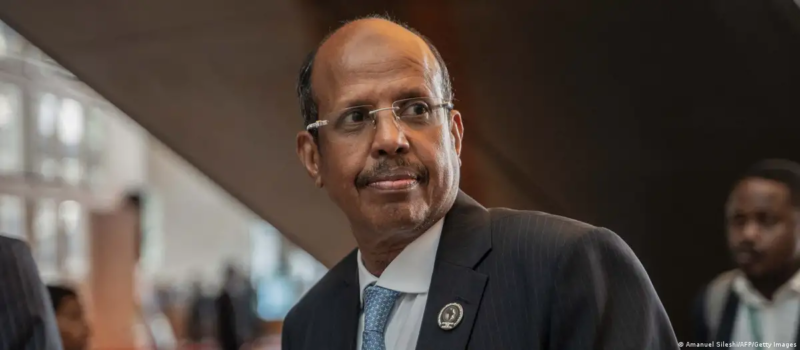
The alarming revelation came from AUC Chairperson Mahmoud Ali Youssouf during the 52nd Ordinary Session of the Permanent Representatives’ Committee (PRC) held in Addis Ababa.
“The AU currently operates with only 30 percent of its required staffing levels,” Youssouf disclosed, painting a troubling picture of an organization attempting to serve 1.5 billion Africans with less than one-third of the manpower it considers necessary.
The staffing crisis is only one symptom of a broader financial challenge. According to the Commission, the AU is effectively operating with only a fraction of the resources required to execute its ambitious continental agenda, raising serious questions about the pace and feasibility of implementing Agenda 2063, Africa’s long-term blueprint for economic and social transformation.
A Continental Institution Under Pressure
The African Union’s responsibilities have expanded dramatically in recent years. From conflict mediation and peacekeeping operations to climate resilience initiatives, health emergency responses, trade integration, and digital transformation programs, the organization faces growing demands from member states and citizens alike.
Yet its financial capacity has failed to keep pace.
Data from AU budget documents illustrate the scale of the challenge:
| Year | Budget |
|---|---|
| 2025 Adopted Budget | USD 608 million |
| 2026 Proposed Budget | USD 814 million |
| Typical Annual AU Budget | Around USD 600 million |
To put these figures into perspective, the proposed 2026 AU budget of USD 814 million is smaller than the annual budgets of many large African cities and significantly lower than the resources available to major international organizations with comparable mandates.
Experts have long argued that the AU’s dependence on member-state contributions and external donors has created a structural vulnerability that undermines the institution’s financial sovereignty.
Financial Sovereignty: The AU’s Achilles Heel
Internal AU reform documents have repeatedly identified financial dependence as one of the organization’s greatest weaknesses.
The consequences extend beyond accounting spreadsheets.
Funding shortages can delay:
- Peace support operations and conflict mediation efforts;
- Humanitarian interventions;
- Institutional reforms;
- Continental infrastructure initiatives;
- Health emergency responses;
- Trade and integration programs under the African Continental Free Trade Area (AfCFTA).
The inability to reliably finance these priorities threatens not only operational effectiveness but also the AU’s strategic independence.
For years, African leaders have debated mechanisms to reduce donor dependence, including proposals such as the 0.2 percent import levy designed to generate sustainable financing for AU activities. However, implementation has remained uneven across member states.
Global Turbulence Intensifies the Crisis
The AU’s financial troubles are unfolding against an increasingly unstable global backdrop.
Youssouf highlighted several interconnected challenges affecting the continent:
- Geopolitical tensions disrupting global trade routes;
- Macroeconomic instability and inflationary pressures;
- Delays in fertilizer imports critical for food security;
- Multiple armed conflicts across regions;
- Public health emergencies, including recent Ebola outbreaks;
- Supply-chain disruptions linked to developments around the Strait of Hormuz.
These external shocks have amplified pressure on African economies, many of which are already grappling with debt burdens, currency depreciation, and fiscal constraints. As national governments tighten their own budgets, contributions to continental institutions often come under strain.
The Human Cost of Budget Cuts
Perhaps the most striking figure is the staffing deficit.
Operating at only 30 percent of required workforce levels means critical departments may be functioning with skeletal teams while attempting to coordinate continent-wide initiatives.
Analysts warn that prolonged understaffing can result in:
- Slower implementation of strategic programs;
- Reduced monitoring and evaluation capacity;
- Delayed project execution;
- Increased workload and burnout among existing staff;
- Lower institutional responsiveness during crises.
For an organization expected to coordinate policy across 55 member states, such limitations pose significant operational risks.
Austerity in 2027: What It Means
The announcement of an austerity budget suggests that the Commission is preparing for continued financial pressure rather than a short-term funding gap.
Austerity measures typically involve:
- Spending cuts;
- Delayed recruitment;
- Prioritization of essential programs;
- Reduced administrative expenditures;
- Greater scrutiny of project financing.
While fiscal discipline may stabilize finances in the short term, experts caution that prolonged austerity could slow progress toward Agenda 2063’s flagship goals, including industrialization, infrastructure development, regional integration, and youth employment initiatives.
Alongside the financial warning, African diplomats used the PRC meeting to emphasize the need for renewed continental solidarity.
Ambassador Willy Nyamitwe, Burundi’s ambassador to Ethiopia and current Chair of the Permanent Representatives’ Committee, delivered a strong message urging member states to prioritize collective interests over narrow national considerations.
In a speech focused on institutional strengthening, Nyamitwe argued that Africa’s future would be determined not by rhetoric but by concrete action.
He warned that decisions taken today would shape whether future generations view the AU as a transformative institution or a missed opportunity.
“History will remember whether we strengthened the institutions entrusted to us,” he said, calling on diplomats to choose “solidarity over division and vision over hesitation.”
What’s Next?
The PRC is currently reviewing reports from AU organs, specialized agencies, and subcommittees before forwarding recommendations to the 49th Ordinary Session of the Executive Council, scheduled for 24–25 June 2026 in El Alamein, Egypt.
The discussions are expected to influence the final shape of the 2027 budget and determine how the AU plans to navigate widening resource gaps.
For now, however, the message from Addis Ababa is unmistakable:
The African Union’s ambitions remain vast, but its resources are increasingly stretched. Unless member states significantly strengthen financial support, the continent’s flagship institution may find itself attempting to deliver Africa’s grandest aspirations with only a fraction of the means required to achieve them.








