Breakthrough drug Acoziborole achieves up to 96% cure rate, eliminates need for hospitalization, and offers new hope against one of Africa’s deadliest neglected diseases
By Ayele Addis Ambelu
KINSHASA, June 12, 2026 In what health experts are calling a historic turning point in the fight against one of Africa’s most devastating diseases, the Democratic Republic of Congo (DRC) has approved Acoziborole, a groundbreaking single-dose oral treatment that could finally bring sleeping sickness to the brink of extinction.
The approval marks the most significant advance against gambiense human African trypanosomiasis—commonly known as sleeping sickness—in decades. For the first time, patients diagnosed with the deadly parasitic disease can be treated with just one dose taken in a single day, replacing lengthy treatment regimens that often required hospitalization, injections, and intensive medical supervision.
The medicine, co-developed by the Drugs for Neglected Diseases initiative (DNDi) and pharmaceutical giant Sanofi, will be provided free of charge to patients across affected countries.
A Disease That Once Terrorized a Continent
Sleeping sickness, transmitted by infected tsetse flies, has haunted Africa for generations. Without treatment, the disease is almost always fatal.
Victims initially suffer headaches, fever, and fatigue. As the parasite advances, it crosses into the brain and central nervous system, triggering seizures, behavioral changes, aggression, confusion, severe neurological damage, and ultimately death.
The scale of the crisis was staggering.
In 1998, Africa recorded nearly 40,000 reported cases, while experts estimated that 300,000 additional infections remained undiagnosed. Entire communities lived under the shadow of a disease that devastated families and overwhelmed fragile healthcare systems.
Today, after decades of scientific effort, the landscape has dramatically changed. In 2024, fewer than 600 cases were reported across Africa, with the DRC accounting for 330 cases, more than half of the continent’s total burden.
Health officials now believe the new treatment could push those numbers even lower—and potentially end transmission altogether.
The Science Behind the Breakthrough
The DRC’s decision follows successful Phase II/III clinical trials conducted in both the DRC and Guinea by DNDi in partnership with national sleeping sickness control programmes.
The results were remarkable.
Researchers found that Acoziborole achieved success rates of up to 96 percent across both early and advanced stages of the disease, maintaining a strong safety profile over an 18-month follow-up period.
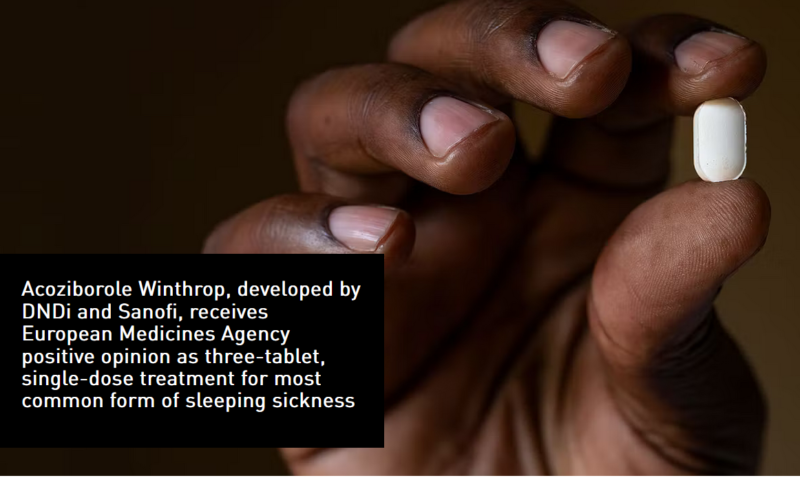
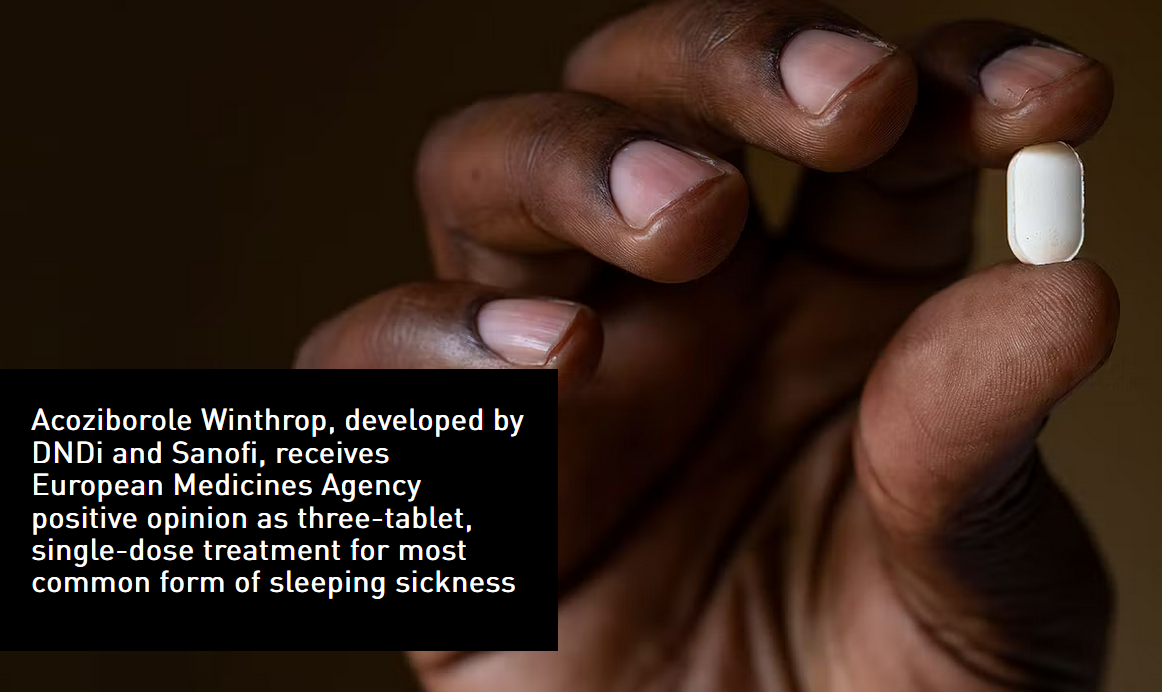
Unlike existing treatments, which require either a 10-day oral course or a combination of injections and oral medicines administered over several days in hospital, Acoziborole is administered as a single dose of three tablets taken once.
That simplicity could transform disease control efforts in some of Africa’s most remote regions.
“We Can Realistically Aim to Eliminate the Disease”
For frontline health workers battling sleeping sickness for decades, the approval represents a watershed moment.
“The registration of acoziborole in the DRC is fantastic news for patients. The drug represents a major advance over existing treatments: it does not require hospitalization, is well tolerated, and can be administered immediately after diagnosis. This will allow us to reach the most remote endemic areas. With this new tool, we can realistically aim at eliminating the disease in the coming years,” said Dr Erick Miaka, Director of the DRC’s National Sleeping Sickness Control Programme.
His optimism reflects a broader belief among scientists that sleeping sickness may finally be entering its endgame.
From Toxic Arsenic Injections to a One-Day Cure
The breakthrough is especially significant considering the grim history of sleeping sickness treatment.
Just two decades ago, patients with advanced disease were treated using injectable arsenic derivatives notorious for severe side effects.
The evolution since then has been dramatic:
- 2009: Introduction of nifurtimox-eflornithine combination therapy (NECT).
- 2018: Approval of fexinidazole, the first all-oral treatment requiring 10 days of therapy.
- 2026: Approval of Acoziborole, the first single-dose oral cure.
Reflecting on that journey, Dr Luis Pizarro, Executive Director of DNDi, said:
“In just 20 years, we have gone from complicated treatments including arsenic derivatives with serious side effects, to today, when a single-dose, one-day therapy could safely cure patients. This progress is testament to the transformative power of collaborative science and will bring us closer to finally eliminating sleeping sickness, a disease that has killed millions on the African continent in the past century.”
A Victory for African Science
Beyond the medical achievement, many experts view Acoziborole as a landmark success for African-led scientific research.
Clinical trials were conducted in some of the continent’s most challenging environments, relying heavily on local researchers, physicians, and healthcare workers.
“The development of acoziborole and today’s positive scientific opinion is a victory for Africa-led science, made possible thanks to African doctors and researchers who conducted cutting-edge pharmaceutical research in some of the most remote and difficult-to-reach areas on the continent,” said Dr Miaka.
The sentiment was echoed by Africa CDC Director-General Dr Jean Kaseya, who described the approval as evidence of the continent’s growing scientific capacity.
“This breakthrough brings Africa closer to eliminating sleeping sickness and reflects the growing strength of African scientific leadership. The next step is to ensure innovation translates into sustainable access for the communities most at risk.”
Guinea’s Warning: Elimination Is Not the End
The approval comes only a year after Guinea achieved a major milestone by eliminating sleeping sickness as a public health problem.
Yet officials warn that victory remains fragile.
“Guinea succeeded in eliminating sleeping sickness as a public health problem last year—a remarkable achievement driven by research, science, and human perseverance. But the disease can return if we become complacent. Acoziborole, a breakthrough treatment successfully tested here in Guinea, will be a powerful tool to prevent any resurgence, as it is safe, exceptionally simple to administer, and can be taken in just one day,” said Mamadou Camara, Coordinator of Guinea’s National Human African Trypanosomiasis Control Programme.
Global Health Crisis, Local Innovation
The approval arrives at a time when international health funding is under growing pressure.
For DNDi, the achievement demonstrates that alternative models of drug development focused on neglected diseases can still deliver transformative results.
“With foreign aid and global health in crisis, the development of acoziborole represents a resounding success for African science and global cooperation. It is powerful proof that alternative models of medical research, based on patients’ needs, can deliver new breakthrough medicines,” said Chirac Bulanga, DNDi’s West and Central Africa Director.
Bulanga also highlighted the role of local communities in the drug’s development.
“We are delighted that the communities most affected by the disease will finally have access to this treatment they played a major role in developing.”
Rebuilding Trust Through Innovation
In regions where distrust of healthcare systems remains a major challenge, researchers say innovations like Acoziborole are helping transform relationships between communities and health workers.
“As mistrust of health workers fans the flames of the current Ebola epidemic in Ituri, our experience with sleeping sickness shows that long-term investment in research and development can regain the trust of communities. The same communities that suffered under arsenic-based treatments two decades ago are now partners with our health workers, thanks to innovative new treatments like acoziborole,” Bulanga added.
International Backing
The breakthrough has drawn praise from governments and global health institutions worldwide.
UK Development Minister Jenny Chapman called the drug a “historic milestone,” saying:
“Not so long ago, the only treatment for sleeping sickness was a toxic injection with grim side-effects, so the development of a single-dose oral treatment is a historic milestone for combatting the disease.”
African Union Commissioner Amma Adoma Twum-Amoah hailed the development as:
“A historic victory for health equity in Africa. We are turning what once required hospital beds into a simple cure, removing the last mile barriers to ending sleeping sickness for good.”
Meanwhile, Audrey Duval, Executive Vice President of Corporate Affairs at Sanofi, emphasized the extraordinary progress achieved over two decades:
“Together, we have helped drive cases to historic lows, achieving a remarkable 98% reduction since 2001 by putting patients first and investing in innovation where it is needed most. Acoziborole builds on this legacy and represents a decisive step forward in eliminating gambiense sleeping sickness by 2030.”
The Road to Elimination
The approval follows a positive opinion issued in February 2026 by the European Medicines Agency under the EU-M4all pathway, a mechanism designed to accelerate access to medicines addressing major unmet health needs.
The DRC’s registration is expected to pave the way for approvals across other sleeping sickness-endemic nations in Central and West Africa, including Guinea.
Further studies are already underway to expand the treatment’s use among children aged one to 14 yearsa group historically overlooked in clinical research.
For global health experts, the implications extend far beyond one disease.
Acoziborole represents a rare triumph against a neglected tropical disease that once seemed impossible to defeat. If deployment succeeds across endemic regions, the drug could become the final weapon needed to achieve the World Health Organization’s goal of eliminating sleeping sickness by 2030.
After more than a century of suffering, millions of deaths, and decades of scientific struggle, Africa may finally be witnessing the beginning of the end for one of its deadliest forgotten killers.