





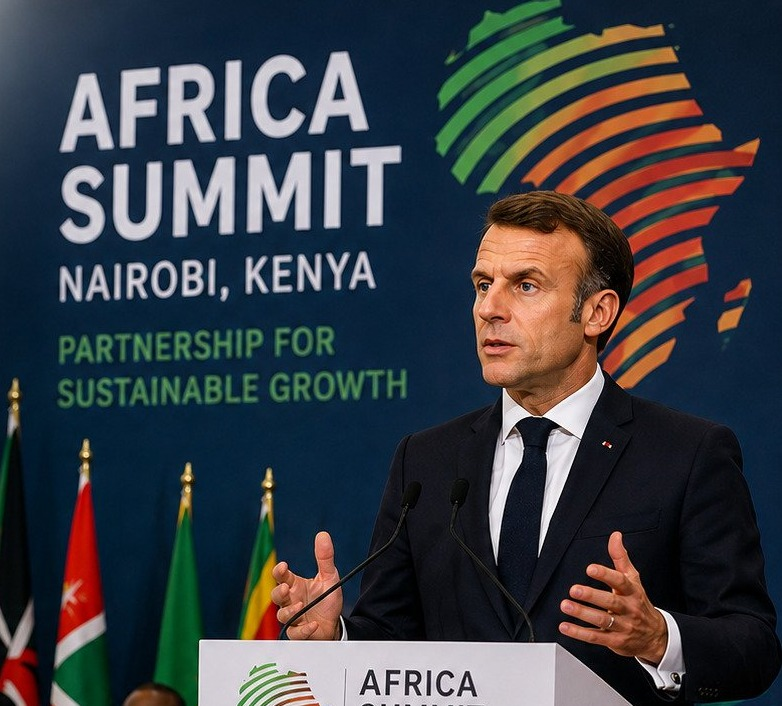
By Staff Reporter | Nairobi | May 2026
In a moment that could redefine the economic future of Africa, French President Emmanuel Macron has unveiled a staggering €23 billion investment initiative, signaling a dramatic shift from traditional aid to a new era of private capital-driven partnership between Africa and France.
The announcement, delivered at the high-profile Africa Forward Summit in Nairobi, was more than a financial pledge, it was a geopolitical statement. One that positions Africa not as a recipient of aid, but as a strategic partner in global growth, innovation, and economic power.
In a bold and potentially transformative moment for Africa’s economic future, French President Emmanuel Macron has unveiled a €23 billion investment initiative that signals a decisive shift from traditional aid to a new model centered on private capital, shared growth, and strategic partnership. Announced during the high-level Africa Forward Summit in Nairobi, the initiative is being framed not merely as financial support, but as a redefinition of Africa–France relations one grounded in mutual benefit, sovereignty, and long-term economic cooperation.
Speaking before a powerful gathering of African heads of state, global financial institutions, business leaders, and development partners, Macron emphasized that the era of donor-recipient dynamics must give way to a partnership built on investment, innovation, and co-creation. The €23 billion package is designed to unlock Africa’s economic potential by targeting critical sectors such as clean energy, digital infrastructure, sustainable agriculture, and innovation ecosystems. These sectors, he noted, are central not only to Africa’s transformation but also to global economic stability and climate resilience.
The announcement came at a summit deliberately structured to move beyond rhetoric and toward concrete outcomes. Co-hosted by Kenyan President William Ruto and Macron, the Africa Forward Summit brought together a wide range of stakeholders from governments and the African Union to private sector CEOs, youth leaders, and civil society actors. Unlike previous forums, the summit’s mandate was clear: deliver actionable, bankable, and scalable solutions. It positioned Africa not as a passive participant in global development but as an active driver of innovation and economic growth.
Central to Macron’s proposal is the urgent need to reform the global financial architecture, which continues to limit Africa’s access to affordable capital. Despite its vast opportunities, the continent faces disproportionately high borrowing costs and persistent perceptions of investment risk. To address this, Macron proposed the introduction of a first-loss guarantee mechanism, expected to be advanced at the upcoming G7 Summit. This mechanism aims to reduce investor risk exposure and unlock large-scale private investment into African markets, potentially transforming how capital flows into the continent.
Beyond financing, Macron underscored the importance of giving Africa a stronger voice in global decision-making processes. From climate negotiations to technological governance and economic policy, he argued that Africa’s role must be elevated to reflect its growing strategic importance. The continent, he stressed, is not on the margins of global affairs but at the center of future stability and growth.
The summit also highlighted a major shift in development thinking by placing the private sector at the heart of the new partnership framework. Businesses, investors, and entrepreneurs are expected to play a leading role in driving industrial cooperation, innovation, and job creation. This was evident in parallel platforms such as the Nova Garage initiative, which showcased young African innovators and connected them with global investors, signaling a future where Africa’s economic transformation is powered by its own entrepreneurial energy.
Ethiopia was among the key voices at the summit, with Prime Minister Abiy Ahmed participating in discussions focused on green industrialization, energy transition, and economic reform. Upon returning to Addis Ababa, the Prime Minister reaffirmed Ethiopia’s commitment to strengthening its leadership in sustainable development, particularly in advancing green industry and energy transformation. His engagement underscored the country’s strategic positioning within the broader continental agenda being shaped at the summit.
Ultimately, the €23 billion initiative represents more than a financial commitment it marks a turning point in how Africa engages with global partners. By shifting the focus from aid to investment and from dependency to partnership, the initiative reflects a growing recognition that Africa’s future must be built on equal footing, shared interests, and tangible results. As the Africa Forward Summit concludes, it leaves behind a powerful message: the next chapter of Africa’s development will not be written for the continent, but with it, and increasingly, by it.
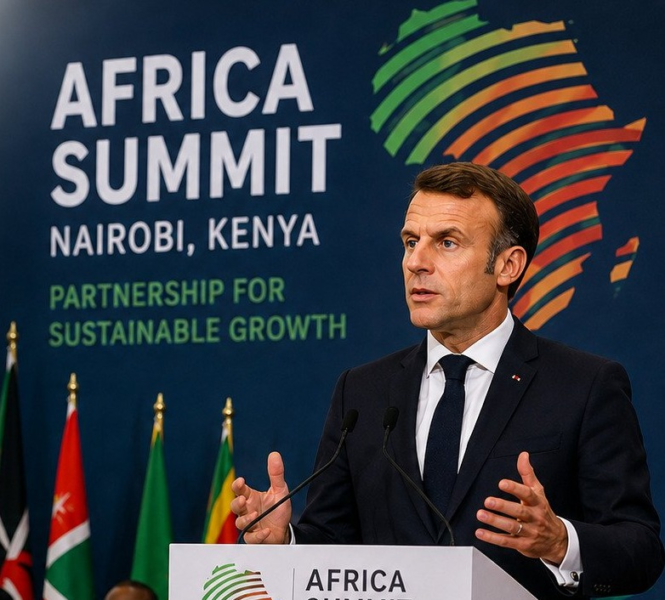
Standing before African heads of state, global financiers, and private sector leaders, Macron made it clear: the old model is over.
Africa–France relations must move “beyond traditional aid models toward investment-driven cooperation based on mutual benefit, sovereignty, and shared growth.”
This €23 billion initiative is designed to unlock long-term economic transformation, targeting sectors that will define Africa’s future:
- Clean energy and green industrialization
- Digital infrastructure and AI technologies
- Sustainable agriculture and food systems
- Innovation ecosystems and start-ups
The message was unmistakable, Africa is not the future; Africa is the present.
A New Era Begins: Equal Partnership, Real Power
Macron’s €23 billion pledge is not just about money, it’s about power, positioning, and partnership.
For the first time, France and an English-speaking African nation co-chaired the summit—symbolizing a new, open, and future-focused relationship.
As Macron himself stated:
“Partnerships must be built on equal footing, shared interests, and tangible results.”
The Bigger Picture: A Continental Turning Point
The Africa Forward Summit may well be remembered as the moment Africa:
- Reclaimed its economic narrative
- Redefined its global partnerships
- Positioned itself as a central player in global stability
With investment replacing aid, and partnership replacing dependency, a new chapter is unfolding.
This is not just a €23 billion initiative.
This is a shift in global power dynamics.
A re-engineering of Africa’s economic future.
And perhaps, the beginning of a new global order where Africa leads—not follows.
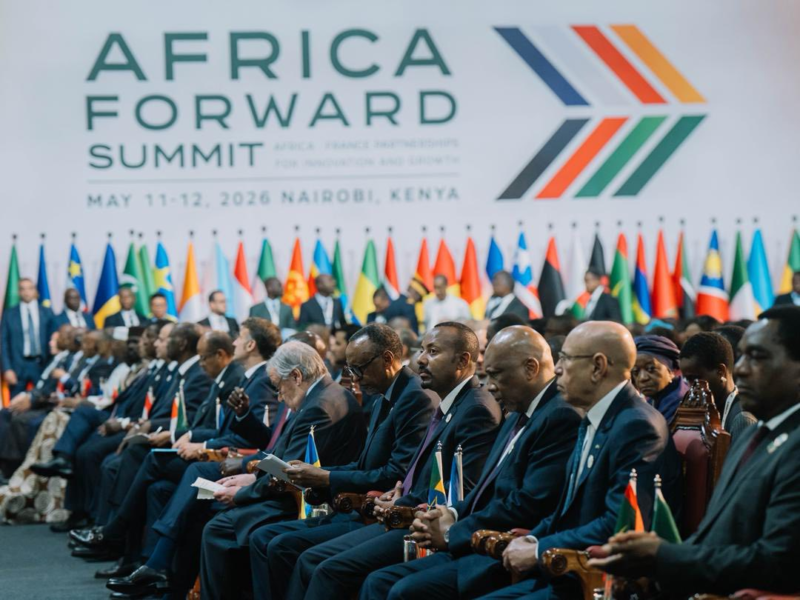
Ethiopia’s Voice: Green Growth and Strategic Positioning
Among the key African voices at the summit was Ethiopian Prime Minister Abiy Ahmed, who returned to Addis Ababa following high-level engagements in Nairobi.
He highlighted Ethiopia’s growing leadership in:
- Green industrial development
- Energy transition initiatives
Ethiopia will continue strengthening its role in green industry and energy transformation.
His remarks reinforced Ethiopia’s ambition to become a regional powerhouse in sustainable development, aligning closely with the summit’s priorities.
By Ayele Addis Ambelu (Ayeleradio@gmail.com)








