





Kinshasa / Paris / Geneva / Amsterdam — 27 February 2026 — In what global health leaders are calling a historic scientific breakthrough, Europe’s top medicines regulator has endorsed a revolutionary single-dose cure for the deadliest form of sleeping sickness — a disease that once ravaged Africa with near-certain fatality.
The Committee for Medicinal Products for Human Use (CHMP) of the European Medicines Agency has issued a positive scientific opinion for Acoziborole Winthrop, a three-tablet, one-day oral treatment for gambiense human African trypanosomiasis — the most common and lethal form of sleeping sickness.
Developed through a two-decade collaboration between the Drugs for Neglected Diseases initiative (DNDi) and Sanofi, the drug marks a dramatic shift from the painful, toxic and logistically complex treatments that defined the disease for over a century.
From Arsenic to Three Tablets: A Medical Revolution
Just 25 years ago, patients in advanced stages of sleeping sickness — when parasites invade the brain — were treated with arsenic-based injections known for severe side effects and sometimes death.
Today, that nightmare may be reduced to three pills taken once.
Clinical evidence published in The Lancet Infectious Diseases shows that Acoziborole achieved up to 96% cure rates at 18 months, effective in both early and advanced stages of Trypanosoma brucei gambiense infection. The pivotal Phase II/III trials were conducted in the Democratic Republic of Congo and Guinea in partnership with national control programs.
Dr. Luis Pizarro, Executive Director of DNDi, described the moment as transformational:
“In just 20 years, we have moved from dangerous arsenic derivatives to a safe, single-dose therapy. This brings us closer to eliminating a disease that has killed millions across Africa.”
A Disease That Attacks the Brain — and the Poor
Sleeping sickness, transmitted by infected tsetse flies, begins with fever and headaches. If untreated, the parasite crosses the blood-brain barrier, causing neurological damage — seizures, aggression, confusion, sleep disruption — and ultimately death.
Without treatment, the disease is almost always fatal.
In 1998, nearly 40,000 cases were officially reported, with an estimated 300,000 undiagnosed infections. By 2024, reported cases dropped below 600 — a staggering 98% reduction since 2001 — thanks to sustained public-private partnerships.
The new therapy could accelerate the final push toward the World Health Organization (WHO) goal of eliminating gambiense sleeping sickness by 2030.
Why the EMA Decision Matters
The CHMP’s positive opinion came under the EU-M4all procedure — a regulatory pathway reserved for medicines addressing urgent public health needs in low-income countries. It involves collaboration with WHO experts and regulators from endemic nations.
This endorsement:
- Opens the door for rapid regulatory approval in the Democratic Republic of Congo
- Supports revision of WHO treatment guidelines
- Paves the way for broader adoption across Central and West Africa
- Validates African-led clinical research conducted in remote regions
Dr. Erick Miaka, head of the DRC’s national sleeping sickness control program, emphasized:
“This is a victory for Africa-led science. African doctors conducted cutting-edge pharmaceutical research in some of the most difficult areas of the continent.”
Free for Patients: A Philanthropic Model
In a significant access commitment, Sanofi announced it will donate Acoziborole Winthrop free of charge through its philanthropic arm, Foundation S – The Sanofi Collective, to the WHO for distribution in endemic countries.
Audrey Duval, Executive Vice President at Sanofi, framed the development as the culmination of decades of engagement:
“Acoziborole represents a decisive step toward elimination. We have helped drive cases to historic lows by putting patients first.”
Africa’s Leaders Call It a Historic Equity Moment
The breakthrough drew praise from across Africa and Europe.
H.E. Dr. Jean Kaseya, Director General of the Africa Centres for Disease Control and Prevention, called it:
“A reflection of Africa’s growing scientific leadership. The next step is ensuring innovation translates into sustainable access.”
The African Union’s Health Commissioner hailed the milestone as a victory for health equity, noting that what once required hospitalization may soon be managed at the community level.
The European Union ambassador to Guinea emphasized that the one-dose model could allow diagnosis and treatment in a single visit, critical for remote communities vulnerable to resurgence.
Beyond Adults: Research Continues for Children
A second study is now underway in the DRC and Guinea evaluating Acoziborole for children aged 1 to 14, potentially transforming pediatric care for one of Africa’s most neglected diseases.
The therapy is the 14th treatment delivered by DNDi since its creation in 2003, supported by a coalition of global funders including Germany, the Netherlands, Norway, Switzerland, Spain, the UK, the Gates Foundation, and Médecins Sans Frontières.
The Bigger Picture: Can Elimination Become Reality?
The scientific success of Acoziborole is undeniable. But analysts caution that elimination depends not only on medicine, but on:
- Sustained surveillance in remote communities
- Strong health systems
- Community engagement
- Prevention of funding fatigue as cases decline
If regulatory approvals move swiftly and distribution systems hold, experts say the drug could become a “screen-and-treat” tool administered immediately after diagnosis, breaking transmission chains.
After a century of devastation, sleeping sickness may finally be cornered not by injections, not by hospitalization, but by three tablets.
For millions in Central and West Africa, that could mean the end of a silent killer and a powerful reminder that neglected diseases need not remain neglected.
by Ayele Addis Ambelu
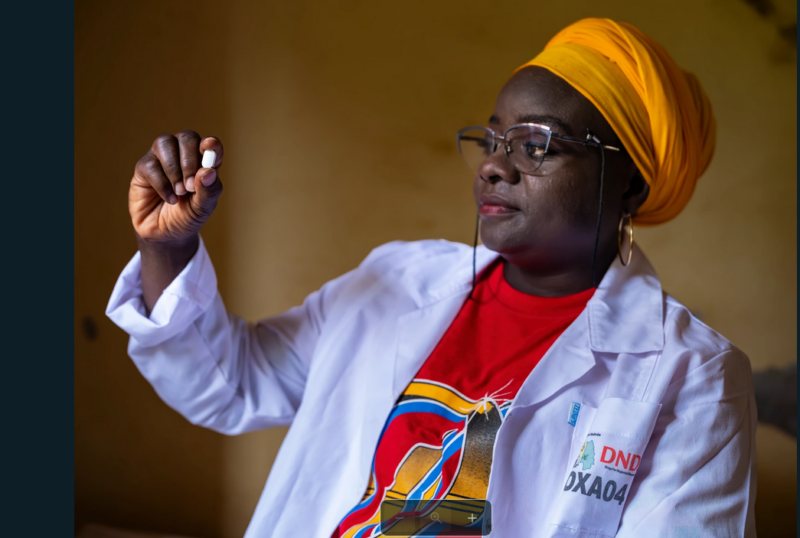
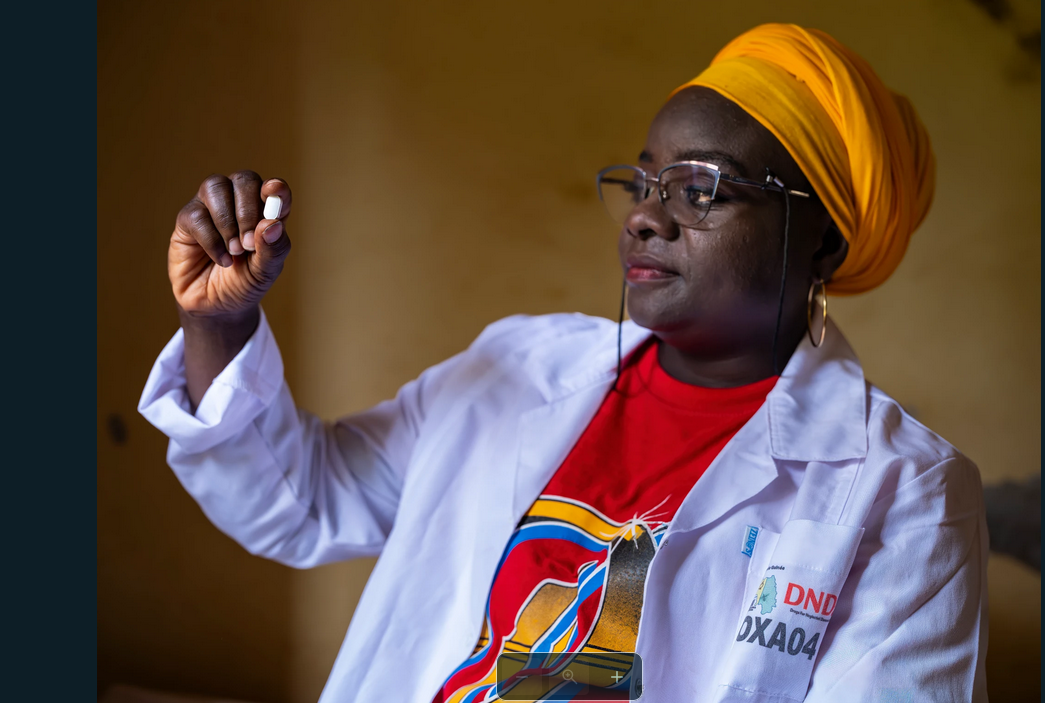
Dr Mariame Camara, DNDi Investigator, National Sleeping Sickness Program holding an acoziborole pill at the sleeping sickness hospital in Dubreka, Guinea. This hospital was one of 13 sites in the DRC and Guinea where clinical trials took place for the single-dose treatment. Long: Dr Mariame Camara, DNDi Investigator, National Sleeping Sickness Program with acoziborole pills at the Dubreka Clinical Trial site, or “Centre Trypano” in Dubreka. Guinea has played an important role in the development of the revolutionary treatment acoziborole. It is a multi-faceted story. The trials played an important role in building treatment capacity in the country. And importantly, the drug will play a huge role in the next phase of elimination. “Acoziborole will really be a revolution,” said Dr Camara. “A patient only needs to receive a positive RDT result in a community screening, a “suspect” patient, and we can give them treatment with acoziborole.”
Diseases
Sleeping Sickness
Region
Africa
Region – African countries
Guinea
Copyright
Brent Stirton/Getty Images
Year
2024
Subject
DNDi Members, Doctor/Nurse, Female, Medical equipment, Treatment
Situation
Hospital/clinic
Treatment/Drug
Acoziborole








