





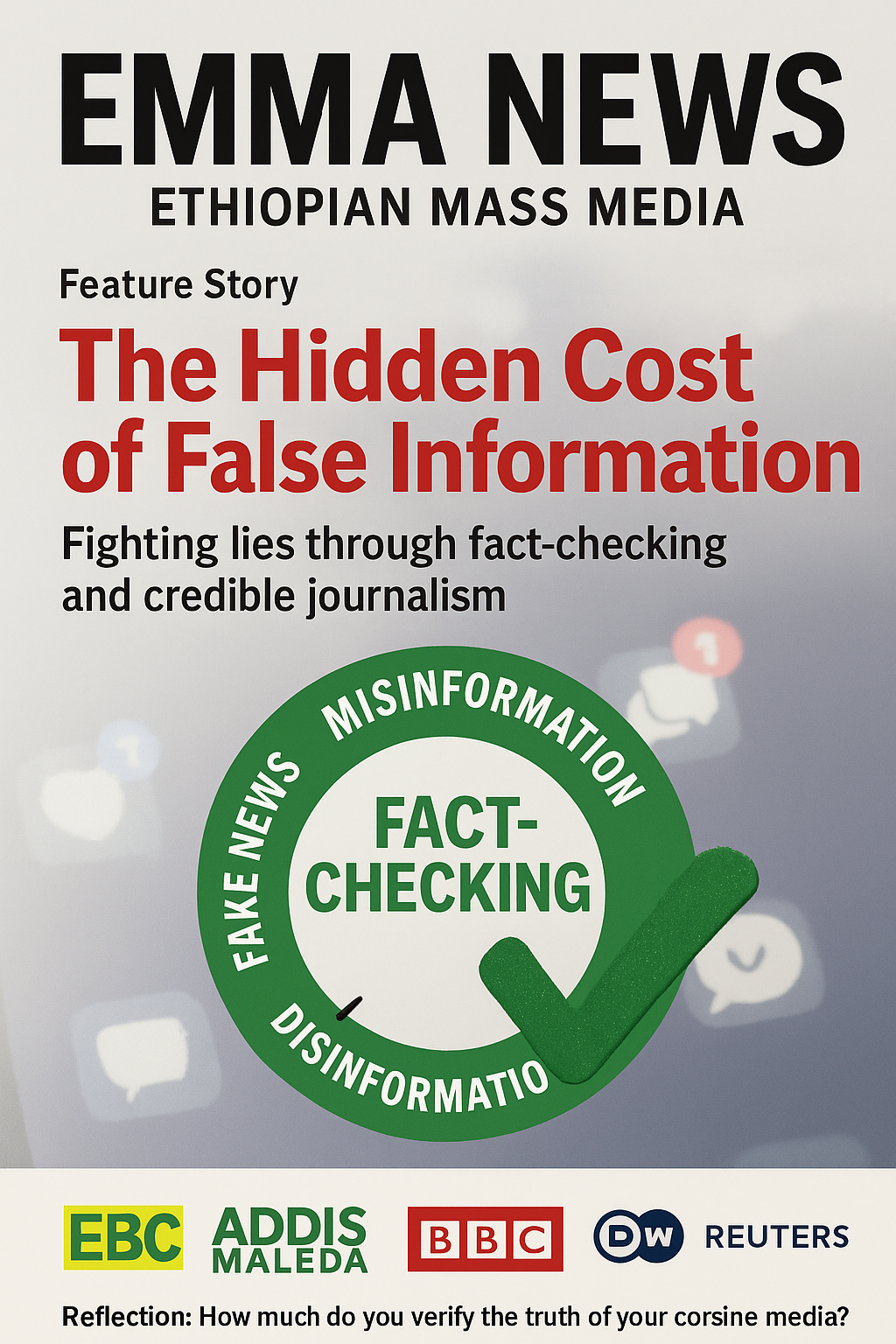
The Hidden Cost of False Information
Fighting lies through fact-checking and credible journalism
In today’s digital age, information flows faster than ever before. Social media platforms and artificial intelligence tools have revolutionized communication, making it easier to access news, education, and entertainment. Yet, this progress has a darker side—the rise of false information.
Fake news, misinformation, disinformation, malinformation, and hate speech are spreading widely across digital spaces, often disguised as authentic content. From fabricated videos of politicians to AI-generated images of celebrities, false narratives are damaging reputations and fueling anger in society.
One of the biggest dangers lies in how quickly these stories gain traction. A fake headline can circulate through thousands of accounts before fact-checkers or credible outlets have time to respond. By then, the harm is already done—relationships strained, communities divided, and trust in media eroded.
Misinformation is often spread unintentionally, when users share without verifying. Disinformation, on the other hand, is created deliberately to mislead. Malinformation uses real facts but twists them out of context, while hate speech targets groups with insults and threats. Together, they create a toxic environment that undermines social values.
The solution lies in strengthening fact-checking and promoting media literacy. Credible outlets such as EBC, Addis Maleda, BBC, DW, and Reuters play a vital role by verifying information before publishing. But responsibility also rests with each individual user. Before reacting, forwarding, or sharing, it is essential to ask: Is this true? Where is it coming from?
False information is not just a nuisance—it has real consequences. It can incite violence, erode trust in institutions, and weaken democracy itself. To protect society, we must build a culture of critical thinking, where truth is valued more than speed, and credibility matters more than clicks.
The challenge is urgent. As technology continues to evolve, so too will the tools of deception. But with vigilant fact-checking, responsible journalism, and cautious audiences, the hidden cost of false information can be reduced—and truth can reclaim its place at the center of public life.
By Ayele Addis (Emmanews23@gmail.com)








