
ADDIS ABABA (africaunionmedia@gmail.com)– Ethiopia has doubled down on its ambition to spearhead a continental media front for Africa, declaring that “the work of communication should be to build a common narrative, strengthen trust, and create strong political, economic, and cultural integration” (Dr. Legesse Tulu, Minister of Government Communication Services).
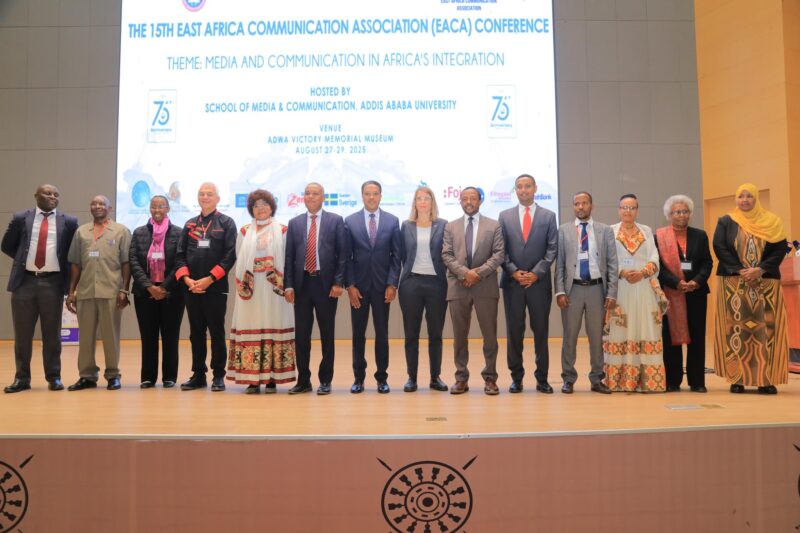
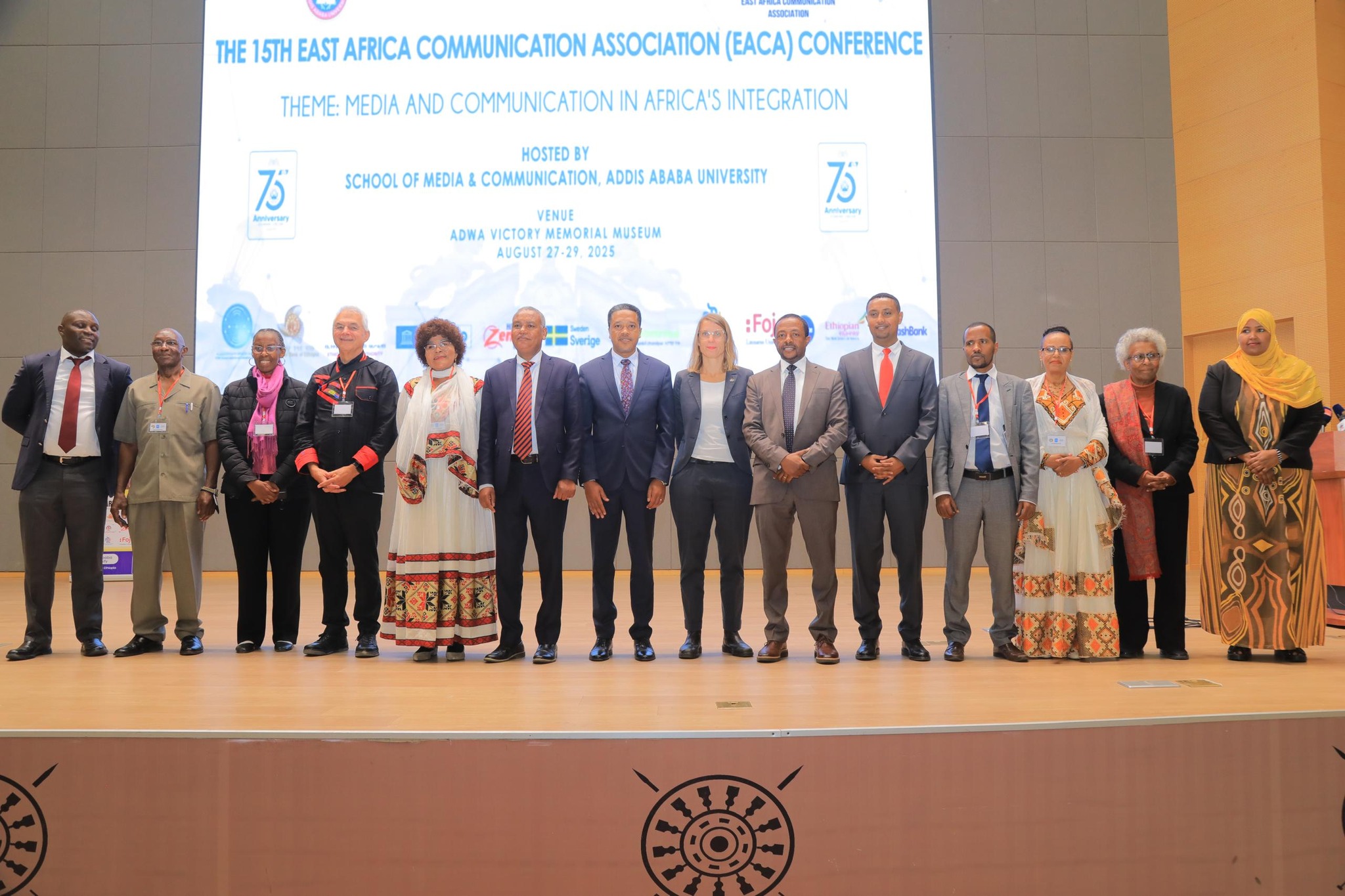
The declaration was made at the 15th East African Communication Association (EACA) Annual Conference, hosted by Addis Ababa University at the iconic Adwa Victory Memorial, under the theme “Media and Communication in Africa’s Integration.”
The three-day event, taking place from August 27 to 29, 2025, has brought together nearly 300 representatives from 20 countries, including leading African scholars, policymakers, journalists, and communication experts.
Ethiopia’s Bold Vision
Opening the conference, Guest of Honor Dr. Legesse Tulu, Ethiopia’s State Minister of Government Communication Services, stressed that African media must move beyond fragmented national narratives to build a continental voice:
“We need to bolster our collective media power as we seek a louder voice on the world stage… turning borders into bridges for a prosperous, united, and proud Africa.”
He emphasized investments in digital infrastructure, interstate media partnerships, and training journalists to amplify Pan-African stories, while also confronting the threats of disinformation and external narratives that distort Africa’s image.
Addis Ababa University’s Pan-African Role
Dr. Samuel Kifle, Interim President of Addis Ababa University, linked the conference to the university’s Strategic Plan 2024–2028, positioning AAU as a “Pan-African center of knowledge, innovation, and engagement.”
“We seek to generate narratives of resilience, solidarity, and shared destiny that move integration beyond politics into the realm of culture and ideas.”
He called the conference an opportunity for scholars to “go far, together” in advancing integration through research, dialogue, and transformative partnerships.
EACA President Prof. Margaret Jjuuko hailed Addis Ababa as a symbolic city for African integration and urged communication professionals to harness their collective power:
“Together, let us harness the power of communication to build a brighter future for our continent. May Addis Ababa’s warm spirit inspire our endeavors.”
But the tone was not all celebratory. Dr. Abdulaziz Dino, Head of the School of Media and Communication at AAU, highlighted the double-edged impact of Africa’s rapidly changing digital environment:
“This mass production [of digital content] has come with deceptive and insecure content that is invading privacy, misleading users, and affecting trust and social harmony.”
He called on African scholars to address gaps in media and information literacy, distinguishing professional journalism from unchecked content production.
The conference arrives at a pivotal time when Africa’s voice in global affairs is gaining visibility—from BRICS expansion to debates over digital colonialism and Agenda 2063. The call for a continental media platform is not only about narrative sovereignty but also about leveraging communication for trade, cultural diplomacy, and continental solidarity.
By placing Ethiopia at the helm of this conversation, Addis Ababa is asserting itself as both a symbol of Pan-Africanism and a hub for continental media integration.
Beyond Academia: A Political Statement
The speeches carried undertones that go beyond scholarly debate. They positioned media as a strategic instrument for Africa’s unity and bargaining power globally. As Legesse Tulu noted, strengthening a collective media voice is central to “raising the voice of our youth as owners of the African future.”
The 15th EACA Conference is more than an academic gathering—it is a political and cultural rallying call. Ethiopia’s pledge to drive a continental media project underscores a growing consensus: Africa must tell its own story, in its own voice, to its own people—and to the world.