‘A child’s right to survive cannot end where access to clean water, safe sanitation and effective medicine fails’
ACPF and Leiden University legal experts urge African governments to confront antimicrobial resistance as an environmental and children’s rights emergency, warning that fragmented policies and weak accountability leave the continent’s most vulnerable children dangerously exposed.
ADDIS ABABA / MASERU, LESOTHO — 20 October 2026
By Aye
A deadly threat is growing in the spaces between hospitals, contaminated environments, inadequate sanitation and public policies that fail to protect the most vulnerable. It does not always arrive with a dramatic outbreak, a visible wound or a sudden public-health emergency. Instead, it threatens the effectiveness of medicines that families depend on to treat infections, while exposing children—particularly newborns and those living in poverty—to risks they have little power to escape.
Antimicrobial resistance (AMR), increasingly described as a “silent pandemic,” is emerging as one of Africa’s most urgent public-health and development challenges. Yet a new policy briefing by the African Child Policy Forum (ACPF) and Leiden University Children’s Rights Legal Clinic argues that the crisis must be understood through a wider lens: not simply as a problem of medicine and microbiology, but as a children’s rights and environmental justice emergency.
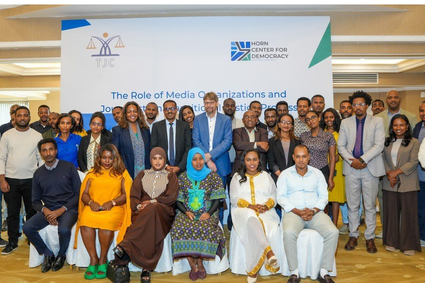
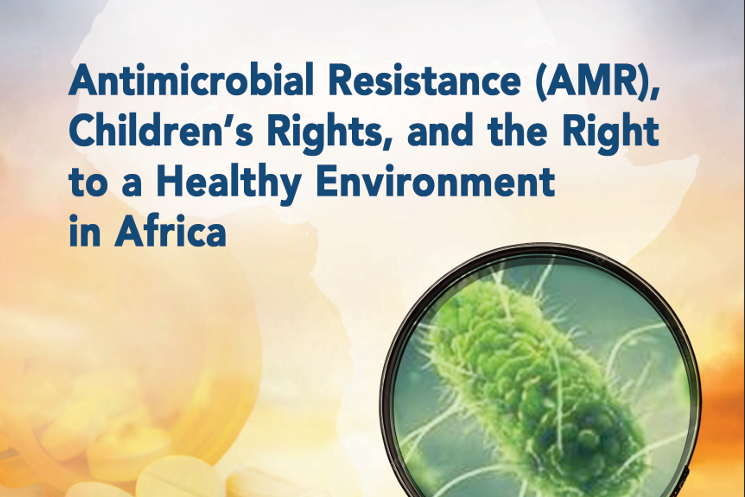
The organisations presented their briefing paper, Antimicrobial Resistance (AMR), Children’s Rights, and the Right to a Healthy Environment in Africa, at the 48th Ordinary Session of the African Committee of Experts on the Rights and Welfare of the Child in Maseru, Lesotho.
The paper’s message is both urgent and politically consequential. When children lack clean water, adequate nutrition, safe housing, sanitation and accessible healthcare, they become more vulnerable to infections. When infections are more frequent and antimicrobial medicines are misused, overused or inadequately regulated, the conditions for resistance can intensify. Environmental contamination and inequalities in access to essential services can compound these dangers.
The result is a cycle in which the children least responsible for creating the problem may be among those most exposed to its consequences.
“This is not only about whether a child can obtain medicine when sick. It is also about whether that child lives in conditions that prevent illness, whether the treatment works, and whether public institutions act before preventable risks become irreversible harm.”
That is the central implication of the briefing paper: Africa cannot sustainably confront antimicrobial resistance without confronting the inequalities, environmental failures and governance weaknesses that help drive it.
The numbers behind the emergency: Children bear a disproportionate burden
The scale of the threat is already alarming.
According to the briefing paper, approximately 4.95 million deaths worldwide were associated with bacterial antimicrobial resistance in 2019. One in five of those deaths occurred among children younger than five, while almost 99 per cent of AMR-related child deaths occurred in low- and middle-income countries. The paper also reports that more than half of these child deaths occurred during the first month of life.
These figures, drawn from research cited in the briefing, reveal a devastating inequality: the burden of resistant infections falls heavily on populations with fewer resources to prevent, diagnose and treat them.
The statistics require careful interpretation. Deaths associated with AMR are not necessarily all deaths directly caused by resistance. Nevertheless, the distinction does not diminish the seriousness of the findings. It demonstrates the enormous burden connected to infections in which resistance plays a role.
For Africa, where poverty, malnutrition, gaps in health services and inadequate water and sanitation can overlap, the threat cannot be separated from the wider conditions in which children grow up.
A newborn with a serious infection needs timely diagnosis, appropriate antimicrobial treatment and a health facility capable of providing effective care. If diagnosis is delayed, medicines are unavailable, infection prevention is inadequate or the organism is resistant to the available treatment, the consequences can be catastrophic.
The briefing paper cites UNICEF’s 2023 guidance on AMR, which warns of its “devastating effects on the health and well-being of children, with the poorest and most vulnerable bearing the brunt.”
That warning places equity at the centre of the debate. A child’s chances of surviving an infection should not depend on household income, geographical location, access to clean water or whether the nearest health facility has the diagnostic tools needed to identify an effective treatment.
Yet those circumstances can shape the risks children face.
The crisis also threatens the future of healthcare itself. Antimicrobial medicines are essential for treating many bacterial, viral, fungal and parasitic infections, although different medicines work against different types of organisms. When microbes develop resistance to medicines designed to control them, treatment options may become more limited, costly or difficult to administer.
For families, this can mean prolonged illness and greater pressure on household resources. For healthcare systems, it can mean more complicated treatment, additional diagnostic demands and greater expenditure. For children, it can mean increased risks to survival, development and long-term well-being.
Beyond the hospital: How environmental failures can fuel drug resistance
For years, AMR has largely been discussed in terms of prescribing practices, antibiotic misuse and infection control inside healthcare facilities. Those issues remain important. But the ACPF–Leiden briefing argues that this narrow framing overlooks the wider systems in which resistance emerges and spreads.
The paper identifies poverty, malnutrition, inadequate housing, unsafe water, poor sanitation, food insecurity, weak healthcare systems, pharmaceutical and industrial waste, and pollution associated with mining and agricultural activities as interconnected concerns.
These are not merely separate development problems. Together, they can create conditions in which infectious diseases spread more easily, medicines are used more frequently, and the environmental pathways associated with resistant microbes become harder to control.
Consider the consequences of unsafe water and inadequate sanitation. When communities lack reliable access to safe drinking water and effective waste management, preventable infections can become more common. Children may be repeatedly exposed to disease in their homes, schools and communities. Families then need access to diagnosis and appropriate treatment, while healthcare facilities must manage the resulting burden.
If antimicrobials are used unnecessarily, incorrectly or without appropriate clinical guidance, selection pressure can favour resistant microbes. Inadequately treated infections and poor infection prevention can further complicate the situation.
Environmental contamination presents another dimension. Pharmaceutical waste, industrial pollution and some agricultural practices can contribute to environmental conditions relevant to the spread or selection of resistance. The risks vary according to the contaminant, exposure pathway and local conditions, which makes monitoring and evidence-based regulation essential.
The briefing paper therefore challenges policymakers to stop treating unsafe water, pollution, malnutrition, medicine use and weak healthcare as unrelated policy files.
Its analysis points instead to a connected chain of risks: deprivation increases vulnerability to infection; failures in prevention and care intensify the burden on families and health systems; inappropriate antimicrobial use can accelerate resistance; and environmental contamination can compound the threat.
The policy implication is clear. A strategy that concentrates exclusively on prescribing medicines, without addressing the conditions that make infections more frequent and prevention more difficult, will leave major drivers of the crisis untouched.
A children’s rights crisis hidden in plain sight
The most consequential finding in the briefing may not be a mortality estimate. It is the reported gap in the way African and international children’s rights institutions have addressed antimicrobial resistance.
The authors reviewed general comments and concluding observations issued by the UN Committee on the Rights of the Child and the African Committee of Experts on the Rights and Welfare of the Child. Their analysis examined environmental concerns in the context of children’s rights across African countries over several decades.
The briefing’s conclusion is stark: AMR has not yet been addressed by these committees as a children’s rights issue, while environmental harms have often been treated inconsistently and in isolation.
The African Committee of Experts has issued general comments on children’s rights, but the briefing reports that none of its ten general comments specifically addresses AMR. The UN Committee on the Rights of the Child has also addressed environmental concerns, including in General Comment No. 26, but the briefing finds that AMR itself remains unaddressed within that guidance.
This is more than a technical gap in legal interpretation. It has implications for how governments define their obligations, how policies are assessed and how responsibility is monitored.
When pollution is discussed separately from healthcare, sanitation separately from nutrition, and antimicrobial misuse separately from environmental management, policymakers risk overlooking the relationships between these problems.
The briefing argues that such fragmentation can obscure responsibility for the combined effects of environmental degradation and economic and social deprivation on children’s health, survival and development.
In practical terms, a government may report progress in one sector while children continue to face overlapping risks in another. A health programme may seek to improve treatment while inadequate sanitation sustains the spread of infection. Environmental rules may exist on paper while industrial waste or pharmaceutical pollution goes insufficiently monitored. A national AMR plan may focus on medicine use without fully incorporating children’s rights or the environmental determinants of health.
The central question is therefore not simply whether African countries have policies addressing AMR. It is whether those policies protect children across the full range of conditions that determine their exposure to infection and their ability to obtain effective treatment.
The briefing calls for a more integrated framework that recognises the connections between environmental protection, economic and social rights, public health and the best interests of the child.
The legal argument: Health is not just a hospital bed
The African Charter on the Rights and Welfare of the Child provides a framework for examining the responsibilities of states in responding to AMR.
The briefing identifies several provisions as particularly relevant, including:
- Article 3: non-discrimination and the need to address unequal exposure to risks.
- Article 4: the best interests of the child in decision-making.
- Article 5: the rights to life, survival and development.
- Articles 4(2) and 7: children’s participation and their right to be heard.
- Article 14: the right to the best attainable state of health.
- Article 11: education and access to information.
- Articles 22 and 23: protections relevant to children affected by armed conflict, displacement and humanitarian emergencies.
Together, these provisions offer a way to assess AMR beyond the immediate question of whether a medicine has been prescribed.
Article 14, for example, is relevant not only to the treatment of an infection but also to the preventive conditions necessary for children to enjoy the best attainable state of health. Those conditions include access to clean water, adequate sanitation, immunisation, appropriate nutrition, quality healthcare and measures to reduce harmful environmental exposures.
Article 5 brings the discussion into sharper focus by connecting the issue to children’s life, survival and development. Article 3 raises the question of whether policies adequately protect children who experience the greatest disadvantages.
Article 4 adds an intergenerational dimension: decisions made today about pollution, antimicrobial use, healthcare investment and environmental protection can shape the conditions in which future generations live.
The briefing also points to Article 1 of the African Charter in considering state obligations to recognise and implement children’s rights, including through appropriate legislative and administrative measures.
The significance of this approach is that it moves AMR from the margins of child protection into the broader discussion of state accountability.
The argument is not that every resistant infection automatically proves a human rights violation. Rather, governments should be assessed on their duties to prevent foreseeable harm, ensure equitable access to essential services, regulate relevant activities and protect children from avoidable risks.
A rights-based framework would make it harder to dismiss repeated failures in sanitation, pollution control, infection prevention or healthcare access as merely technical shortcomings. It would also provide a stronger basis for asking which institutions are responsible, what action they have taken and whether their interventions are producing measurable improvements for children.