





By Awot Haileslassie — August 13, 2025 | Addis Ababa, Ethiopia
Ethiopia has taken a bold leap towards its clean energy future, sealing a landmark partnership with the International Solar Alliance (ISA) and global renewable energy innovators. In a high-profile signing ceremony at the Ministry of Water and Energy headquarters in Addis Ababa, officials unveiled a suite of ambitious projects aimed at accelerating solar deployment, boosting rural electrification, and reinforcing Ethiopia’s leadership in climate-resilient growth.
The agreements hailed as a “cornerstone for Ethiopia’s renewable energy transformation” include a 400 MW Solar Park, the 700 kWp Waro Solar Mini-Grid Project for rural electrification in Central Ethiopia, and the 100 kWp Solar Rooftop Car Charging and Parking Hub, which was officially inaugurated during the event. These initiatives, backed by ISA, the SELCO Foundation, and OMC Power, aim to expand access to clean energy, strengthen power reliability, and foster eco-friendly infrastructure.
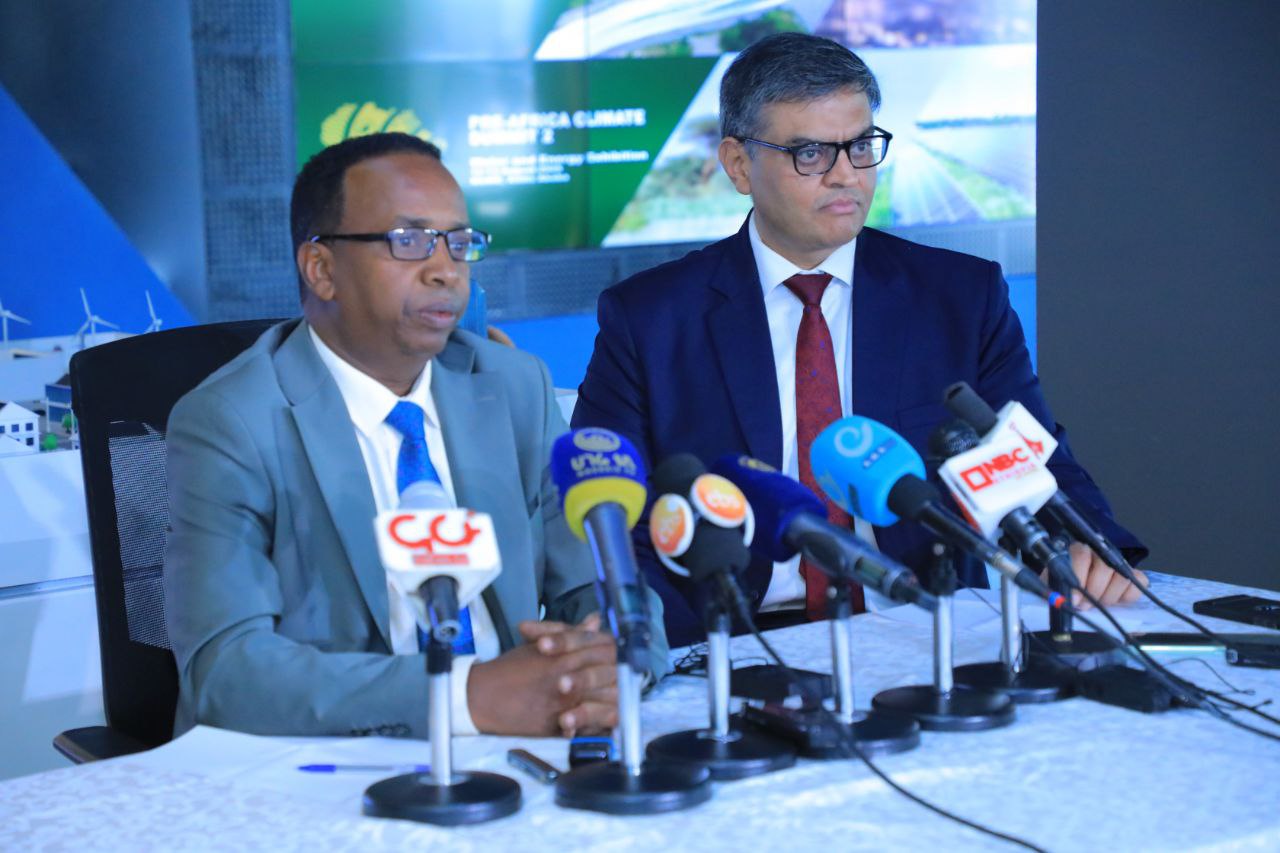
State Minister H.E. Dr.-Ing. Sultan Wali underscored Ethiopia’s commitment to diversifying its energy mix, stressing that solar power is central to modernizing the nation’s electricity sector. “Solar energy is not just about technology; it is about equity. It allows us to bring light and opportunity to rural and underserved communities, bridging the energy gap while protecting our environment,” he said. The minister emphasized that Ethiopia’s renewable energy push is aligned with the nation’s Green Legacy Initiative and its goal of achieving universal energy access by 2030.
From the ISA side, Mr. Ashish Khanna, Director General, praised Ethiopia’s determination since joining the alliance in 2019, noting that “Ethiopia has shown the right mix of vision, policy commitment, and institutional readiness to attract sustainable financing for solar projects.” He called for continued alignment between policy frameworks, private sector incentives, and community-based implementation to ensure long-term success.
The partnership extends beyond hardware — it also opens the door to technical cooperation, knowledge sharing, and private sector engagement. The Country Partnership Framework (CPF), also signed today, formalizes Ethiopia’s integration into ISA’s strategic programs, providing a roadmap for scaling solar across industrial, residential, and agricultural sectors. With Ethiopia’s abundant sunshine — averaging more than 300 days of solar exposure annually — analysts say the country could become a regional hub for clean power exports in the Horn of Africa.
The Waro Solar Mini-Grid is expected to transform local economies by powering schools, clinics, small businesses, and water systems. Meanwhile, the 100 kWp rooftop solar charging hub, now operational in Addis Ababa, is being hailed as a model for sustainable urban mobility, enabling electric vehicles to run on 100% renewable power.
Energy experts say the 400 MW Solar Park will be a game-changer in meeting Ethiopia’s rapidly growing electricity demand, which is projected to triple by 2037. It also aligns with the nation’s ambition to reduce carbon emissions by 68% by 2030 under its updated Nationally Determined Contribution (NDC).
Today’s announcements come at a time when Africa’s energy transition is under global scrutiny. While the continent accounts for just 4% of global greenhouse gas emissions, over 600 million Africans still lack access to electricity. The Ethiopia–ISA partnership demonstrates how targeted investments and international collaboration can deliver climate action alongside tangible socio-economic benefits.
“Solar energy is the currency of the future,” said one senior energy analyst attending the event. “By investing now, Ethiopia is securing not only its energy independence but also its position in the global green economy.”
The next phase will focus on mobilizing financing, building local technical capacity, and ensuring that communities — especially women and youth — play a central role in designing and managing solar solutions. With the ink now dry on these agreements, the real work begins: turning Ethiopia’s abundant sunlight into a force for inclusive development.
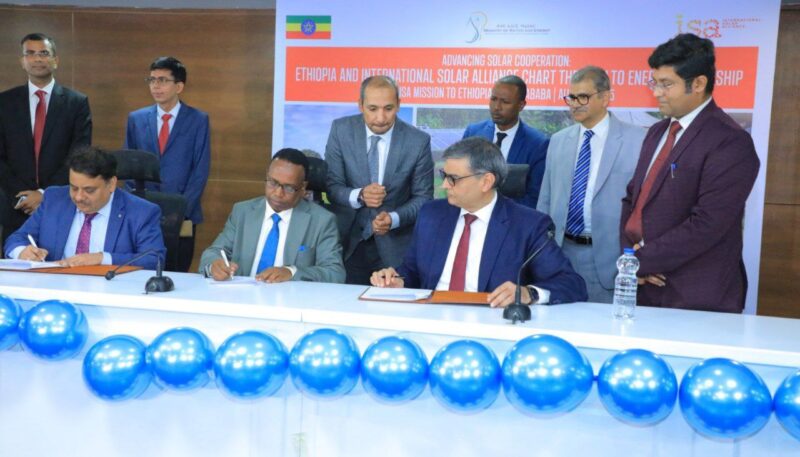
FDRE Ministry of Water and Energy (MoWE) signed key partnership agreements with the International Solar Alliance (ISA) and its partner organizations. The signing ceremony took place in Addis Ababa, which marks the shared commitment of Ethiopia, ISA, and its partner organizations to combat climate change by enhancing renewable energy and socio-economic growth through the provision of sustainable energy and excellence in innovation.
A Tripartite project of 400MW Solar Park and 700 kWp Solar Mini-Grid Project was signed by the FDRE Ministry of Water and Energy with International Solar Alliance, SELCO Foundation, and OMC Power, respectively. In line with this, 100KWp Solar Rooftop Car Charging and Parking, which shows the dedication and commitment to fostering eco-friendly energy options, was also officially inaugurated.

During the signing ceremony, the State Minister of Water and Energy, H.E. Dr. Ing Sultan Wolli, addressed Ethiopia’s commitment to harnessing solar energy as a means of diversifying energy options and deploying renewable energy sources. He pressed the importance of solar power in transitioning to modernization, especially by addressing rural electrification, underserved communities.
On the other hand, H.E. Mr. AshishKhanna, from the ISA, appreciated Ethiopia’s commitment to deploy renewable energy solutions to reach out to the rural areas with solar energy. He underscored that the commitment must be supported by a clear energy policy, a responsible institution, and sustainable financing, and Ethiopia has been conducting since its membership in ISA-2019.
Today’s agreement laid the cornerstone for optional energy projects and private sector engagement by unlocking international collaboration, knowledge sharing, technical support, and strategic partnerships to overcome the energy challenges. Moreover, excelling in solar energy ensures the decarbonization of the globe and ensures safe and eco-friendly energy usage.








