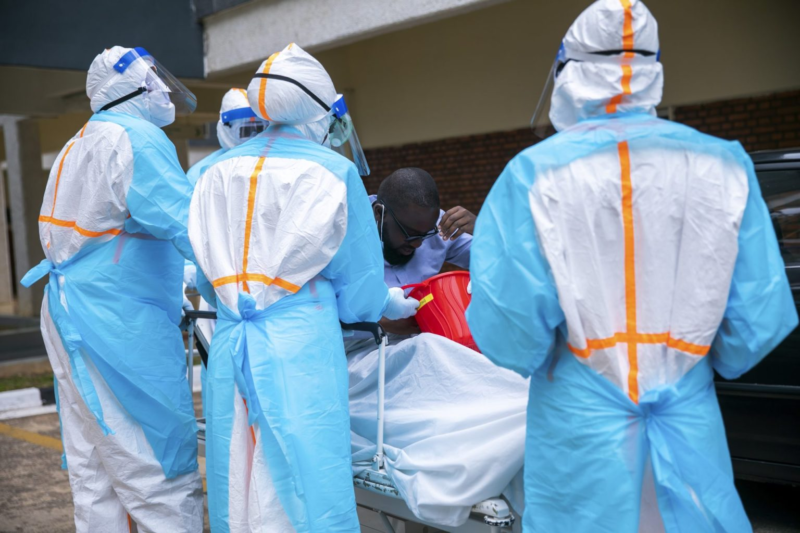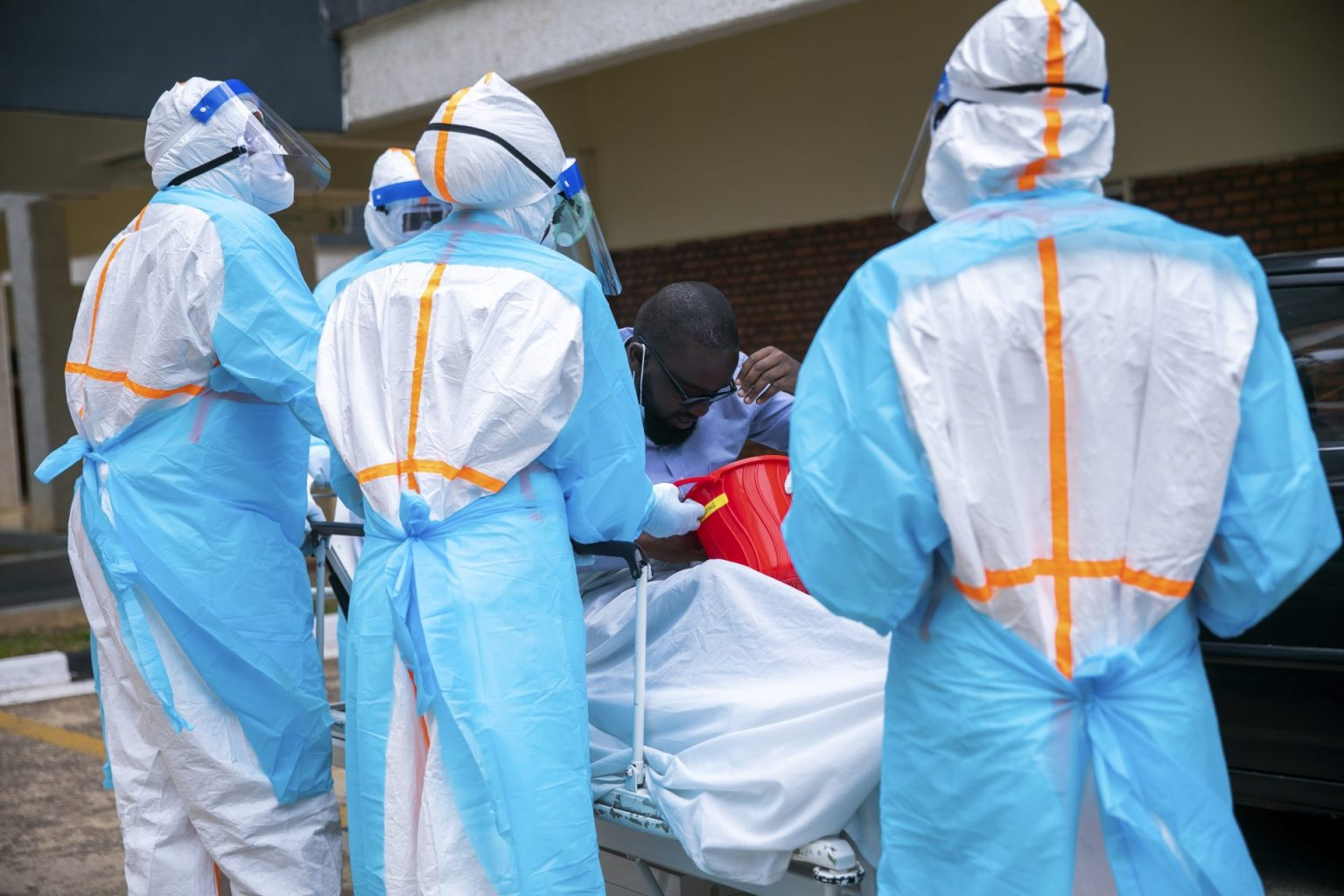
Uganda beats back Ebola after 20 confirmed cases and two deaths, but the regional threat is far from over
By Ayele Addis Ambelu (ayeleradio@gmail.com) AU media fellow
ADDIS ABABA/KAMPALA, 27 August 2026, the 42-day clock has finally stopped. Zero new cases. Zero new chains of transmission. Uganda has officially declared its 2026 Ebola outbreak over.
The announcement by the World Health Organization (WHO) and the Africa Centres for Disease Control and Prevention (Africa CDC) marks a major public-health victory for Uganda after the country confronted an outbreak of Bundibugyo virus disease, a form of Ebola that spread across borders from the Democratic Republic of the Congo.
The milestone came after Uganda completed 42 consecutive days without a new confirmed Ebola case, following the discharge of its last patient on 16 July 2026. The 42-day period represents twice the upper limit of the virus’s incubation period and is the internationally recognized benchmark used to establish that transmission associated with an outbreak has been interrupted, WHO | Regional Office for Africa reports.
But behind the celebration is a stark regional warning: Uganda may have stopped Ebola at its borders, but the virus is still raging in neighbouring DRC.
From outbreak to victory
Uganda declared the Ebola outbreak on 15 May 2026. By the time the outbreak was brought under control, the country had recorded 20 confirmed cases and two deaths.
According to WHO | Regional Office for Africa WHO, 15 of those cases were imported from the DRC, while five were locally acquired among people who had been exposed to imported cases, including contacts and health workers. Eighteen patients recovered. More than 800 contacts were identified and monitored during the response.
The final patient was discharged on 16 July after testing negative for the virus twice, triggering the critical 42-day countdown reports WHO | Regional Office for Africa.
The countdown ended on 27 August, with no additional confirmed cases detected.
For Uganda, the result represents more than simply the end of an outbreak. It is evidence that rapid detection, contact tracing, isolation, clinical care, infection prevention and control, community engagement and cross-border surveillance can prevent a dangerous outbreak from becoming a national catastrophe.
“Uganda has demonstrated that with decisive action, Ebola outbreaks can be brought under control quickly,” WHO Director-General Dr Tedros Adhanom Ghebreyesus said.
Africa CDC Director-General Dr Jean Kaseya described Uganda’s achievement as both a victory and a lesson for the continent, while warning that the region cannot consider itself safe while transmission continues elsewhere.
The other side of the border: DRC remains in the danger zone
While Uganda celebrates, the picture across the border is dramatically different.
The DRC is facing an unprecedented escalation of the same Bundibugyo virus disease outbreak. World Health Organization WHO reported that by 12 August 2026, the DRC had recorded 4,665 confirmed cases and 2,184 deaths, with transmission spreading across 54 health zones in six provinces. The outbreak’s case-fatality ratio stood at about 46.8%.
World Health Organization WHO has described the DRC outbreak as the largest Ebola outbreak ever reported in the country, with the epidemic expanding through interconnected transmission clusters and complicated by insecurity, population displacement, humanitarian pressures and cross-border movement.
The speed of the epidemic has been particularly alarming. During the week of 3–9 August, the DRC reported 579 confirmed cases and 304 deaths, according to World Health Organization.
That contrast makes Uganda’s achievement both remarkable and fragile.
A border cannot stop a virus
Uganda’s success does not mean the country’s Ebola risk has disappeared.
The two countries share extensive social, economic and family ties. People routinely cross the border for trade, employment, health care and other reasons. Such movement can create opportunities for an imported infection to enter Uganda again.
WHO | Regional Office for Africa WHO has therefore continued to emphasize heightened surveillance, rapid testing, contact tracing and preparedness at points of entry.
The agency has also advised countries not to impose blanket travel or trade restrictions because of Ebola. Instead, countries are encouraged to maintain international travel and trade while strengthening proportionate public-health measures that allow suspected cases to be identified and managed quickly.
What Uganda did differently
Uganda’s response demonstrates the importance of acting before an outbreak becomes uncontrollable.
Authorities rapidly combined:
Early case detection. Suspected infections were identified and confirmed through strengthened surveillance and laboratory capacity.
Contact tracing. Hundreds of people who may have been exposed were identified and monitored.
Isolation and treatment. Confirmed patients were moved into appropriate care, reducing opportunities for further transmission.
Infection prevention and control. Health facilities strengthened measures designed to protect health workers, patients and communities.
Community engagement. Public-health authorities worked with communities to support disease detection and response.
Border surveillance. Monitoring at points of entry became an important line of defence against additional imported infections.
These measures helped Uganda move from outbreak declaration to interruption of transmission in a matter of months.
A victory: but not the end of the battle
Uganda’s declaration is a powerful reminder that Ebola outbreaks can be stopped.
But it is also a warning against complacency.
The current regional situation demonstrates how quickly Ebola can cross borders and expand when surveillance, health systems and community protection are overwhelmed. World Health Organization WHO has noted that the DRC outbreak is occurring amid humanitarian crisis, insecurity, population displacement and substantial population and trade movement, all factors that complicate outbreak control
For Uganda, the next challenge is therefore not simply to celebrate the end of the outbreak, but to protect the gains it has achieved.
For the DRC and its neighbours, the message is even more urgent: the regional Ebola emergency is not over.
Uganda’s lesson to Africa
The story of Uganda’s 2026 Ebola response offers a simple but powerful lesson:
Ebola can be stopped, but only when surveillance is fast, health systems are prepared, communities are trusted and governments act before transmission gets out of control.
Uganda has crossed the 42-day finish line.
Now, Africa’s public-health challenge is to make sure that the victory does not remain isolated behind Uganda’s borders.
As Africa CDC’s Jean Kaseya warned, the continent will only be truly secure when transmission is stopped everywhere.
For Uganda, the alarm has fallen silent. For the region, however, the watch continues.