
ADDIS ABABA — While the world watched global aviation powerhouses struggle through economic shifts and supply chain bottlenecks, a quiet powerhouse high in the Horn of Africa built an empire. Ethiopian Airlines professionals have systematically shattered century-old industry norms, elevating a regional carrier into a world-dominating aviation titan.
By Ayele Addis Ambelu (ayeleradio@gmail.com)
The African Union’s Agenda 2063 frames a collective blueprint titled “The Africa We Want,” driving toward an integrated, prosperous, and peaceful continent led by its own citizens. At the heart of this vision is the drive to break down regional barriers, accelerate economic integration, and position Africa as a resilient global power through self-reliance, unity, and sustainable infrastructure development.
The impact of Ethiopian aviation leadership extends far beyond a single carrier, as a distinguished cohort of Ethiopian citizens currently leads national and regional airlines across Africa. Central to this ecosystem is Group CEO Mesfin Tasew Bekele, an electrical engineer who rose through Ethiopian Airlines’ technical ranks for nearly four decades and previously served as CEO of Togo-based ASKY Airlines before taking charge of Africa’s largest aviation group.
Beyond the primary hub in Addis Ababa, Ethiopian executives are directly appointed to command partner carriers, including Esayas Woldemariam Hailu as CEO of ASKY Airlines in West Africa, Solomon Bekele as CEO of Malawi Airlines, Thomas Gebreyohannes leading Zambia Airways, and Mesfin Biru Weldegeorgis serving as Director General of Air Congo in the Democratic Republic of the Congo.
The broader influence of Ethiopian leadership is further highlighted by industry veterans like Girma Wake, the former CEO and Board Chairman of Ethiopian Airlines who was called upon by the Ugandan government to advise and lead Uganda Airlines. Together, these Ethiopian citizens deploy a unified corporate blueprint prioritizing operational independence, strict safety standards, and regional connectivity across the continent.
At the organizational level, Ethiopian Airlines Group leads the African market by executing a multi-hub strategic expansion model supported by official equity stakes and technical management agreements. Under corporate joint venture reports and strategic partnership frameworks, the group maintains a 40% stake in Togo’s ASKY Airlines, a 49% stake in Malawi Airlines, a 45% stake in Zambia Airways alongside the Zambian Industrial Development Corporation, and a 49% stake in Air Congo.
Operating as an overarching aviation engine, the Group supports these partner airlines through Maintenance, Repair, and Overhaul (MRO) services, flight crew provisioning, and specialized training out of the Ethiopian Aviation University. By combining equity ownership with hands-on executive oversight, the enterprise has positioned itself as the central operational backbone for commercial aviation across Western, Central, and Southern Africa.
Pioneering the Future: Technology and Fleet Firsts
From introducing the continent’s first commercial jet aircraft to being the first outside North America and Europe to operate game-changing airframes including the Boeing 787 Dreamliner and Airbus A350 Ethiopian engineers and flight crews have consistently set industry benchmarks.
The airline’s Maintenance, Repair, and Overhaul (MRO) division serves as a primary tech engine for dozens of international carriers. Ethiopian aviation professionals do not merely fly planes; they maintain, repair, and certify multi-billion-dollar global fleets at their world-class facilities in Addis Ababa.
Voices from the Aviation Frontier
“We didn’t just adapt to the evolution of global aviation—our professionals led it. When we introduced next-generation airframes to our fleet, our engineers and pilots proved to the world that African aviation standards can set the global bar, not just follow it.”
Girma Wake— Former Group CEO, Ethiopian Airlines
A vital pillar of this vision relies on cross-border physical and economic connectivity, spearheaded by flagship initiatives like the Single African Air Transport Market (SAATM) and the African Continental Free Trade Area (AfCFTA). By building modern infrastructure and unifying regional air networks, the continent aims to streamline the movement of goods, services, and people. Operational models built on localized technical mastery, strategic multi-hub partnerships, and African-led aviation networks serve as practical engines turning these continental aspirations into tangible economic growth.
“Our facility in Addis Ababa isn’t just an engine workshop; it is an international center of excellence. When airlines across Europe, the Middle East, and Asia send their aircraft to our technicians, they are trusting the precision and mastery of Ethiopian professionals.”
Senior Maintenance & Systems Engineer, Ethiopian MRO Division
Global Footprint & Industry Leadership
- Worldwide Connectivity: Serving over 145 international passenger and cargo destinations spanning five continents. Ethiopian Airlines Corporate website
- Multi-Hub Strategy: Establishing operational hubs across Lomé (Togo), Lilongwe (Malawi), Lusaka (Zambia), and Kinshasa (DRC) to build an interconnected global web. Ethiopian Airlines Corporate website
- Educational Hub: The Ethiopian Aviation University (EAU) trains thousands of pilots, engineers, cabin crew, and aviation managers annually from across the globe.
- Cargo Dominance: Operating one of the world’s most advanced, fully automated cargo terminals with a 1-million-ton annual capacity. Ethiopian Airlines Corporate website
Documented Milestones
                  ETHIOPIAN AIRLINES: A HISTORICAL TRAJECTORY
                  ===========================================

 [ 1946 ] Inaugural Flight (DC-3 to Cairo)
    │
    ├──► [ 1960s ] First jet flight in Africa (Boeing 720B)
    │
    ├──► [ 1984 ] Operational milestone: First B767 delivery outside North America
    │
    ├──► [ 2011 ] Joins Star Alliance, solidifying global reach
    │
    ├──► [ 2012 ] First non-US carrier to fly the Boeing 787 Dreamliner
    │
    └──► [ 2026 ] Over 145 fleet units, multi-hub ecosystem, & 8x Skytrax Best Airline Award
The Gold Standard of Resilience
During periods of severe crisis from global recessions to unprecedented supply disruptions Ethiopian Airlines professionals demonstrated remarkable agility. By converting passenger jets into freighter configurations within days during global emergencies, Ethiopian Cargo sustained critical pharmaceutical supply chains worldwide.
As the aviation sector shifts toward sustainable fuels and next-generation fleet models, Ethiopian Airlines professionals remain at the forefront, driving the standard of global flight operations and redefining what an international carrier can achieve.
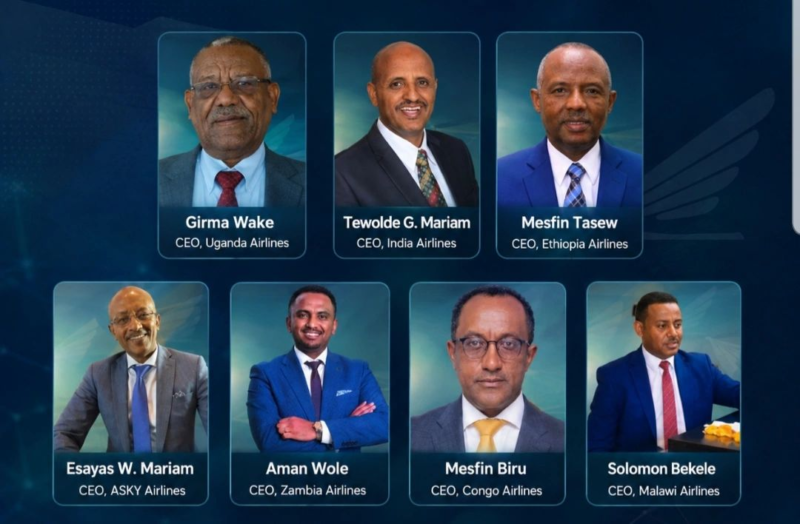
Through its multi-hub pan-African strategy, Ethiopian Airlines Group owns equity stakes, manages operations, and provides technical, management, and operational leadership for several carriers.
Connoisseur Circle
Airlines Managed or Led by Ethiopian Airlines
- ASKY Airlines (Togo)
- Ownership & Role: Ethiopian Airlines holds a 27% equity stake and serves as the strategic management and technical partner. Ethiopian Airlines Corporate website
- Operations: Based in Lomé, ASKY functions as Ethiopian’s primary West African hub, serving over 27 regional destinations. Ethiopian Airlines Corporate website
- Report Source: Ethiopian Airlines Corporate Partner Report & ASKY Strategic Partnership Disclosure.
- Malawi Airlines (Malawi)
- Ownership & Role: Joint venture between the Malawian Government (51%) and Ethiopian Airlines (49%), with Ethiopian holding the operational and management contract. Ethiopian Airlines Corporate website
- Operations: Operating out of Lilongwe and Blantyre, it connects Malawi to key Southern African destinations. Ethiopian Airlines Corporate website
- Ownership & Role: Joint venture established between the Zambian Industrial Development Corporation (IDC) (55%) and Ethiopian Airlines (45%). Ethiopian Airlines Corporate website
- Operations: Relaunched to serve domestic and regional routes out of Lusaka, with Ethiopian handling fleet management, crew training, and maintenance.
- Zambia Airways (Zambia)
- Air Congo (Democratic Republic of the Congo)
- Ownership & Role: Strategic joint venture where Ethiopian Airlines holds a 49% stake alongside the DRC government. Wikipedia
- Operations: Headquartered in Kinshasa, Air Congo provides domestic and regional connectivity using aircraft and operational management managed by Ethiopian.
- Ceiba Intercontinental / Equatorial Guinea Partner Initiatives
- Ownership & Role: Technical management and operational support agreements where Ethiopian provides aircraft maintenance, flight crew training, and executive guidance.